AICA Visit to London Galleries - 5
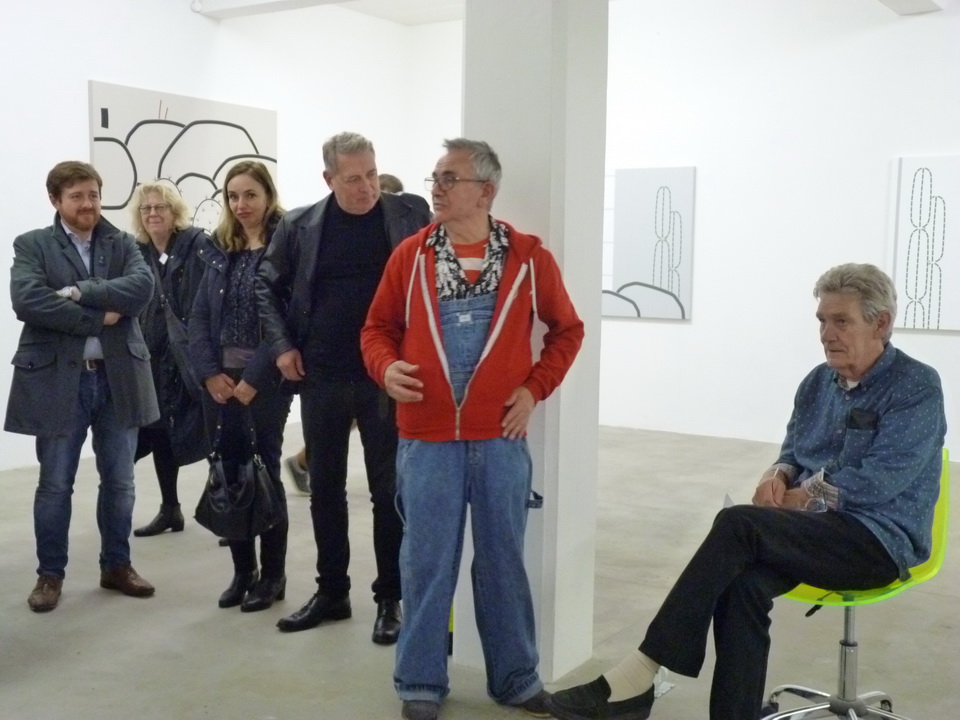
First visit: Matts Gallery owner and artist Gerard Hemsworth, who presented his work and engaged in an unforgettable artistic dialogue with international art critics.
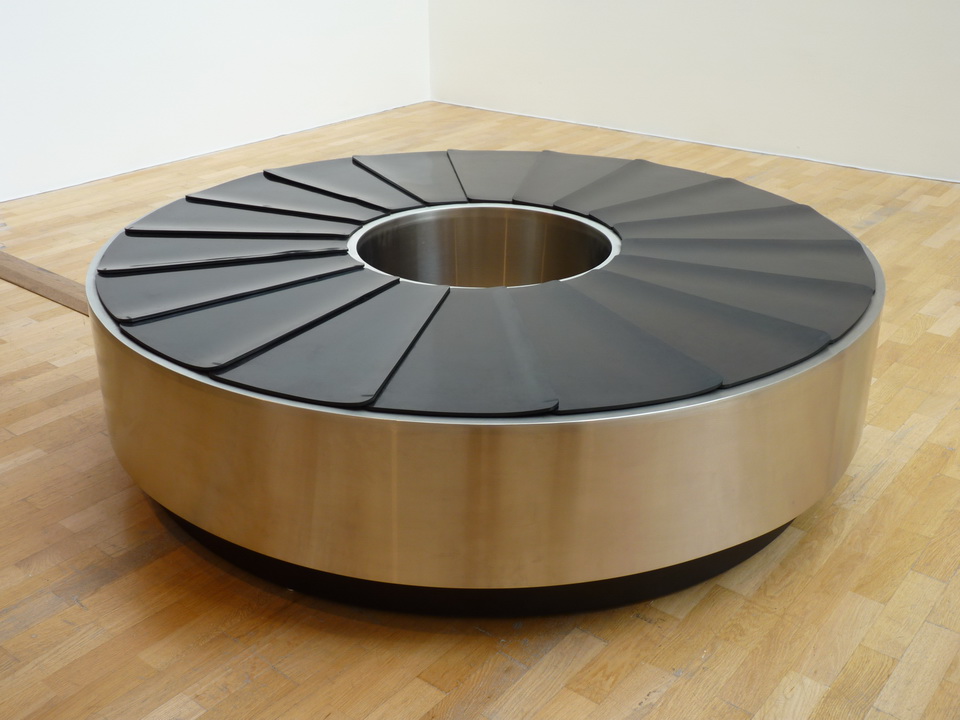
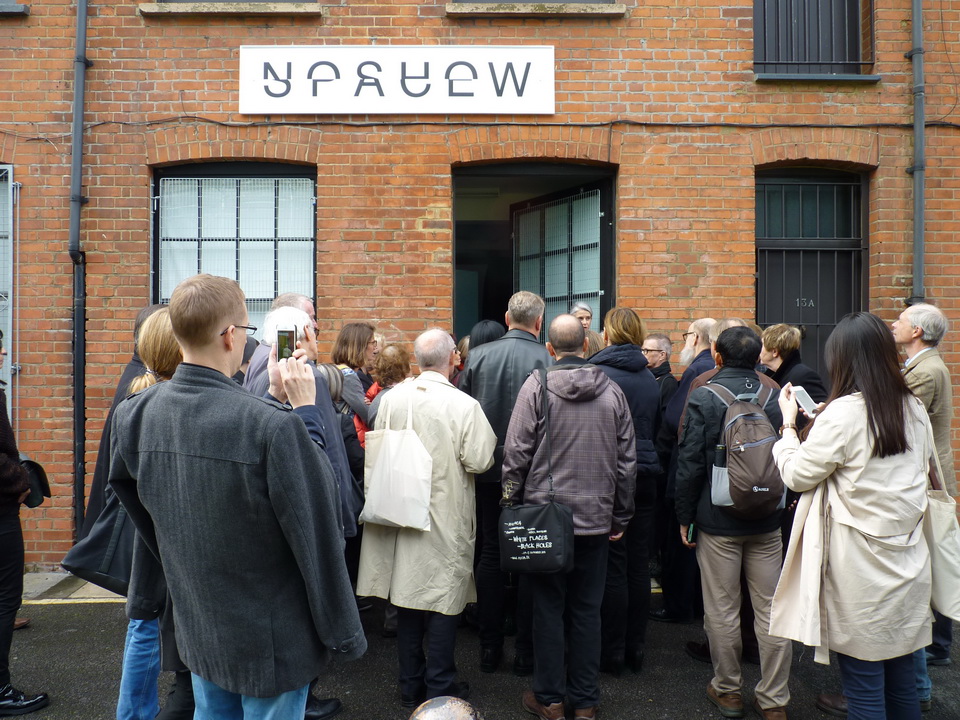
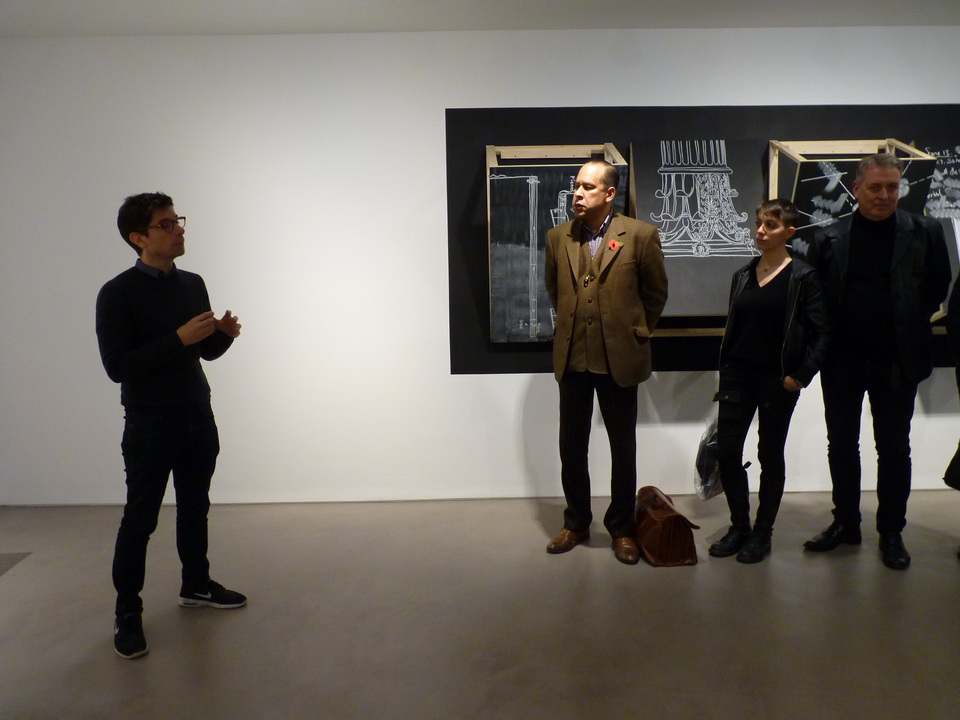
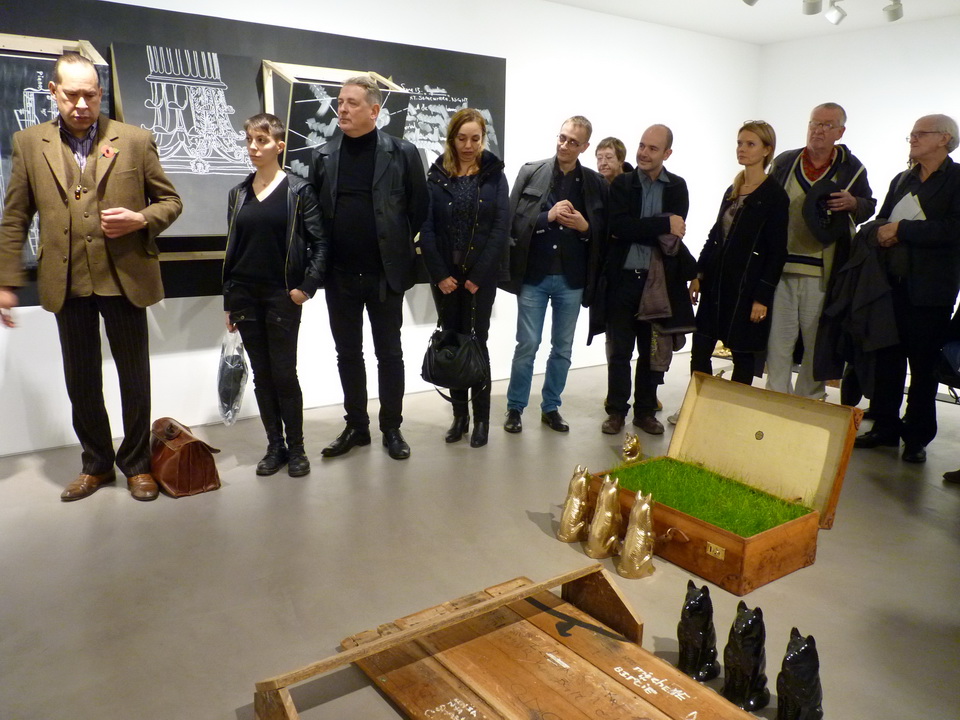
Text and photos by Chen Chi-Hsiang. At the XLVIII AICA International Congress in London (2015), on the 28th, the organizers planned a tour of galleries in East London. This gallery-hopping experience was quite enjoyable; we rode a sightseeing bus through London’s exhibitions. Almost all the venues were experimental, non-commercial galleries. The schedule was tight, spanning a full day of visiting eight large and small galleries. For this group of international art critics, the focus was not just on the exhibitions and spaces, but on the artists, curators, or gallery directors who hosted us for explanations and dialogues at every stop. We even visited resident artists to gain deeper insights into London’s gallery operations, strategic directions, and artistic perspectives.
This morning began with a dramatic little incident. AICA members gathered around 8:30 AM near Camden Mecklenburgh Square Park. It had been raining heavily since the previous evening in London, and the morning remained wet and cold with intermittent showers. Having prepared the night before, I took a bus to the meeting point as planned. Unexpectedly, the bus broke down halfway. Forced to get off, I hurried toward the destination in the rain. However, haste makes waste; I went the wrong way. After asking for directions, I continued rushing through the rain, but in my hurry, I couldn’t find the meeting spot. When I finally arrived, the sightseeing bus had already disappeared. I had missed the time. Using quick wit, I called our accompanying assistant, Tang. Her wise guidance led me to take a taxi, which proved the quickest and most convenient option. Rarely do I ride a taxi in London. As soon as I hung up the phone, one appeared right in front of me. We drove to the northeast corner of London to meet at the first gallery on the itinerary. Navigating the city streets during business hours involved a long detour, but we finally reached the secluded Matts Gallery. The fare was over £20. Indeed, money talks. We finally caught up with the group. AICA members gathered in the exhibition space, beginning today’s gallery visits.
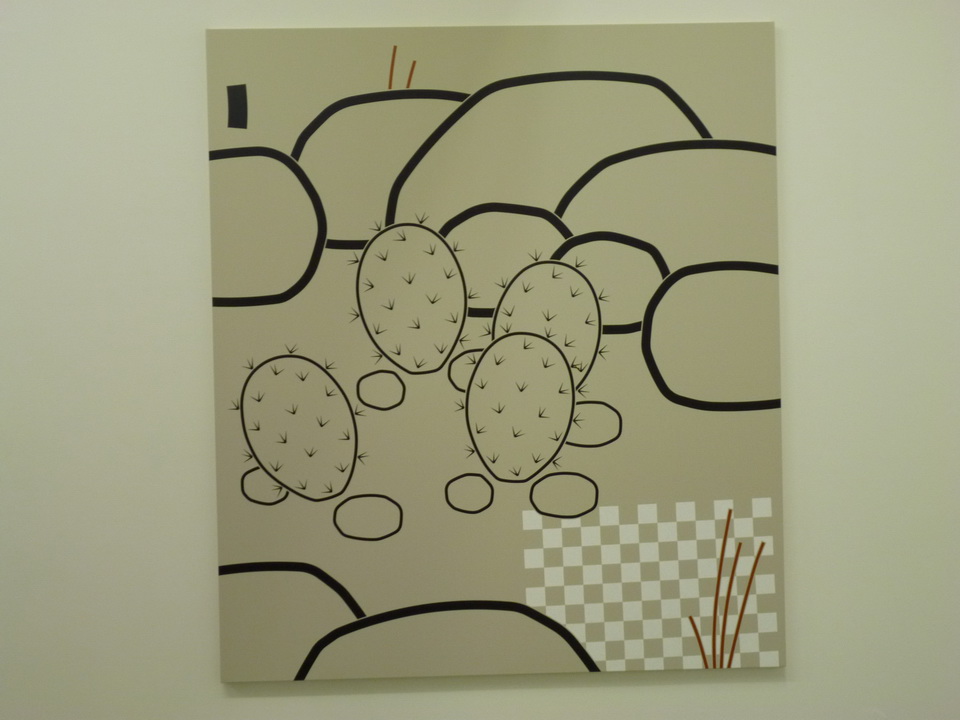
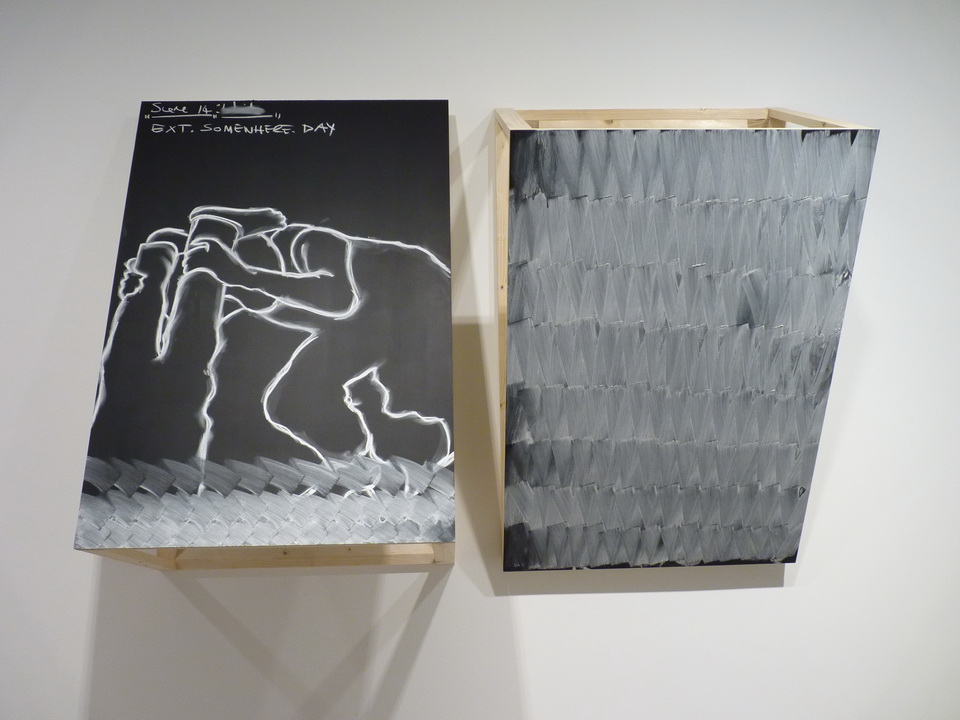
Matts Gallery was hosting a solo exhibition by British painter Gerard Hemsworth (b. 1945): "Nothing to declare." Accompanied by the gallery owner, the artist himself explained his creative process and engaged in an unforgettable artistic dialogue with the international art critics. His new works are filled with subtropical geographical landscapes—cacti. These pieces, reportedly created during his stay in New Mexico, USA, outline cacti with dashed lines and geometric strokes. Within their rigorous structure, rationality and sensibility, consciousness and poetry coexist.
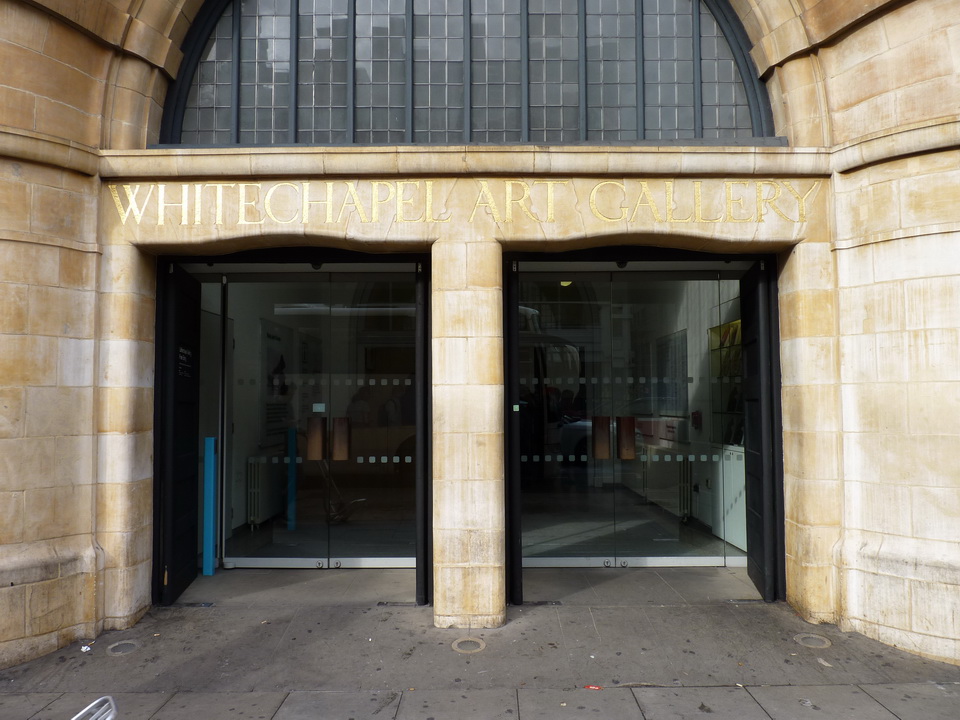
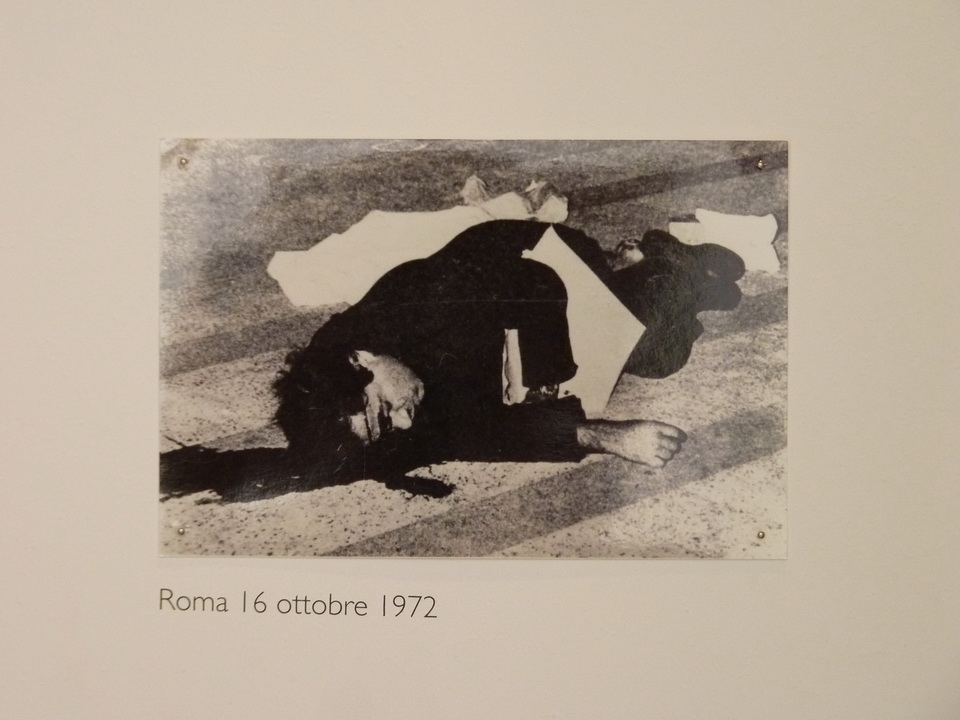
Next, we visited London’s famous Whitechapel Gallery, which was hosting a solo exhibition by young British artist Emily Jacir: "Eropa." The curator warmly welcomed us, explaining the exhibition’s conceptual framework and key viewpoints. The entire exhibition is built upon conceptual narratives and literary elements. The story unfolds from the murder of a Palestinian friend, navigating between reality and fiction, literature and history, politics and society, culture and consciousness, suggestion and imagination.
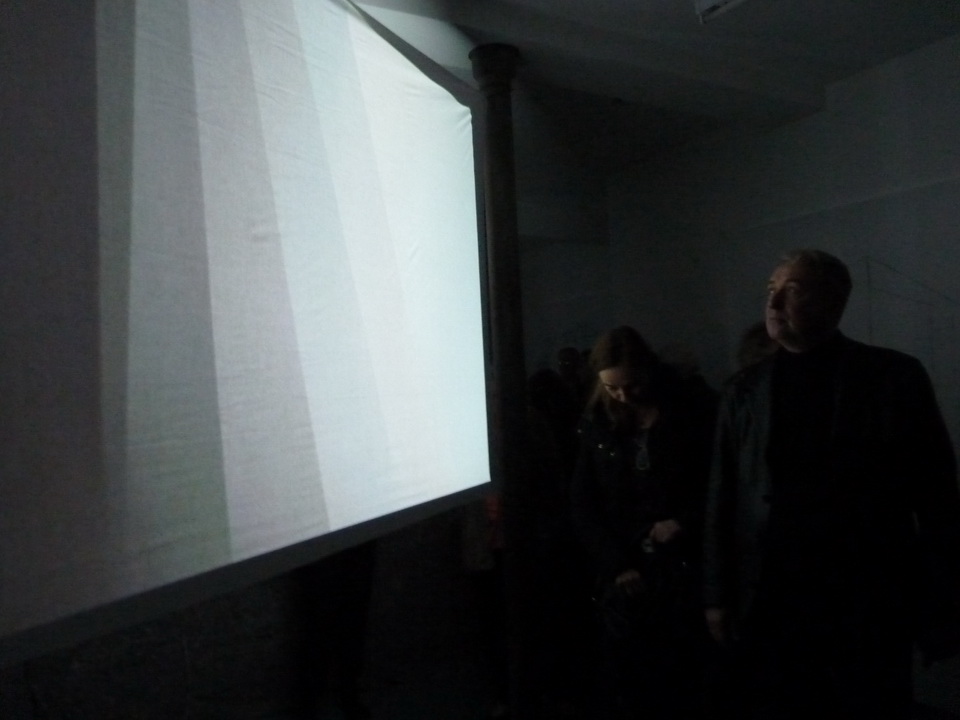
At Noshowspae, an experimental art space, the director personally explained the space’s intent: it holds a significant position in the UK’s experimental short film (online) scene. Though small, the space feels grand. It featured a solo experimental video exhibition by Matt Calderwood: "Breather," exploring light, shadow, and audio-visual media.
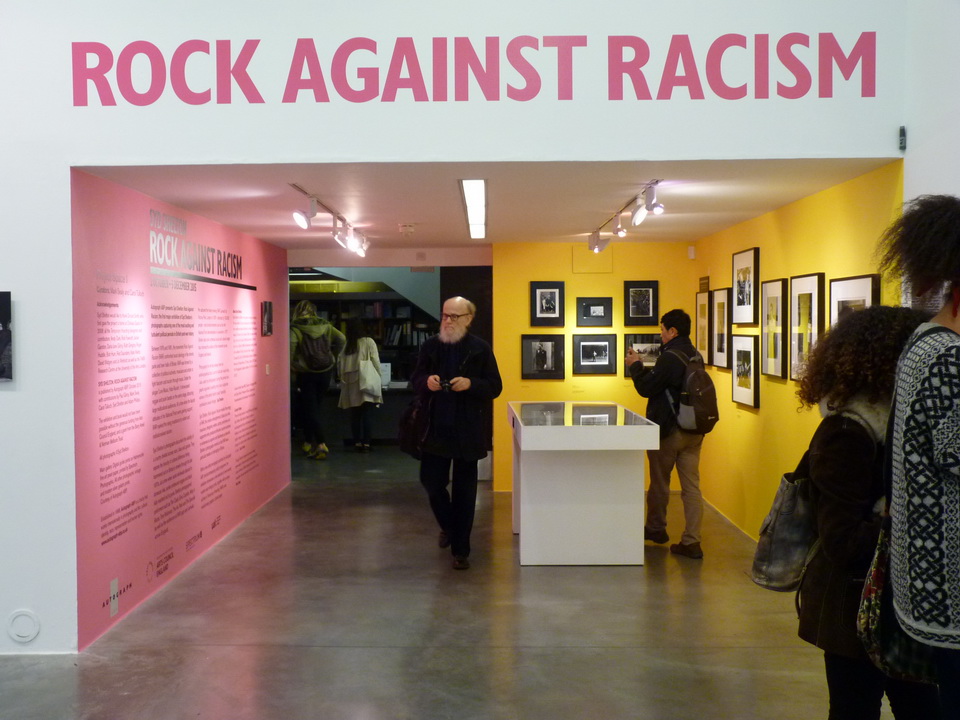
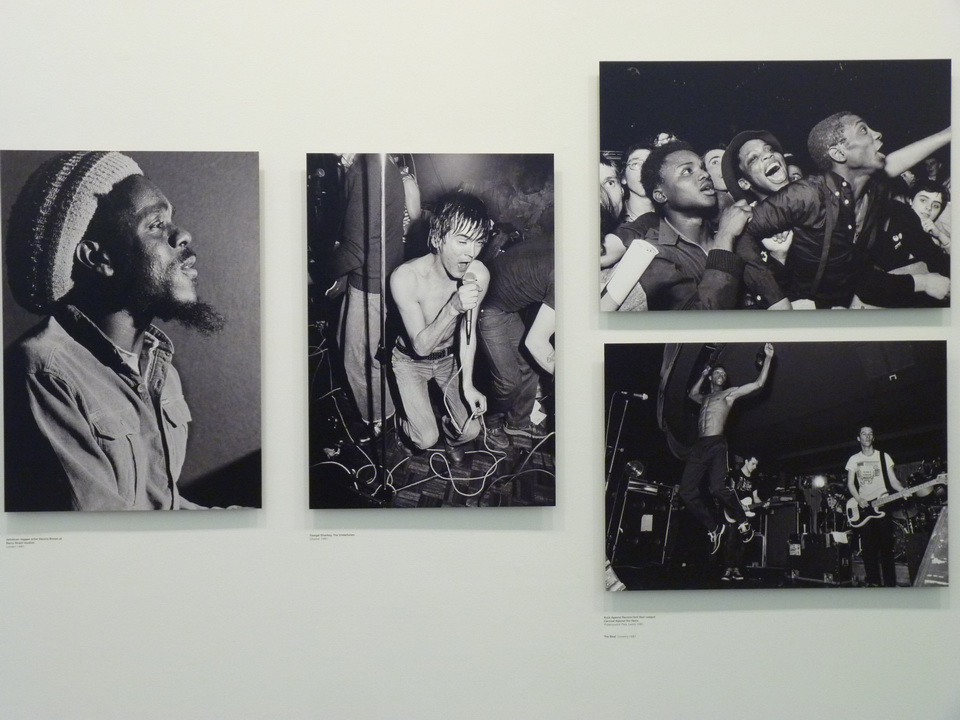
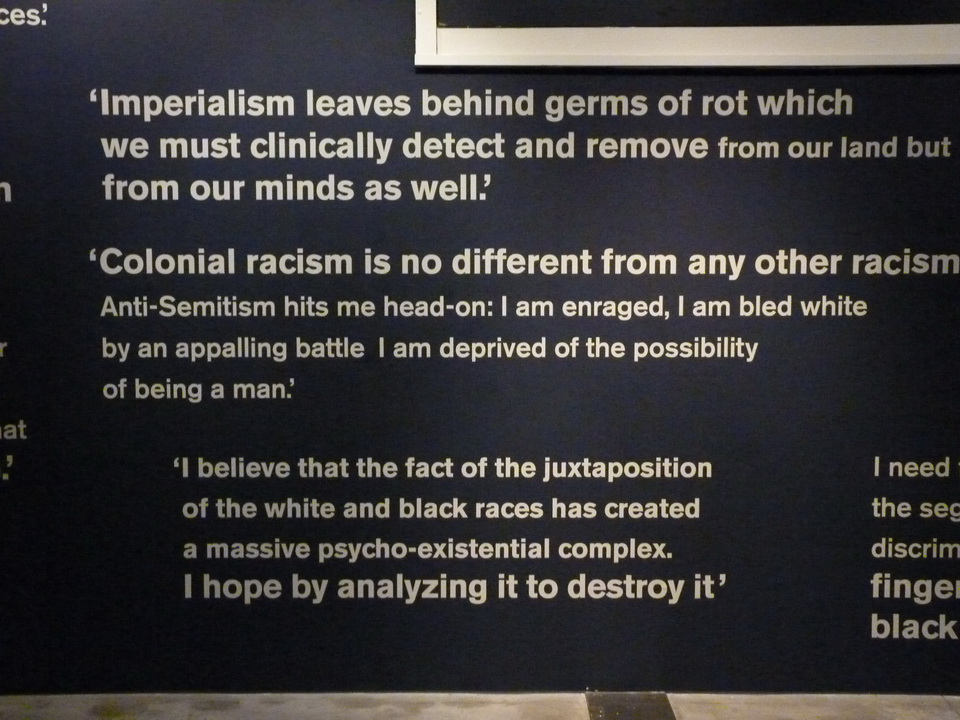
At PEER Image Art Archive Space, the curator and person in charge welcomed us to the third-floor art archive, explaining the space’s operations: art archival collection, exhibitions, publications, and strategic direction. Currently, two exhibitions with strong resistance themes are on display. On the ground floor, Syd Shelton’s solo exhibition "Rock against racism" is shown. Upstairs, Bruno Boudjelal presents a solo exhibition addressing colonialism and racial discrimination, using text and images. In the press release, Bruno Boudjelal wrote: “This series is based on Frantz Fanon. A Martinique-born French-Algerian psychiatrist, philosopher, revolutionary, and writer whose work is influential in the fields of post-colonial studies. I felt it was important, at a point where Algeria is celebrating its fiftieth birthday, to consider the thoughts and life story of Fanon, his relation with Algeria, his position as one of the most important post-colonial thinkers, and finally the story of his journey as a human being.”
Leaving PEER Image Art Archive Space was nearly 2 PM. Taking a winding path, we arrived at a small gallery (I forgot the name). Everyone was hungry. Lunches at the AICA annual conference are often irregular—one meal here, none there. Tsai joked that Britons are good at controlling food portions. Indeed, while our minds were fed by art, our stomachs were empty every day, which was not a pleasant feeling. Arriving at this small gallery, I thought we were only there to view the exhibition. To my surprise, we ended up eating a buffet. It seemed to be vegetarian. Tsai joked again that we were eating grass—a salad made of lettuce and Italian rolled pasta. Because I was hungry, I ate with relish and felt satisfied. Each person had a bottle of mineral water. Although the cake was delicious, it lacked a cup of hot coffee. Afterwards, the beautiful painter Joy Gerrard shared her work with everyone, and we discussed her pieces.
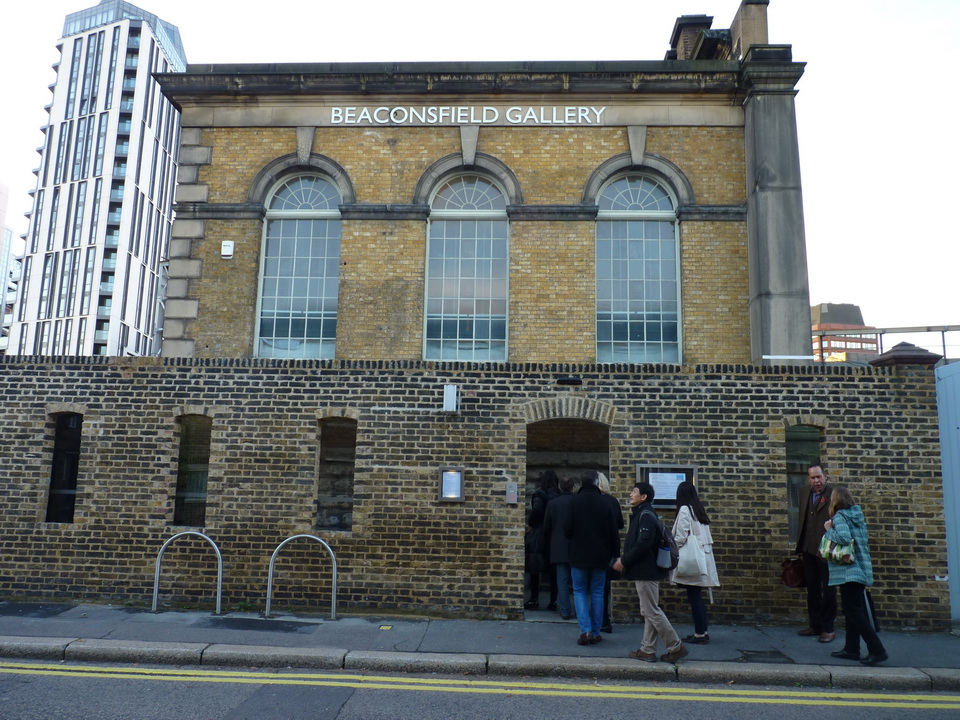
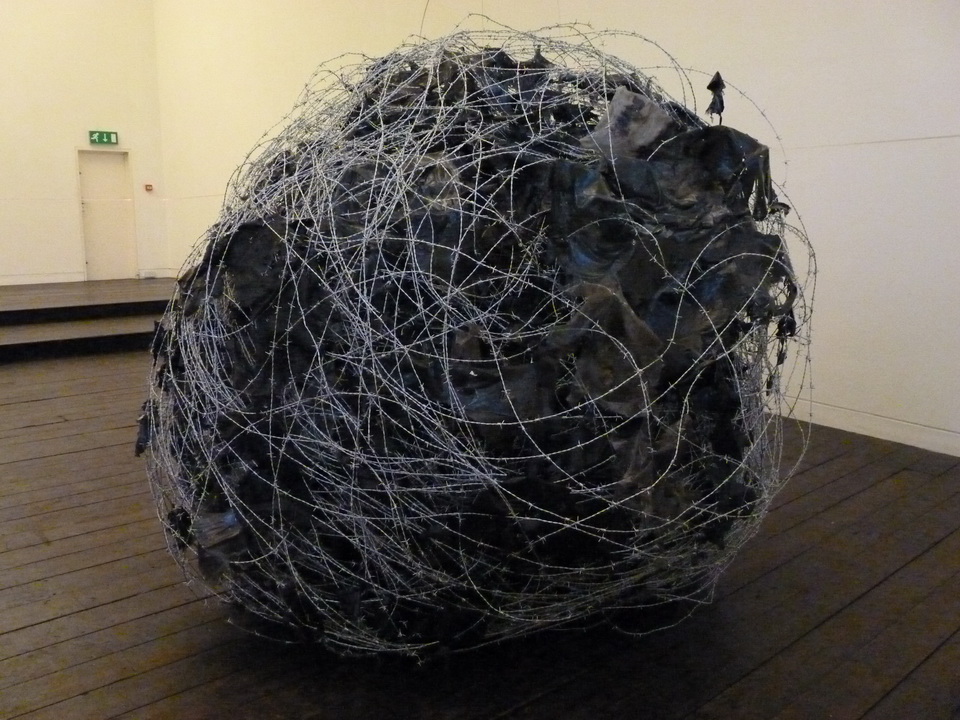
In the evening, we came to Beaconfield, an experimental space, for coffee. The director introduced us to the space’s operations and announced that due to government budget cuts, cultural units would no longer provide operational resources next year. This was the final exhibition slot. Indeed, under national budget austerity measures, culture has become the biggest casualty. Beaconfield is known for long-term exploration of new forms of art. Currently, Ellie Harrison’s solo exhibition "Radical renewable art activism Fund (RRAAF)" is on display. It features a large iron wire ball wrapped in black plastic, full of semiotic signs; two symmetrical red L-shaped spatial installations in the corner of the wall and floor; and a thin golden line that forms variations under changing light and shadow. Attitude and behavior become form; the space carries consciousness and profundity.
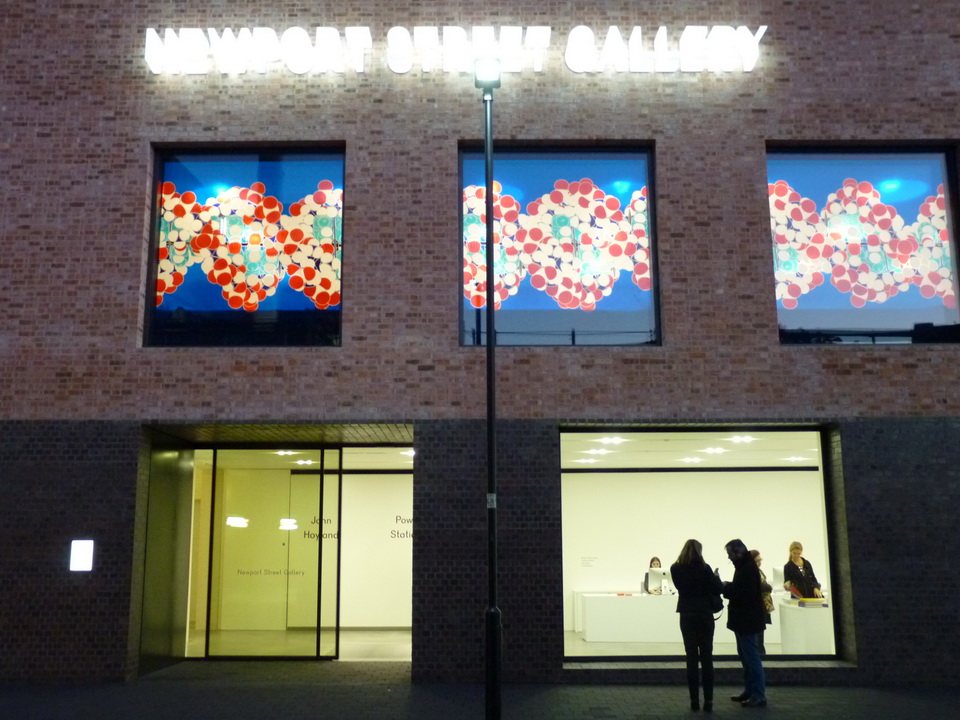
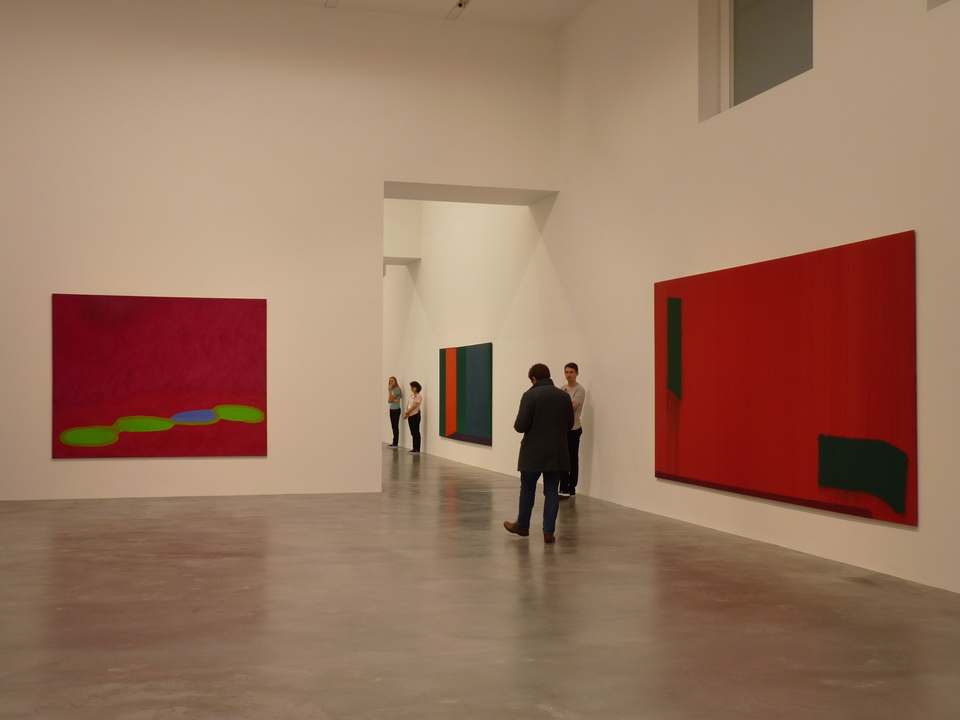
Not far away is The Newport Street Gallery, currently London’s most beautiful exhibition space. It is a new gallery recently opened solely by renowned British star artist Damien Hirst after his summer break. It gives one the feeling that having money is truly good. The inaugural exhibition featured British post-abstract geometric painter John Hoyland: "paintings 1964-1982." The bright, high-ceilinged white space highlighted vivid and dazzling colors, presenting a kind of sacred geometric color field. "Beauty" speaks for itself.
Gasworks Art Space is another hub for contemporary art exchange in London. It offers not only exhibitions but also upstairs studios for resident artists from around the world (each year, artists from across the globe and locally reside there). A young director welcomed us, introducing the current solo exhibition by South African artist Kemang Wa Lehulere: "Sincerely yours," along with the space’s operations and exchange programs. The art space treated us to a rich reception. Lai Chun-Chieh, an art critic friend living in London, also met us there. Inside the exhibition space, we sipped wine and ate snacks while carefully tasting and discussing the artworks. Then, we went upstairs to visit one resident artist studio after another, exchanging ideas with them.
Afterward, the four of us went together to Chinatown in London for dinner. We discussed art and criticism while dining until the restaurant closed, ending a day rich in artistic feasts and wonderful experiences in London.