The Master of French Gardens
A distinguished portrait of the master of French gardens, André Le Nôtre, is held in the collection of the Municipal Museum of Orléans. When mentioning the rigorous and perfect French garden, one cannot help but think of André Le Nôtre.
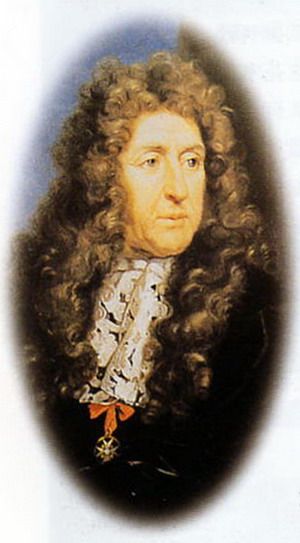
A distinguished portrait of the master of French gardens, André Le Nôtre, is held in the collection of the Municipal Museum of Orléans. When mentioning the rigorous and perfect French garden, one cannot help but think of André Le Nôtre. Undoubtedly, he is the most renowned horticulturist in Western garden history and the greatest master of French landscape design. He was fortunate to live during the rise of seventeenth-century Western positivist philosophy and under the absolute monarchy of Louis XIV, the Sun King who loved strolling and flowers. It was only then that he could fully display his artistic talent and reveal the ultimate aesthetic beauty of French humanism, thereby creating the distinctive feature of French gardens where gardens dominate nature.
Born into a family of horticulturists, André Le Nôtre was born on March 12, 1613, in Paris. Three generations of his family served as royal gardeners for France. His grandfather, Pierre Le Nôtre, was the royal gardener for Catherine de' Medici, mother of the queen. His father, Jean Le Nôtre, was the royal gardener of the Tuileries Garden for Queen Marie de' Medici. André's two sisters later married royal gardeners: Françoise married Simon Bouchard, a gardener at the Tuileries; Elisabeth married Pierre Desgots, also a gardener at the Tuileries. After her brother-in-law Simon died in 1638, André's sister inherited his profession and became a gardener at the Tuileries. André grew up in the magnificent Tuileries Royal Garden, immersed in this environment of a gardening family, making garden art the core of his life. In 1630, at seventeen, he succeeded his father and became a royal gardener at the Tuileries. He had the fortune of working with Claude Mollet, the chief gardener to King Louis XIII (one of the most important horticulturists in Western garden history before André Le Nôtre, and the first to create magnificent patterned flower beds), and was deeply influenced by him. At the same time, he entered the studio of royal painter Simon Vouet to study painting, made friends with Le Brun in the studio, and frequently visited the workshop of sculptor Le Rambert. This original artistic experience was rare for a gardener; it provided a sense of rigorous organization and balance.
The Gestation of New Garden Art: After six years of training in plastic arts, André Le Nôtre was deeply influenced by Italian garden art paintings by Vouet and immersed in French positivism—Descartes' strict and clear thought process, especially in the exploration of these new garden arts. Claude Mollet—Horticulture and Beautiful Theaters (Théatre des Plans et Jardinages), conducted research and development on agriculture, horticulture, garden architecture, and earthworks. In Séso's (J. du Cerceau) "Positive Perspective Lessons" (Lecons de Perspective Positive): "Perspective is nothing; it is a bright mirror that allows people to learn how to express things according to science and reason, which appears in the eyes." Then! Positive perspective involves the effect of deformation practice, that is, shortening perspective. It is displayed in Le Nôtre's magnificent Vaux-le-Vicomte gardens. Boyceau—Garden Treatment According to the Principles of Art and Nature (Traite du Jardinag Selon les Raisons de la Nature et L Art). In Serres' (O. de Serres) famous work "Theater of Agriculture" (Théatre d Agricuture), it is written: "He hoped that gardens must be viewed from above, such as from buildings or from high platforms surrounding magnificent patterned flower beds." This became the formula for the entire rigorous and perfect French garden art. Finally, Father Niceron's famous work "Curious Perspective or Artificial Magic" (La Perspective Curieuse ou Magie Artificielle) also has an explanation in this regard. These new garden concepts deeply changed young André Le Nôtre, thereby nurturing the new face of future French gardens.
A Marvelous Work of Creation: In 1635, André Le Nôtre became the chief gardener for Gaston d'Orléans, the younger brother of King Louis XIII. Five years later, he married Françoise Langlois and lived a peaceful life in the Tuileries Garden. Starting from 1643, he was responsible for all royal gardens, maintaining and planning magnificent gardens. Until 1656, when Le Nôtre was forty-three years old, he finally had the opportunity to display his talents. Invited by his friend Le Brun, the three of them formed a strong lineup with architect Le Vau. After five years of ingenuity and craftsmanship, they created the magnificent Château de Vaux-le-Vicomte and its magnificent gardens, marking the birth of a new garden art. The following year, Le Nôtre was appointed Inspector of Royal Buildings. In 1661, Mazarin died, and the young King Louis XIV ascended the throne, deciding to build the Palace of Versailles. André Le Nôtre became the chief gardener for Louis XIV and updated the patterned flower beds of the Fontainebleau Queen's Garden, becoming the most outstanding and largest patterned flower bed after Vaux-le-Vicomte. The following year, he began developing the gardens of Versailles. Under Le Nôtre's nearly thirty years of miraculous creation, this barren mountain field was transformed into a unique and magnificent grand garden. In the same year, the British king invited Le Nôtre to Britain to update the Saint-James Royal Garden. Louis XIV declined the British king's kindness with the words, "I need Le Nôtre every day."
In 1663, André Le Nôtre updated the magnificent Saint-Germain-en-Laye Royal Garden and simultaneously developed the rigorous and perfect Sceaux Garden, which took more than ten years to complete. He also excavated the Apollo Fountain in the Versailles Garden. From the following year, for eleven years of ingenious creation, the Tuileries Royal Garden was renewed, becoming the most beautiful French garden in the city. In 1668, starting from the magnificent Tuileries Garden, a royal promenade avenue was opened, called the "Champs-Élysées," which is now the most famous avenue in the city. In 1699, the British writer Lister wrote when visiting Paris: "What I saw in Paris, the most beautiful was—the Tuileries Garden, this magnificent grand perspective avenue." In 1665, Le Nôtre ingeniously managed the Saint-Cloud Royal Garden. Two years later, he developed the Grand Cascade of the Saint-Cloud magnificent garden. At the same time, he planned the Versailles Garden, with green carpet lawns between the avenues, and excavated the Grand Canal. In 1699, he updated the harmonious and perfect palace garden and planned the Neptune Grand Fountain of the Versailles magnificent garden. The following year, he developed the exquisite and perfect Sézo Garden for Colbert, and simultaneously excavated the Grand Canal of the Sceaux Water Mirror Garden and opened the urban avenue (llee de Roule). In 1672, he joined forces with his grandson Claude Desgots to plan the colorful Trianon magnificent garden of Versailles. In 1674, to celebrate the opening ceremony of the Versailles Garden Grand Canal, the Kingdom of Venice specially presented a gilded light boat to the Sun King Louis XIV. In the same year, he developed the Four Seasons Fountain and the rigorous and perfect gardens of Clagny and Colombiere in the provinces. The following year, Le Nôtre received the Order of Saint Lazarus, established two lush small forests in the Versailles Garden, and excavated the octagonal fountain water mirror of Sézo.
In 1678–1679, Le Nôtre finally realized his long-awaited trip to Italy, personally exploring Italian magnificent gardens, and carried out the engineering projects for another retirement residence of King Louis XIV, the Marly Palace and its gardens. This is also one of the most outstanding works of the generation's master of horticulture. An extraordinary garden, it is the world's largest and most beautiful garden (the cost of the magnificent Marly Palace and gardens was twice that of Versailles, unimaginable how magnificent it was! Now it has become just an ordinary large park). At the same time, Le Nôtre planned the perfect garden of Louvois, Louis XIV's finance minister, in Meudon (completed until 1695). In the early 1680s, he changed the two large water basins of the Versailles Garden with shimmering reflections. In 1684, Le Nôtre and Mansart jointly renovated the Orangery of Versailles. At the same time, Le Nôtre designed the water wheel of the Marly River, becoming the most outstanding hydraulic project in the history of garden art (diverting water from the Seine River to a hill over two hundred meters high). Mansart built the Versailles Garden and added a colonnade rich in musical form. In 1687, he rebuilt the Trianon—Pink Marble Pavilion, once again, and also Le Nôtre's last colorful and beautiful garden plan. After retiring in 1692, he handed over the position of Inspector of Royal Buildings to his grandson Claude Desgots and retired to his Tuileries residence. In his later years, Le Nôtre wrote: "Do you know the beautiful gardens of France? Versailles, Fontainebleau, Vaux-le-Vicomte, especially the Sceaux Garden." On September 15, 1700, the great master of gardens passed away, leaving behind numerous magnificent gardens. People call these gardens, characterized by rigorous organic organization, "French Gardens."