Anish Kapoor Artist
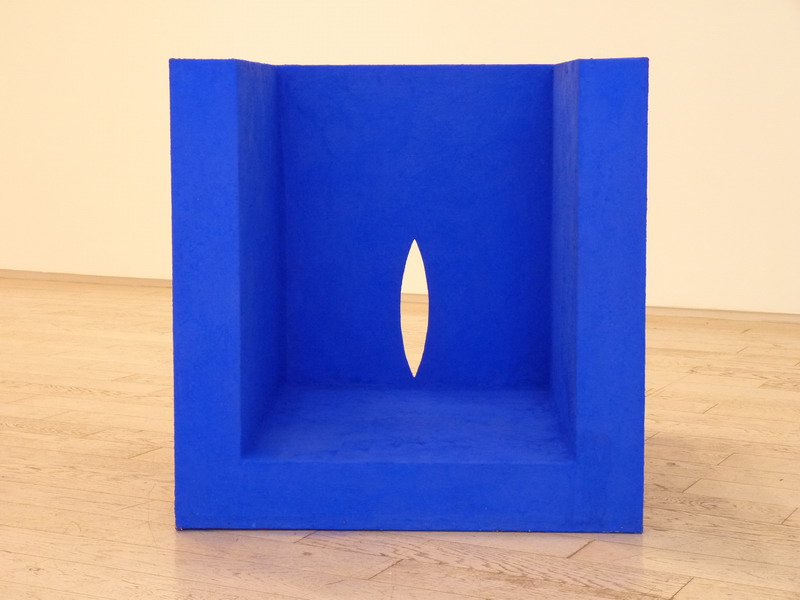
Anish Kapoor Metaphysical-Plaza 90x80x80 cm 1985
Text and images by Chen Chi-Hsiang. Anish Kapoor (born in Bombay, India, in 1954) settled in the UK in the early 1970s and became one of the key figures of British sculpture in the 1980s. Known for his intense colors and mesmerizing forms, his work carries a profound and mysterious Indian heritage and philosophy, deeply immersed in Western modern art. His cross-cultural experience synthesizes Eastern and Western civilizations, constructing a metaphysical appearance rich in contemplation, imagination, and religious meditation, making him one of today’s most unique sculptors.
Kapoor began creating art in 1974. In the early 1980s, he attracted attention with his magical geometric forms and strongly expressive colored sculptures, often referencing Indian traditions. He frequently sprinkled color powders (black, white, red, yellow, blue, green, purple, etc.) on his sculptures, imbuing them with energy and consciousness. The artist stated: “Color powder gives objects an invisible characteristic, producing a Gestalt psychological sensation, forming a unity as a fundamental concept before and after that state, approaching those non-existent practices.” Archetypal forms serve as the body of the work, while color is its soul. The vibrant hues are like mesmerizing Indian spices, striking and magnetic. Bright colors are often used to enhance form and metaphysical concepts, injecting dynamic force into static imagery. Forms are weathered and dissolved by color; visual facades become flat, subtle depth disappears, carrying strong mystery and sensuality, rich in contemplative space, revealing extraordinary chromatic profundity.
In the mid-1980s, his work became more original. Vibrant colors disappeared, replaced by magical deep blues and blacks. He carved geometric shapes (circles, rectangles, squares) from the centers of irregular or geometric forms—such as cubes—and painted them, constructing a deep metaphysical consciousness space. This achieved dematerialization and formalization, reaching an Eastern mystical realm of “emptiness,” creating a religiously meditative world. The artist said: “‘Emptiness’ presents itself in different layers... I am often attracted by ideas of fear, through sensations of dizziness, falling, and being sucked inward.” After 1986, he began using various materials such as fiberglass and polystyrene.
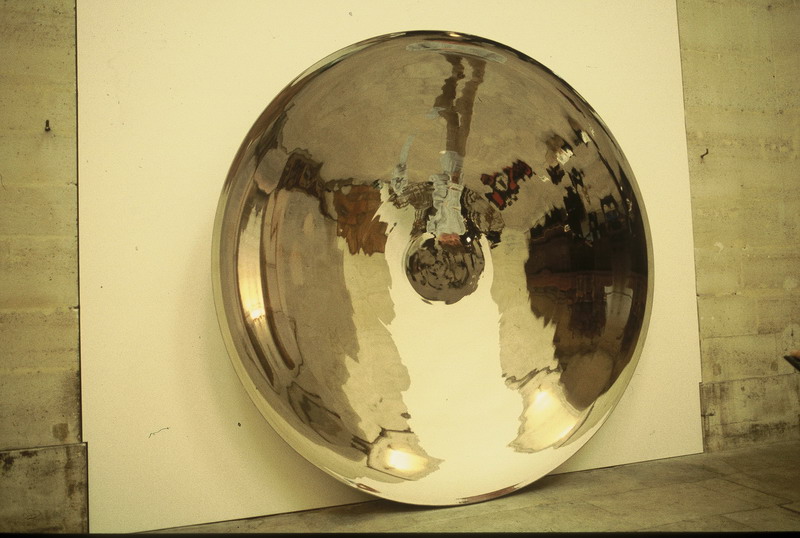
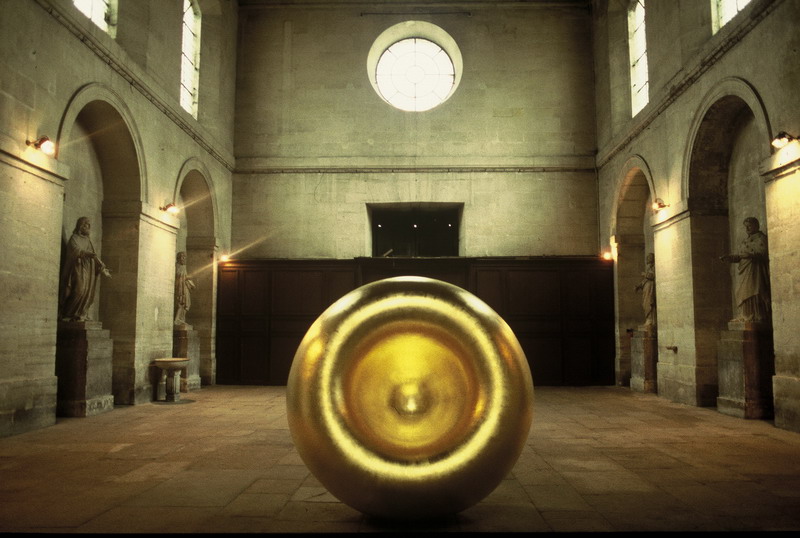
He represented Britain at the Venice Biennale in 1990. The following year, Kapoor received the Turner Prize, Britain’s most prestigious contemporary art award. Exploration of new materials, discovery of new spaces, new revelations and incubations followed. Works grew larger and more defined, liberating themselves from artificial media and traditional techniques to enter industrial materials, existing between objects, sculptures, and spatial installations. In the early 1990s, he incorporated vortex-like imagery. A new method transformed space into object; his first large-scale object-sculpture-installation work, Descent into Limbo (1992), was presented at Documenta in Germany. Mid-career, he added gold aluminum foil and developed smooth, mirror-like reflective materials: stainless steel, marble, resin. Each new material offered a test of immateriality. The artist said: “I like the concept that, according to all these materials, it is like a presentation of immateriality.”
In 1999, he first used new PVC plastic materials, assisted by new technologies and industrial techniques. In 2002, invited by Tate Modern in London, he realized Marstas, a massive indoor exhibition piece in deep red, measuring 155 meters long. The artist said: “To materialize celestial bodies.” He continued developing different material media, undertaking numerous stainless steel monuments, such as the UK Victims Memorial in New York (referencing 9/11) or the Chicago City Monument. Retrospectives were held at the Royal Academy of Arts in London and the Guggenheim Bilbao in Spain during 2009–10. In 2011, invited to the Monument exhibition, he displayed the magnificent and colossal spatial installation Behemoth at the Grand Palais in Paris.