Anish Kapoor Versailles 2015
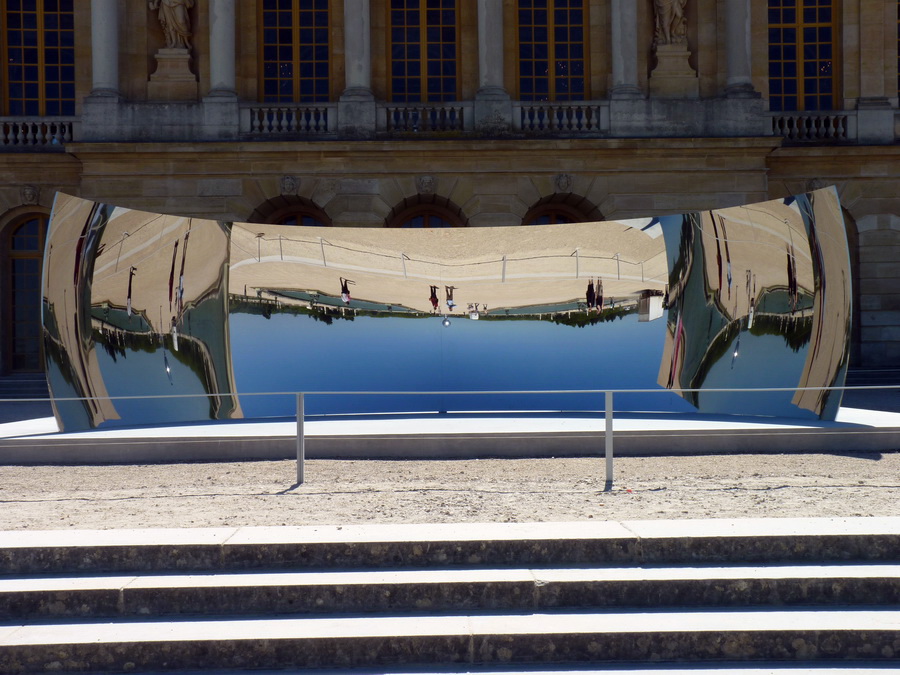
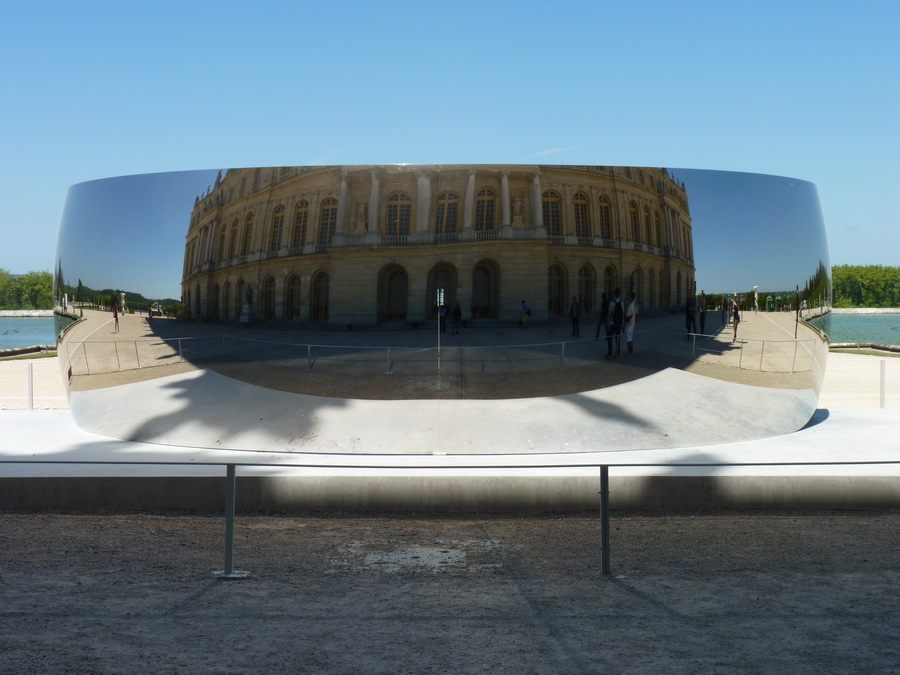
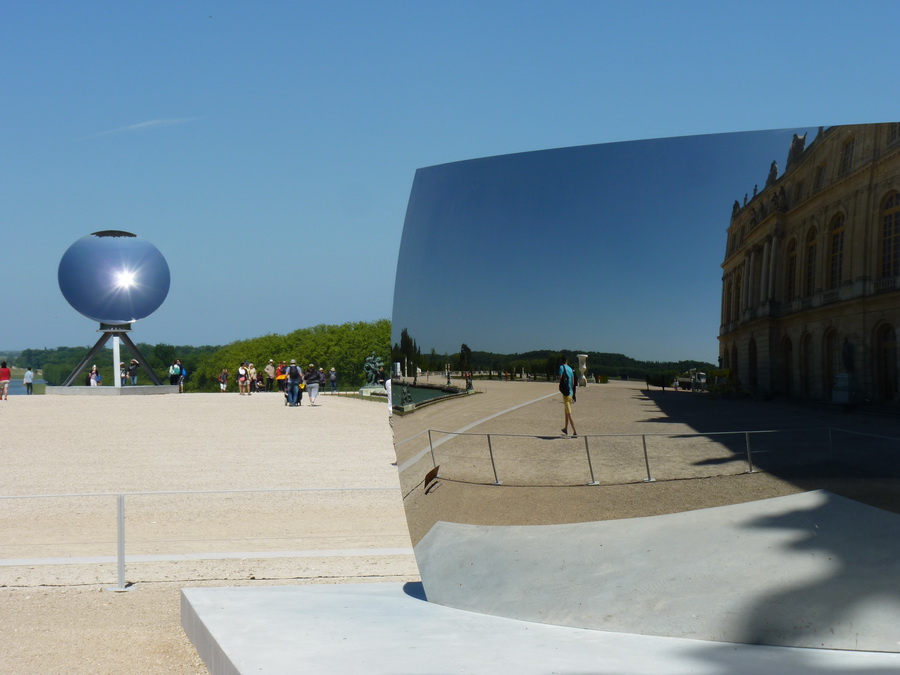
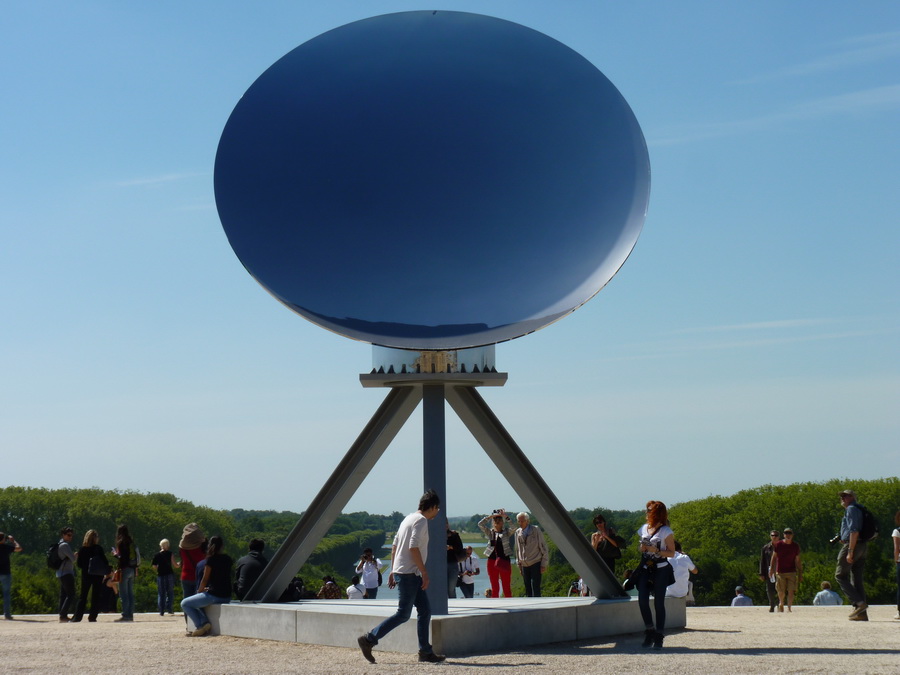
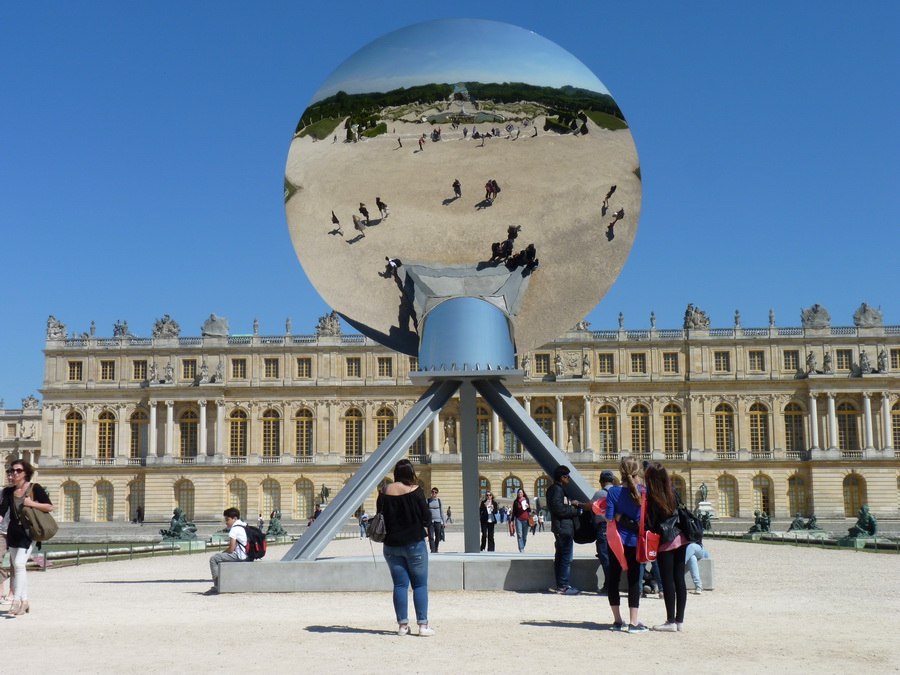
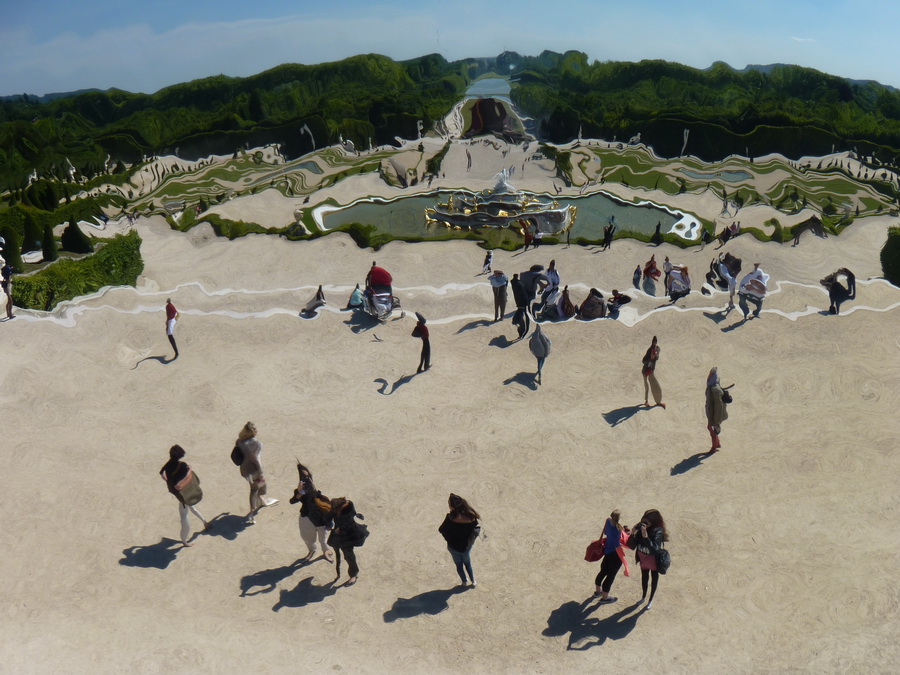
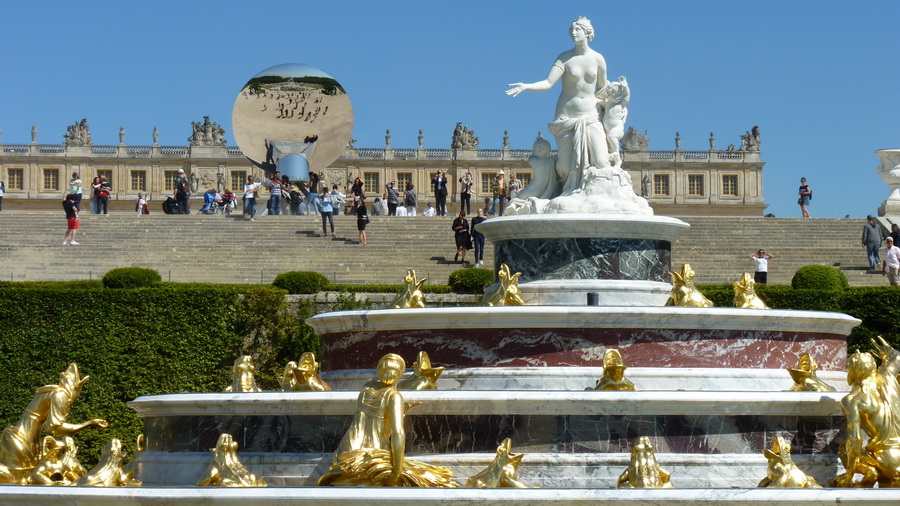
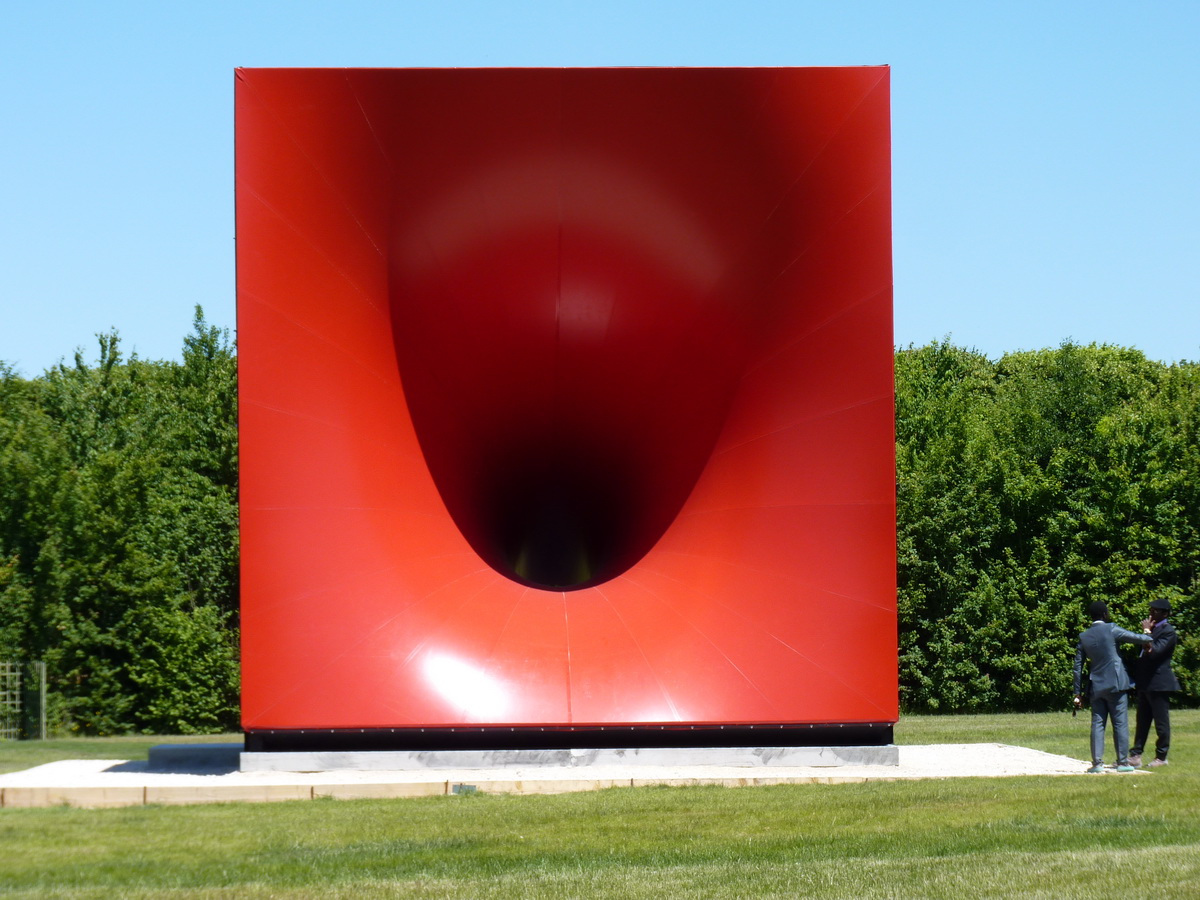
C-curve (2007) A mirror surface between heaven and earth—from the front, one can see the surrounding gardens and water beds of Versailles.
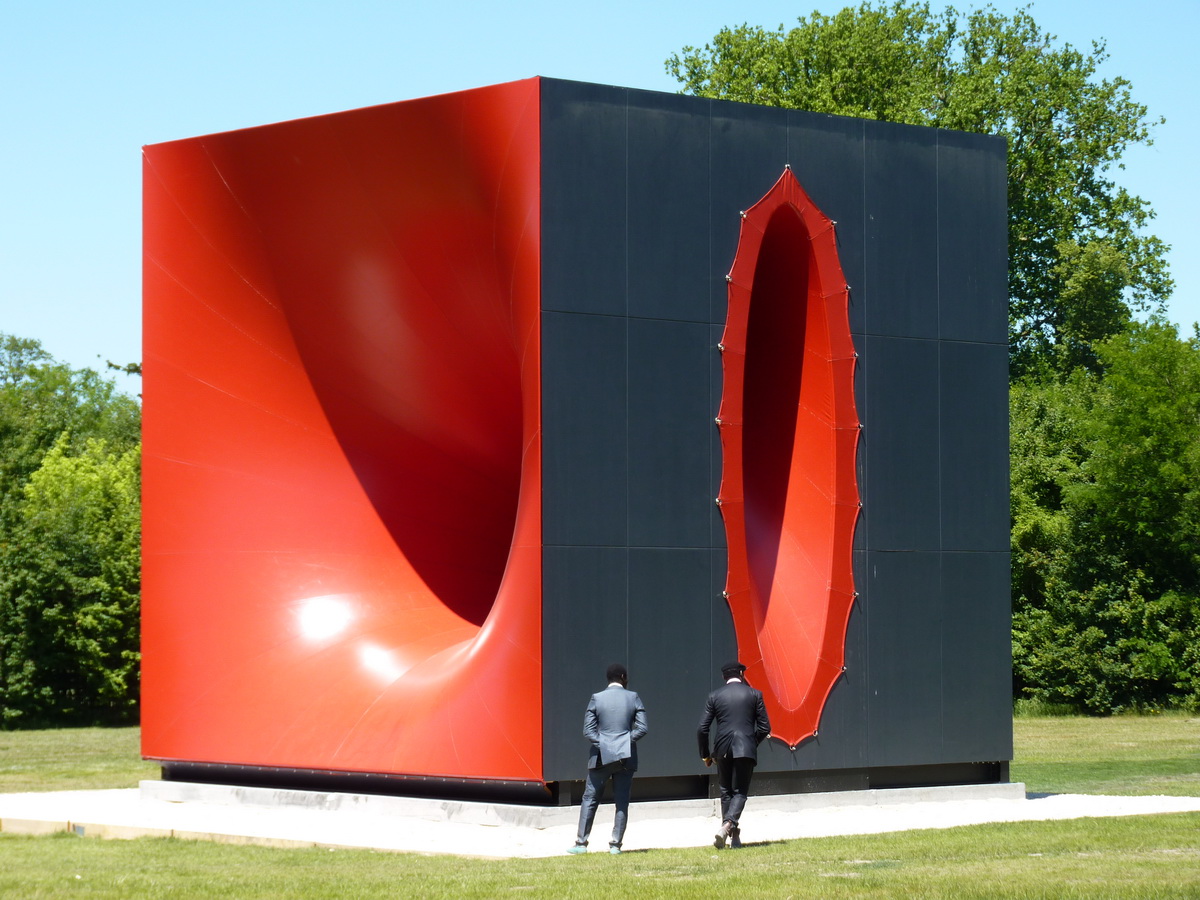
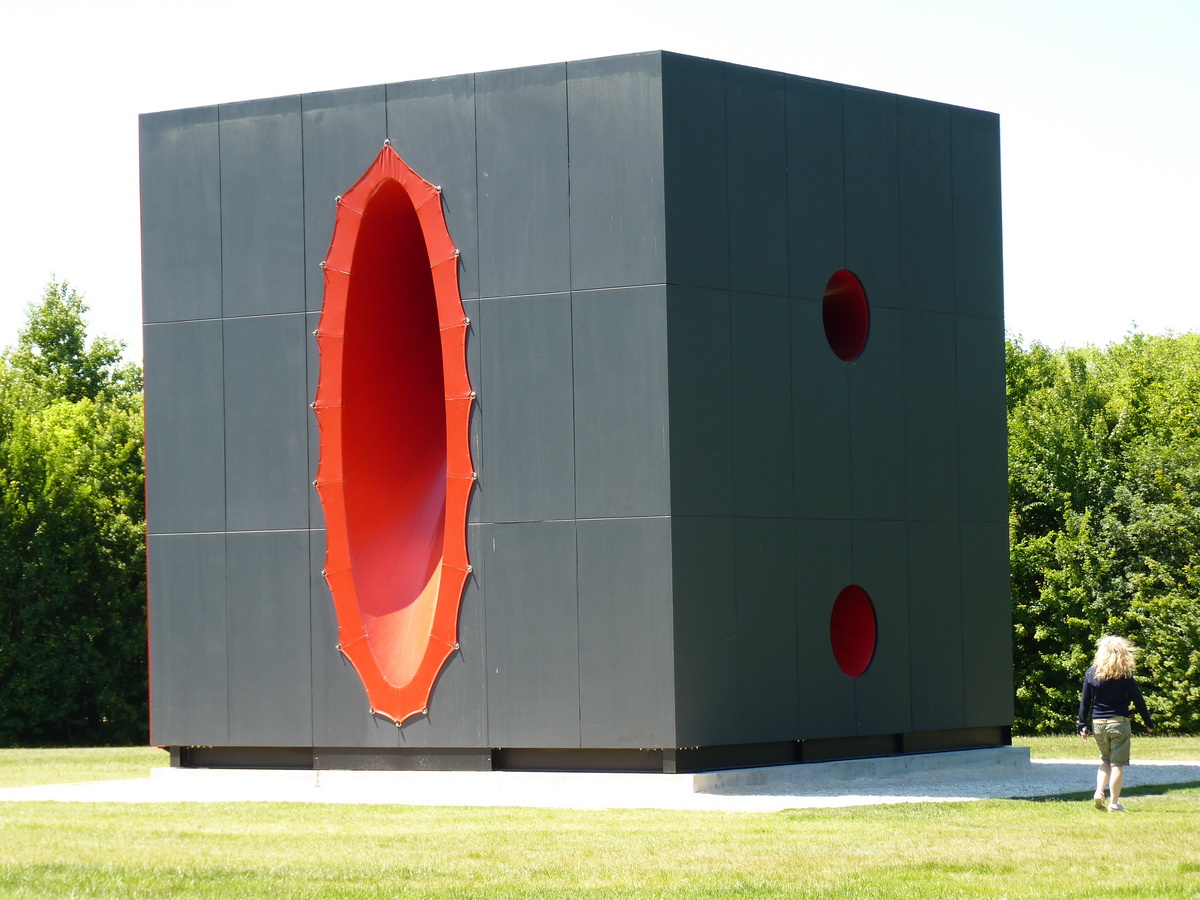
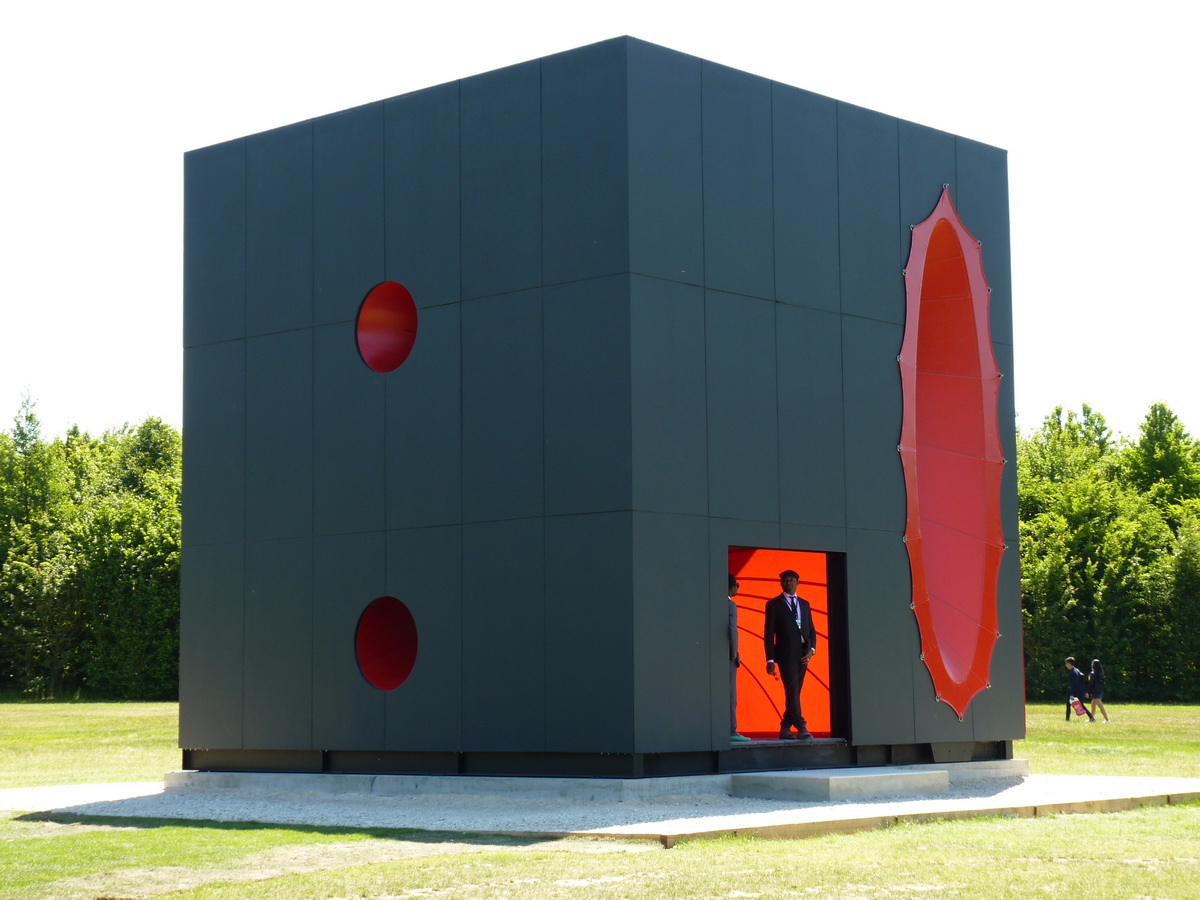
Text and images / Chen Chi-Hsiang Anish Kapoor Versailles 2015 Dates: June 9 to November 1 Location: Gardens of the Palace of Versailles, Paris
Preface: The work of Anish Kapoor, the most renowned British-Indian artist internationally today, is not unfamiliar to us. From the 1980s to the present, his development has been unimaginable. In 2011, he was invited to the annual Monumenta exhibition at the Grand Palais in Paris, where his "leviathan" sculptures with an Eastern mystical quality and extraordinary volume stirred people's imagination and senses. This year, invited for a special exhibition at the Palace of Versailles on the outskirts of Paris, it is the grandest and most dramatic exhibition in France this year, and for the artist, it is the most challenging exhibition. There are six monumental, extra-large works installed in the magnificent grand garden theater of the Palace of Versailles, which carries a complex history. The ingeniously conceived works engage in an unprecedented dialogue with the garden (water beds, fountains, canal, grand perspective tree-lined paths, and buildings) of the French horticultural master Le Notre. The artist, with his exquisite craftsmanship, accepts the challenge of the Versailles space, between heaven and earth, shadow and light, the visible and the invisible, inside and outside, imagination and awareness, sensibility and rationality, situation and site, energy and consciousness, challenging people's vision and imagination, interpreting and displaying his extraordinary cosmic and historical perspectives.
Artist Anish Kapoor: Anish Kapoor (born 1954 in Bombay, India) settled in Britain in the early 1970s and is one of the seminal figures of the New British Sculpture of the 1980s. He is famous for his intense colors and mesmerizing forms, carrying a profound and mysterious Indian heritage and philosophy, deeply immersed in the baptism of Western modern art. His cross-cultural experience and synthesis of Eastern and Western civilizations construct a metaphysical style rich in profound thought, full of imaginative and religious meditative space. He is the most unique and unparalleled sculptor of our time.
The work of the internationally most renowned British-Indian artist Kapoor is very captivating. Famous for his sculptures with an Eastern mystical quality and extraordinary volume, in his exploration of material and space, he completely renews contemporary object-sculpture art, expanding the possibilities of current sculpture. Possessing a mysterious energy, it is particularly thought-provoking. Concise and powerful, his organic forms, magical colors, reflective mirror surfaces, unusual proportions, extraordinary volumes, architectural geometry, and diverse material media form a subtle and profound physical phenomenon, spirituality, emptiness, and poetry, full of imaginative space, all very eye-catching, with strong sensory appeal, evoking unusual inner spirit and consciousness.
His numerous works guide people's perception and experience: how to construct reliable forms, how to contrast a massive object within our fragile conscious understanding, how to immerse oneself in a deep, dark color and find an original feeling within it, through a revelation of deep inner consciousness, reawakening people's awareness and spiritual resonance. Color, proportion, the connotation of these object-materials, guide people from the method of precise modeling to a vocabulary people perceive. The artist explains: "A sculpture thus carries the body, viewed in a material way, we thus establish a relationship with the subject, form, non-form, primordial form, etc. Its deepest feeling is likewise... physiological." In his exploration of material and space, he completely renews contemporary object-sculpture art, expanding the possibilities of current sculpture.
Anish Kapoor Palace of Versailles Exhibition: Anish Kapoor's exhibition in the gardens of the Palace of Versailles this time not only involves a dialogue between the works and the gardens but also contemplates the site of past French regimes, using the volume filled with history as a creative background, presented in an obscure manner. The placement of the works also involves careful consideration, such as the subversive Shooting into the Corner installed in the Jeu de Paume (tennis court room), the site of the French Revolution's Declaration of the Rights of Man, or the provocative Dirty Corner presented in the very center of the garden—on the Green Carpet, and the exhilarating water installation Descension located between the Apollo Fountain and the canal. Each work has its unique (historical and cosmic) meaning, intending to evoke the local historical collective consciousness.
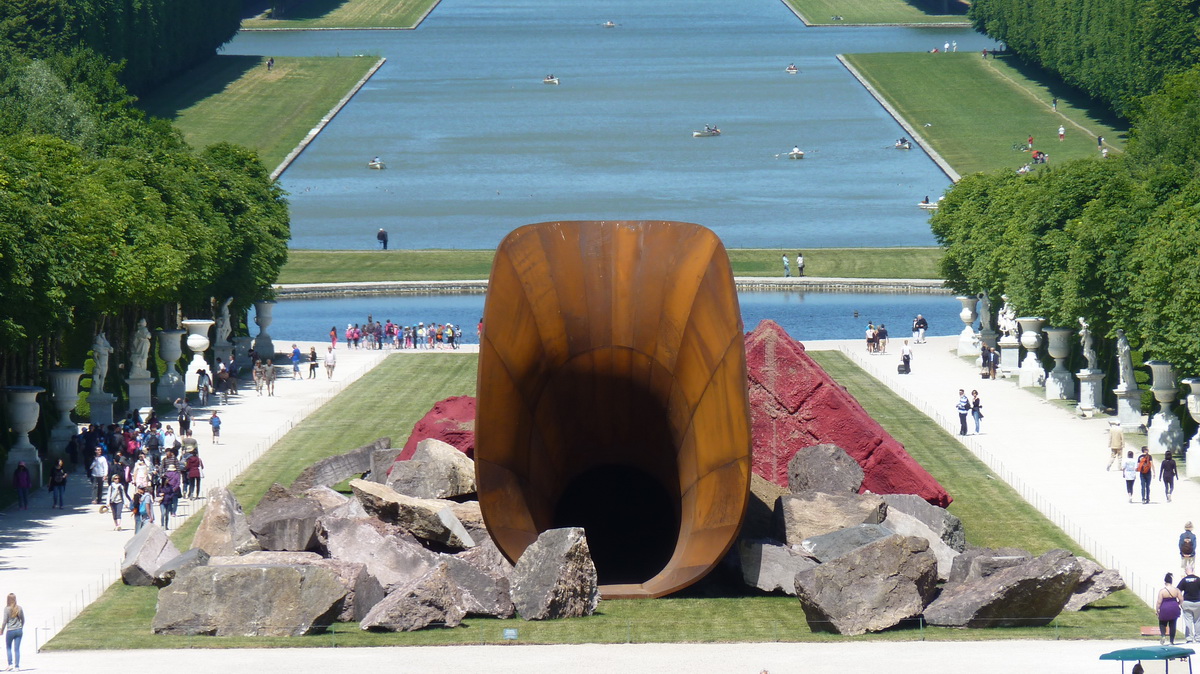
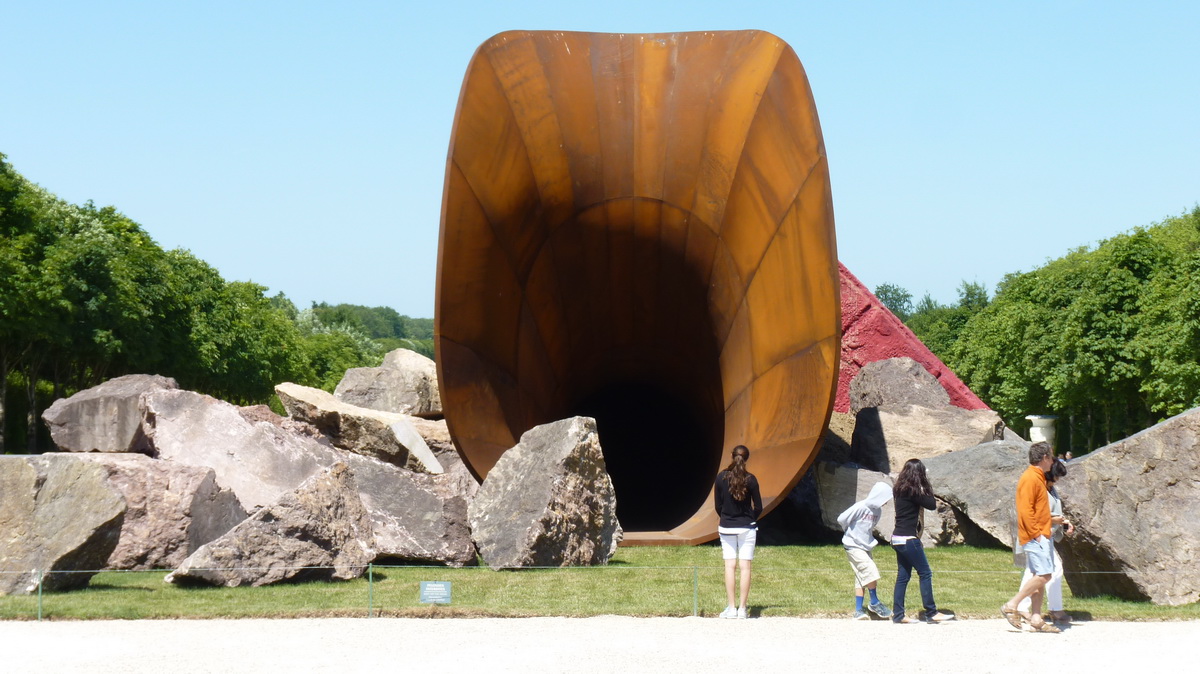
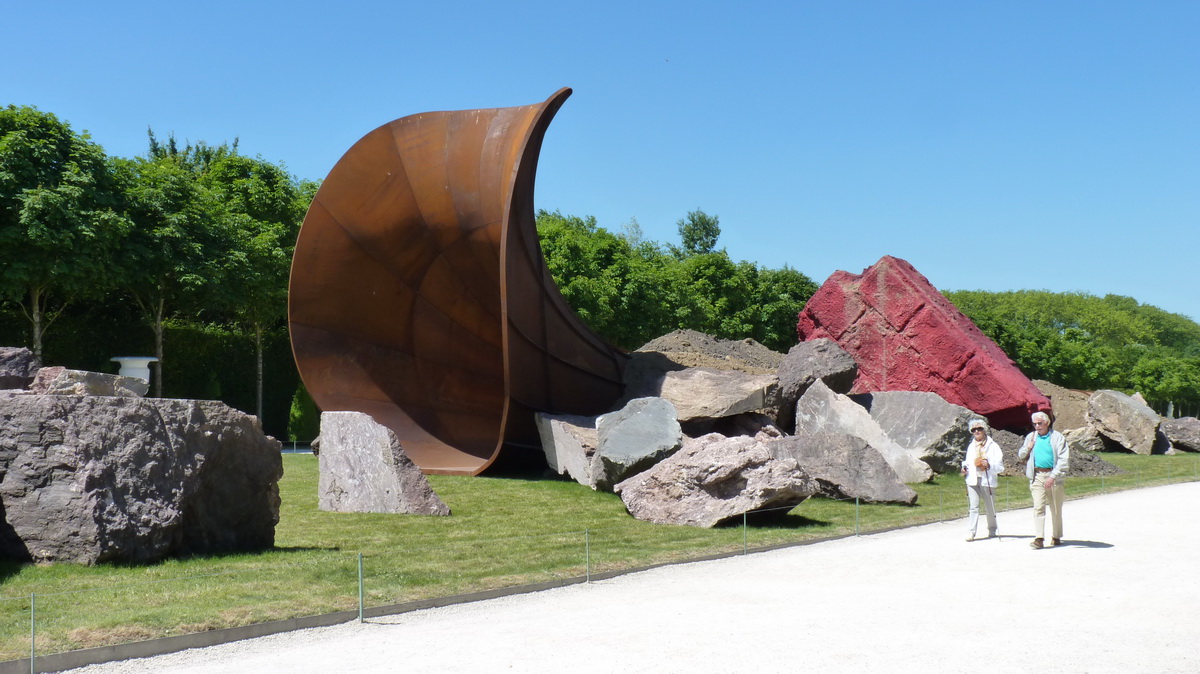
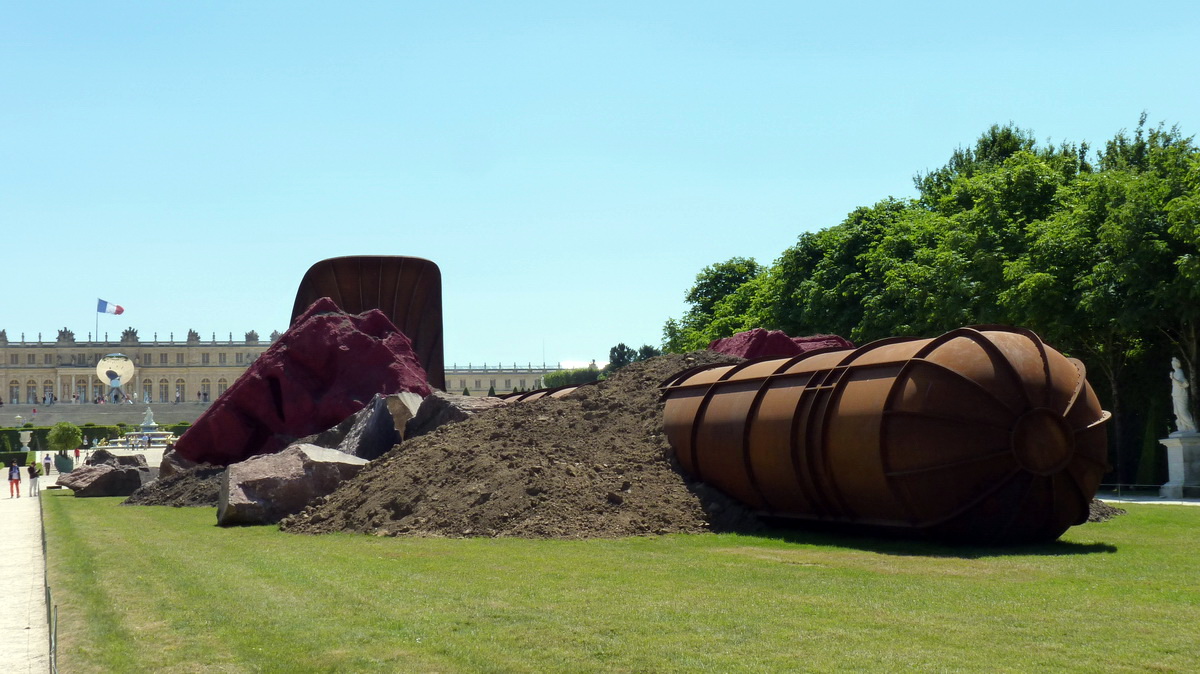
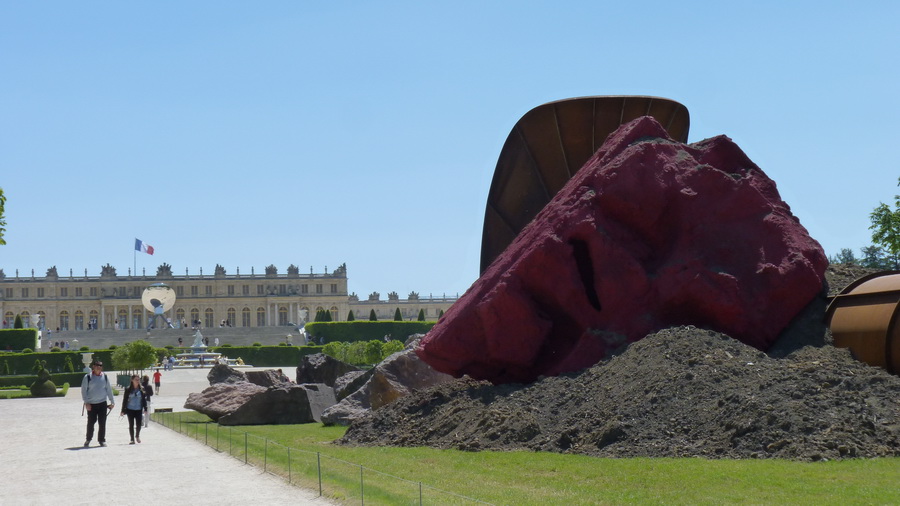
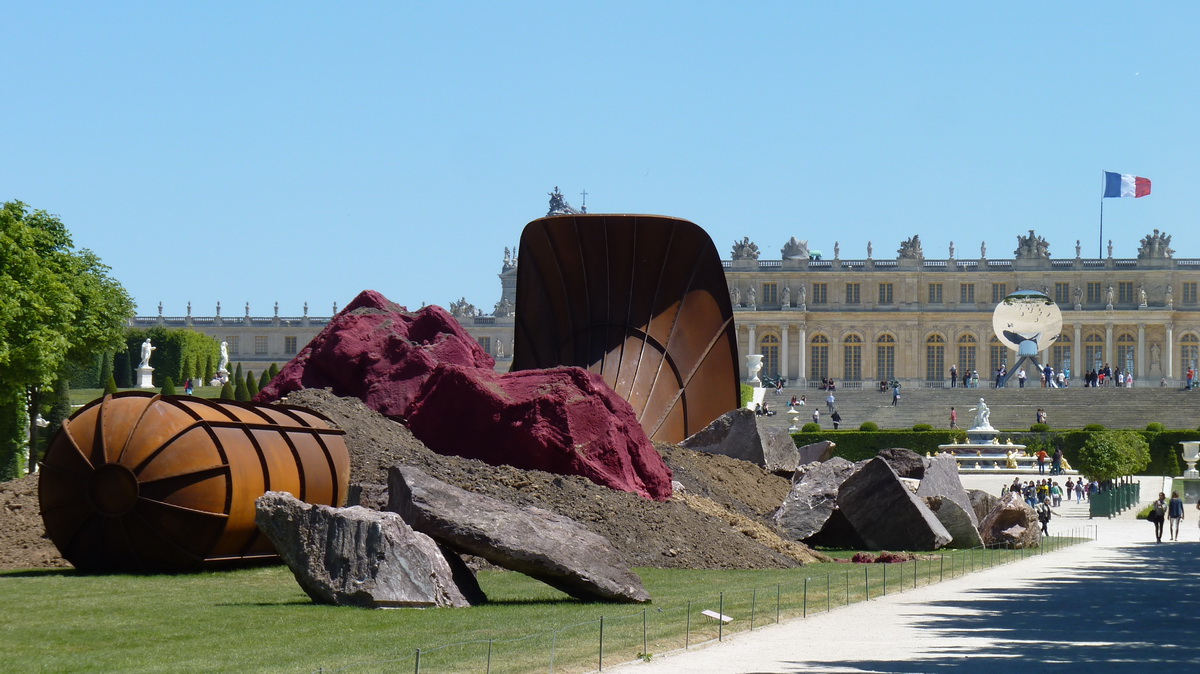
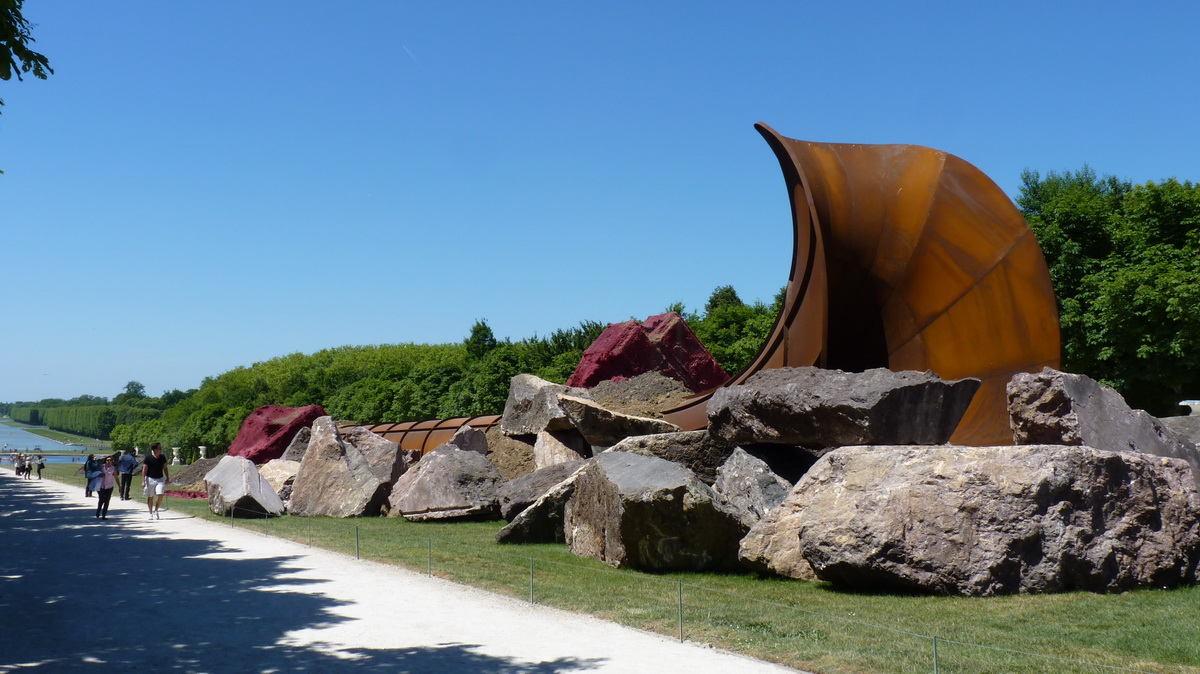
Sensational "Dirty Corner" (2011-15): The sensational "Dirty Corner" is installed on the Green Carpet, a challenging and provocative work. What does the dirty corner refer to? It is difficult to understand, metaphorically referring to France's past authority, or scheming, or dictatorship? The hidden remorse of the great French social revolution? How is a history of violence or lies formed, who manipulates behind the scenes, who gains the most benefit? A riddle-like theme, what message does it convey? It leaves the audience baffled. Sometimes the title of a work is superfluous; the maze/obstruction instead leads the audience astray. I believe that facing the work with intuitive senses will lead to an understanding of its mystery.
"Dirty Corner" is a magnificent object installation that challenges the audience's vision and imagination. It is a massive rust-red iron sculpture plus over five hundred tons of rock and earth piled to construct it, 60 meters long and 9 meters high. From the front, it resembles a full of vitality, open, reclining large flower (lily or calla lily), extremely beautiful, with large blocks of granite piled in front of the flower. Behind the flower, earth and clods are piled on top, and a huge round tube extends from beneath the earth pile. This imaginative object is like a huge special sea mine or other possible symbolic object. It allows for many associations: an open horn, bull horn, Tibetan long horn, lily flower, or symbolic female genitalia from the front; behind, it suggests male genitalia symbolism, etc. Anish Kapoor's art has always been magical and sensual, exploring the origin of the cosmos or narrating the origin of life. Sex is sacred and not dirty at all; sex is the origin of life, full of energy and symbolic consciousness. It's all the fault of this sensational title "Dirty Corner"? Thinking of "sex" is good, but secularizing and vilifying it as "sex" is terrible, especially in the gardens of the Palace of Versailles. Some jokingly call it "Queen's Vagina", causing public uproar and discussion. The work degenerates into vulgarity, staining the royal gardens, insulting French history. This Thursday (June 18) early morning, audience members opposed to the work sprayed yellow paint on it in anger and petitioned for the organizers to remove the exhibition. Regarding this incident, artist Kapoor stated: "I never used this causing an uproar name." This behavior is hard to forgive for any art.
Spirituality and eroticism are separated by a single thought. What the creator or viewer observes and thinks affects the work itself. In fact, "we do not see things as they are, we see them as we are." Is this news or art? One can imagine that the work seems to have been replaced by the incident, with those watching the spectacle outnumbering those viewing the work. Regardless, as a work of art for free discussion, freedom is taken, excluding all events and issues. Face the work as it is, visit it properly, so as not to waste your eyes. Feeling will directly tell you the truth about the work.
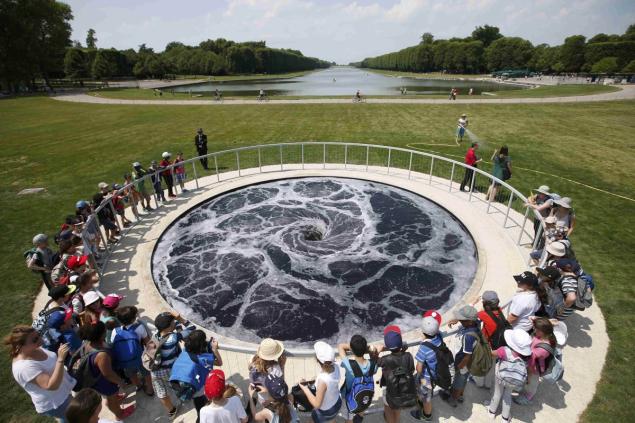
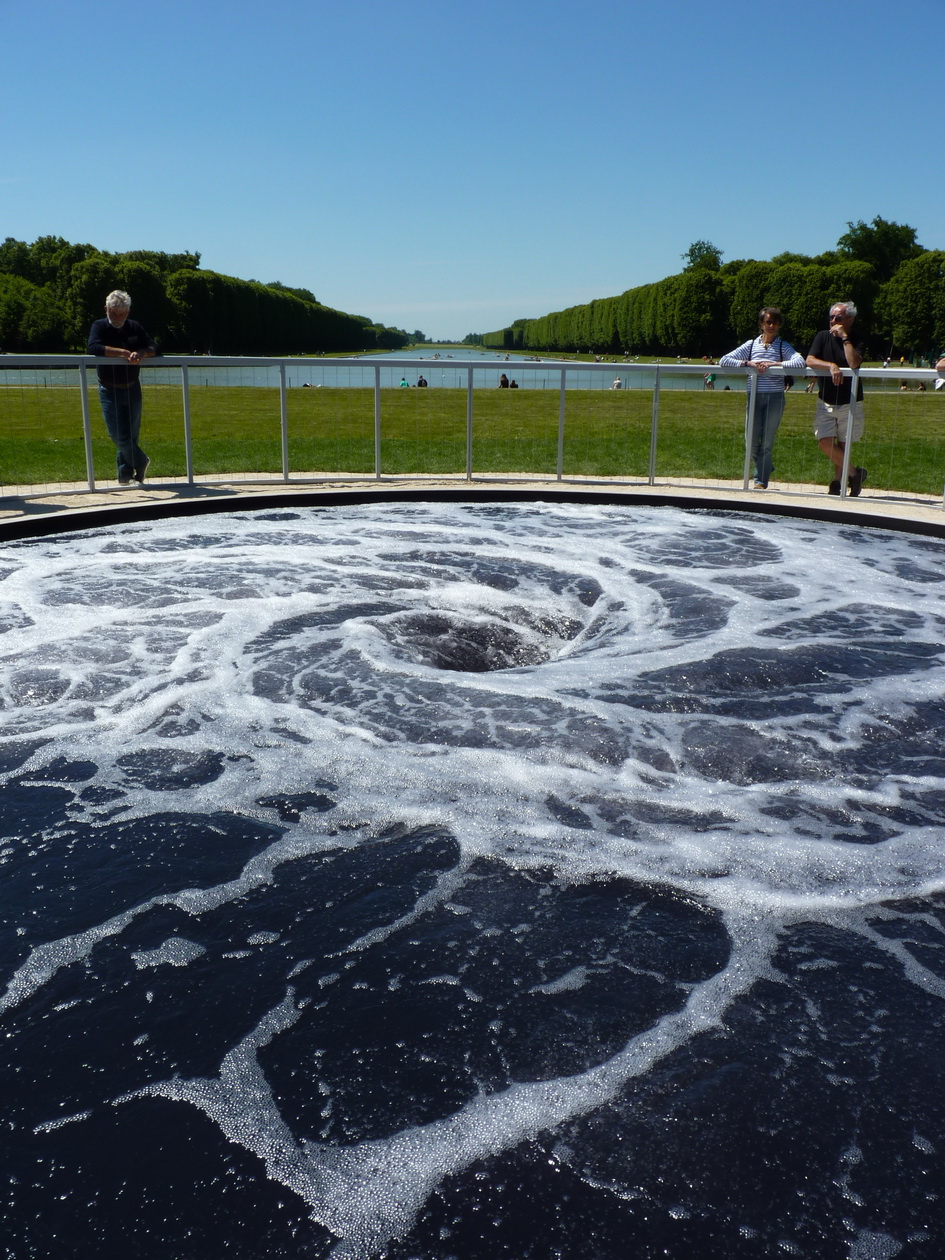
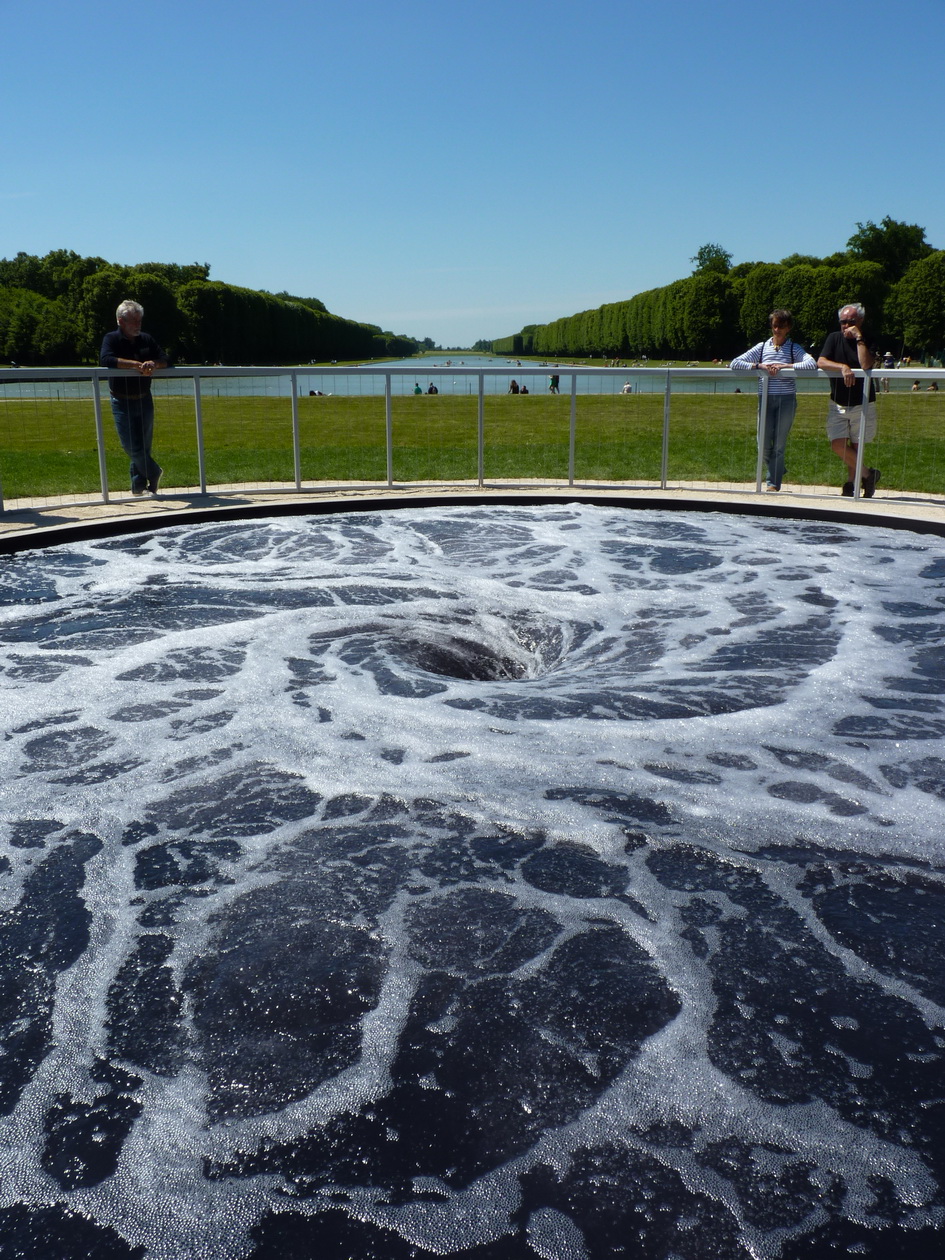
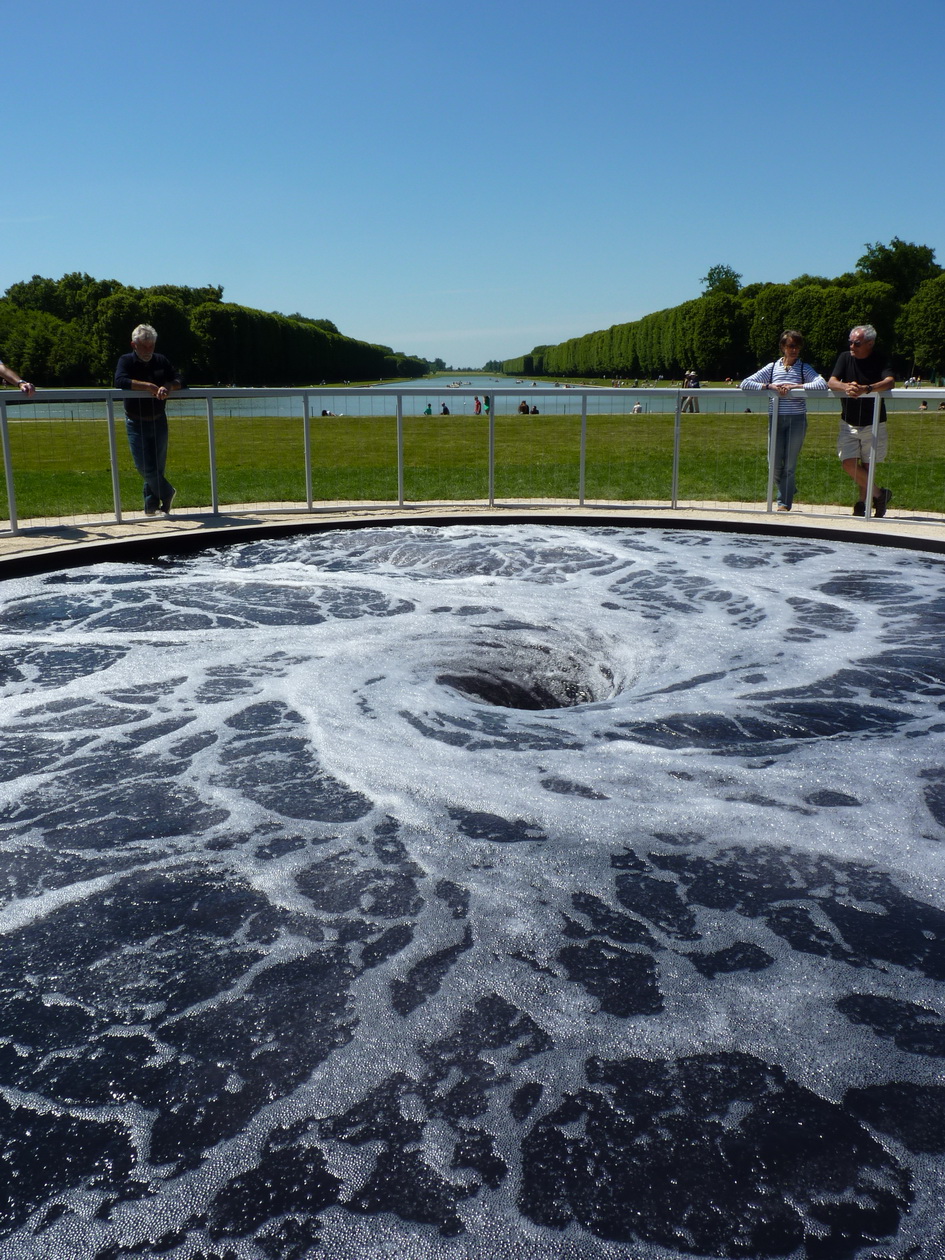
Challenging People's Vision and Imagination - Descension (2015): The dramatic Descension (2015) is an extraordinary land art installation of water and a powerful motor, located between the Apollo Fountain and the canal. A huge circular water mirror, with water light and mirage reflecting the blue sky, white clouds, and trees, is exceptionally tranquil and poetic. When rotating, a startling large vortex forms in the pool, continuously swirling and plunging towards the earth's core. The powerful vortex and the motor's sound create a storm-like momentum, full of natural energy and consciousness. The area where the audience gathers around shakes like an earthquake, forming a romantic field that strikes the body and mind.
The eye-catching large vortex is like a typhoon eye, causing dizziness, seemingly about to suck people into the ground and devour everything, even the Palace of Versailles. This full of sensibility work, with mixed feelings, has strong political connotations. The vortex also associates with revolution, or human desire, greed, corruption of power, war, etc., all being personal existential vortices, bringing revelation of humanity to the brink of destruction. Descension challenges people's vision and imagination, interpreting and displaying his extraordinary cosmic and historical perspectives. Anish Kapoor, in his exploration of material and space, completely renews contemporary object-sculpture art, expanding the possibilities of current sculpture.
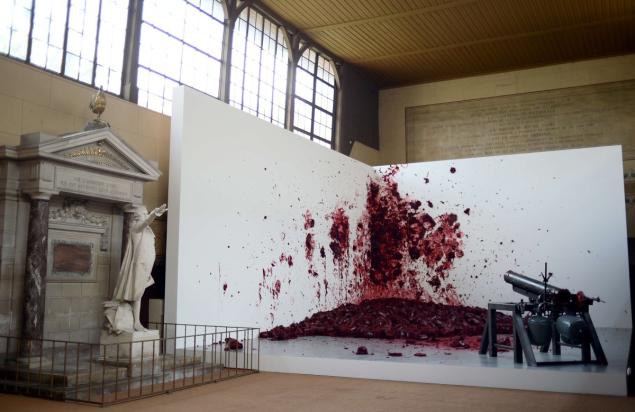
Shooting into the Corner: Anish Kapoor's most subversive work, Shooting into the Corner, is installed in the Jeu de Paume (tennis court room) of the Palace of Versailles, the only work installed indoors. The Jeu de Paume—this is the site where democracy was established and the French Declaration of the Rights of Man was created after the French Revolution. The "Shooting into the Corner" installation is in a corner of the Jeu de Paume, facing the statue of the painter and critic Luc-Olivier Merson making a gesture of salute. Clearly, it is full of artistic and political symbolism. This work consists of a cannon; Kapoor fires wax bullets at the white wall at eighty kilometers per hour. The wall is covered with wailing fragments of shells, and on the ground lies a pile of ashes like those from battle. It evokes the scene of the French Revolution and the battlefield. King Louis XVI and Queen Marie Antoinette were sent to the guillotine by revolutionaries, ending the French imperial regime's journey to the underworld, but soon after, the revolutionaries also died on the guillotine they invented.
It seems no revolution happens without bullets or bloodshed, only to construct a beautiful utopia. People will fight without sparing themselves, not sparing their own lives. Revolution always flows like a river of blood; under a scene of bloodshed, the old is replaced with the new. Destruction is for the sake of fighting for freedom, striving to fight for ideals until triumph, only for a hard-won democratic society. There is no such thing as a free lunch; freedom does not fall from the sky, one's own value is created by oneself. But from anti-corruption to corruption, from revolution to counter-revolution, from destruction to construction, from construction to destruction, history is not linear, yet it always repeats the same mistakes. Shooting into the Corner: "Painting is proof, painting is the clear evidence left by killing."