Anri Sala’s Solo Exhibition of Video Installations at the Centre Pompidou
A novel video installation where viewers follow the film’s rotation, their bodies shifting with the projected images.
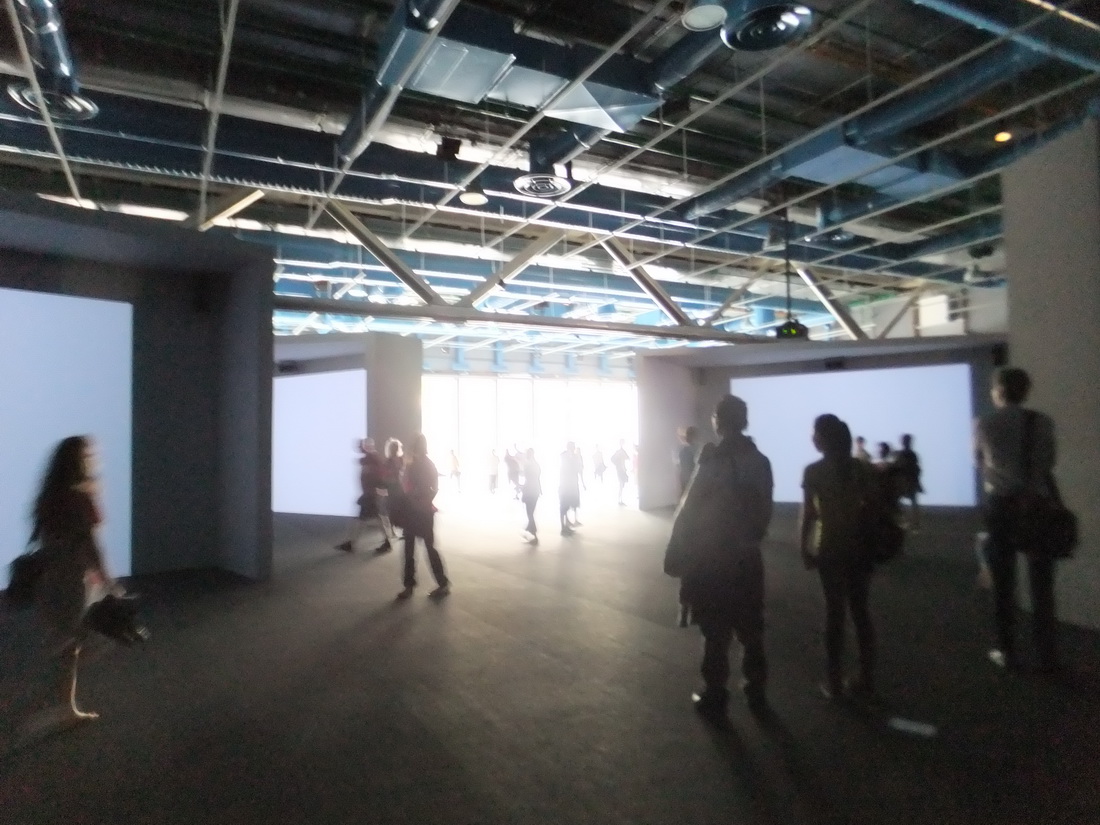
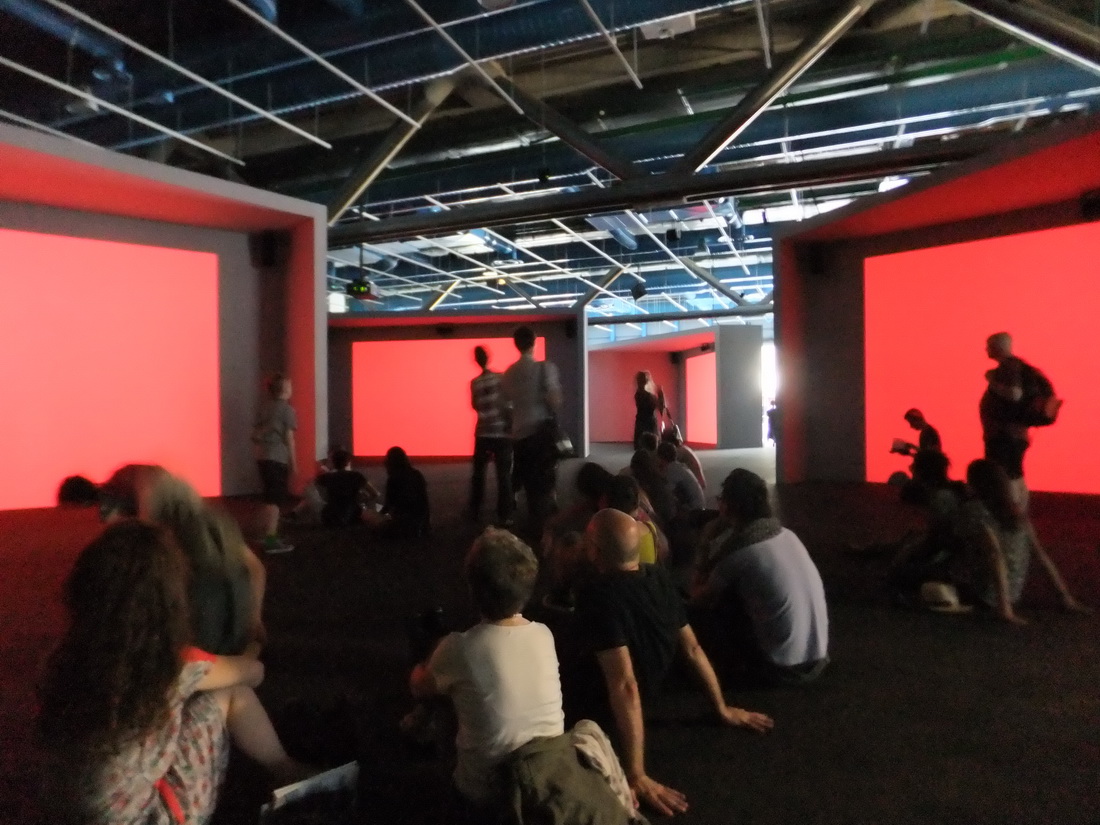
Text/Chen Chi-Hsiang. Venue: South Gallery, Centre Pompidou. Dates: May 3 to August 6. Images and text by Chen Chi-Hsiang. Anri Sala (born 1975 in Albania) is a leading figure among Europe’s most creative new generation of video artists and will be the artist for the French Pavilion at next year’s Venice Biennale. His works blend image, music, and architecture, containing profound and substantial sonic domains where music acts as an alternative language within virtual-real spaces and events. The artist states: “The ‘place’ I understand is where people can experience memory; it is not just the construction of space, but also time. Both must exist simultaneously. It has inherent qualities involving architecture, sound, and events.”
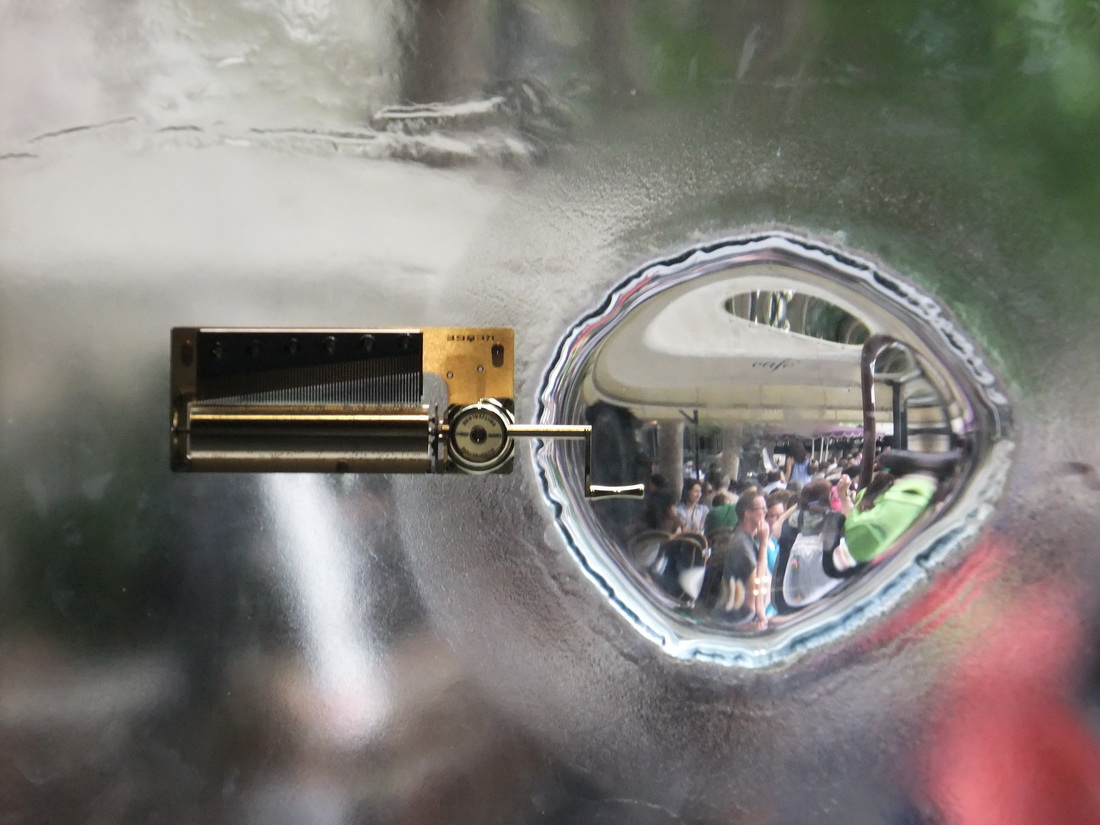
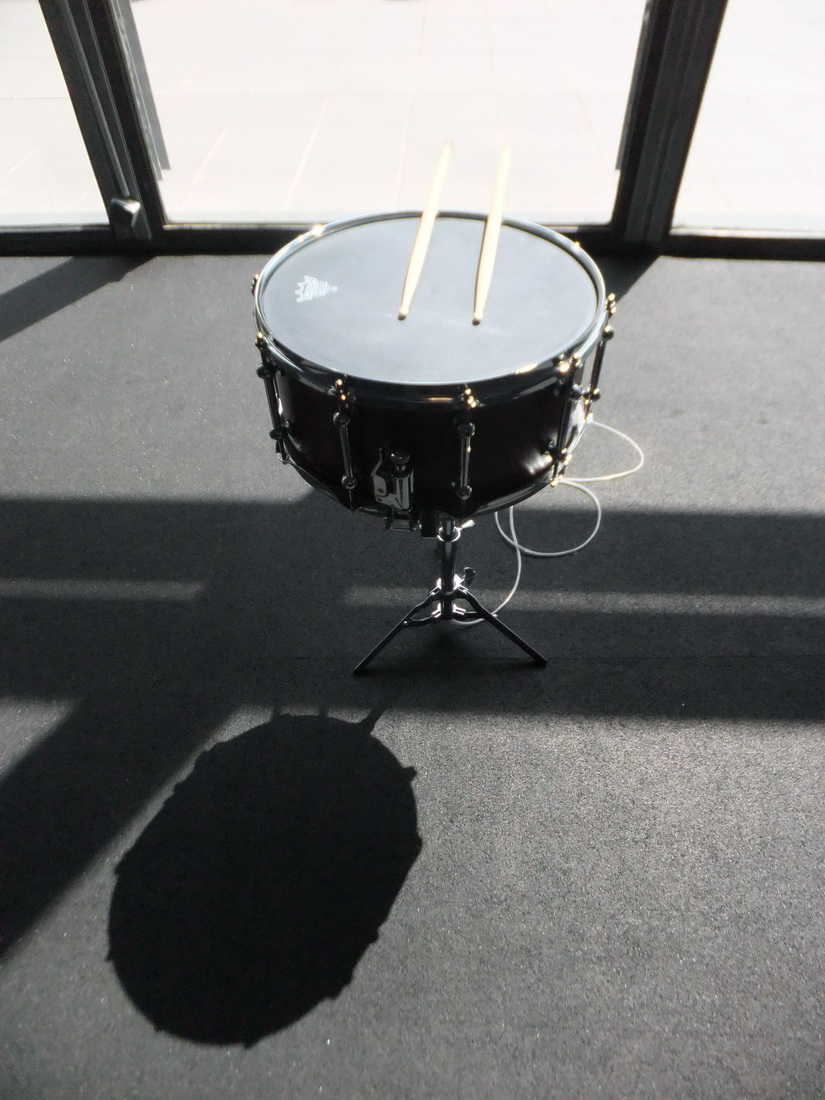
In addition to four films exhibited in the South Gallery of the Centre Pompidou, there are two black-and-white photographs, Untitled-tagplan-1 & 2 (2005); an electric sculpture-object installation Title Suspended (2008), consisting of blue gloves rotating subtly; and a series of ten electric timed snare drums, Doldrums (2008), placed by the floor-to-ceiling windows with drumsticks displayed above them. These drums automatically play along with the musical melody from the film, using the soundtrack from Answer Me. Embedded in the glass window is a small music box, No Window No Cry (Renzo Piano and Richard Rogers) (2012), derived from the film Conflict in Tlatelolco (2011). It plays automatically in sync with the film, but viewers can also manually crank it, making the exhibition space resemble a music box.
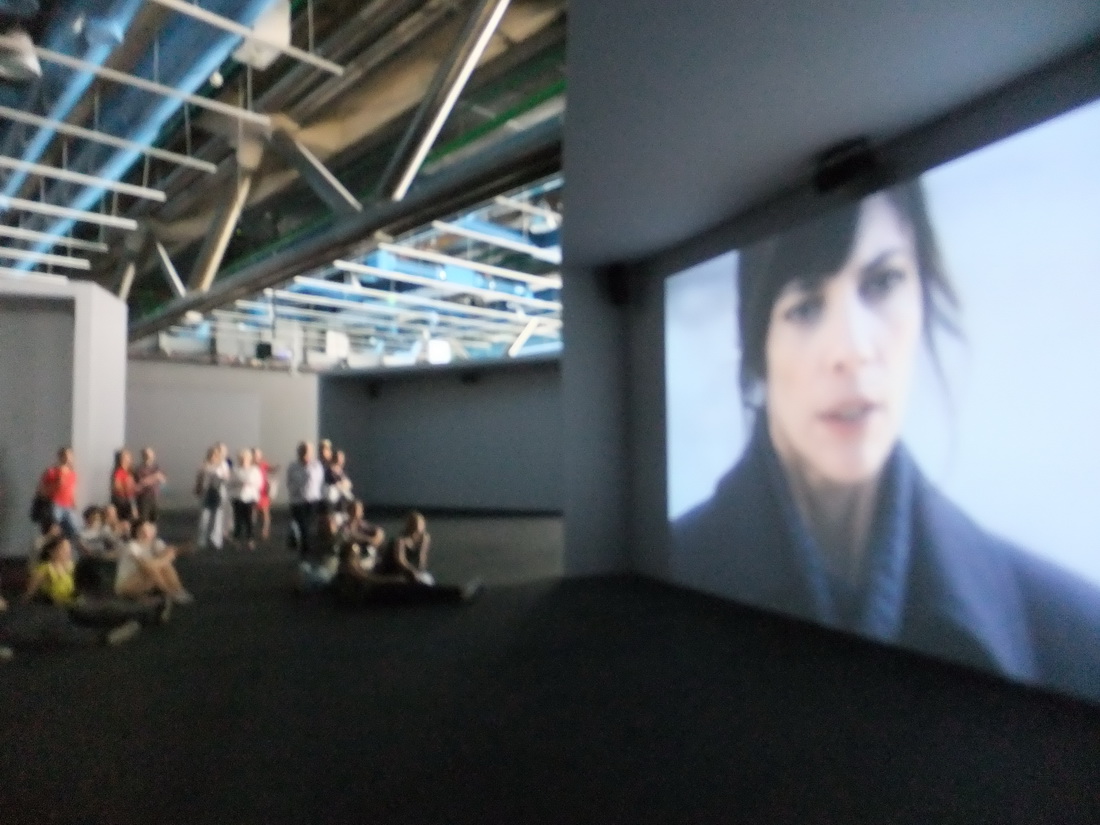
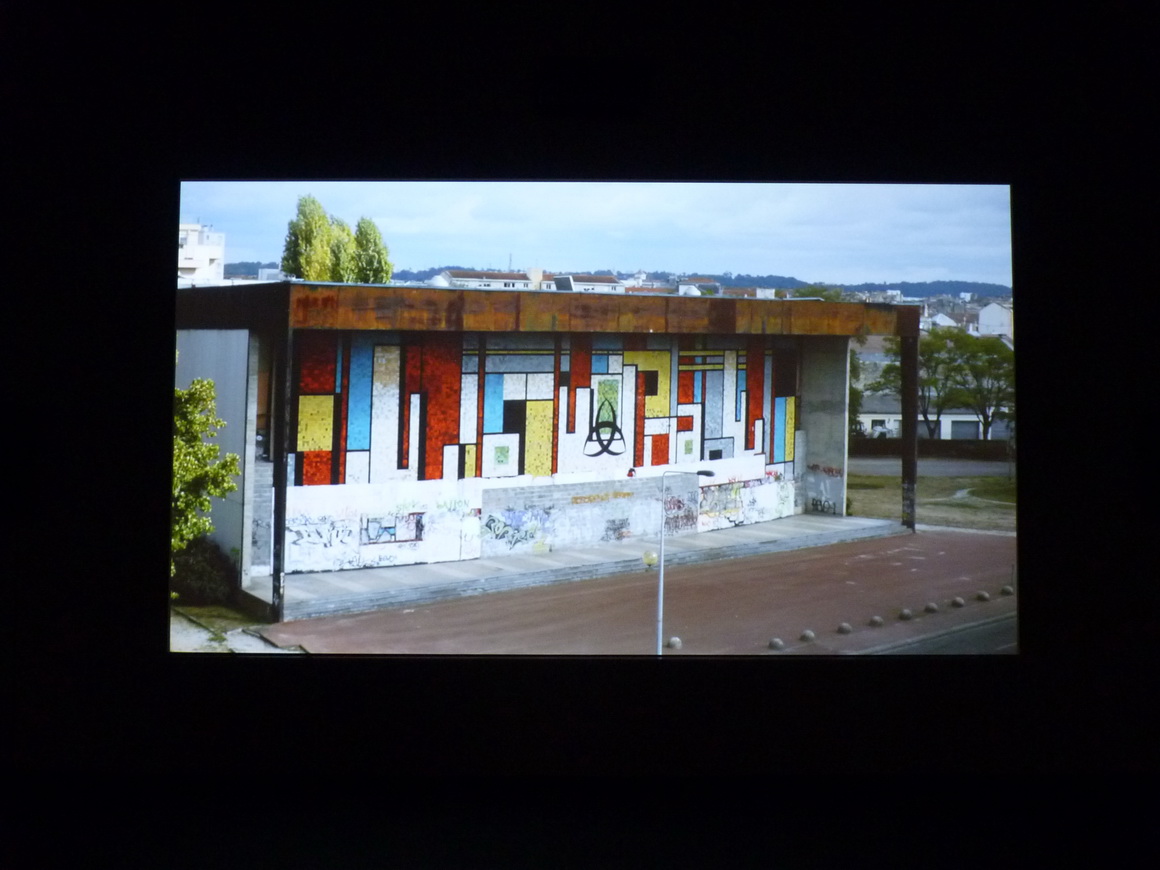
He constructs his video installations like a symphony of audio and visuals, skillfully combining four latest works to take viewers to four different locations: Sarajevo, capital of former Yugoslavia, in 1395 Days Without Red (2011) (43 min 49 sec), depicting the siege of Sarajevo during the Bosnian War of Independence (1992–1995), where red became a target for snipers; geodetic surveying of the Berlin Cathedral in Answer Me (2008) (4 min 51 sec); the abandoned festival hall in Bordeaux, France, in Conflict (2010) (8 min 31 sec); and finally, the Aztec site in the Tlatelolco district of Mexico, Conflict in Tlatelolco (2011) (11 min 49 sec). He edits these four films into a continuous one-hour piece, creating different feelings, atmospheres, situations, and fields under varying sonic domains.
He asymmetrically places five large screens in the exhibition space. Original film segments are cut into twelve parts that rise and fall with the musical melody, playing on one screen before jumping to another based on duration. Viewers follow the film’s rotation, their bodies shifting with the projected images. Sometimes two different films play simultaneously on two large screens; sometimes the same film plays continuously across all five screens; or suddenly only the sonic atmosphere guides the viewers. Intermittent narratives oscillate between reality and virtuality, each segment having its unique sonic domain while intermittent sounds accompany the visual fragments. Additionally, automatic music in the exhibition space mixes to form a visual and musical symphony, with viewers’ emotions flowing through the intermittent visual fields and musical melodies. Under this overall sonic spatial field, the exhibition resembles a place where intermittent versions of Clash’s Should I Stay or Should I Go, Tchaikovsky’s symphonies, percussion beats, or traditional folk accordion and hand-cranked tunes are played in sequence.
In Anri Sala’s video exhibition at the Centre Pompidou, 1395 Days Without Red (2011) serves as the main axis. This longest and most symbolic film depicts the siege of Sarajevo. Throughout the film, a woman and citizens walk nervously through Sarajevo’s streets and urban corners. Whenever crossing an intersection or important street, they must hide in corners, watch out (for distant snipers), and then rush breathlessly across. Upon closer observation, no one dares to wear red clothing, as red clearly marks a sniper’s target. The entire film unfolds to the lyrical symphonic melody performed by the Metropolitan Music Academy Orchestra, where the woman’s body concretizes into a musical instrument, and her actions become the symphonic rhythm.
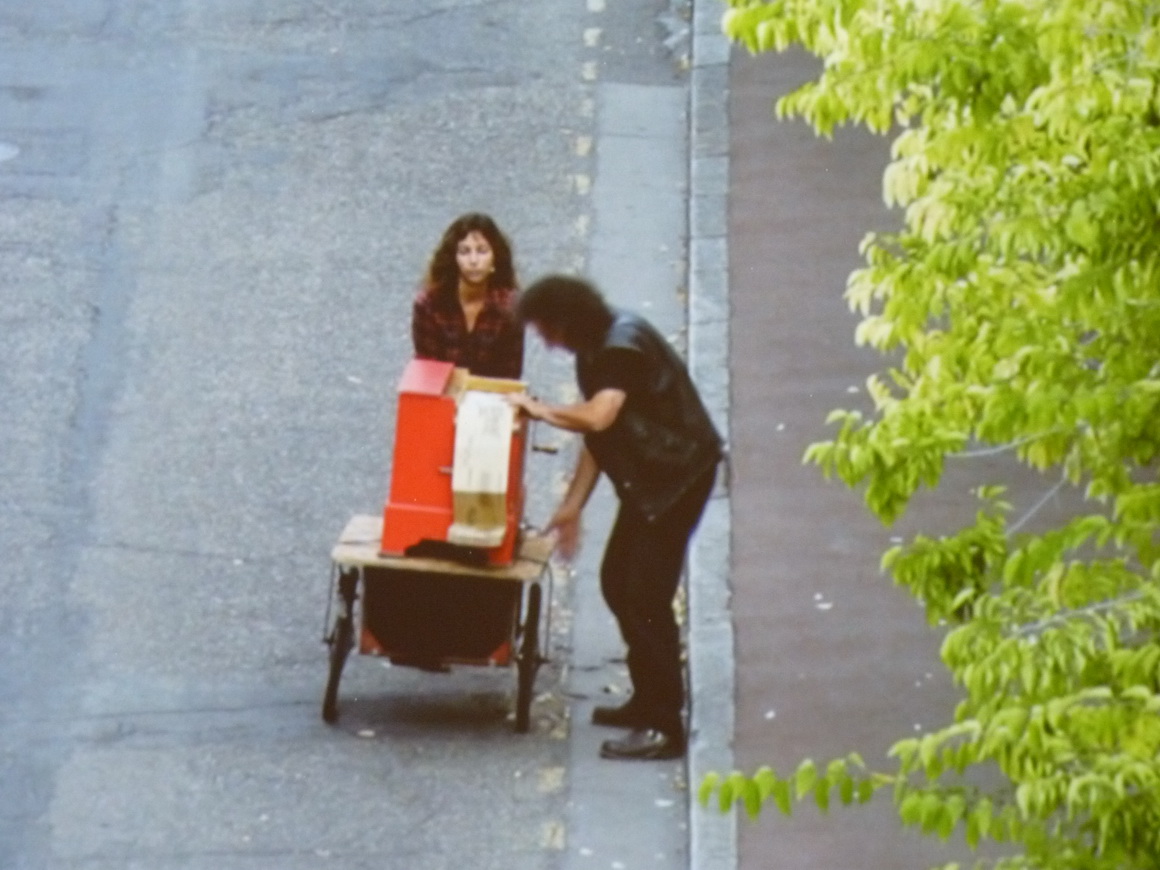
Interspersed with Answer Me and Conflict, the mixed pieces make it difficult to distinguish certain seconds. In one clear segment, in an ancient arena, a traditional hand-cranked organ is shown, with each person holding a perforated music sheet, connecting day after day to form a traditional folk tune. Finally, in Conflict in Tlatelolco, a middle-aged man carries a paper box containing a small hand-cranked organ like those on shop windows, walking and cranking it; a young couple pushes a hand-cranked organ cart singing, hiding the deep historical collective memory of Mexico. Tlatelolco was the site where the Aztecs surrendered to Spain in 1521, marking the starting point of Mexico’s modernization. Here in 1968, Mexican police and army massacred three hundred student demonstrators. Through the irregular and accidental punk rock song Should I Stay or Should I Go, the artist evokes the accidental arrival of individual lives and the diverse intensity of personal behavior submitting to common consciousness. Of course, the highly picturesque imagery hides historical events that seem imaginable only in imagination. Anri Sala’s poetic and picturesque works carry strong symbolism and clever narrative, hiding political volume. In lyricism, they possess intimate and civilian resistance awareness.