Paris, the Capital of Martial Arts
(Top) Panoramic view of the opening ceremony of the 3rd Parisian Martial Arts Festival in the 14th arrondissement. (Bottom) A dramatic lion dance kicks off the festival.
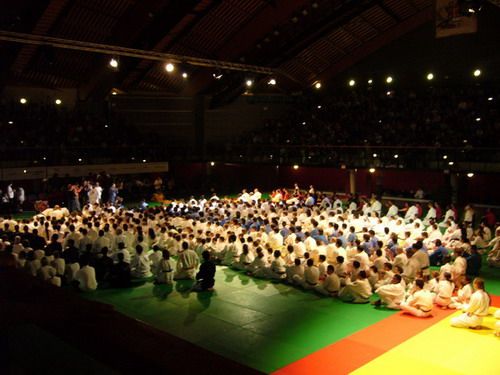
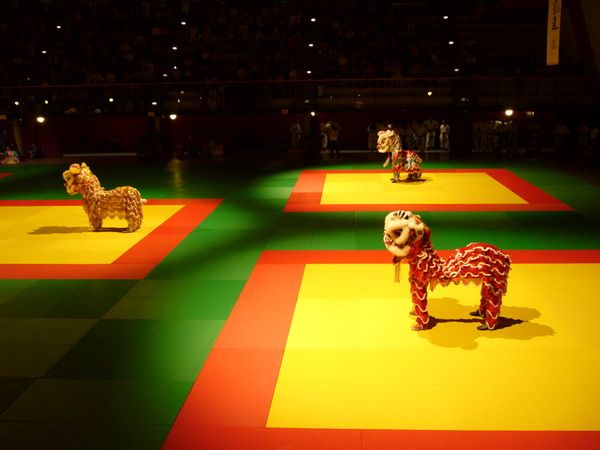
(Top) Panoramic view of the opening ceremony of the 3rd Parisian Martial Arts Festival in the 14th arrondissement. (Bottom) A dramatic lion dance kicks off the festival.
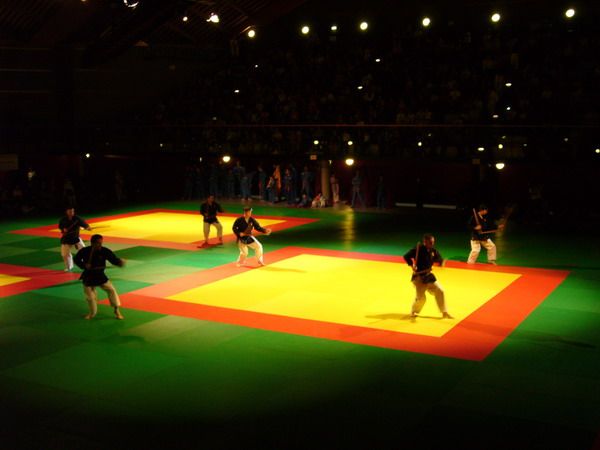
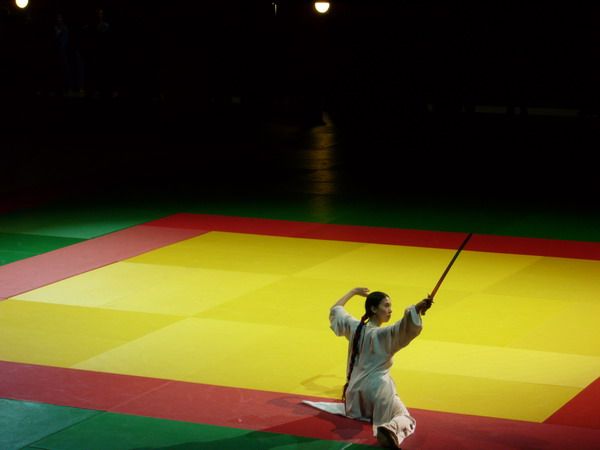
(Top) Okinawan karate performance from Japan. (Bottom) A scene from a spectacular performance by a Chinese female sword master. Everyone knows that Paris is the "City of Art," an artistic utopia for artists, and also the "Flower City," a romantic haven for lovers. These two reputations have long been symbols of Paris. However, few people know that Paris is also the "Capital of Martial Arts" for those who favor martial arts. In this place that appreciates beautiful things, people are curious about worldly affairs and fascinated by the extraordinary. Beyond pursuing quality of life, Parisians prioritize physical and mental health. This has become an emerging leisure industry for mind and body among developing countries. Various scale-based leisure enterprises and clubs flourish, ranging from indoor gymnasiums, running tracks, gymnastics, golf, and swimming pools to outdoor sports clubs featuring track and field, jogging, hiking, mountaineering, skydiving, and diving, as well as various ball games, especially football, basketball, and tennis.
Of course, what attracts particular attention is that martial arts can strengthen the body and provide self-defense, making it one of the most popular physical and mental activities among young people in today's uncertain society. In Paris, these activities are divided into two main organizations: leisure club activities organized by district governments or private martial arts schools. There are diverse martial arts with unique features, particularly judo (France has won gold and silver medals at the World Games), taekwondo (France has won silver and bronze medals at the World Games), French boxing, Muay Thai, Okinawan karate, jujutsu, aikido, aikibudo, kendo, traditional martial arts, and recently popular Chinese Kung Fu, Tai Chi, Brazilian capoeira, Vietnamese martial arts, Indian martial arts, etc. These have become another channel for guiding young people in French society.
French martial arts have a long history. Since the introduction of Eastern culture in the mid-19th century, it was evident that Impressionism was influenced by Japanese woodblock prints. Under the curiosity of French elites regarding Eastern culture and art (especially Japanese), the door to Japanese martial arts was opened, particularly judo and aikido. These only gradually became widespread and popularized after World War II. Many French martial artists traveled overseas to visit Japan and follow renowned masters such as Mochizuki Minoru, Sugino Yoshio, and Takeda Tokimune. For example, in the 1960s, French New Realist avant-garde artist Y Klein went to Japan to study judo, followed by Alain Floquet (the founder of French Aikibudo) who studied traditional martial arts, jujutsu, and aikido in Japan. These were good examples. After returning home, these teachers established schools to transmit their skills and frequently invited Japanese martial arts experts to France for guidance, seminars, and exchanges, making it even more popular today.
Every year, Paris hosts performance festivals featuring martial arts experts from around the world. The grandest and most impressive events are naturally gathered at the Bercy Indoor Sports Arena, showcasing spectacular performances of various unique skills. France's fourth television channel broadcasts them live, which indicates how popular martial arts are. In the Chinatown area of Paris, groups of women can be seen practicing movements in parks or building plazas every morning. Occasionally, one can see crowds practicing Tai Chi or Chinese martial arts in Luxembourg Park or Bercy Park. Martial arts seem to have become part of the daily life of Parisians, just like other sports.