Artichokes for Viewing and Eating
Artichoke (Artichaut) - photographed in the garden of Impressionist painter Caillebotte
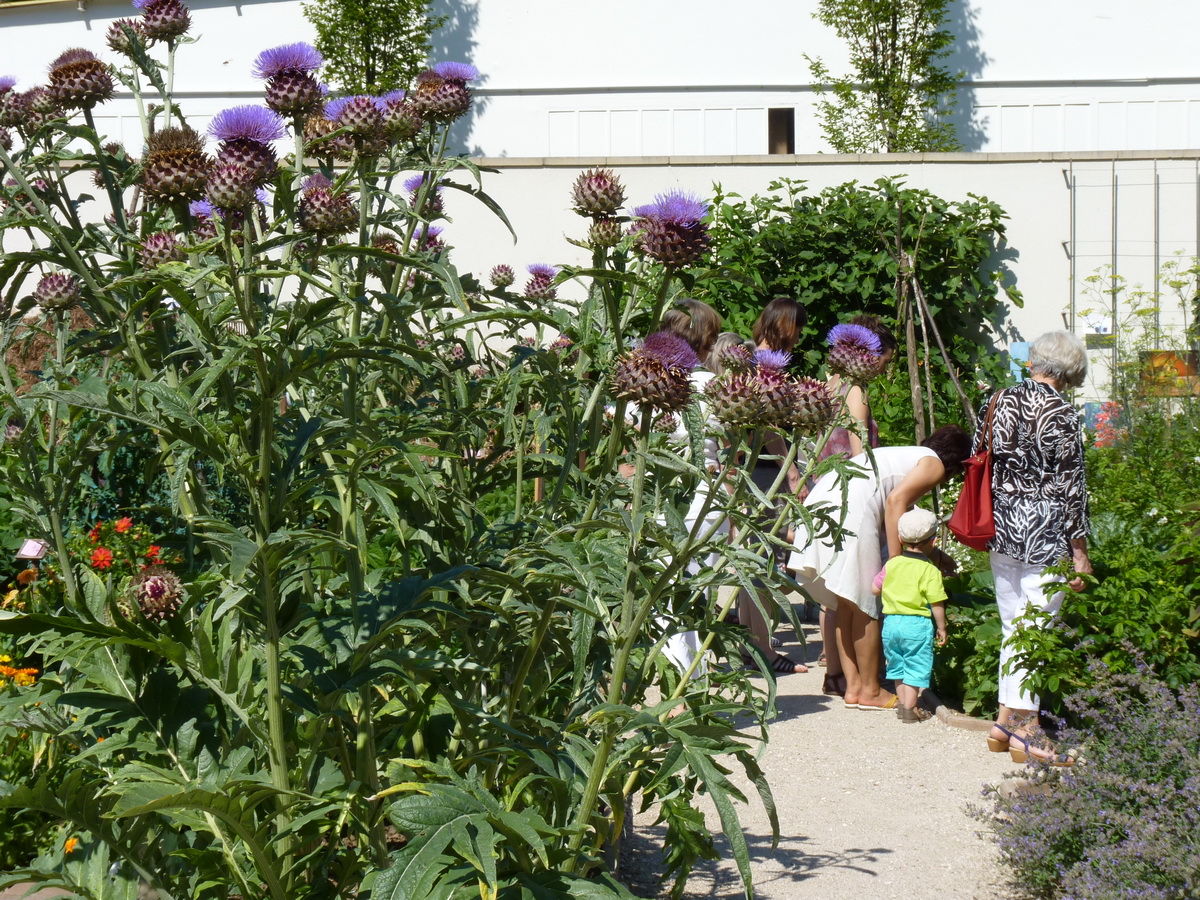
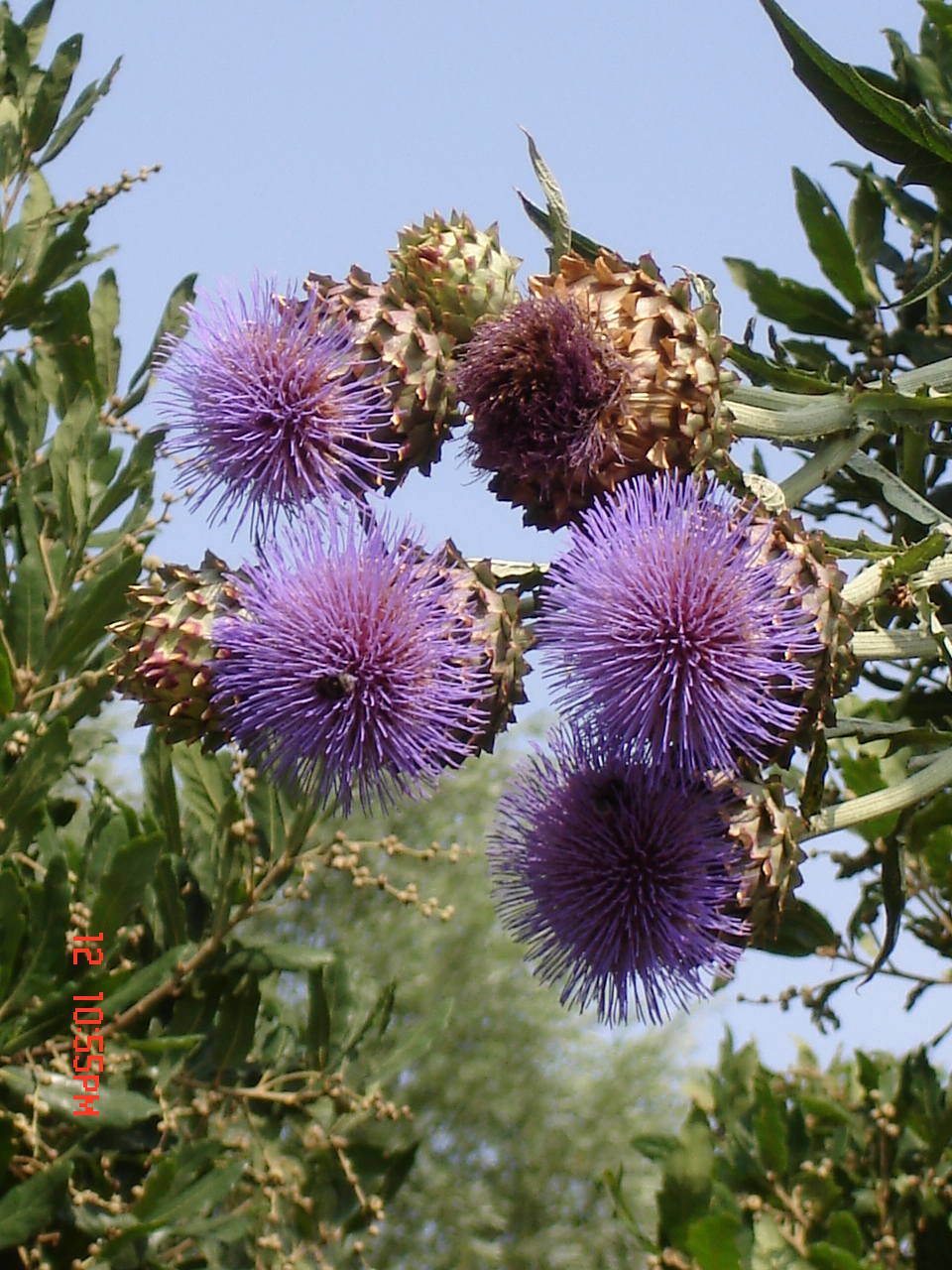
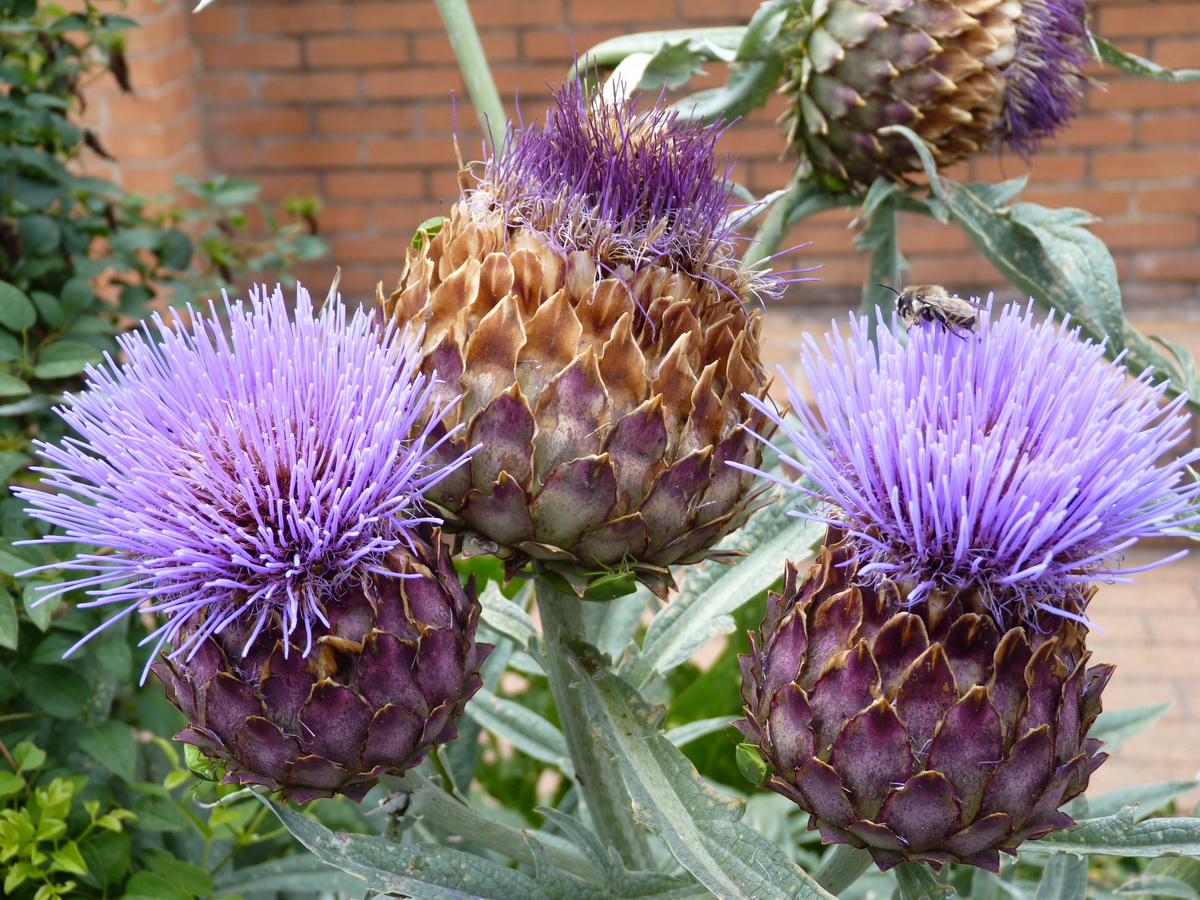
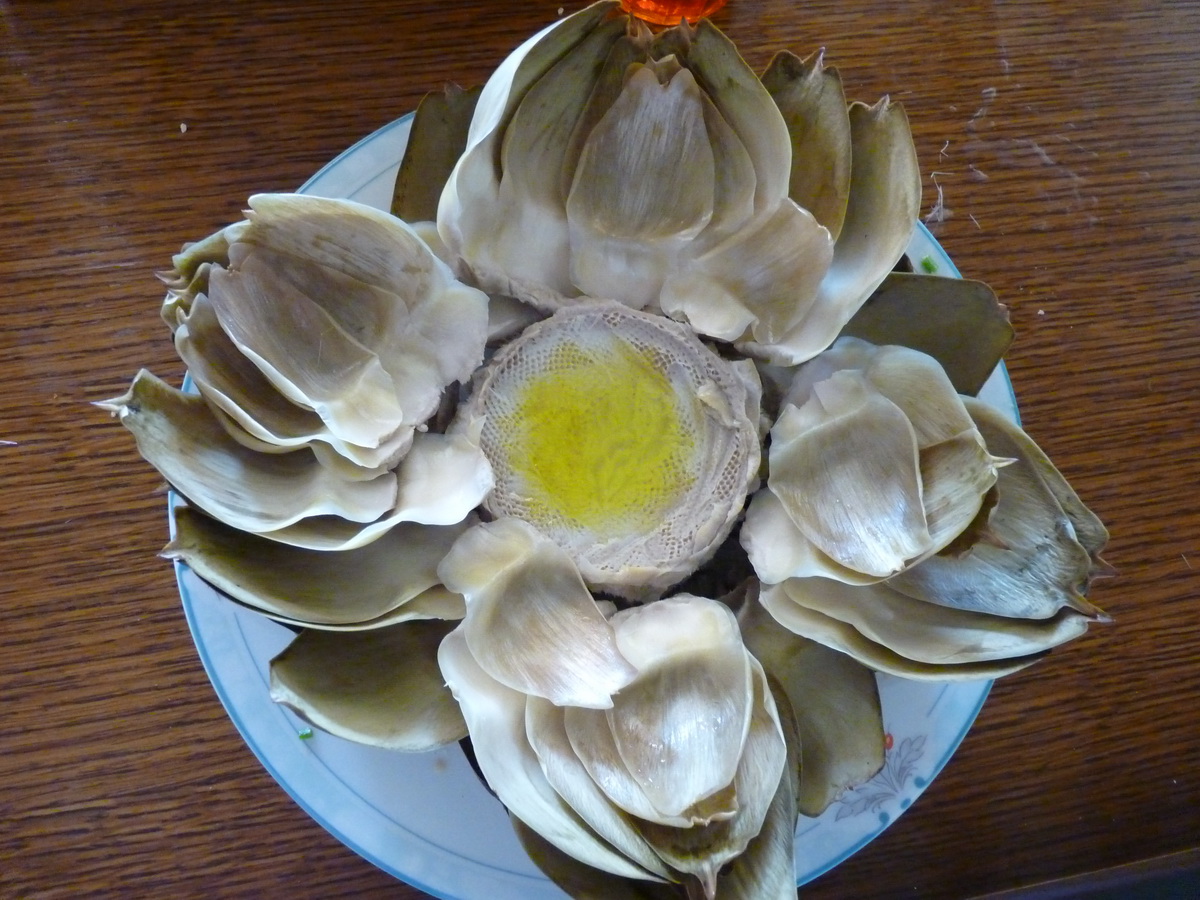
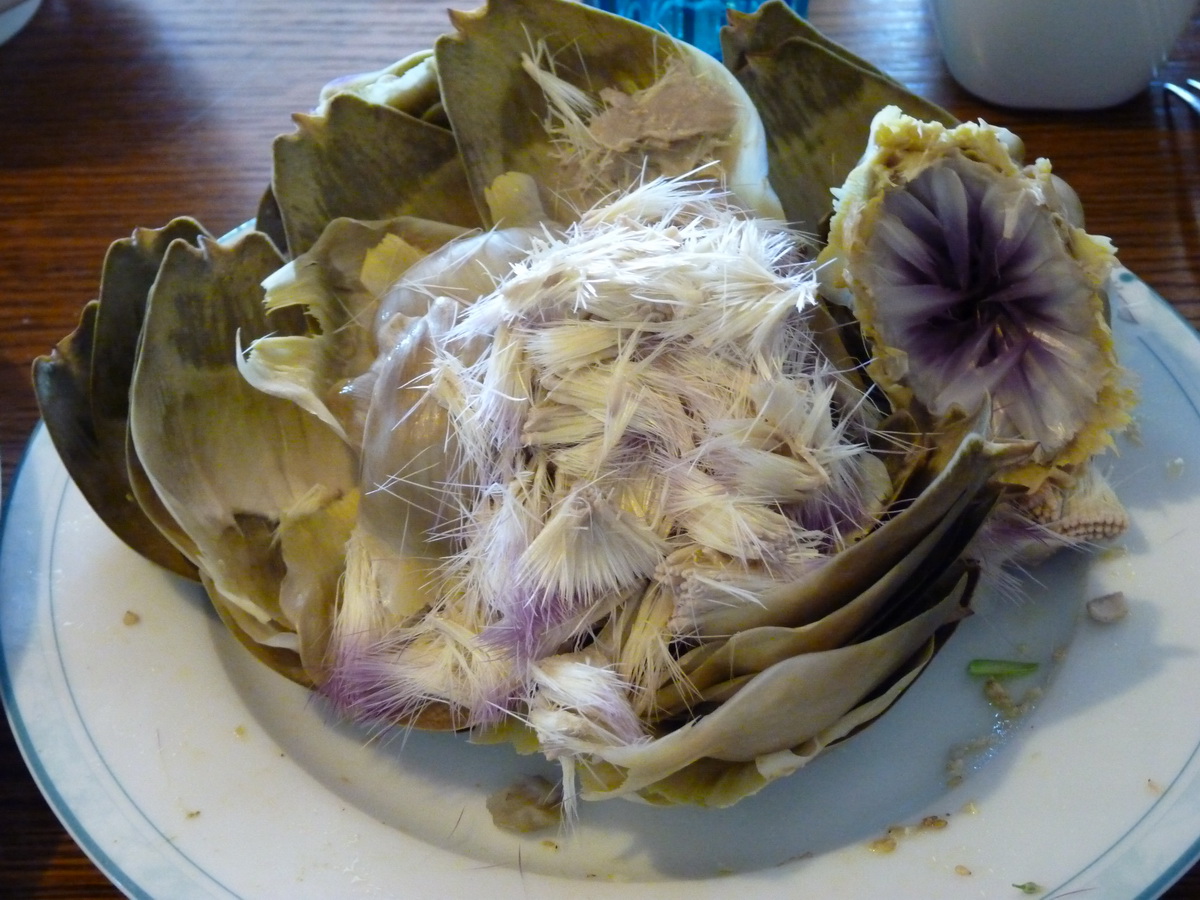
Text and photos by Chen Chi-Hsiang. When I first arrived in France, passing through mobile vegetable markets, I often saw hard, green fruits shaped like lotus flowers. I was always curious about what kind of vegetable this was. Often, while walking in botanical gardens or parks during summer, I noticed clusters of dark green plants with many straight branches (nearly a meter high), serrated leaves, and structural, lotus-shaped green flower buds. Purple flowers bloomed from the bracts, resembling the sensual and charming phlox, clearly indicating a plant with both ornamental and edible value. This vegetable is called "Artichaut" (artichoke) in French; it belongs to the Asteraceae family, genus Cynara scolymus. It is a perennial large herbaceous plant, also known as globe artichoke or French artichoke. Originally growing in the Mediterranean region, especially Italy, historical records indicate that ancient Egyptians, Greeks, and Romans used it as food and medicine. In Rome, artichokes were an important dish at banquets, and in the Middle Ages, they were improved into aphrodisiacs. By the 15th century, with Queen Catherine de' Medici's entry into France, it spread throughout Europe. Today, California produces the most.
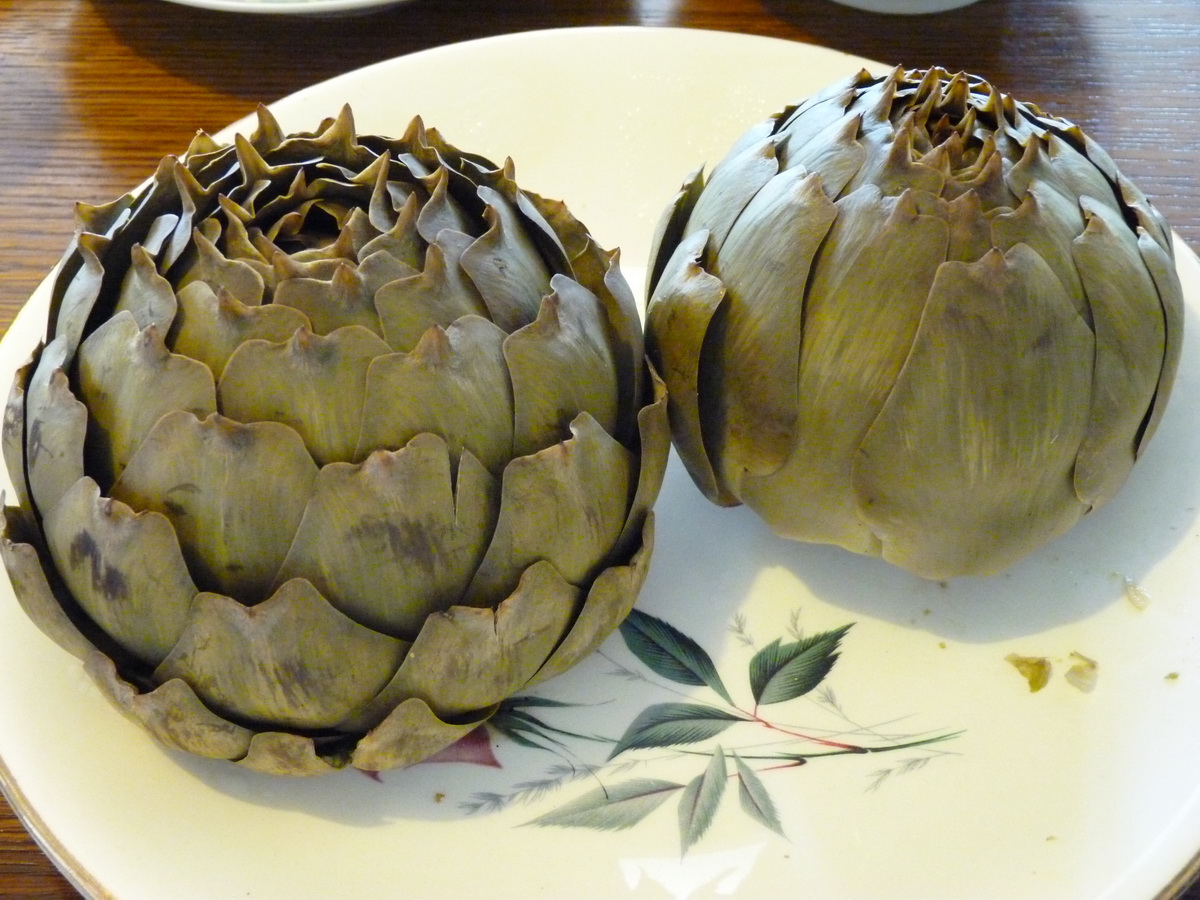
The edible part of the artichoke is the hard, green oval fruit-bud. The consumed parts are the total bracts and receptacle of the flower bud. They are often served as salads or appetizers and must be cooked thoroughly (simply boiled or steamed for about forty minutes until leaves can be plucked off, indicating doneness). Generally dipped in salad dressing (olive oil, vinegar, and salt), one peels away the hard, structural fruit segments piece by piece to eat (though there isn't much edible content). As you peel deeper, the segments become finer, covered with dense fuzz which should be removed. Then, the light purple conical base flesh appears, which is the main part eaten when consuming artichokes. Known for its mild original flavor and rich nutrition, it seems that although one whole artichoke yields little edible portion, the remaining waste is substantial. A French proverb says, "Artichokes are a poor man's meal (Un vrai repas de pauvre)." Indeed, eating artichokes means eating stable, highly nutritious food that promotes amino acid metabolism and lowers cholesterol. Medicinally, the fleshy receptacles and bracts stimulate bile secretion, while leaves and roots have bactericidal effects. Added to digestive aids, they enhance liver function and act as diuretics. They can also treat arteriosclerosis, anemia, hepatitis, and liver damage caused by poisoning or alcohol, while lowering cholesterol.
This short essay reflects my thoughts after eating artichokes in the countryside. Note: This article references Wikipedia.