Balthus (1908–2001): Representative of Postwar Figurative Painting
Cathy in the Interior, Bathing. 165x150cm, 1933. Collection of the Centre Pompidou, Paris.
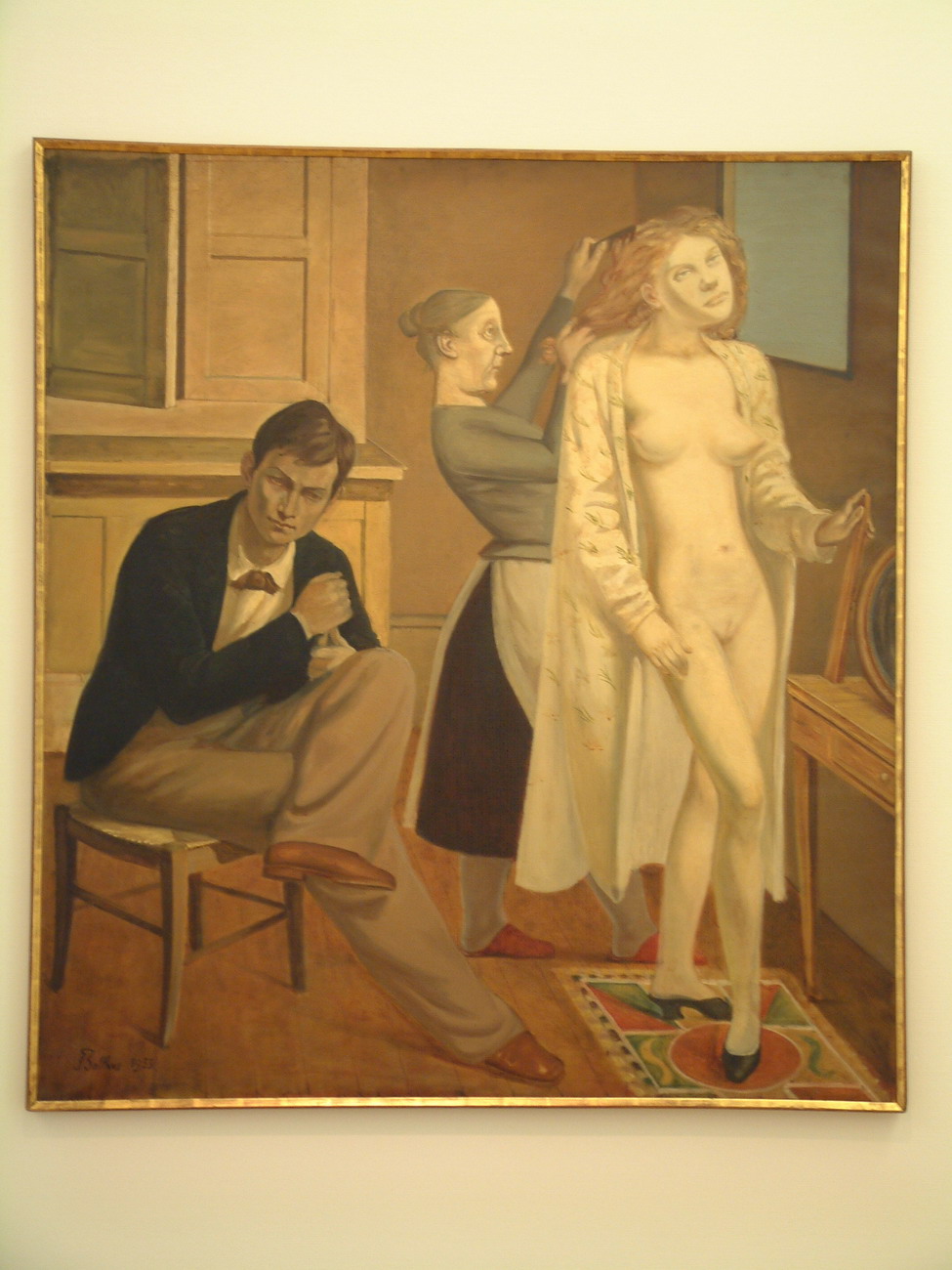
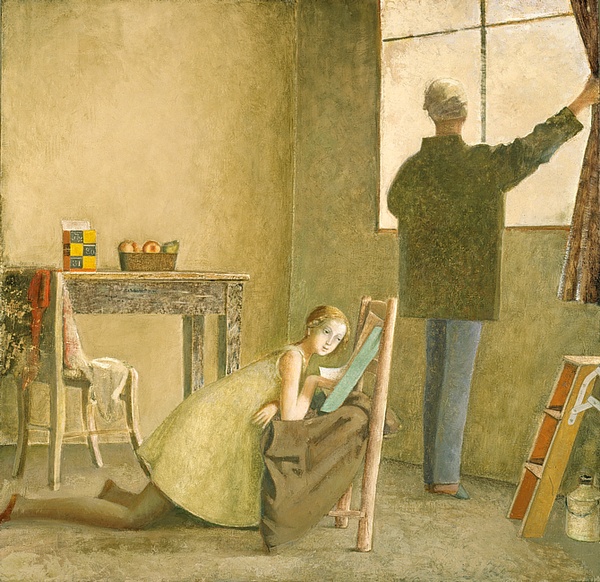
Born into an artistic family, Balthus (1908–2001) was raised surrounded by art; his father was an art critic and his mother a painter. He grew up immersed in this environment, meeting artists Bonnard and Derain at a young age. He began painting at sixteen and met the poet Rainer Maria Rilke in Switzerland, which helped shape his personal humanistic cultivation. His early works were influenced by Bonnard. Deeply engaged with artistic mastery, he learned from the essence of traditional art, surveying art history while admiring the classical, rigorous composition of Italian Renaissance master Piero della Francesca. He progressed through Nicolas Poussin of the French Baroque era to modernists such as Cézanne, Seurat, Degas, and Utrillo. Closer to the Neoclassical Ingres and the natural realist Courbet, he synthesized the finest elements of art history. A rare example in modern art history, he could be termed a pioneer of "educated painting" or postmodern painting using 1980s terminology, laying the foundation for the return to traditional painting in that decade and serving as the patriarch of educated painting within the postmodern trend.
Balthus frequently employed traditional academic materials (oil, drawing, charcoal, watercolor) and traditional oil painting techniques. His work style is divided into two major themes: landscapes and interior figures. Like Courbet’s preferred subjects, he integrated the rigorous structures of Piero and Cézanne, the form depiction of Ingres and Degas, the dramatic scenes of Seurat, the landscapes of Utrillo, and the figure structures and tones of Poussin. Combining the essence of ancient and modern art, along with his unique and perfect grasp of the atmosphere in landscapes or figure scenes, his intuitive contemplation of nature became Balthus’s distinctive style. From his first solo exhibition in 1934, he presented daily life scenes filled with poetic imagery and hidden melancholy (pure girls in intimate indoor settings). This personal distress was shrouded in clouds of sorrow (understanding that he was Jewish, and during the anti-Semitic, anti-racial disasters of World War II, he changed his name to Balthus to preserve his life; his original name was Balthazar Klossowski). The gloom of World War II and racial persecution led him, from the 1940s onward, to metaphorize claustrophobic terror through "intimate eroticism." Through pubescent girls, evil, depraved, anxious, troubled figures bathing, sleeping, or half-naked on living room sofas, he explored these themes. For example, in the 1954 painting Bedroom, a naked, pubescent girl lies with limbs languidly stretched in a self-abandoned posture, seemingly awaiting sexual violation. A mysterious light shines in, gilding her nude body, while a faintly visible hand suggests an atmosphere of erotic desire (Note). These melancholic yet intimate erotics imply impending violence.
Against this social background and shifting time, his quiet landscapes of the 1960s approached an Orientalist intuition and contemplation, where past storms turned into natural mystery. Within rigorous landscapes or gentle indoor scenes arranging figures, he achieved perfect expression. The pure, childish innocence, romance, and poetic quality of pubescent girls in rooms, or self-portraits and dramatic group scenes (little girls playing) in simple studio settings, all represent a unique intellectual temperament in Balthus’s painting, making him stand out among contemporary artists.
(Note): Refer to Postwar Visual Arts, page 68, Balthus, original text by Lucie-Smith, translated by Li Chang-chun, published by Dalu Bookstore.