Baselitz "Sculptor" Retrospective
Baselitz "Sculptor" Retrospective: Poster from the Paris Municipal Modern Art Museum
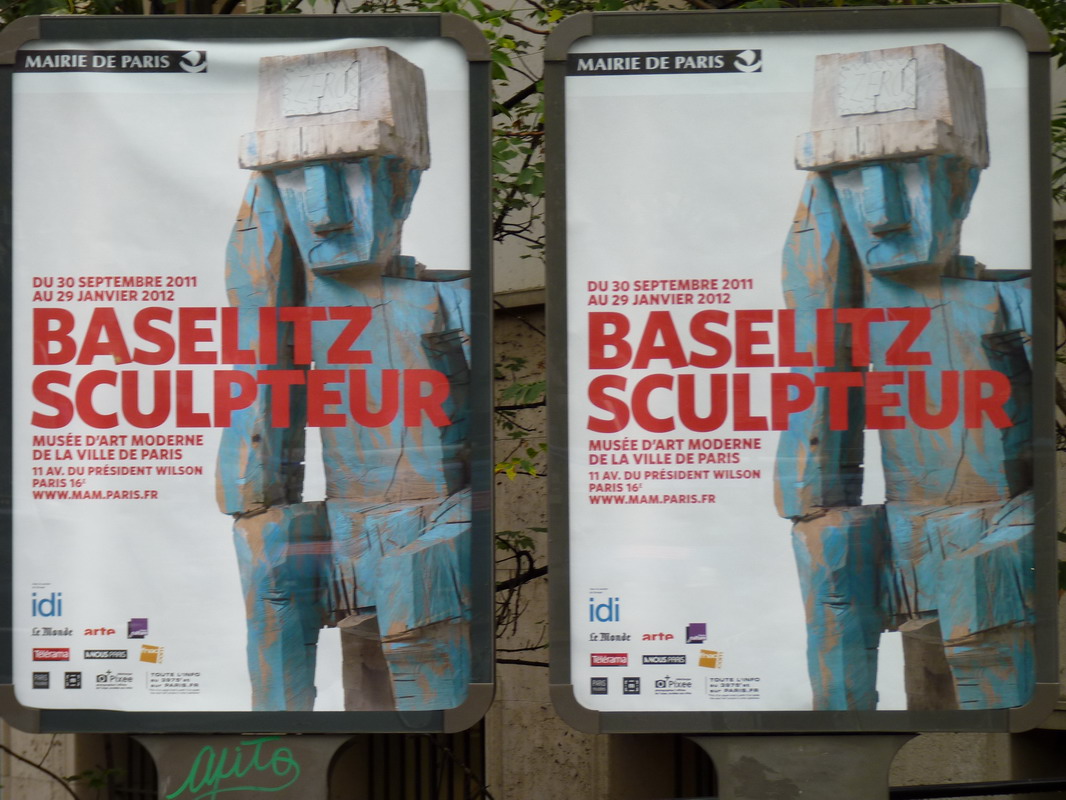
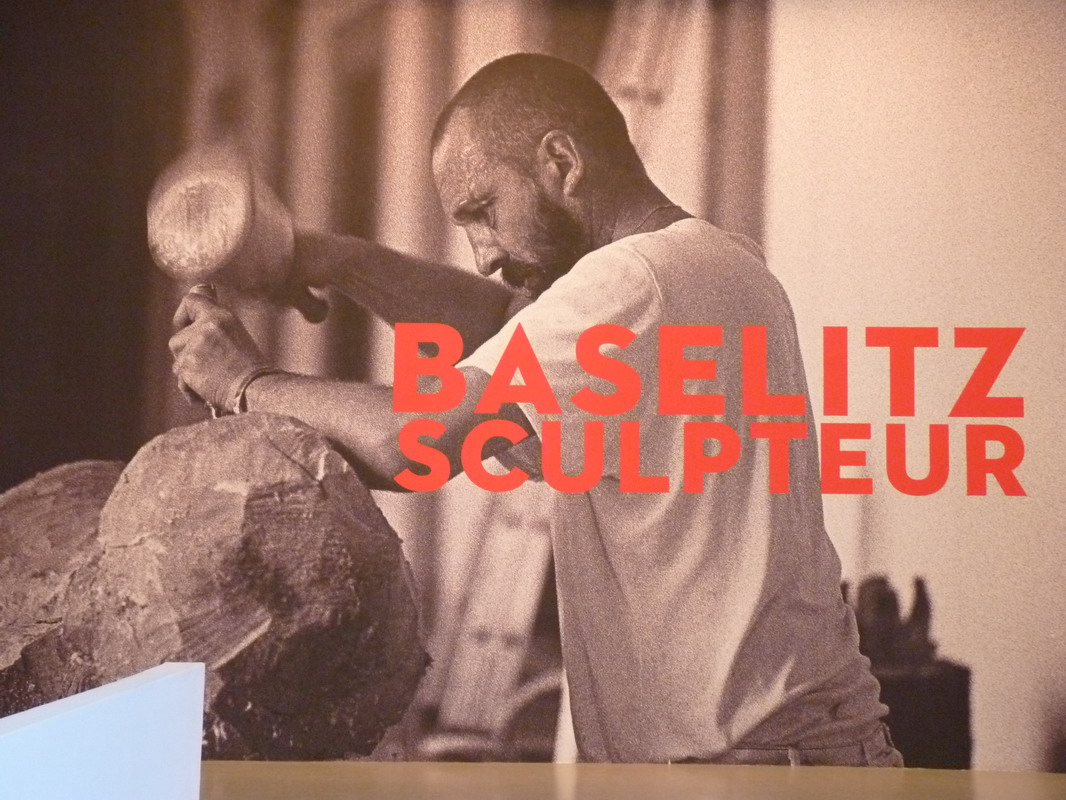
Venue: Paris Municipal Modern Art Museum. Dates: September 30, 2011 to January 29, 2012. Text and images by Chen Chi-Hsiang.
"I think sculpture is a more direct path than painting to achieve the same result. Because sculpture is more primitive, rougher, and more unconditional, just like painting." — Georg Baselitz
Georg Baselitz (born 1938 in Soxe, East Germany) is the most representative painter and sculptor of German Neo-Expressionism. He is known for his dramatic, provocative, and visually distinctive inverted paintings ("head-down paintings"), as well as his expressive, raw, and primitive sculptures. In the 1980s, German Neo-Expressionist painters sought liberation from two-dimensional painting; their defining characteristic was being both painters and sculptors. Typical examples include Baselitz, Anselm Kiefer, A.R. Penck, Jörg Immendorff, and Markus Lüpertz. They clung to traditional materials such as wood, clay, and stone. While achieving outstanding results in painting, their three-dimensional sculptures often retained painterly qualities. They expressed inner violence and unease through expressive figurative forms, using vivid, intense, and metaphorical colors to enhance dramatic imagery and object tension.
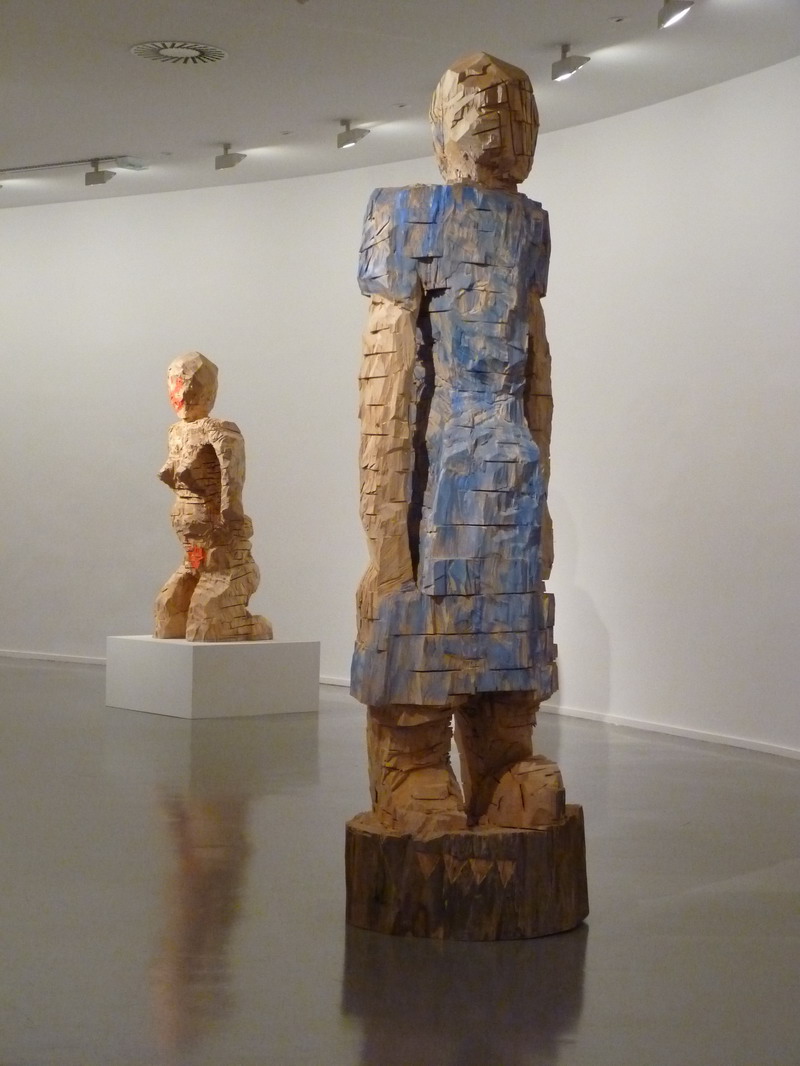
In 1980, Baselitz shocked the art world at the German Pavilion of the Venice Biennale with a series of expressive, beast-like large wooden carvings. Slightly larger than natural human figures, these works were neither seated nor standing statues, yet they were painted with strong, metaphorical colors, appearing as if characters emerging from painting. Titled "The Claim of Sculpture," beneath these rough, provocative axe marks, the wood resembled a block subjected to intense attack, forming stunned, brutal, or mentally uneasy figurative characters or heads. The works retained traces of violent chiseling and axe strikes, much like the bold brushstrokes in painting, making them highly expressive. Combined with provocative and sensual vivid colors, they displayed tension, reinforcing violence and unease. Was this a response to historical trauma and fear of the future, or the metaphysical anxiety or spiritual sorrow of Nordic artists? This caused widespread uproar and strong responses, presaging the birth of a new type of sculptural image in Neo-Expressionism.
For Baselitz, both sculpture and painting are acts and attitudes of subversion. He believes that "sculpture is a faster way to express the same violent problems. Because sculpture is more direct, primitive, intense, and unconditional than painting." The artist stated more explicitly, "I borrow the viewpoint of painting images, which is a clearer and more powerful method, present in my paintings. The large nude woman in the big bucket, this work, like all my current sculptures, is a provocative act."
I have seen many of Baselitz's scattered and intermittent sculptures over the years. The most memorable and complete was undoubtedly his solo exhibition of prints and sculptures at the Bibliothèque nationale de France in Paris in 1985, which left a lasting impression. Whether rough heads or frail standing figures, they challenged viewers' senses, offering visual shock and a touch of emotion. Now, once again at the Paris Municipal Modern Art Museum, I had the privilege of seeing a more comprehensive retrospective of Baselitz's sculpture. This exhibition features over forty challenging and monumental sculptures created between 1979 and 2010, interspersed with recent paintings from the mesmerizing "Drawer (Herfreud Grussgott)" series (2011), and notably, a series of sketch exercises recording the fluid consciousness of daily life.
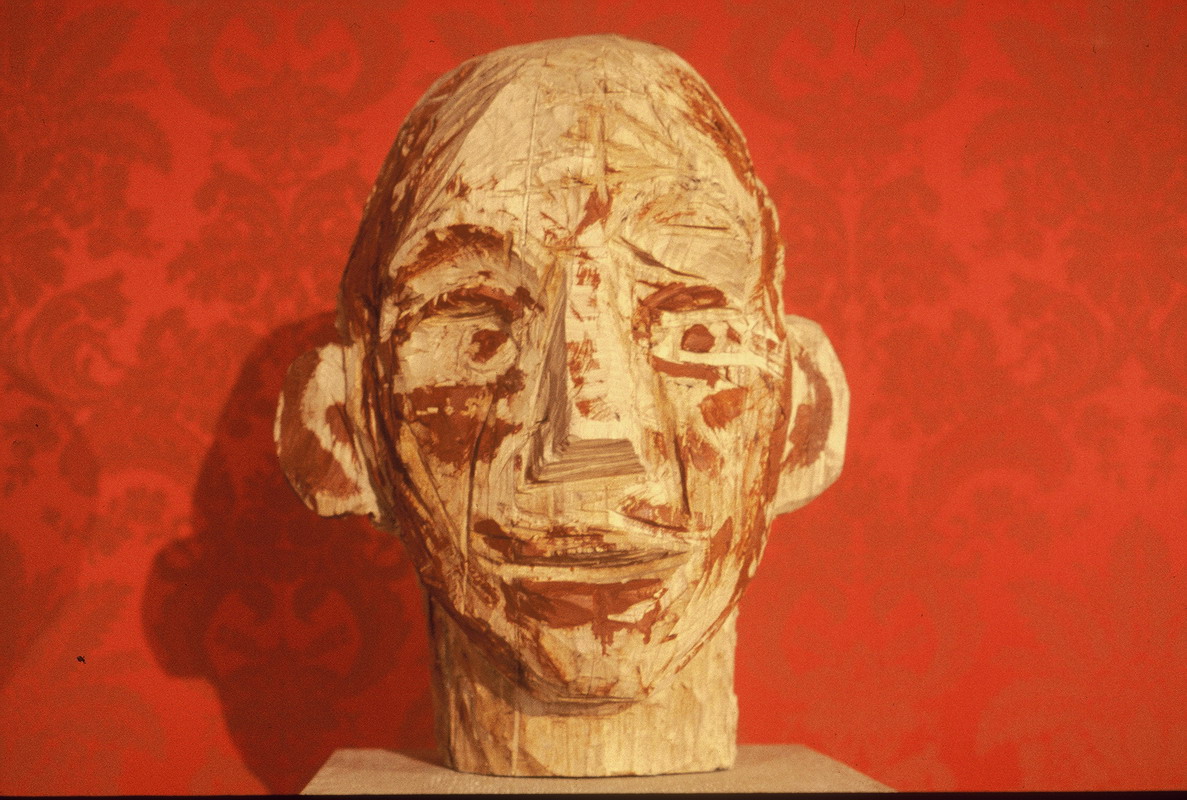
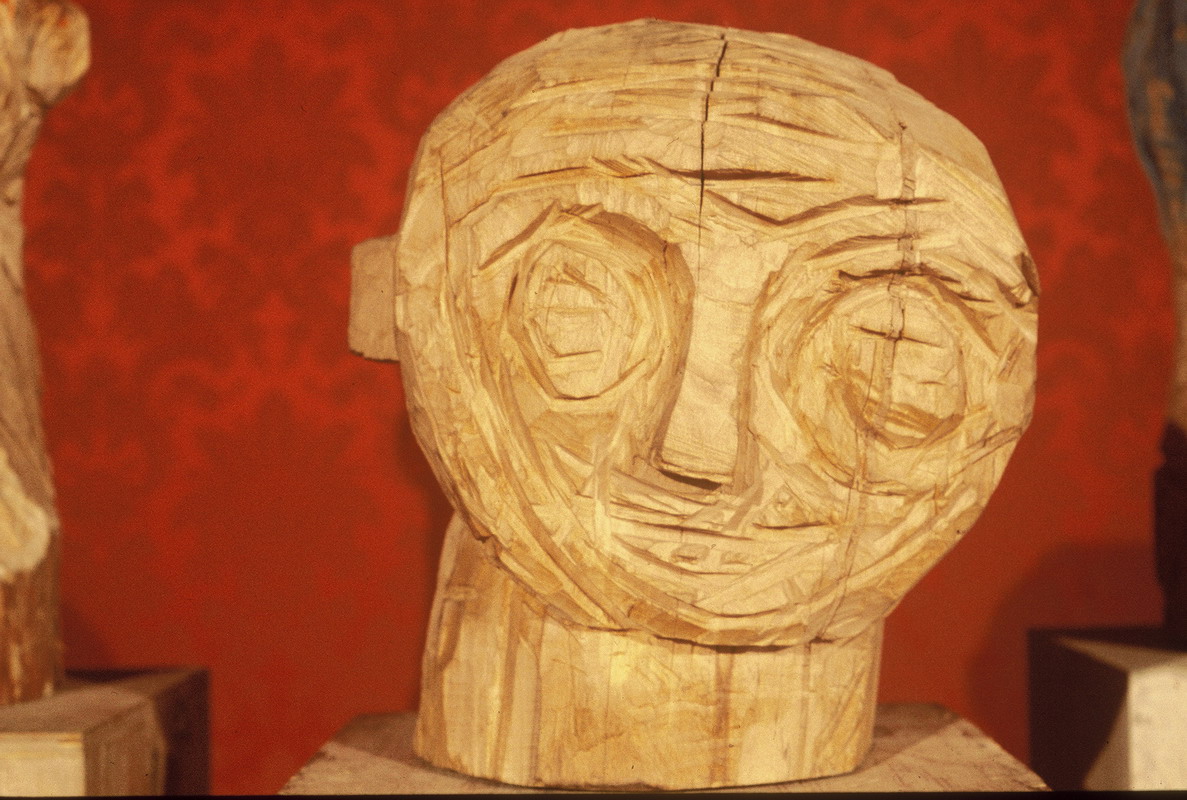
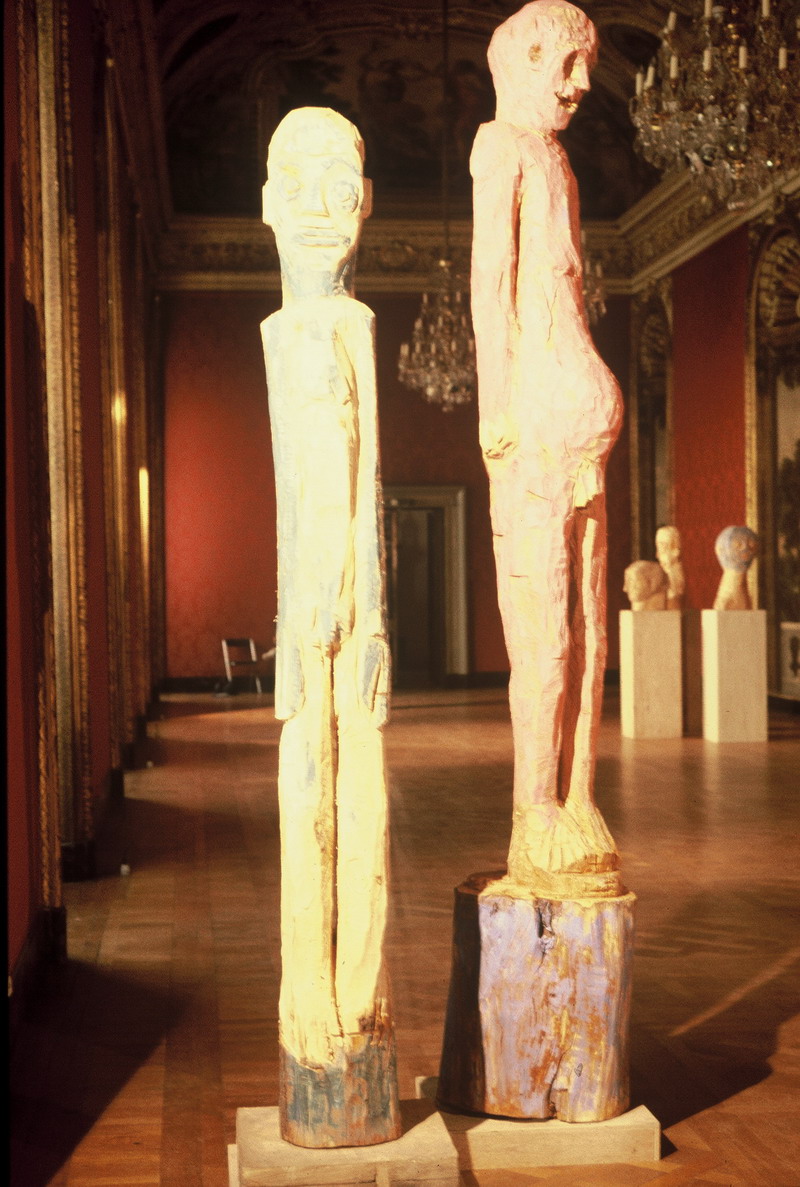
Baselitz began working on sculpture in 1979 and continues today, attempting to discover new paradigms for postmodern sculpture by exploring Western folk and African traditional woodcarving. The exhibition begins with an early large body statue that is neither sitting, standing, nor lying down, seeking a supra-visual posture—an uneasy, unnatural figure, still half-formed within the log, painted with metaphorical colors, as if a bound soul trying to break free from the wood. Next is the series of rough-hewn male head portraits (1981–82), with colorless faces and stunned expressions, highly expressive and sensual. The artist said, "My sculpture and painting serve an important function in giving the impression of rapid brushwork, but the result is not so. I work in fragments; I like fragments."
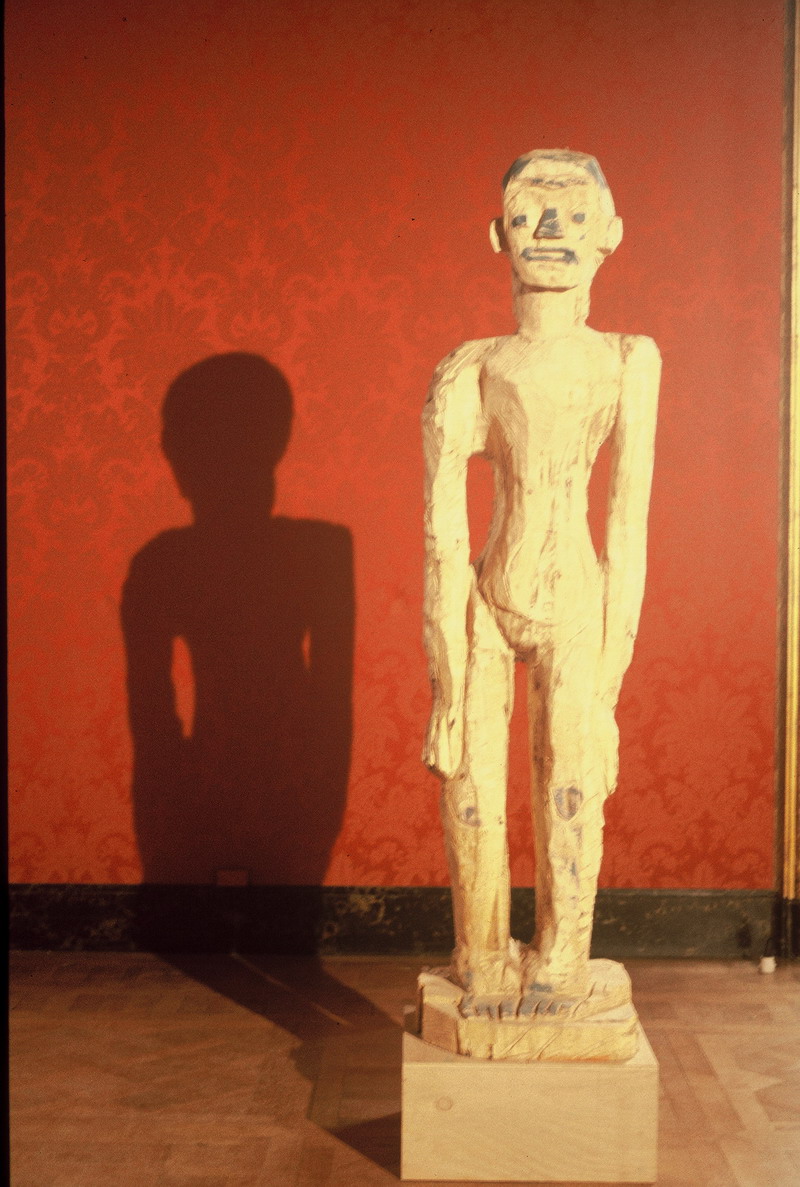
The series of numb, anxious, lonely, and physically expressive standing male nudes (1982–84) stand tall yet appear dejected. Their rough or helpless bodies take shape according to the thickness and length of tree trunks. One robust figure seems to be a self-portrait, mixing traditions of African, Atlantic, and Germanic folk woodcarving. The sculptor said, "If we are fascinated by African sculpture, it is not because we consciously understand its purposefulness. But rather, because we are ecstatic about the aesthetic answer, the manifestation of its extreme form."
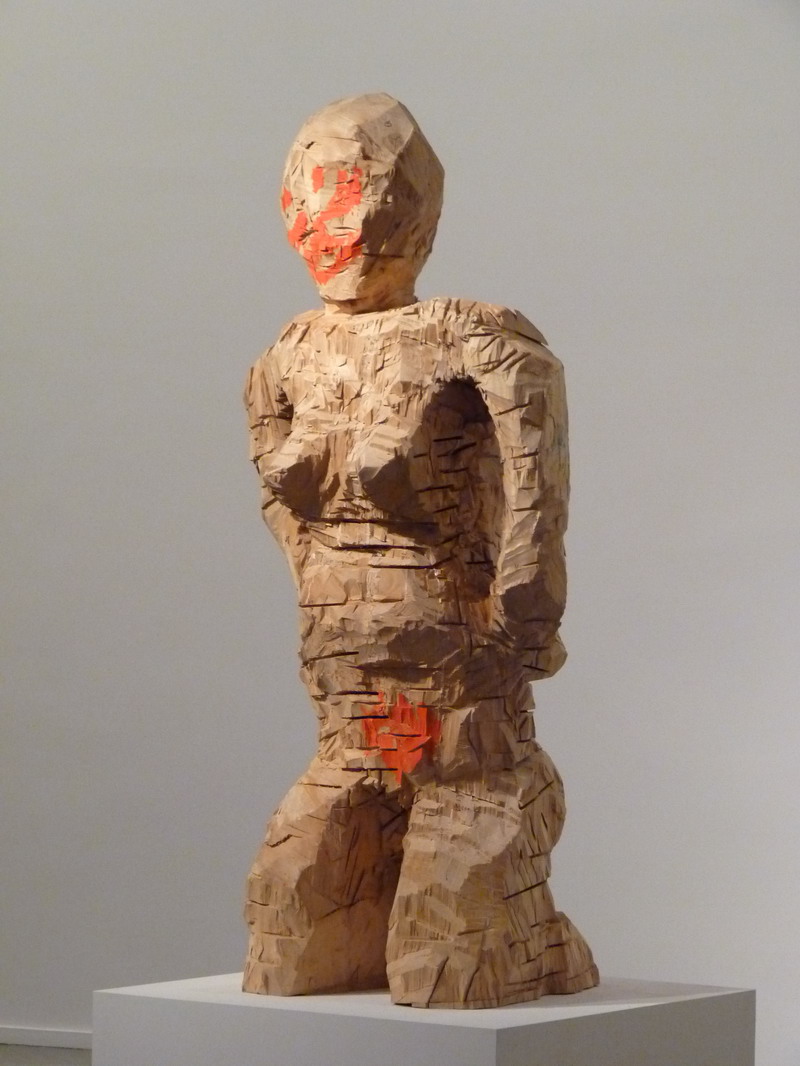
The very primitive "Gruss Aus Oslo" female series (1986–88): Heads held high, footless, and comically posed, these figures attempt to break the norms of traditional figurative sculpture through unstable and unconventional bodily language. Not gentle at all, they imply unease and violence. The sculptor specifically painted the women's breasts, noses, and genital areas red, adding suggestive and referential layers. Or perhaps the more playful and energetic "G-Kopf" and "Tragischer Kopf" statues, reduced to geometric volumes, filled with the tension of saws and chisels, painted in mesmerizing azure blue, releasing infinite energy, fully demonstrating intense emotion and consciousness.
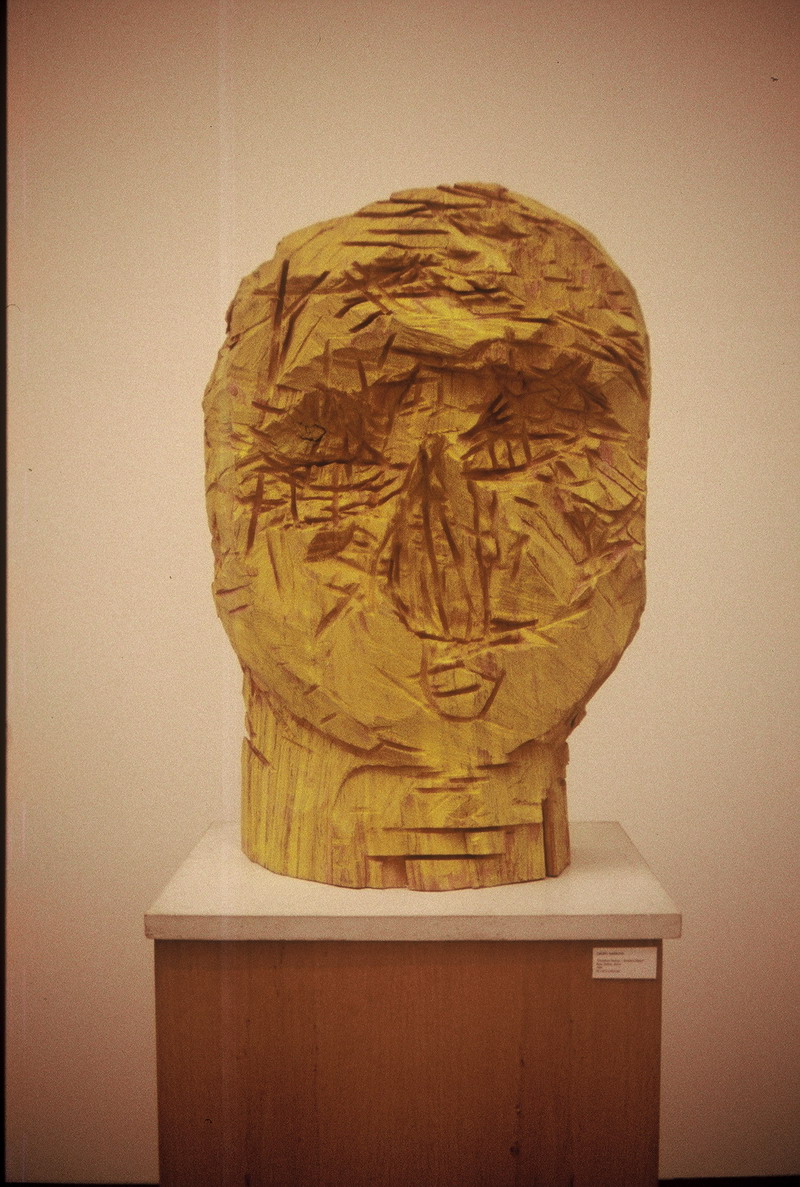
The "Dresden Female Head" series (1989–90) is a new series of female heads starting in 1989, consisting of thirteen monumental female heads. It references the victims of the bombing of Dresden during World War II in 1945. Within a consistent formal language, these vibrant and energetic flat and oval heads feature facial features constructed from concave lines. Unlike the usual red and blue tones, this series introduces bright yellow light, intending to overturn the boundaries of traditional sculpture.
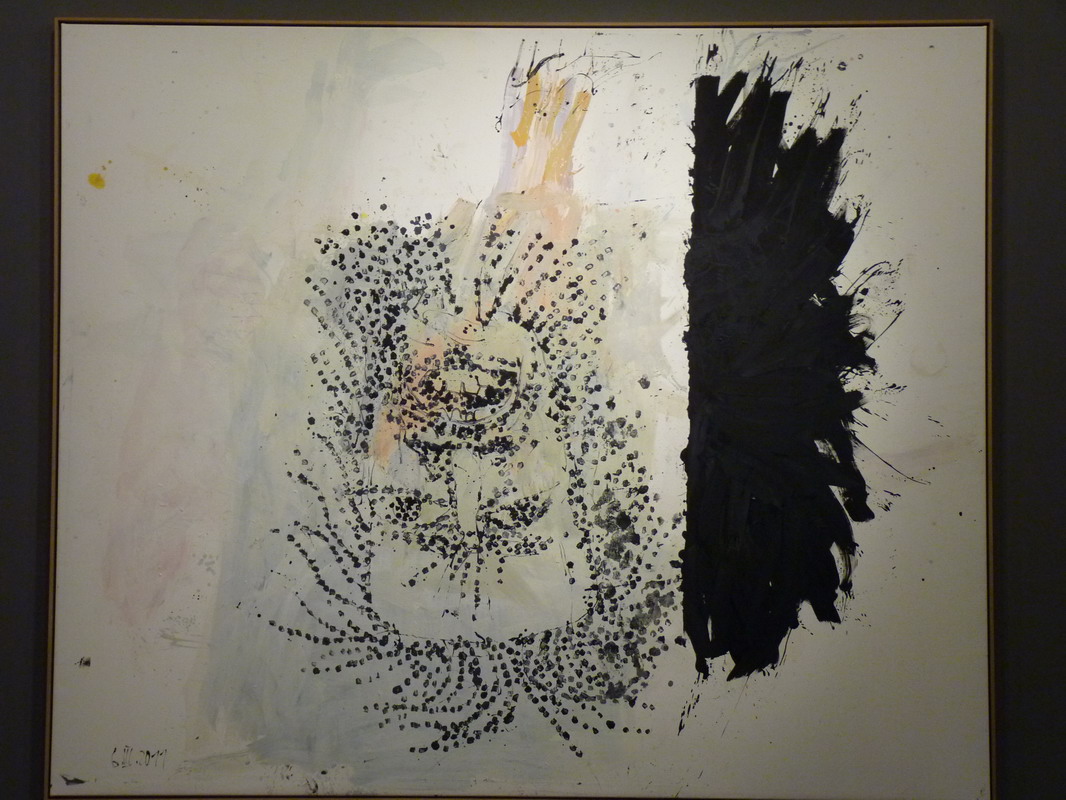
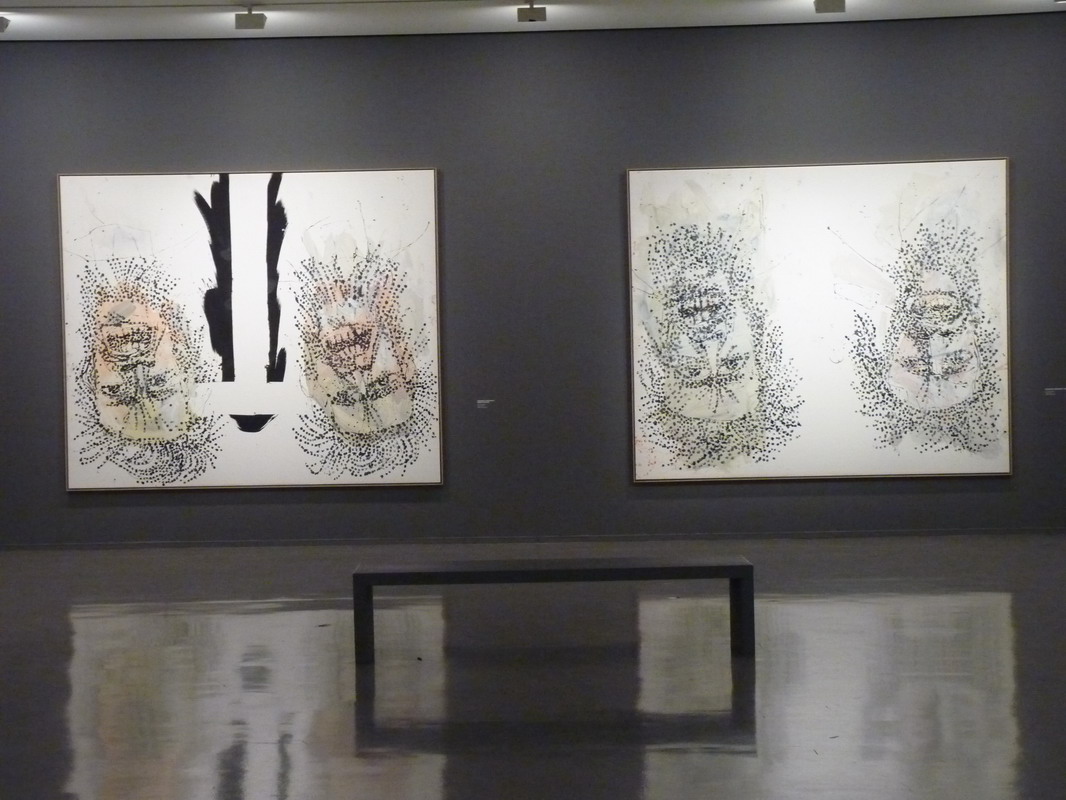
The "Drawer (Herfreud Grussgott)" recent painting series (2011) consists of seven monumental canvases, including two inverted portrait figures. Outlines are formed with rough black dots against a faintly divided pink and purple background, with structural changes in black consciousness. Between consciousness and unconsciousness, imagination and metaphor, image and intent, it mysteriously reveals the unrevealable intent, hence the title "Drawer."
The "Red Body and Head" series (1993–96) represents a three-dimensional exploration following the "Dresdner Frauen" series. No longer standing figures, the upper parts of diverse bodies become the main subject alongside heads. These highly abstract, unusual body parts and fragments move away from traditional sculptural concepts. Works like "Frau Paganismus" feature truncated strong male bodies, women's full bodies, or partial limb postures, endowed with symbolic colors, existing between the figurative and abstract, representation and semantics, primitive and expressive, sensual and imaginative.
"Sketches" are not merely drafts for sculpture. For Baselitz, sketches are not only records of fluid moments but also a unique form of creation. They possess creative vitality and openness, allowing for the exploration and trial of possible forms, which under this openness develop into possibilities for sculpture. The painter said, "I often follow a concept, but often the completion is something else."
The "After Folk Art" series (1996–97) explores new territory in the 1990s, entering the tradition of folk art to develop a new type of sculpture. In a more realistic style, contrary to past naked bodies, female statues are dressed in gorgeous folk costumes. Inspired by folk art and social realist images, such as Mutter der Girlande and Modrians Schwester, these figures are larger than life, footless, and devoid of limb postures. They emphasize the expressions on their faces and their vivid costumes, uniquely exploring a dissonant effect.
In autumn 2003, Baselitz completed an extraordinary self-portrait, "Mein neue Mutze." From this point, he returned to creating large-scale standing figures, developing the "Monumental Statue" series (2003–04). Baselitz constructs these statues with humorous irony, dressing them in colorful checkered beautiful clothes or bikini shorts, resembling enlarged puppets of folk tradition. Especially striking are the reinforced bright pink and blue colors, abrupt yet full of imaginative space. Under autobiographical reference, this reflects a metaphysical questioning, particularly through the metaphor of skulls or the darkness of dawn.
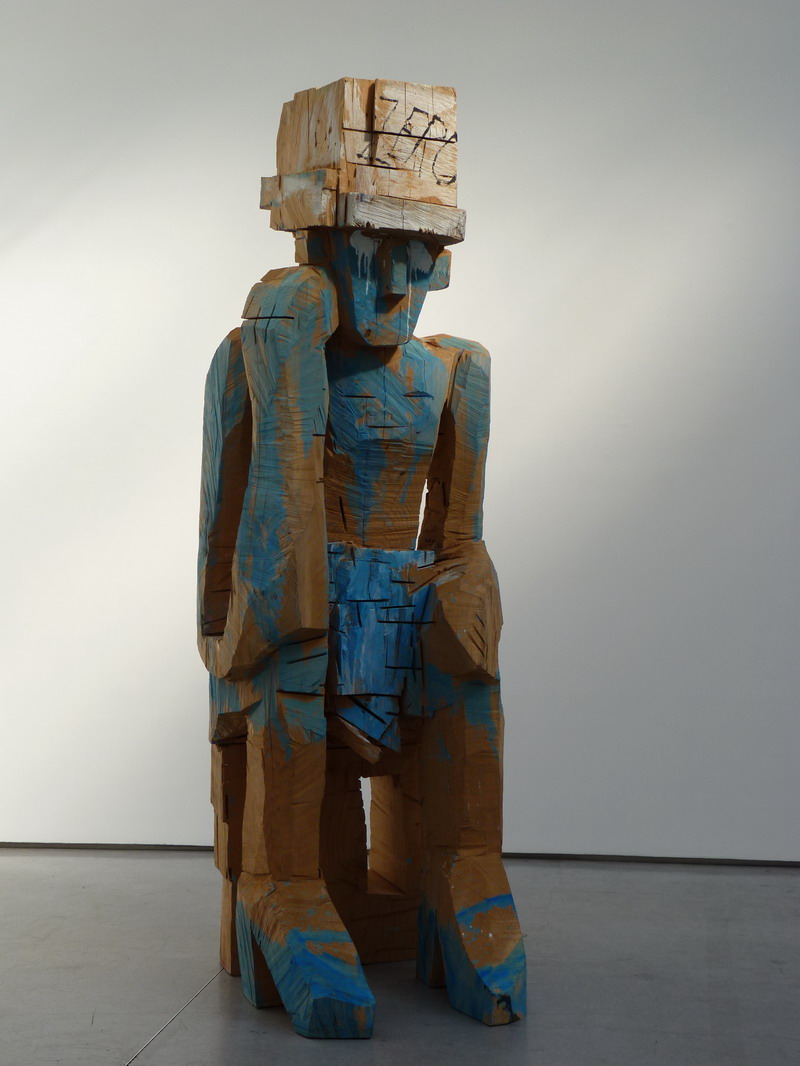
The "Self-Sculpture" series (2009–10) is Baselitz's latest work. Monumental statues like "Volk Ding Zero" and "Dunklung Nachtung Ding" feature rough bodies wearing square hats, thoughtful faces, protruding eyes, sitting with one hand supporting the cheek, wearing high heels, and unconsciously or deliberately revealing male genitals between their legs. This sitting posture recalls Rodin's "The Thinker." Of course, the most unconscious or abrupt element is the blue on the body, introducing a non-existent consciousness, hovering between metaphor and imagination, sensation and emotion, latent and representational aspects. The artist said, "Wood itself is not important. Rather, it is about realizing the object within this material, which is unique and simple, without any pretension."