Bertrand Lavier Solo Exhibition: "Aesthetics of Transformation"
"Ibo Figure Statue" with primitive qualities, 93x23x14 cm, 2008, bronze

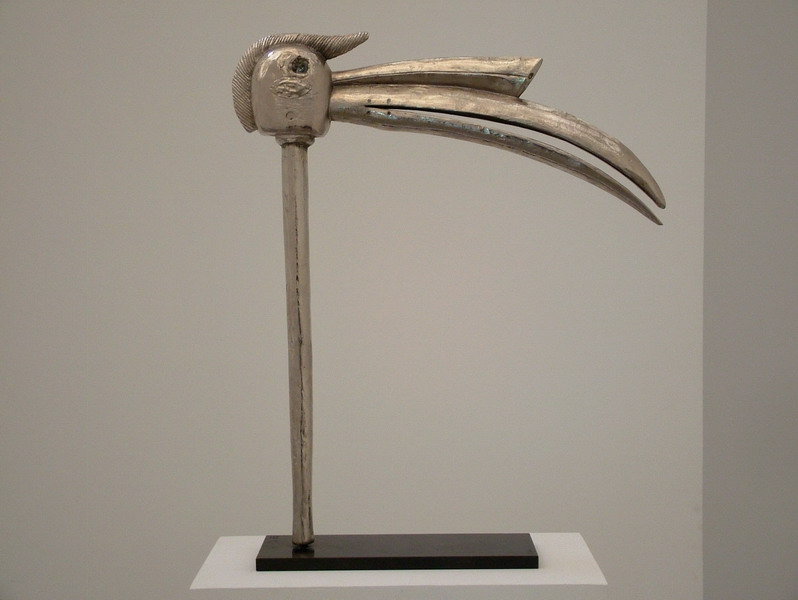
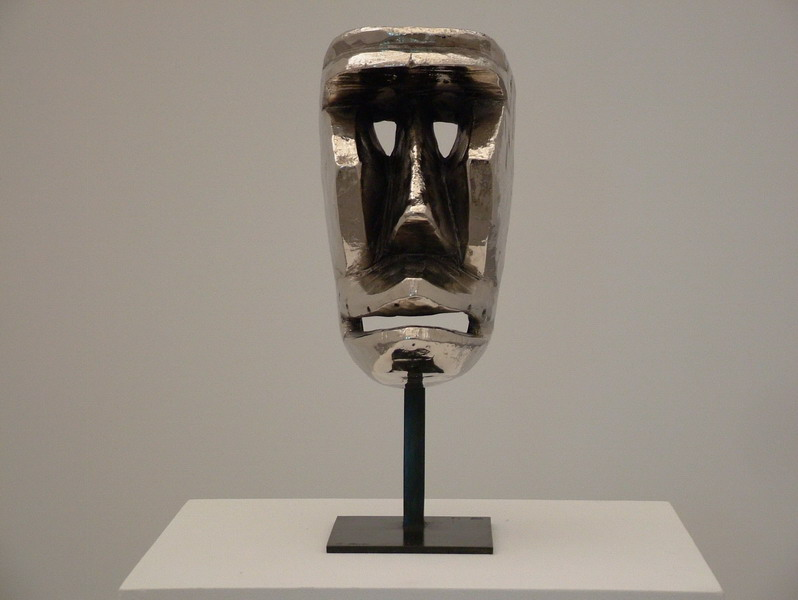

Bertrand Lavier solo exhibition: on view from April 12 to May 17 at Y Lambert Gallery. Bertrand Lavier (born 1949) is one of France's most representative artists in object-sculpture. He is one of the primary inheritors of Duchamp today; under the legacy of French New Realism, he is also an expert in postmodern art—refurbishing, retro-fitting, copying, and appropriating. He is a master who manipulates the semiotics of objects with great intensity. His artistic creation is built upon the concepts of these anomalous or even contradictory readymades. The process of claiming objects as his own goes far beyond pure creation; for him, it involves facing this world of objects with an optimistic attitude before fully affirming them, thereby breaking down the distinction between life and art, freeing works from the fate dictated by the objects themselves.
In the early exploration of conceptual art, he continued to expand concepts through object art in the 1980s, constructing various possibilities of concepts and forms through appropriation, simulation, transformation, juxtaposition, and combination. His creations are divided into three major types. In one, he claims Van Gogh’s emotional and intense brushstrokes, appropriating all supports and objects (iron cabinets, pianos, tables and chairs, refrigerators, aluminum ladders, fire hydrants, traffic signs, books, and even mirrors), applying thick, emotional, and rough brushstroke colors based on material hues. In this postmodern style, it seems that "Duchamp plus Van Gogh" equals Lavier.
Another creative approach involves appropriating two readymades, transferring their material functions, and constructing formal language symbols through combination (for example: a white refrigerator placed on a geometric colored safe; a black streamlined seat placed on a white refrigerator; a black iron hammer stand placed on an off-white document box; a white cabinet or black piano placed on a white freezer; stones placed on a white refrigerator, etc.). Do existing realistic forms become anomalous object-sculptures? Or art? Here, "Duchamp plus Duchamp" equals Lavier. Finally, he receives aluminum doors and windows, volleyball nets, basketball court lines, or Disney cartoons, transforming them into new geometric abstractions or new abstract geometries. Seeming casual yet rigorous, they become art under the guidance of keen concepts. It appears that art is not as difficult as people imagine; it is so cleverly crafted and flexible. Things easily available in life can, with a bit of keenness, awaken your extraordinary imagination, filling real life with vigor and vitality, because there is no longer a boundary between life and art. Life creates art, and art enriches life.
Today, amidst the inflation of knowledge and culture and in the age of images, Bertrand Lavier has liberated himself from daily life, refurbishing, retro-fitting, copying, and appropriating more wildly, seemingly following the mundane with greater ease. Peeking into the artifacts of the primitive world from Western living scenes, in his new work releases, he translates famous statues from African primitive museums into bronze sculptures exactly as they are—for example, the powerful "Toko Bird Head Statue," the modernist-style "Kongo Mask," the primitive "Ibo Figure Statue," and the South African traditional "Nebele Mural" which resembles modern abstract painting. Here, the artist calls it "aesthetics of transformation," but actually, there is no transformation at all. The exact size is maintained; casting in bronze is the fact. It is the same act of appropriation. The difference lies in how the transformed object scene specially constructs space for display. This slight change makes the term "aesthetics of transformation" seem too cynical, evoking a sense of free creation or street magic. This type of artistic creation perfectly aligns with contemporary capitalism—the era where one seeks maximum profit with minimum cost, where capitalism reigns supreme. In such times, talking about art seems too utopian.