Breizh Touch
(Fig. 1) A contemporary art installation of floating fish balloons creates a unique scene. (Fig. 2) A distinctive submarine exhibition display.
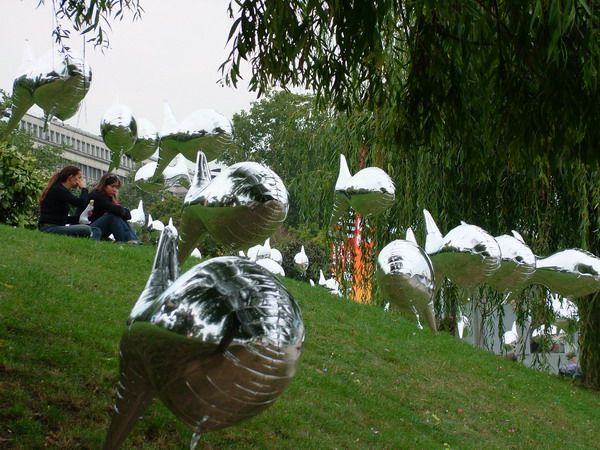
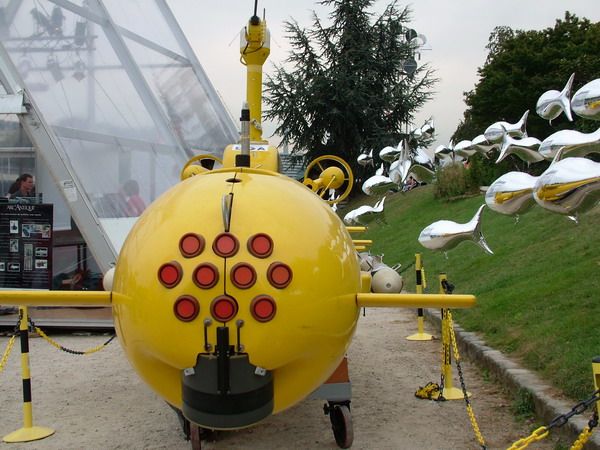
(Fig. 1) A contemporary art installation of floating fish balloons creates a unique scene. (Fig. 2) A distinctive submarine exhibition display.
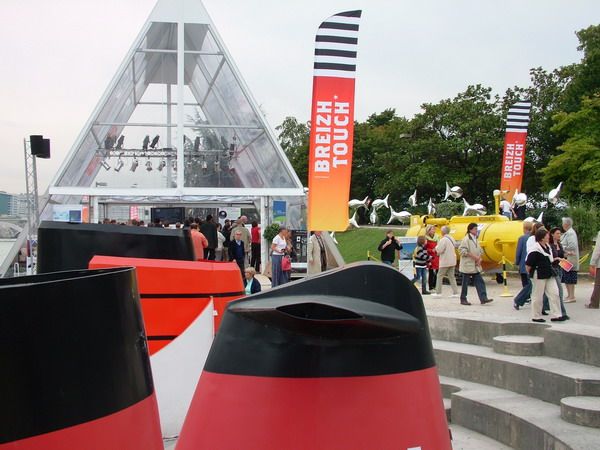
{{/img/paris/005/s004_resize.JPG}} (Fig.) A view of the Breizh Touch – Bretagne exhibition room.
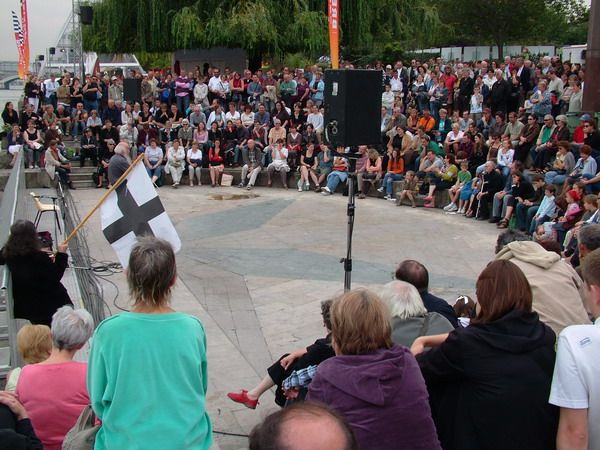
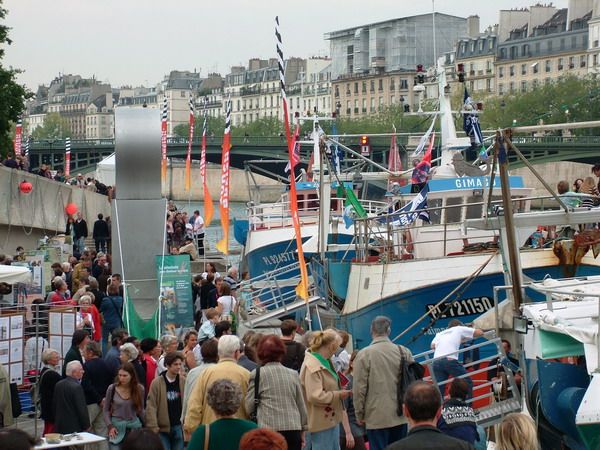
(Fig. 1) The concert venue for Breizh Touch – Bretagne. (Fig. 2) The banks of the Seine transformed into a rare Brittany fishing port.
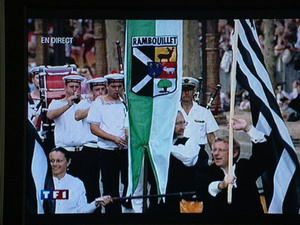
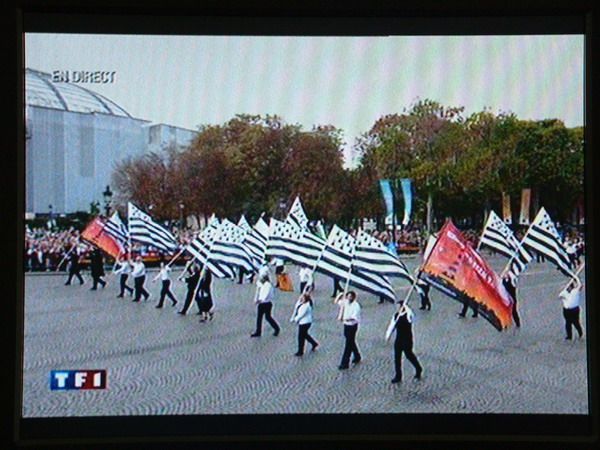
(Fig.) A grand parade by traditional cultural groups from Brittany along the Champs-Élysées; below, the black-and-white Breton flags flutter. Paris, this poetic and picturesque city, serves as an ideal space and stage for joyous celebrations. Almost every day features carnivals, festivals, international sporting events, various trade shows, cultural activities, or openings akin to major international conferences. A continuous series of artistic and sports events confirms that Paris is truly the capital of arts. As soon as the summer holidays end, Paris’s annual autumn carnival begins, kicking off a series of cultural feasts. This year was particularly lively, with the Rugby World Cup adding to the excitement and drawing larger crowds, making the metropolis more vibrant than usual. Following last week’s European Asset Festival, this weekend featured Paris Garden Day and the Brittany Festival. The entire city was filled with festive cheer, especially on Friday evening when the French Blue team played Ireland in the Rugby World Cup. All of France held its breath before their televisions as the French team triumphed 25-3 against Ireland, advancing to the semi-finals. A atmosphere of jubilation enveloped the entire city of Paris.
Paris Garden Day, marking the arrival of autumn, should ideally coincide with crisp, clear weather. However, this weekend saw bright blue skies and shining sun. The grand "Breizh Touch – Bretagne Festival" was held along the banks of the Sasint Bernard outdoor sculpture park by the winding Seine. Brittany, a province in western France located on the Atlantic coast opposite Britain, has historically relied on the sea. Known for its beautiful coastline, unique geography, abundant seafood, and rich culture, it has long promoted tourism and maritime exploration. With Rennes as its capital, the world-famous Mont-Saint-Michel Abbey lies within its borders, alongside Nantes, once its largest Atlantic port, all contributing to its distinct human landscape. Suddenly, the banks of Sasint Bernard became a grand exhibition hall for the French province of Brittany. Amidst the contemporary art installation of floating fish balloons, the bustling scene attracted thousands of Parisians.
The poetic banks of the Seine turned into a Brittany fishing port, featuring a series of innovative theme pavilions, dining areas, and moored fishing boats. This grand exhibition showcased modern Brittany’s diverse maritime activities: seafood, new Atlantic technologies, tourism and dining, navigation, submarines, marine research, environmental protection, culture, and service spaces. It comprehensively promoted Brittany’s tourism and heritage, inviting Parisian families to stroll, meet fishermen, visit boats, participate in maritime development initiatives, listen to innovative Brittany concerts, taste seafood and unique cuisine, and view contemporary art exhibitions. This offered a comprehensive opportunity to deeply understand and stimulate imagination about Brittany.
On Sunday morning, a grand parade by traditional cultural teams from Brittany took place on the world-famous Champs-Élysées. This parade included Breton cultural groups from around the globe (such as the USA, Scotland, Ireland, Australia, and New Zealand), demonstrating how Breton culture has become a global phenomenon through past migration. The unique traditional Breton attire is black and white. Men from Brittany wear black trousers and black berets, resembling naval uniforms with black pants, white shirts, and white hats. Men from overseas countries wore red and black plaid skirts and peaked caps, with belts adorned with waist decorations. Women wore various white embroidered high hats and colorful embroidered scarves around their waists. The unique Breton dance involves participants holding hands in a circle, moving forward and backward rhythmically with two steps forward and two steps back. Breton music, primarily led by bagpipes accompanied by clarinets and drums, features beautiful rhythms and emotional melodies reminiscent of military bands, now serving as a distinctive international musical symbol for Brittany.