Brancusi
"Sleeping Muse," bronze, 1910. Collection of the Centre Pompidou, Paris.
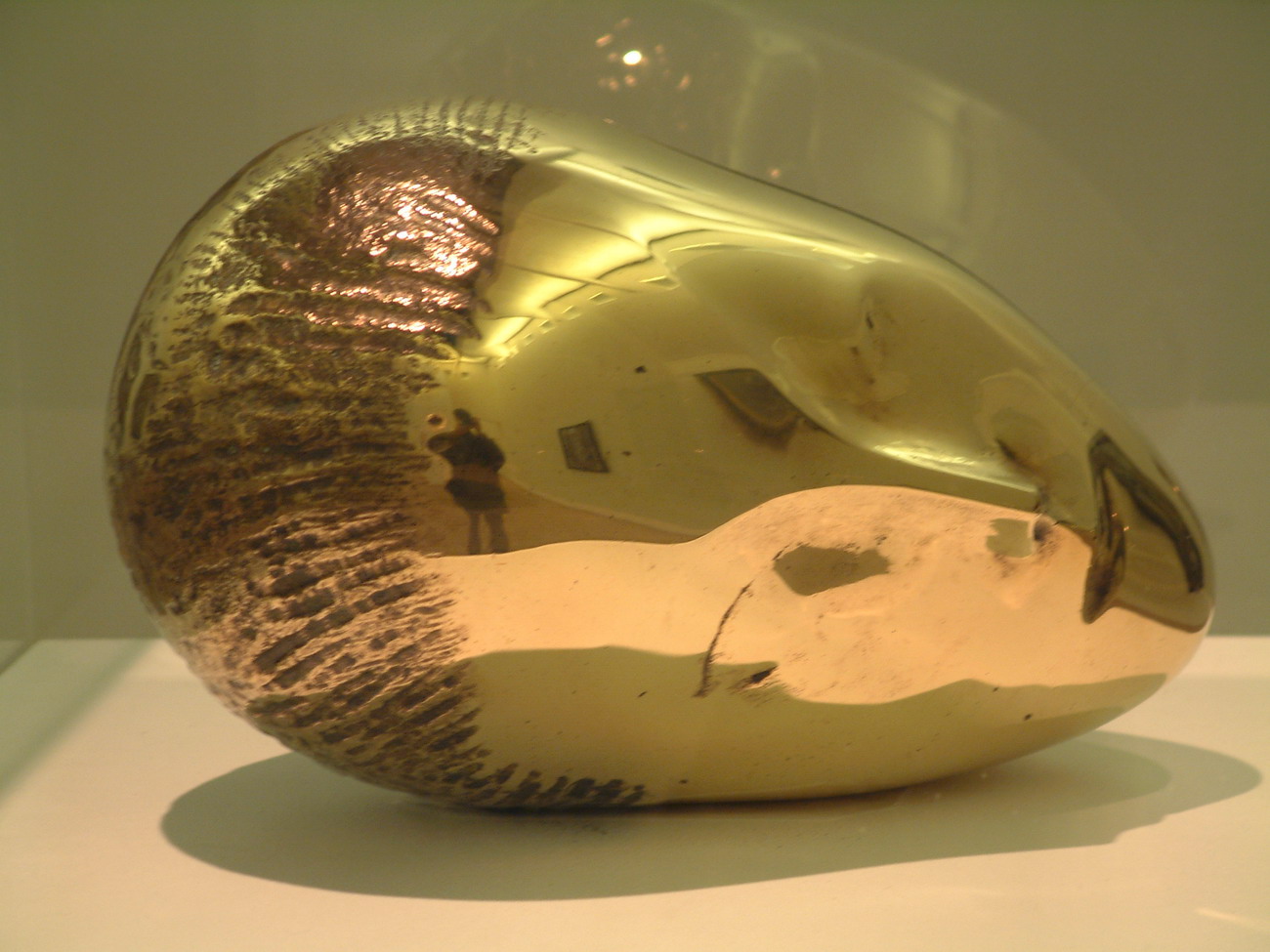
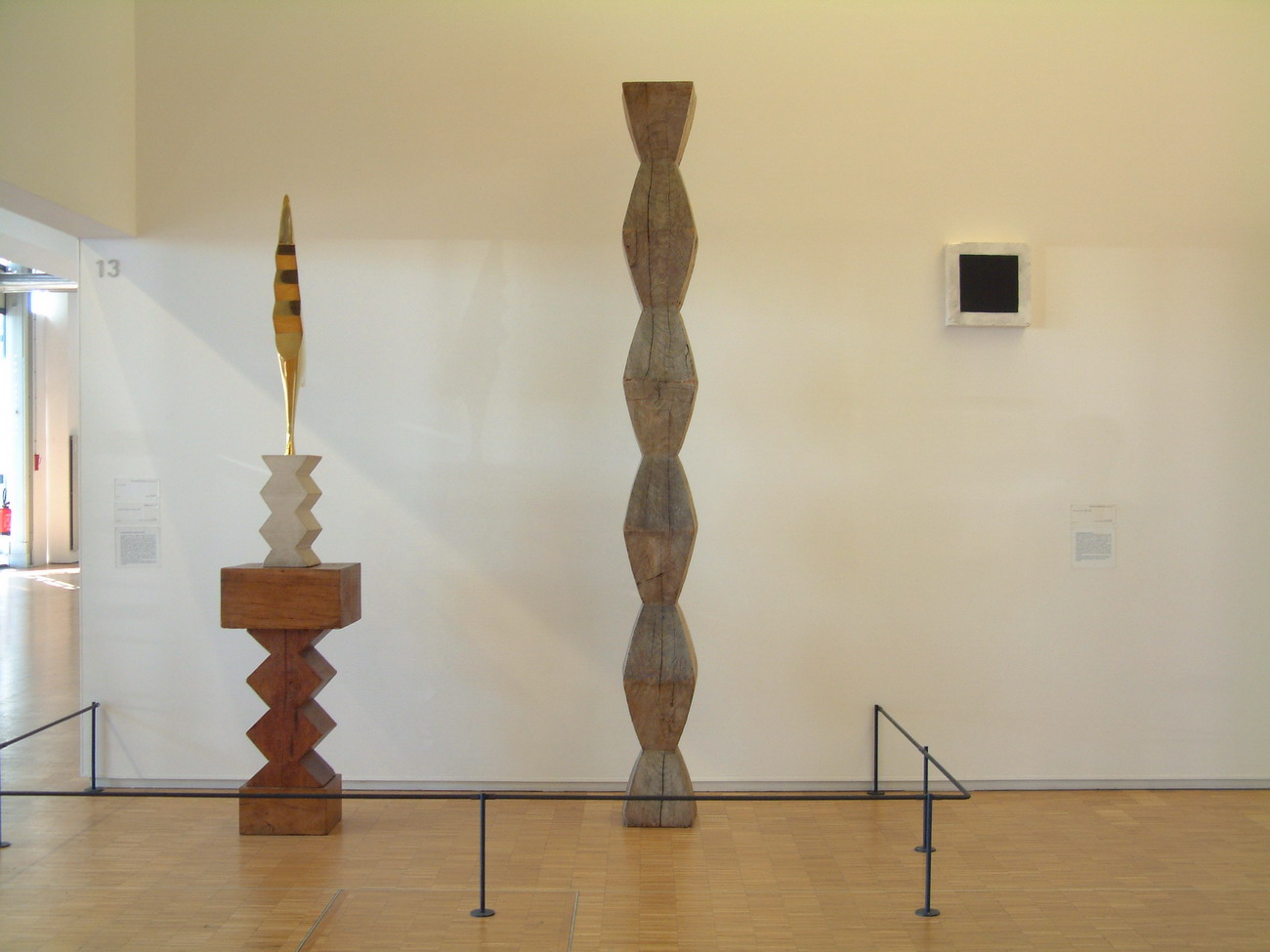
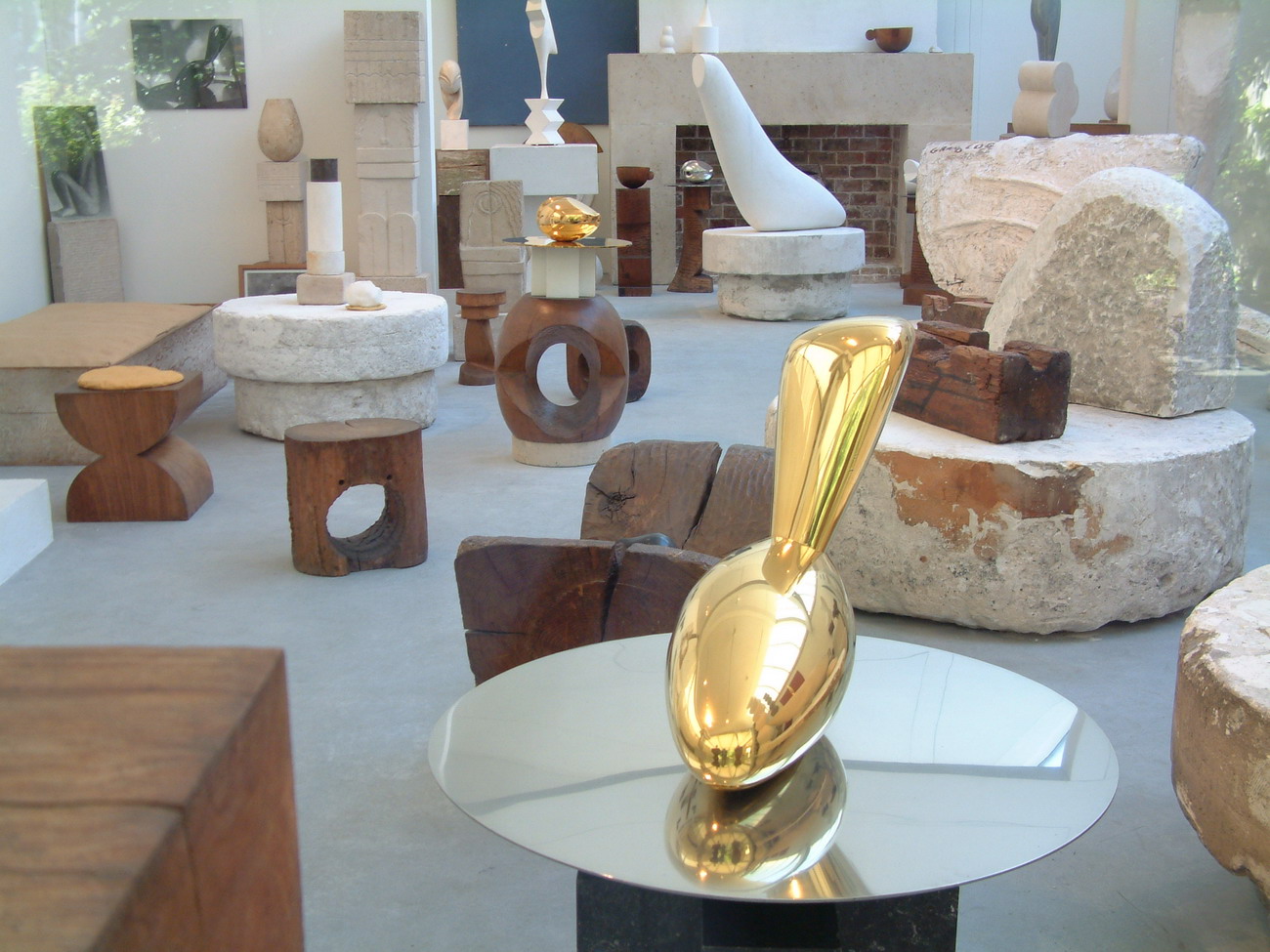
Constantin Brancusi (1876–1957) was a Romanian sculptor and a pivotal figure in Western modern art. He directly influenced American Minimalism, particularly through his innovations in material and concept. He sought to explore a new plasticity for reality while retaining sensibility within the simplification of forms akin to African carving. His early naturalistic "Child's Head" (1906–1908) achieved an unusual balance between figuration and geometry, developing a simplified form. Gradually distancing himself from literal representation, he used abstraction to purify volume, as seen in "Sleeping Muse" (1910) and "Mademoiselle Pogany" (1912–1913), where descriptive elements disappeared. Replacing image with simple sign, he revealed a pure oval that became the archetype of cosmic origin.
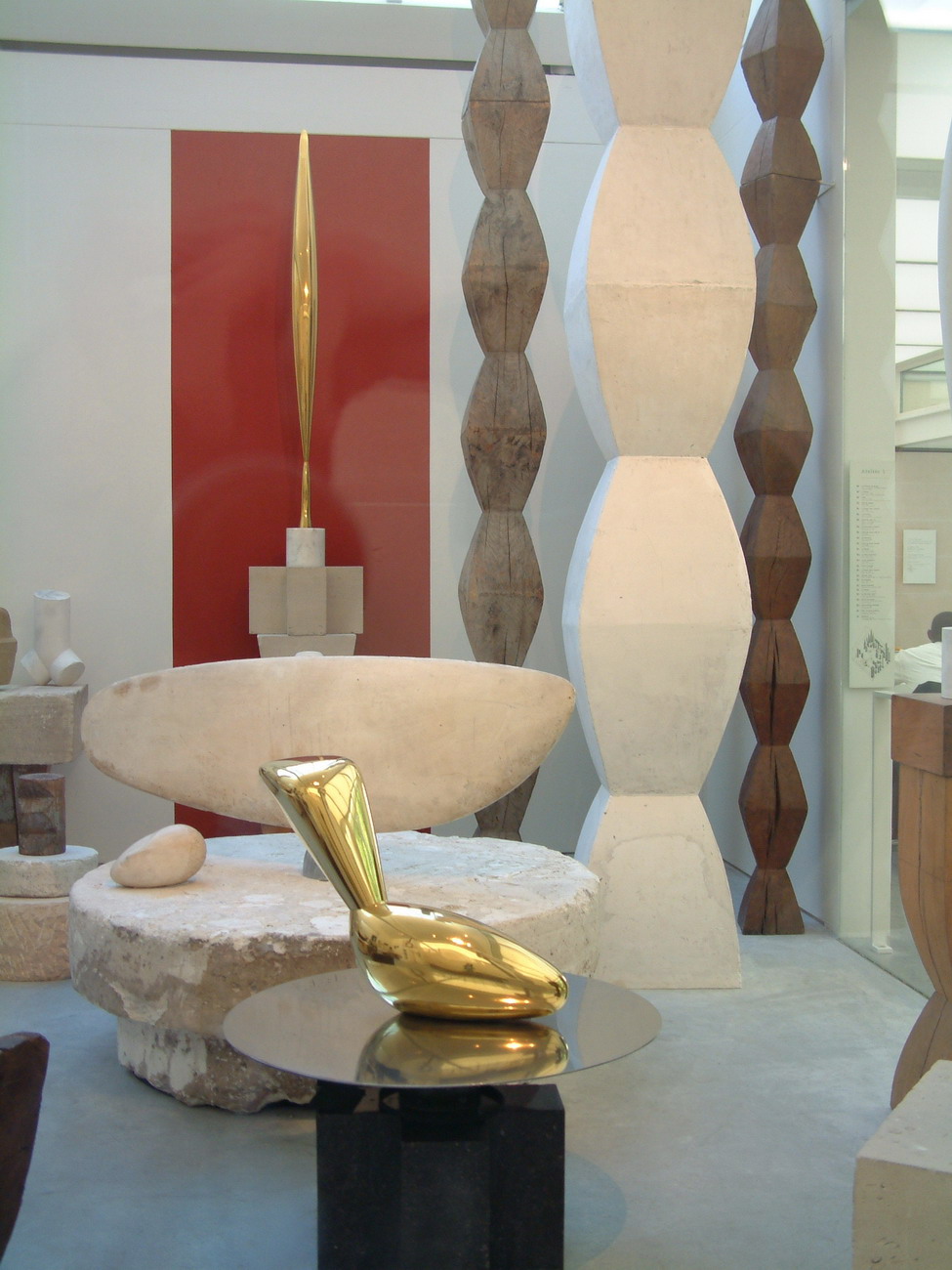
From 1915 onward, he developed series exploring various materials, producing over twenty versions of "Bird in Space." Since 1923, the "Rooster" series captured the essence of life through simplified abstraction, combining different forms and materials for pedestals. From this period, Brancusi revisited the same themes with slight variations and subtle distinctions; both plaster and bronze images retained their originality. Under a general process of reduction, all works possessed an extraordinary character or a sense of story, such as the concise and powerful "Sea Lion" (granite, 1943). The "Great Rooster IV" (1949–1954) is an epic composition of a perfect organic body, embodying the creative universe of the artist.
His major forms were realized through natural materials—wood, stone, marble—expressing symbolic shapes that constantly referenced cosmic and natural order, positioned between abstraction and figuration. Driven by inner talent, he purified and even reduced natural bodies to achieve a concise, real abstract life. Brancusi’s most representative sculpture is the monument of the "Endless Column"—a series of infinitely extending pillars. He stated, "The Endless Column is the amplification of the column project, supporting the ark of heaven like Noah." In the Steinchen Garden in Voulangis, using the monumental category under simple trapezoidal and parallelogram motifs, he repeatedly simulated infinite vertical movement, perceptible according to the viewer's viewpoint.
In his later years, Brancusi worked on two extraordinary memorial projects: the Temple of Love or Liberation, intended for India (only a replica exists today), and the kissing columns with double floral capitals. Inside the temple, three bird sculptures (smooth bronze, white marble, black marble) would stand in the dim light. Another work, established in 1937–1938 in Târgu Jiu, Romania, developed architectural categories including the Endless Column and the linear diagram of kissing statues (Kissing Gate).