Cao Fei Solo Exhibition
RMB City -investors world premiere-A second life city planning by China Tracy 3D video art 2007
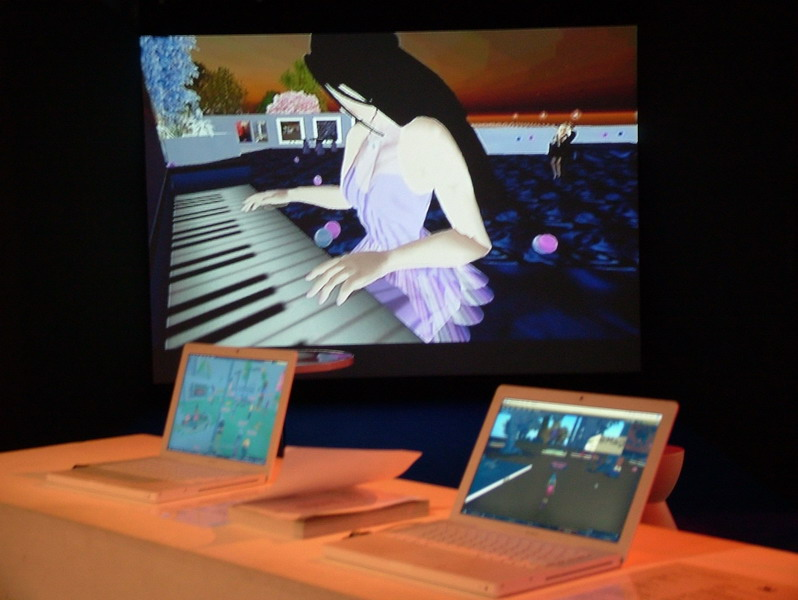
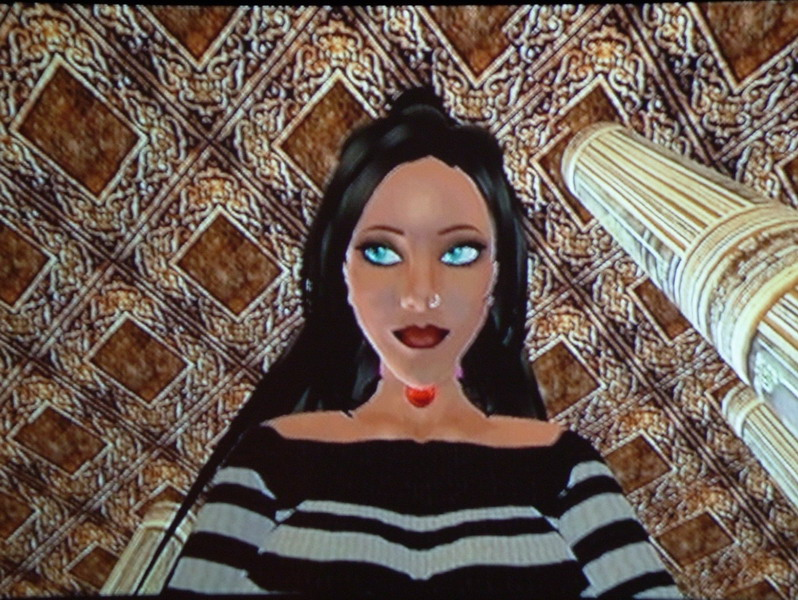
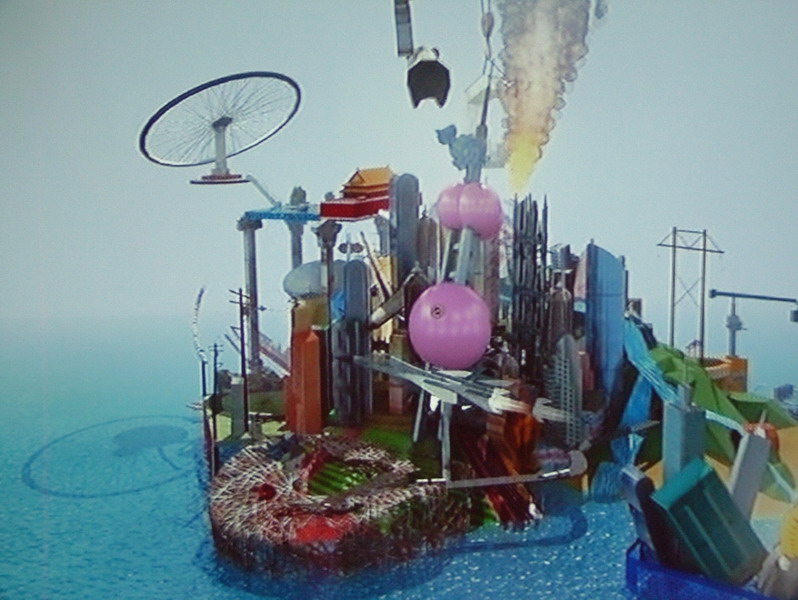
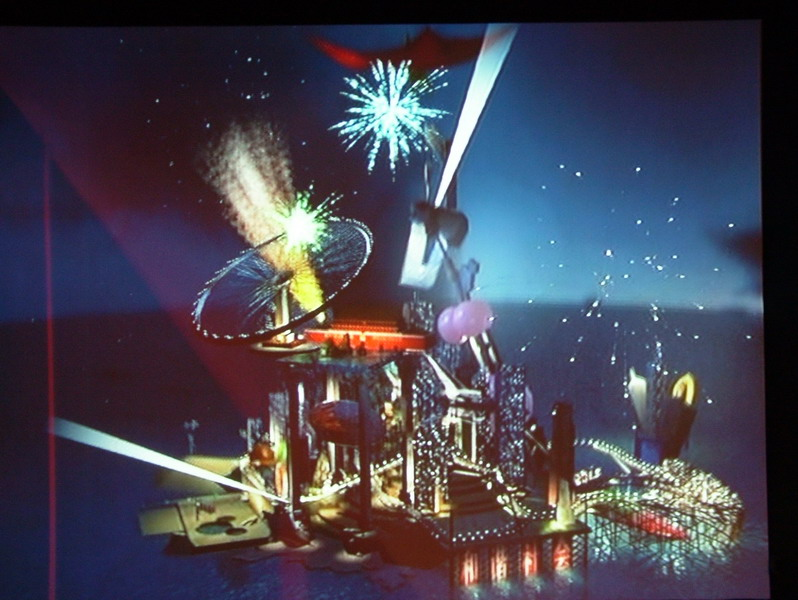
RMB City -investors world premiere-Great real estate opportunity in second life 3D video art 2007 Cao Fei solo exhibition: On display at Le plateau Contemporary Space from March 15 to May 25. Cao Fei is a new-generation artist in contemporary Chinese art and one of its leading figures. Clearly, the new generation of Chinese art is broader and more diverse than before, having moved beyond the deeply rooted old consciousness and stubborn expressive models of modern Chinese art, entering the creative forms and expressive methods of current globalized art. Within the construction of digital-image and video art using new technologies, she attempts to develop the possibilities of current imagery, with narrative and conceptual references and metaphors particularly highlighted, demonstrating social and globalized personal life situations amid current (Chinese) local transformations. Local contexts and thinking have become a culture of diversity in globalized art. The previous generation of Chinese contemporary artists excelled at manipulating traditional Chinese images, reinforcing fixed local cultural codes, carrying a strong ideological tint, possessing a distinct or subconscious resistance to Western art, and uniquely constructing local cultural plots and complex spiritual states within Chinese myths and legends. The new generation seizes globalized artistic meanings and visual codes; stubborn ideologies weaken, deconstructing Chinese myths and legends under local-global multicultural contexts, navigating between reality and virtual worlds.
After the Venice Biennale, Lyon Biennale, and Istanbul Biennale, Cao Fei’s Paris solo exhibition will establish her international status. Cao Fei’s work over the years has been built on video and installation art, presenting new visions and scenes of the new generation of Chinese art; recently, she has explored new 3D digital imaging techniques entering ethereal virtual video art, navigating between reality and virtual worlds, attempting to depict customs, functions, and mechanisms of Chinese society in transformation (the utopia of communism and the development of new capitalism). Cao Fei’s unique imagery possesses a distinctive sense of humor and poetry, clearly influenced by Taiwanese and Hong Kong films, television, advertisements, video games, and American popular culture. Incorporating local humanities and kinship-based Pop (anime and rap/rock) cultures, under globalized cultural plots and unique local appearances.
This solo exhibition by Cao Fei clearly displays the transition from local contexts and meanings to globalized cultural and visual contexts and visions, from early (2000) somewhat rigid works like "Imbalance" to the mature 2007 virtual video work "RMB City." "Imbalance257" (2000): This is Cao Fei’s earliest video work, narrating the absurd situation of a group of art academy students facing reality and free creation under an oppressive, absurd, dreamlike, and utopian feeling. Mixed with documentary and traditional imagery against the contrast of rock rhythm music, it presents the schizophrenia of contemporary society and the anxiety of young students facing current existence.
"Hip-Hop: Guangdong" (2003), comparatively humorous and lighthearted: Like a humorous street musical, through characters of different generations (old, middle, young) and lower-middle classes (workers, walkers, women, beggars, police, prisoners, and children), simulating hip-hop singing and dancing before typical Guangdong street scenes, it presents individual expression within a shared living system, alongside the class-level systems and functions of the entire metropolis. Singing and dancing become a positive force catalyzed by social systems.
"Cosplayers" (2004), presenting the anime culture of the new generation: Characters dressed as anime figures perform in urban natural landscapes: skyscrapers, streets, commercial districts, ruins, fields, under overpasses, etc. Gatherings, chases, or battles among characters, amidst electronic music, impacts, shouts, and noise from young people, are full of imaginative space, resembling a surreal human theater. These characters eventually return to their respective family situations, suddenly returning from the surreal to reality, like an extraordinary dream; the authenticity of reality is something people cannot escape. Dreams are beautiful, but upon waking, they are unbearable to recall, referencing the current situation of Chinese society.
"PDD Anti-Ero" (2005): A hilarious human theater, joyous and festive like a mass TV variety show. In humorous and funny short plays of singing and dancing, it presents conflicts, contradictions, and unrest in current Chinese society, humorously satirizing the machismo sentiment of today's Chinese society. It ends with political propaganda slogans "One World, One Dream" and "Building a Harmonious Society Based on People," constructing a utopia for a new world amidst the clamor.
"Natonal Father" (2005), full of political allegory: This video archive and sculptural environmental installation was a work participating in the 2005 Moscow Biennale. It presents his father, an official sculptor, dedicating his life to the nation, specializing in making monuments and statues of political figures and interview records, and presenting a series of small Deng Xiaoping statues. Another series showcases the "ideal world of the established republic" of Sun Yat-sen’s life created by his father, becoming one of the fathers of the Republic of China. It also includes TV serials about Sun Yat-sen’s legendary life, documentaries of Taiwan Red Army demonstrations against the Chen Shui-bian government (this documentary seems somewhat irrelevant to the Sun Yat-sen theme, questioning the artist’s intent), and interviews with actors playing Sun Yat-sen. It is a work with considerable political education and promotional nature, exploring China’s future prospects.
"Whose Utopia" (2006), critical of capitalism: This is the most eye-catching object and video environmental installation work in this exhibition. Four sides are piled with cardboard boxes (with the word "Utopia" written on them) forming walls, with one large screen and one small TV playing grand scenes of China’s largest OSRAM light bulb manufacturing factory and workers’ sweet dreams and fantasies. Divided into three rhythms: First, "Imagination of Products" introduces the overall mechanical production line process of bulbs and neon products, from raw materials to final product packaging, showing workers’ mechanically skilled production movements and expressionless faces. "The Myth of Factory Fairies" is a theater staged by the artist. On the infinitely wide factory production line aisles, workers sing and dance, do calisthenics, and play guitars; these leisure activities become what workers dream of, constructing a utopia for the worker world between contradiction and poetry, ending with a highly critical tone: "You cry and say... the fairy myth is a lie." Finally, the highly literary "My Future Is Not a Dream" presents workers’ expressions, attitudes, and behaviors at their workstations, showing how individuals constitute the body of factory society, yielding to the rhythm of production mechanisms. In the center of this installation stands a two-story worker bed, simply covered with mosquito nets, surrounded by numerous daily necessities and female magazines full of imaginative space.
The two most dramatic works in this exhibition: "I mirror, a Second life documentary film by China Tracy" (2007): In a virtual anime human beauty dream, an illusory and slow world presents a series of iconic and beautified figures, almost all portraits of the new generation’s young people. In this Western consumer society, amidst carnival scenes of eating, drinking, playing, and gambling, and poetic sentiments, in a hedonistic world chasing money and personal image aesthetics, where everyone can be traded and bought. Here, the life story of the virtual beautiful woman China Tracy, bewitching urban scenes of romance and flowers, sees China Tracy fall in love with a blonde handsome guy, throwing herself into a romantic web until one day the guy confesses his age to China Tracy. Clearly, humans are often confused by appearances; in today’s world emphasizing appearance etiquette in social interactions, human images, evolving with plastic surgery technology, construct a social value. China Tracy’s story mixes life fragments of surrounding young friends, constructing an overall anime world, linked under romantic and ethereal light music, as if music is the subject of life. Under this virtual yet realistic world, the artist presents current human loneliness and social values (not only being wealthy but forever young and beautiful), preferably with an extraordinary romantic love.
"RMB City" (2007), a virtual utopian world: This is Cao Fei’s 3D video art work participating in the 10th Istanbul Biennale. An extremely postmodern island platform, piled and constructed with extremely modern buildings and playgrounds, mixed with some iconic traditional Chinese buildings: Tiananmen Gate, Mao Zedong statue, pandas, Bird’s Nest Olympic stadium, etc., and Dada bicycle wheels, as well as platforms resembling grenades. High-rise buildings are interwoven with constantly rotating highways and ring-road trams. The entire extraordinary metropolis undergoes continuous construction and reconstruction; metropolitan images rotate endlessly, like a metropolis that changes constantly day and night, proceeding under light rhythmic music accompaniment. Conceptual references to the abnormal architecture and metropolitan planning politics of major Chinese cities, metaphorically highlighting the constant transformation and rotation of the commodity and technology world, and highlighting the kingdom of consumer society. Within video game culture and postmodern culture, constructing the artist’s extraordinary utopian world.