Carl Andre - "Sculpture as Place 1958-2010" Retrospective
Poster for the Carl Andre retrospective "Sculpture as Place 1958-2010" at the Musée Municipal d'Art Moderne de la Ville de Paris.
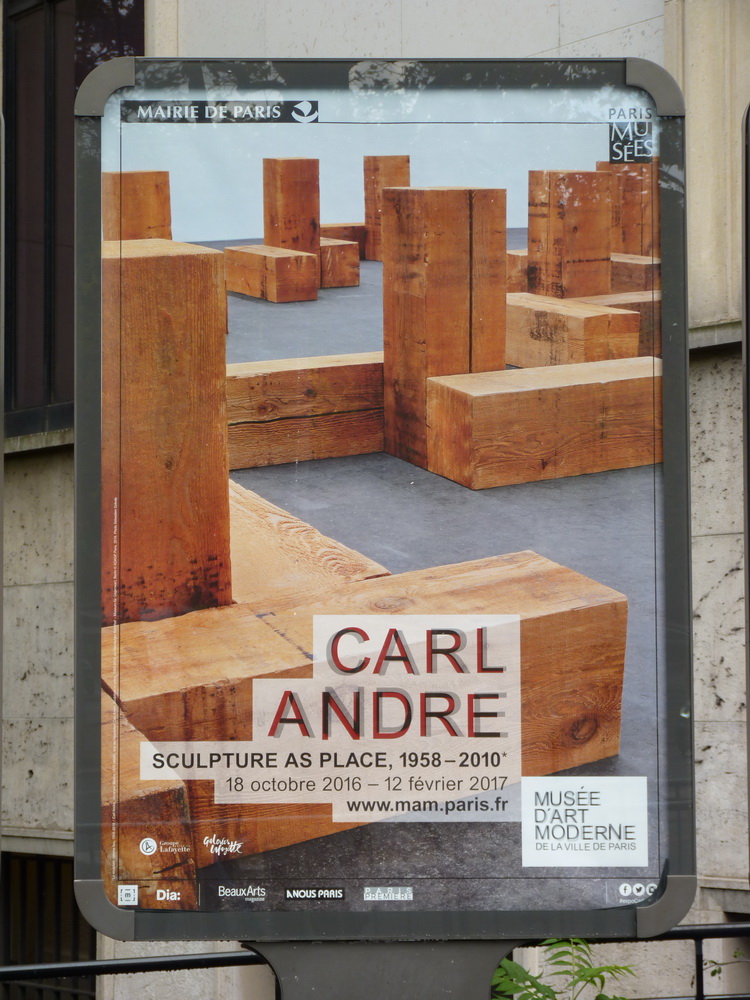
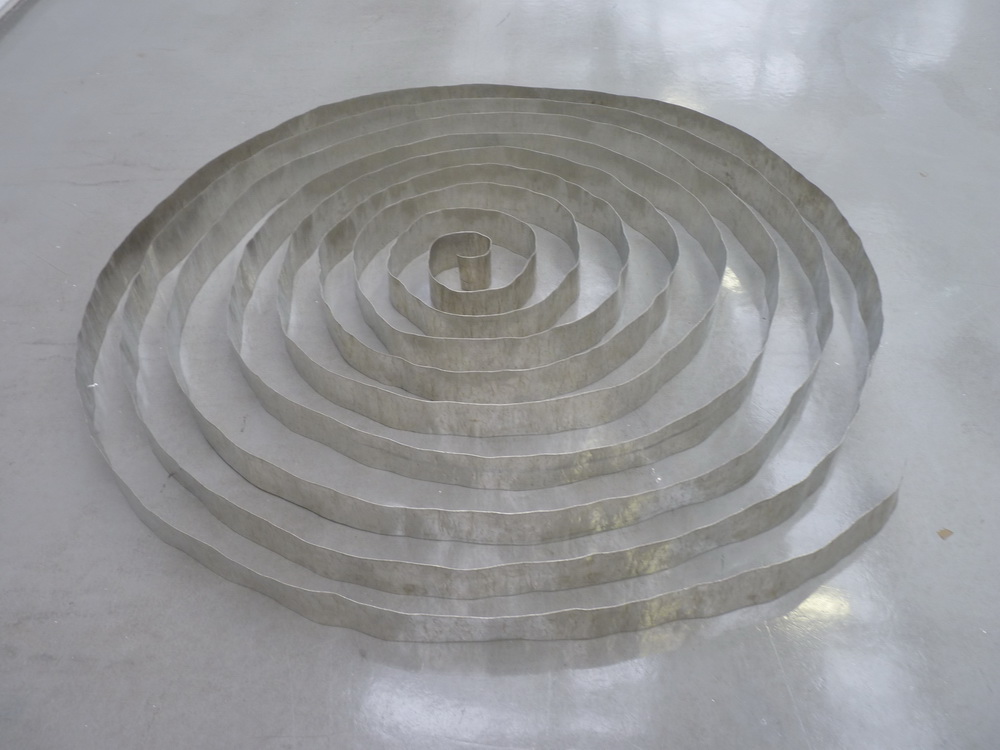
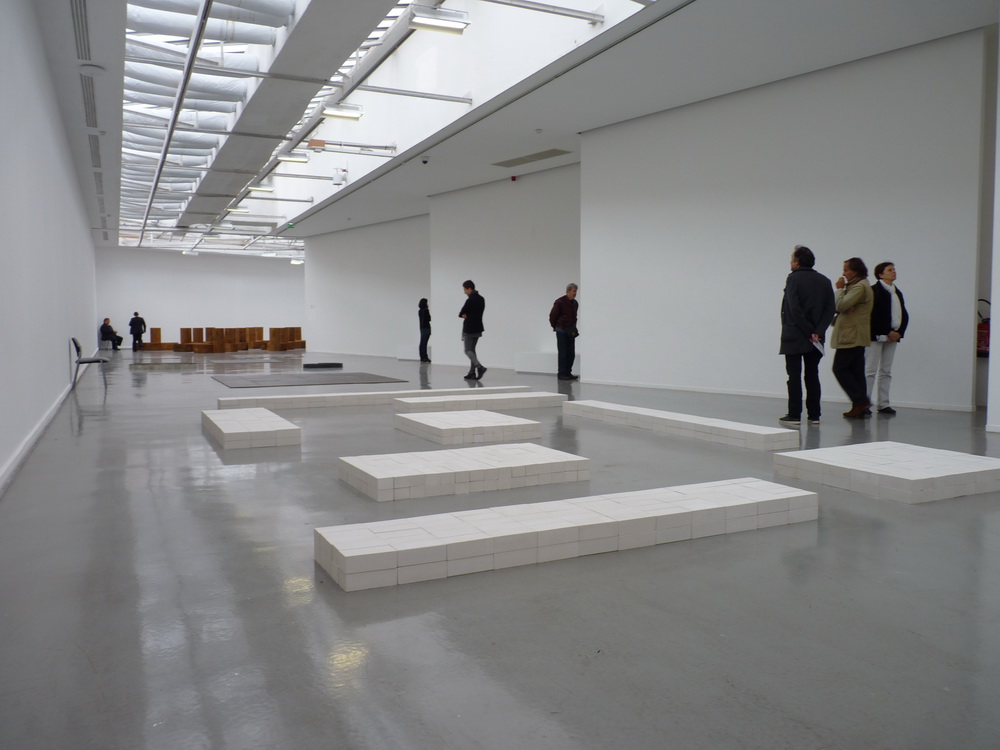
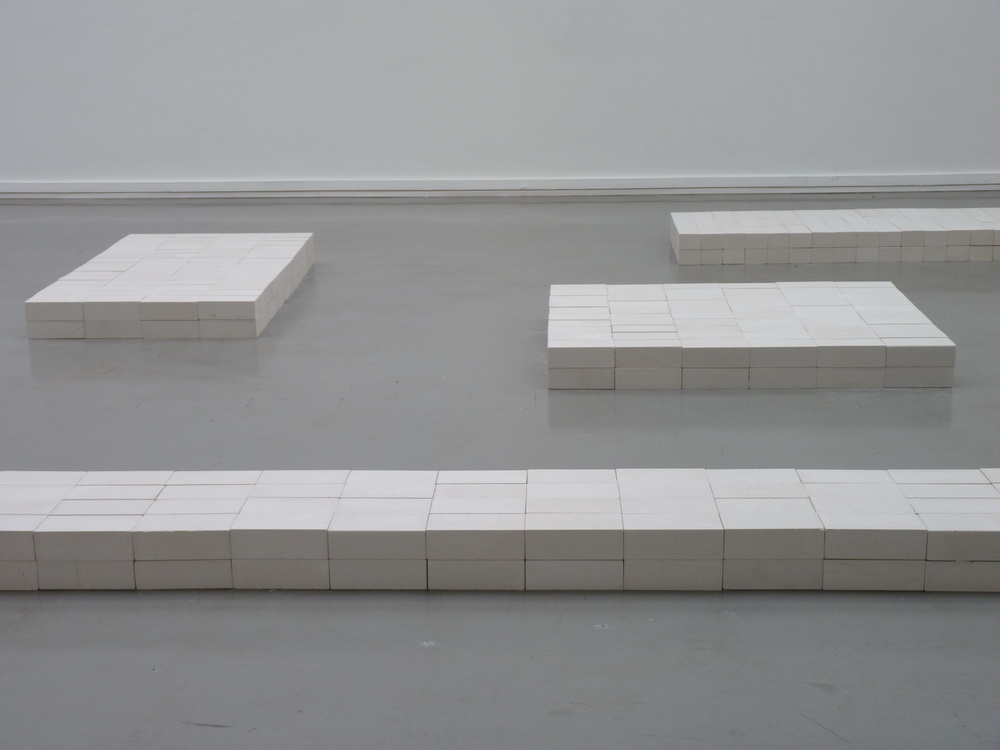
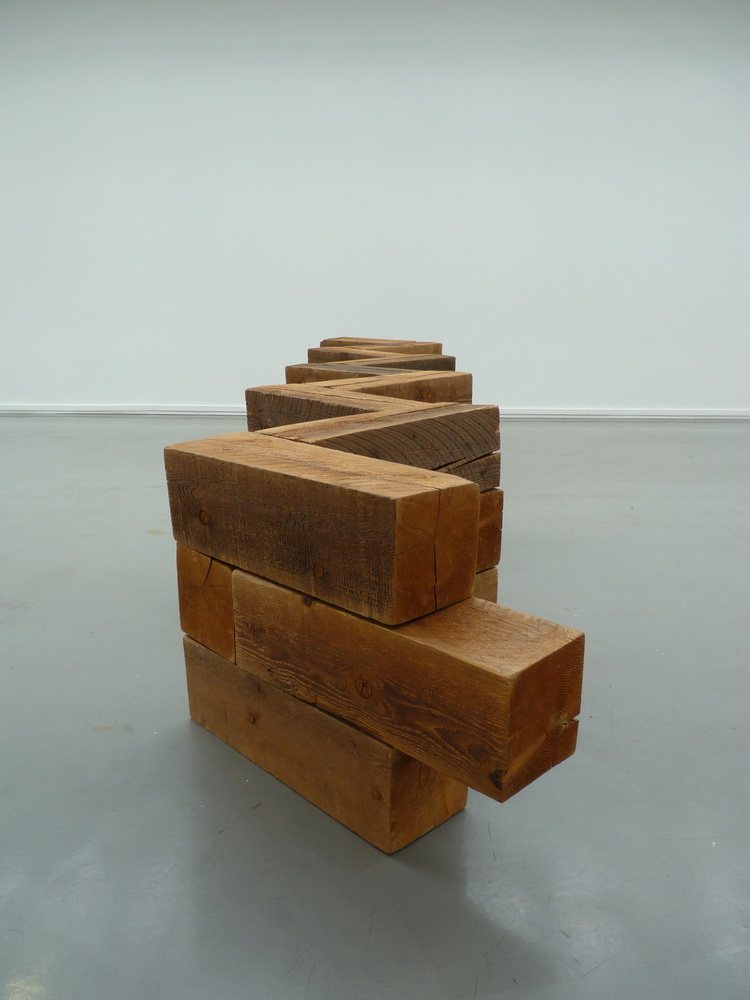
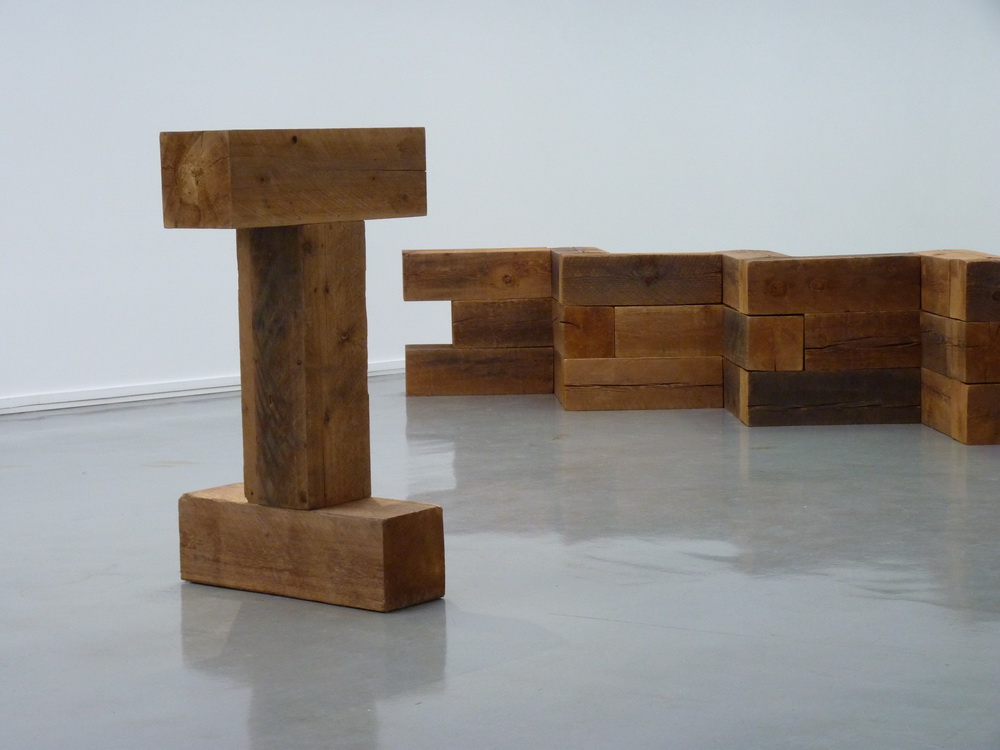
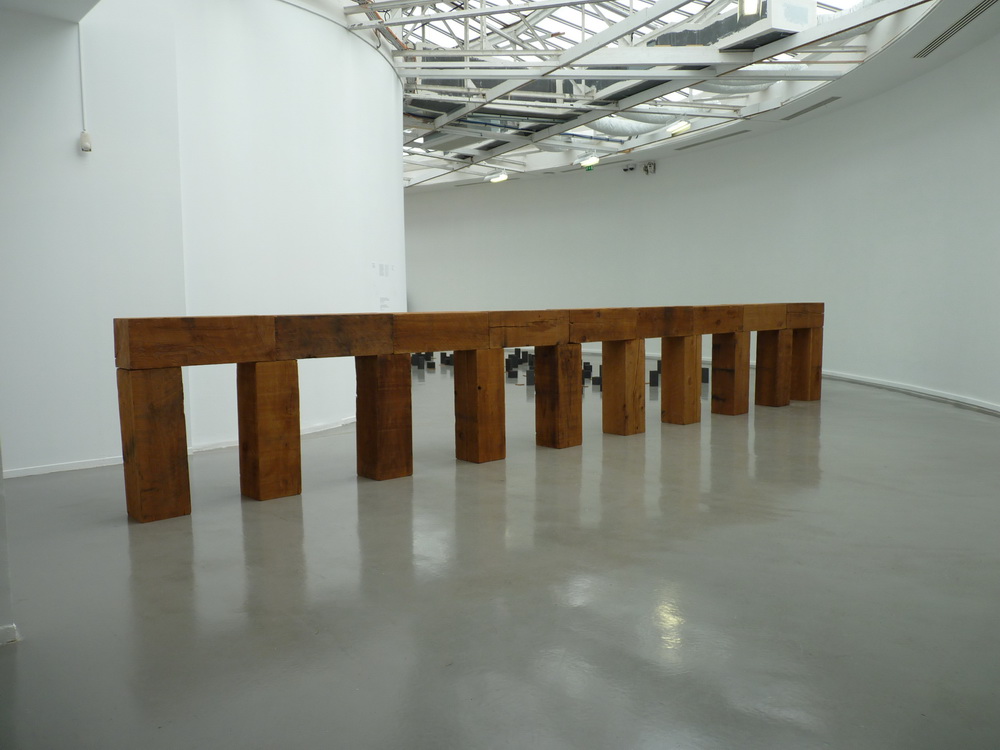
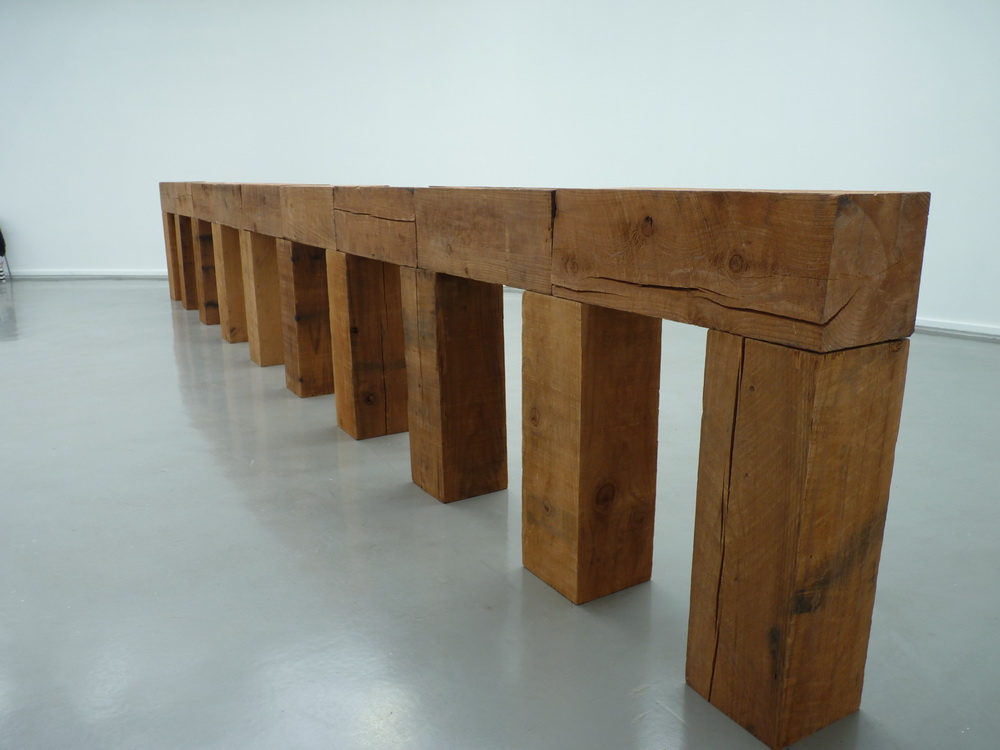
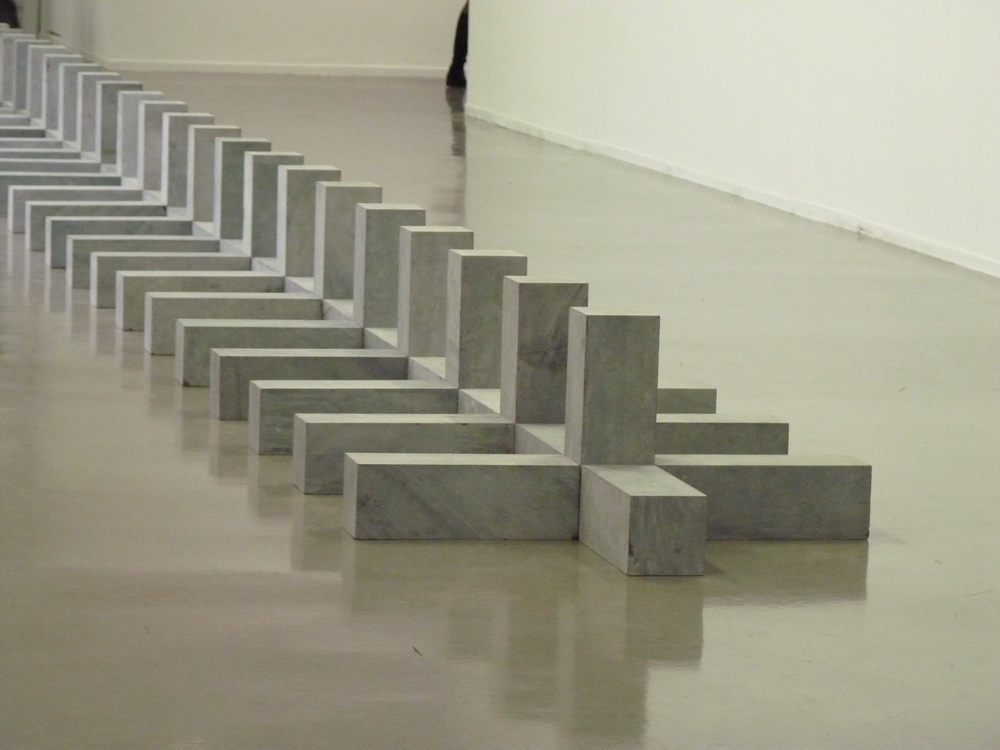
Text and photos by Chen Chi-Hsiang. Exhibition venue: Musée Municipal d'Art Moderne de la Ville de Paris. Dates: October 18, 2016 to January 21, 2017.
"I have only done one thing: abandoned Brancusi's infinite columns." — Carl Andre
Carl Andre (1935–) is one of the representative artists of American Minimalism. He studied at Phillips Academy from 1951 to 1953, where he met Stella. After graduation, he lived in Europe, where he was deeply influenced by Brancusi’s works and prehistoric megalithic architecture. Andre wrote: "...Why are Brancusi's works so closely related to the ground? Because the infinitely extending column is the ultimate expression of this experience; the column is deeply rooted in the earth, extending infinitely vertically. Before it, sculpture had its limits. Brancusi's sculpture stood outside the realm of pavement; it was rooted in the earth. Brancusi used many materials, but these were not the point... What was important was how he combined these heterogeneous elements to construct a pedestal. I think what is interesting about his work is these exciting material pedestals" (Note 1). Besides being decisively influenced by his friend Stella—especially his rigorous artistic attitude (Andre worked in Stella's studio in 1959, witnessing the birth of Stella's black line paintings)—he stated: "Stella is the last master" (Note 2).
Starting in 1959, Andre began assembling and constructing materials. His early most significant representative work, Cedar Works (1959–1964), featured a pyramidal form. Using standardized ninety-two-centimeter square wooden posts, he systematically constructed vertical and parallel structures that could be stacked infinitely to extend the composition, much like Brancusi's infinitely extending columns. In his 1965 solo exhibition, he continued with vertical constructions. Later, he stopped stacking materials and instead adopted horizontal arrangements based on site lines. Each work took shape according to space, making site and space the most characteristic manifestations of Minimalism.
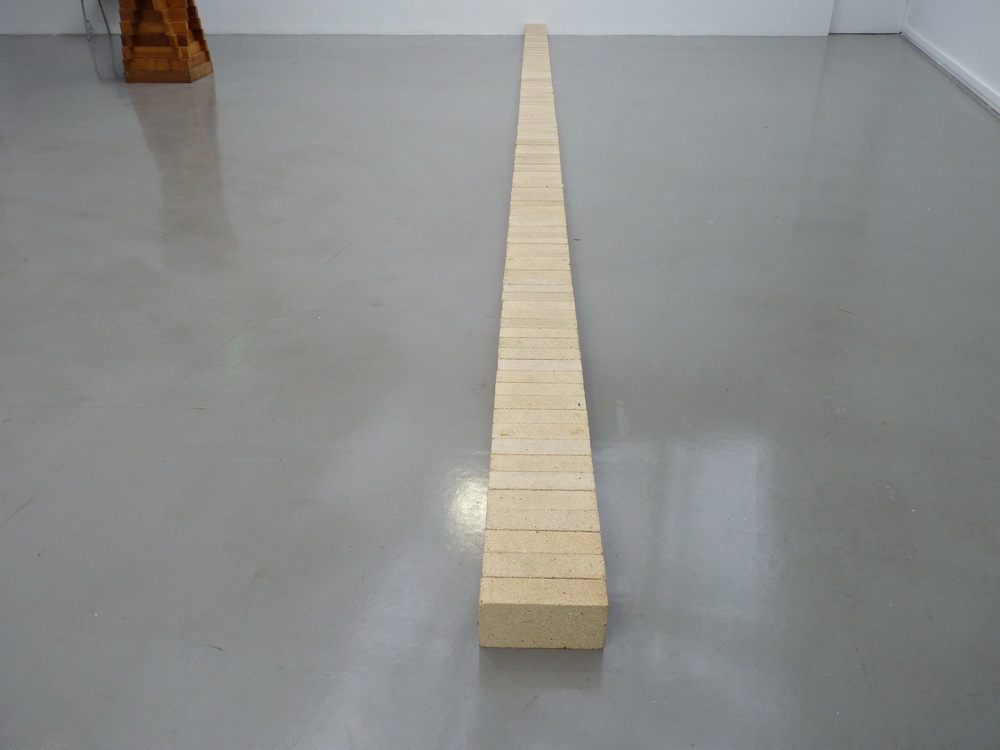
From 1966, Andre became interested in "perception," presenting it through series and repetitive phenomena, directly using uncarved material media. Andre wrote: "If you want to cut materials, might as well use them directly to cut space" (Note 3). That same year, he participated in the "Basic Structures" group exhibition alongside artists such as LeWitt, Judd, Flavin, and Morris, debuting his parallel sculptural work Railing. Composed of 137 standardized firebricks arranged in parallel series, it merged perfectly with the ground. Andre explained this sculpture: "I did nothing but arrange Brancusi's infinitely extending columns on the ground. Past sculptures were mostly Priapique, meaning erect male genitalia. And in my work, the Priapic is on the ground..." (Note 4). Indeed, verticality was the feeling of traditional sculpture; the charter of future sculpture has been seriously tested, especially within Minimalism. In his 1966 solo exhibition, Andre displayed eight parallel works, each constructed from 120 mortar bricks in various arrangements, turning sculpture into linear and planar forms.
In 1967, his most dramatic work, Cuts, covered the gallery floor with cement bricks, leaving eight rectangular voids (revealing the ground), forming a "negative form sculpture" that created a literary spatial and contrasting formal state. According to Stutzman and Kubler: "The work depends on the rhythm of total time and space; placing those parts, the whole is equivalent to their mutual relations" or "No single point is more important than any other in space. Furthermore, the density of the volumetric core makes connection with space impossible. That 'volume' occupies the core of sculpture like a screen... Outside volume, space is elusive to us." Then, "We move around the sculpture, discovering the space hidden behind the work. Yet discovery... Volume appears as an artificial limitation alongside space" (Note 5).
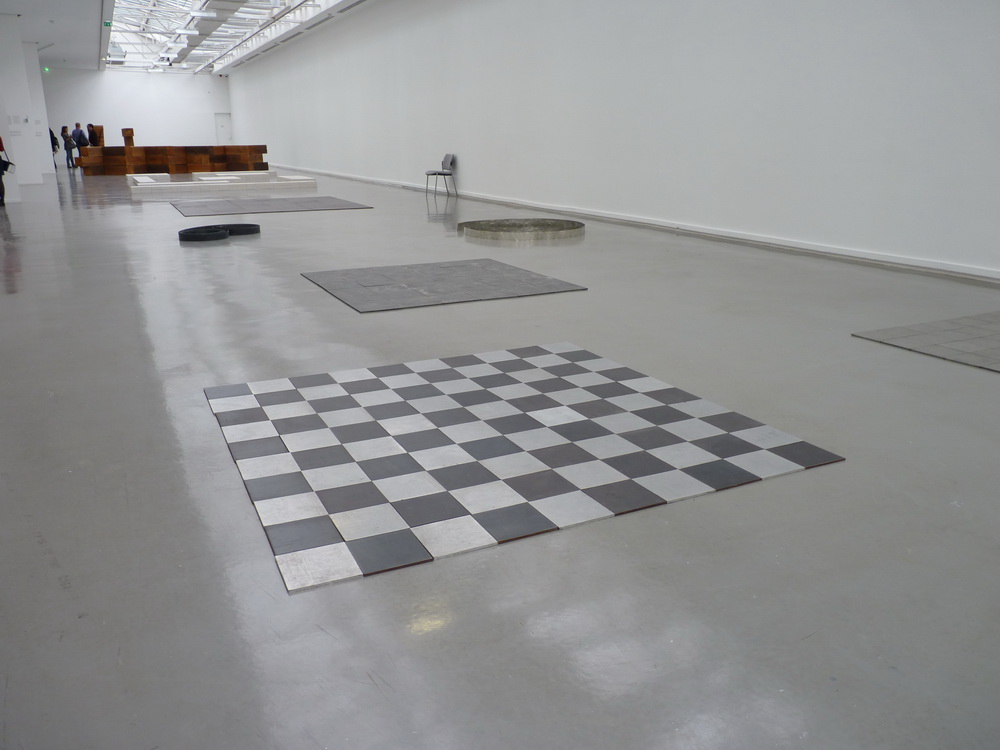
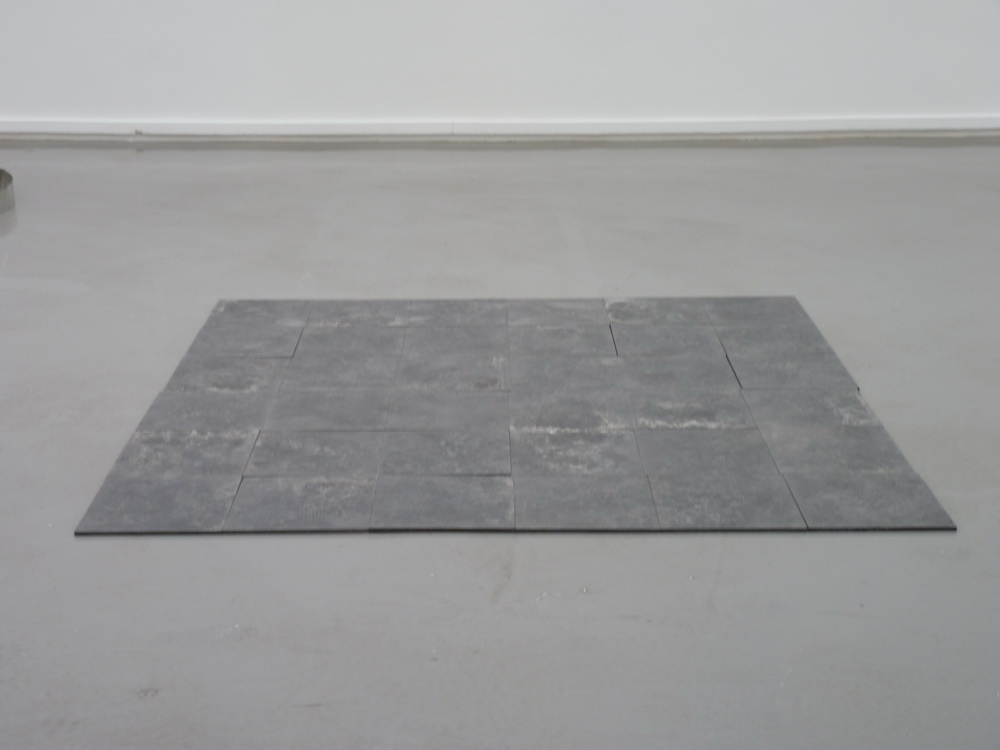
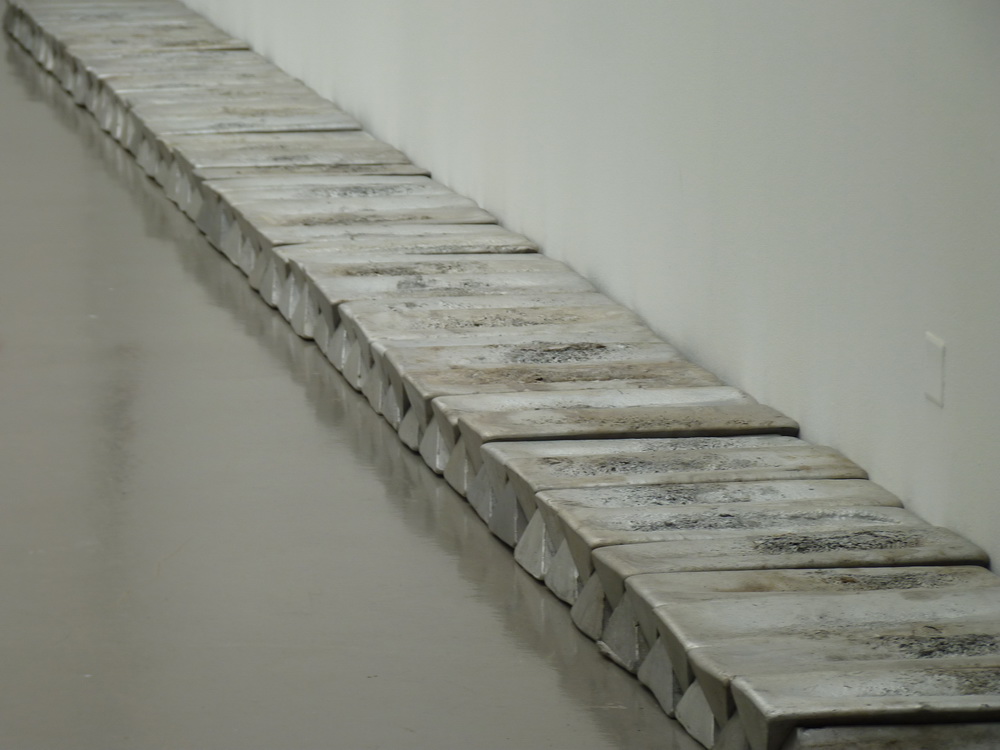
In 1969, the work Zinc-Lead Plain was constructed on the ground using eighteen standardized zinc plates and eighteen lead plates of two colors. Like 37 Piece Work in the 1969 Guggenheim Museum group exhibition, these works merged perfectly with the ground, resembling black-and-white tiled floors. The dramatic space established overall consistency, reflecting objects. It was not just something "seen" or "understood"; viewers could walk on the works, which was Andre's intention. He wrote: "Various materials have many attributes; it is possible to feel walking on them: making the work special, they are either smooth or rough. I also believe in the possibility of an overall feeling, satisfaction becoming a personal obsession..." (Note 6). Andre often used standardized industrial materials, re-expanding traditional concepts of combination toward horizontal construction. The idea of "sculpture as extended space" became the core of his creation, exploring exhibition space consciousness and aligning with the audience's reality transformation. He considered the periodic classification of these elements like "a type of palette," equating them as sculpture "these tones are painting... copper base differs from aluminum, is red and green." Andre said: "I obey the attributes of the materials; they reflect some types of my character... I like depending on the attributes of my materials..." (Note 7).
In the 1970s, regarding movement, proportion, site, space, and material relationships, Andre's works no longer established internal volume, reducing it to its minimum while retaining sculpture within the object's charter. Most notably were standardized rectangular wooden posts assembled into various forms. He said: "He achieved the most perfect effect with the greatest economy." Four Section Hexagon (1974) and Trabum (1977) were constructed from nine pine posts forming a frontal cubic body. Black Creek (1978) consisted of five wooden posts forming a geometrically symmetrical structure. Triskaidek (1979) was built from ninety-one thick wooden posts stacked from one to thirteen, resembling stairs. Fallen Timbers (1980) consisted of forty wooden posts distributed in rows and columns with spacing, all outlining the contours of space through the materials themselves. This expressed a new perspective on sculpture, introducing concepts of shifting forms for viewing and bodily exploration, making sculpture more independent. Andre said: "I often make a type of sculpture that people can enter, but it is not a building" (Note 8).
In the 1980s, Andre continued to depend on material attributes, establishing the position of works regarding site and space. He said: "I realize my installation is simpler than I can realize, considering a material and providing a site: the more prudent I am, the more I can obtain," emphasizing "those things are in their elements, not in their relations" (Note 9). For example, Furrow (1981), constructed vertically from wooden posts, and Bloody Angle (1985), arranged vertically and parallelly against a wall corner, formed a dramatic presentation. The 1983 work constructed with parallel lines on the ground took shape according to the wall corner; Ledge took shape along the wall surface; the Fin series had parallel lines standing vertically on the floor, metaphorically extending infinitely; 45th Travertine Integer (1985) was constructed from one to nine cement bricks, etc. Andre declared emphatically: "Those things are in their elements, not in their relations" (Note 10). "Considering sculpture has a site function, where it exists, and prompts the audience to walk around it, abolishing frontality and pedestal, because these hinder the work from blending into the environmental space" (Note 11). Overall, he explored matter, form, planarity, lines, color, volume, and space, most importantly establishing his sculpture as a place where the audience could even walk inside.
Note 1: Artforum, October 1966, p. 15. Note 2: Irving Sandler, Le Triomphe de L Art Americain Les annee Soixant tome 2, Carré publisher, Paris, France, 1990, p. 280. Note 3: Ibid., p. 280. Note 4: Artforum, October 1966, p. 15. Note 5: Artstudio Art Minimal N6, Autumn 1987 issue, pp. 64–66. Note 6: Irving Sandler, Le Triomphe de L Art Americain Les annee Soixant tome 2, Carré publisher, Paris, France, 1990, p. 282. Note 7: Ibid., p. 282. Note 8: Ibid., p. 282. Note 9: Reference: Centre Pompidou Modern Art Museum Minimalism Guide Card. Note 10: Irving Sandler, Le Triomphe de L Art Americain Les annee Soixant tome 2, Carré publisher, Paris, France, 1990, p. 282. Note 11: Ibid., p. 282.