The Catacombs
(Top left) The inscription notes that remains from the Saint-Lazare Cemetery were placed here in 1848 and another part in 1859. (Top left) Remains from the Saint-Nicolas Cemetery were placed here in 1859; who would have thought that after such a long separation, they would reunite in the Catacombs?
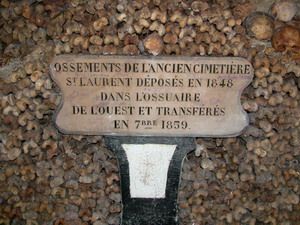
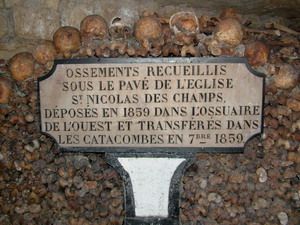
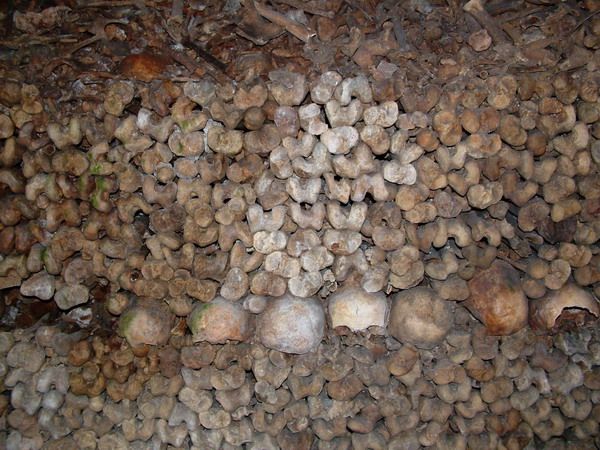
(Top left) The inscription notes that remains from the Saint-Lazare Cemetery were placed here in 1848 and another part in 1859. (Top left) Remains from the Saint-Nicolas Cemetery were placed here in 1859; who would have thought that after such a long separation, they would reunite in the Catacombs? (Bottom) A neat, orderly corridor of bones welcomes visitors.
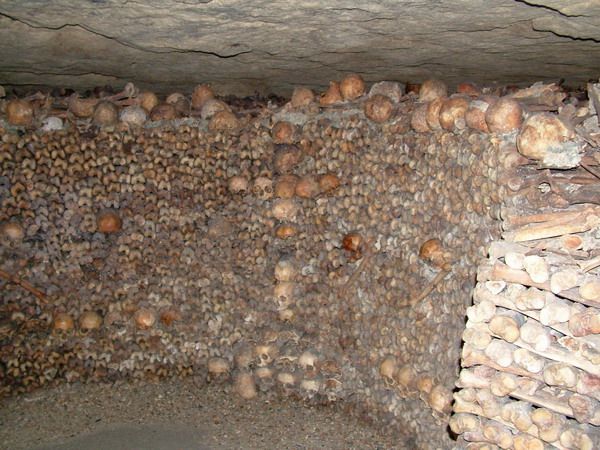
Whether friend or foe, relative or stranger, being gathered together is surely fate.
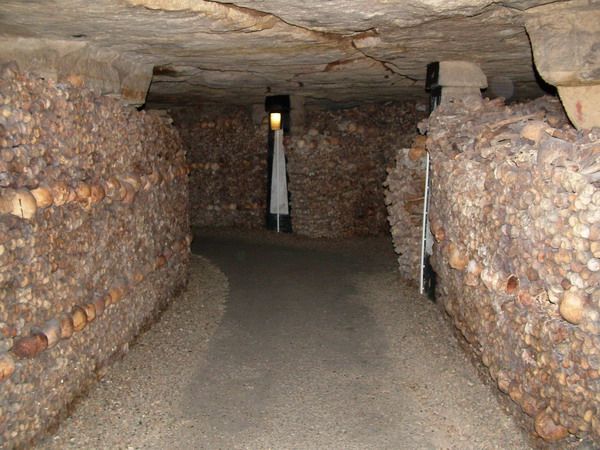
Time turns to ashes here; humans are but cosmic dust.
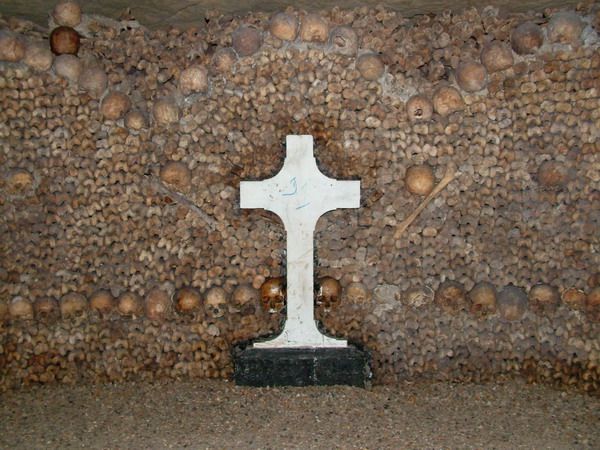
Does everyone carry their own cross? Believe what you will.
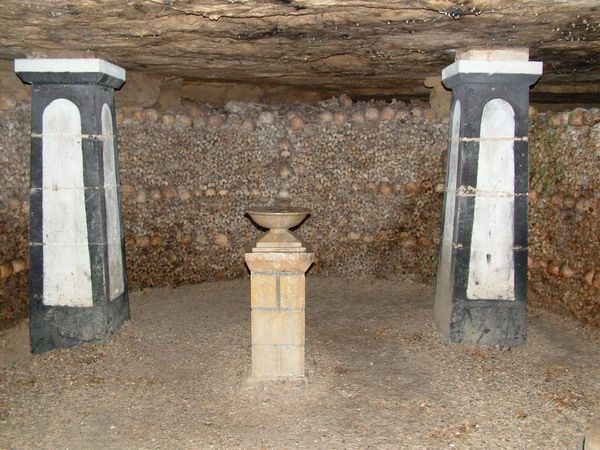
Black-and-white pillars construct the death hall of the Catacombs. Is death black and white?
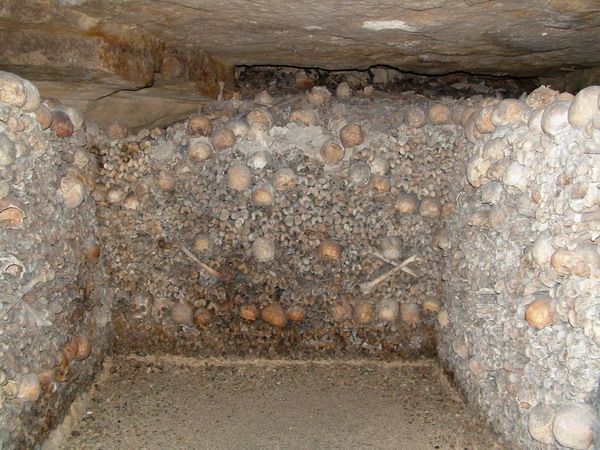
The ossuary wall of six million Parisians. Whose space is this?
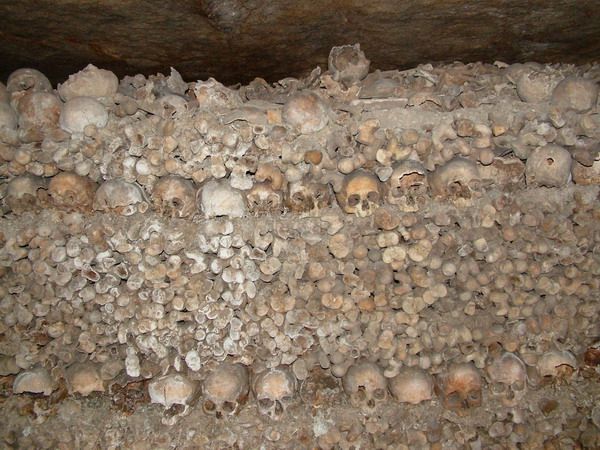
We are watching you, waiting for you.
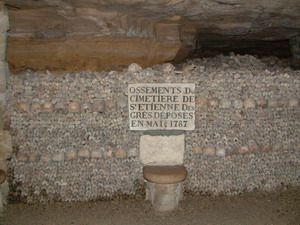
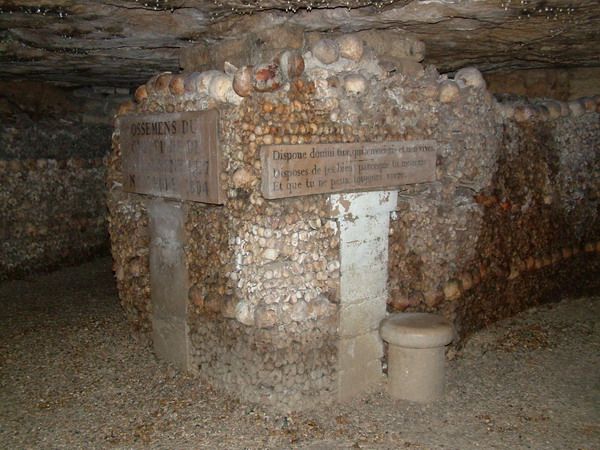
(Top) Visitors, please sit and take a photo with us as a souvenir. (Bottom) Friends on the ground, stop and keep us underground companions company for a while.
Paris has a unique underground cemetery, also known as the Catacombs, located under the sidewalk at Place Denfert-Rochereau in the 14th arrondissement. Inside, the remains of six million Parisians are arranged chronologically in an orderly fashion, which is hard to imagine. At a depth of 20 meters below ground, there are tunnels spanning 17 kilometers with an area of 11,000 square feet. During the reign of Louis XVI (in 1785), due to centuries of dirty, crowded small graves throughout Paris, people could no longer tolerate this unregulated handling method. Amidst complaints from Parisians, the king decided to establish a burial system, banning indiscriminate burial and consolidating transfers to cemeteries, receiving the remains of all nameless graves in Paris. Immediately, quarry inspector Charles-Axel Guillaumot reinforced Paris's past underground stone corridors with cement, constructing stairs and ventilation shafts leading to the underground passages. The following year, on April 7, the Catacombs were established. After two years of relocation, workers neatly arranged large bones against the walls and carefully placed skulls into extraordinary decorations. This bone wall is nearly 30 meters thick and over 10 meters high. This plan to relocate Parisian graves was not completed until 1814. The origins of all remains are clearly marked with dates, locations, or events. Notable are the remains of revolutionary warriors in front of the Brienne mansion in 1788, social revolutionaries in 1789, and victims of the Tuileries massacre in 1792. Of course, the Catacombs continued to receive remains found during the modern urban grand project presided over by Duke Haussmann under Napoleon III in 1859. During World War II, this place served as a hideout base for Paris Liberation fighters. The Catacombs were officially opened for public visitation during the Napoleonic era, further planned and constructed by quarry inspector Hericart de Thury in 1809, who organized the bone corridors and routes, erected marble epitaphs and warning messages, and decorated the passages, becoming the appearance we see today. All this allows visiting crowds or Paris pilgrims to contemplate the meaning of life in a solemn atmosphere.