Chaerles Avery "Onomatopoeia" Solo Exhibition
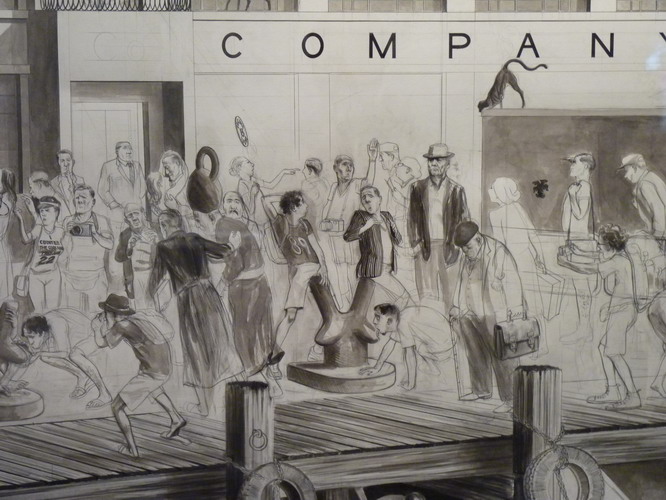
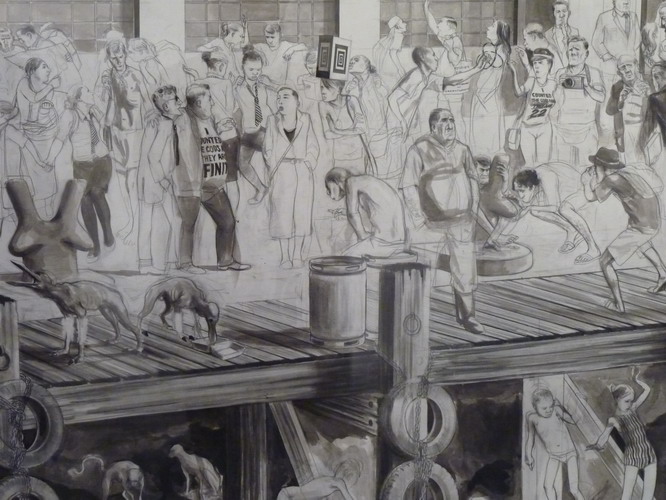
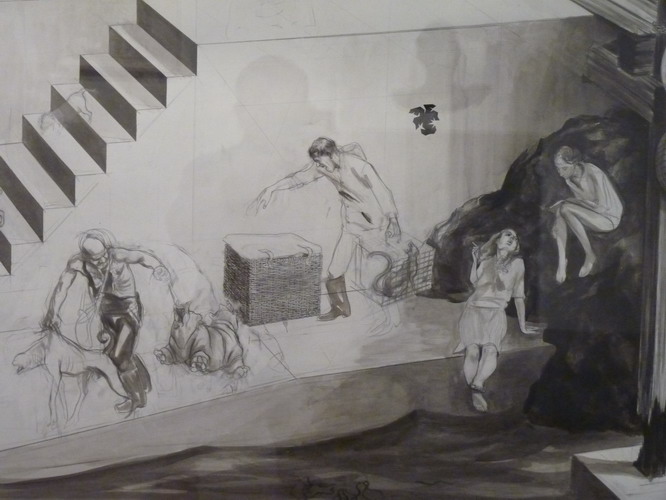
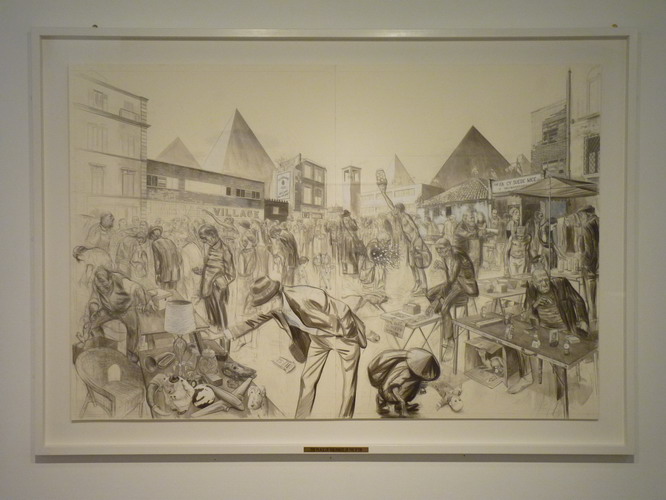
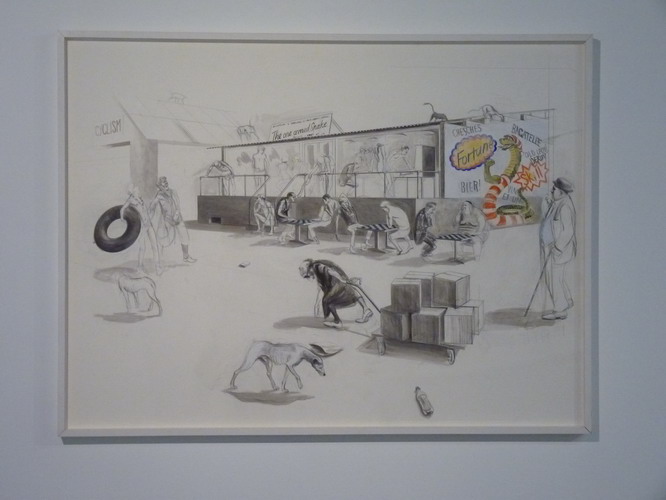
"Onomatopoeia Port" large drawing, detail, on paper, 2009-2010
From May 27th to August 8th at Le Plateau contemporary art center.
Preface: Chaerles Avery (born 1973) is one of the most representative British artists today. He excels in a narrative style of artistic creation, set within a literary and anecdotal world of fiction and imagination. Through his diverse explorations—text, drawing, sculpture, objects, and installations—he investigates virtual geographical situations, compiles stories, and deduces plots, intending to elucidate worldviews and personal insights under today's globalization. Each of his exhibitions is highly dramatic, like reading a complex detective novel, watching a thought-provoking play, or traveling to a place in the world, entering a certain travel scenario, all promising unexpected discoveries and feelings.
Since 2004, Chaerles Avery has abandoned all other thematic inquiries to radically focus on a single "Island" art project, defining the scope of his investigation between reality and relational meaning, akin to modernist artists like Broodthaers, Opalka, and Buren. In terms of literary deduction, he evokes methods used by famous writers like Faulkner and Borges. The "Island" world is depicted through a virtual and imagined realm, specifically the geographical environment, human context, fauna, flora, and living situations of the island's inhabitants, explored through a slow process of exploration, adventure, and discovery. Using a wealth of material and imagination, he compiles storylines, choosing pure classical realistic drawing as his means of interpretation. Under a complex logic and clearly narrative depiction, the rare and superb quality of his drawings achieves the effect of a reportage picture book or illustration. He then develops emblematic characters, objects, or situational spatial installations from these drawings.
The "Archipelago" World: Chaerles Avery's virtual and imagined "Island" world is like a conceptual world, sufficient to metaphorize today's real world. Through spatiotemporal fantasy and a bizarre, profound quality, it presents society's populace, and the local flora and fauna, in a theatrical manner. Under extraordinary living conditions and various events, it presents the diverse perspectives of globalization and the differing values of local life situations, from which numerous social hierarchical orders and character archetypes are established, revealing a world governed by philosophical logical order, intending to question contemporary systems of thought. The renowned curator Nicolas Bourriaud described his work thus, writing: "Avery applies Plato's maxims literarily and decides to manifest the contemporary world from inside the cellar."
Avery wrote this about imagining the "Island" world: "Find an island in the spiral archipelago composed of numerous islands, with tributaries stretching into the vast Atlantic Ocean, near the pole. A medium-sized island lies at the world's core: generally speaking, within its scope, all relationships are perfectly endogenous and the inhabitants are very satisfied with the lives they lead. Their characteristics resemble these basins, semi-marine creations, living with the tides, and restraining all they experience. An anonymous traveler. One of the more difficult aspects of the island is cosmology. The island's inhabitants cannot agree on major issues, as this stems from differing value perspectives. The island's most basic feature contains a dichotomy of perfect positions on all propositions; no matter what, there are two possible stances. This basic concept is the well-known Fifth Hypothesis, and of course, obviously, the inhabitants are equally incapable of agreeing on it. Analyze the other stance by type: 1. The world has one or two faces (aspects). 2. The other face (aspect) stance world is completely identical to the other. 3. According to this, as people deviate from the equator, they become narrower. 4. The South Pole and North Pole's agreement and disagreement are unique, or the same as the positive side."
Entering the Onomatopoeia Exhibition Journey: The exotic "Onomatopoeia" exhibition, with its poetic and rhythmic theme, suggests another virtual, imagined world: the bustling metropolis, market, square, bar, and roadside scenes on a certain unfamiliar island, immediately evoking a strong imaginative space. Because all concepts and thoughts originate from public debate and dialogue, acquaintance, exchange, and understanding can resolve conflicts and differences between people or races, making society more harmonious, open-minded, and civilized. Visiting the exhibition is like unfolding a detective novel with a geographical plot, entering an unexpected spatiotemporal travel adventure and extraordinary encounters.
Here, people can enter the pictures and roam freely according to their own perspectives. Travel with me: start with this monumental large drawing "Onomatopoeia Port" (2009-2010): a luxury liner from afar docks at the modern urban port of Onomatopoeia, tourists and travelers are descending the gangway, facing them is a modern building housing a shipping company, to the left is a square market, everywhere are advertisement signs, to the right is a small dome-shaped oval building. The crowd gathers in the noisy port, a mix of locals, tourists, porters, and prostitutes, groups of people working, chatting, shopping, taking photos, or hurried passers-by, each busy with their own affairs. Several dog-like or cat-like animals crawl on the buildings, and on the shore are a few inexplicable animals (body like a dog or wolf, mouth like a duck), forming a strange and lively market scene.
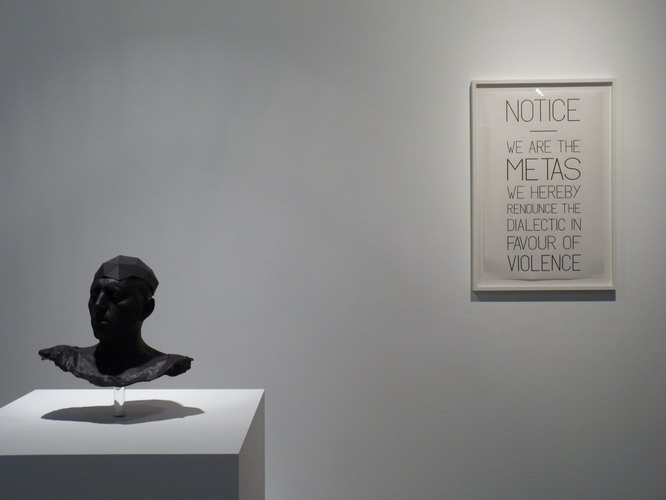
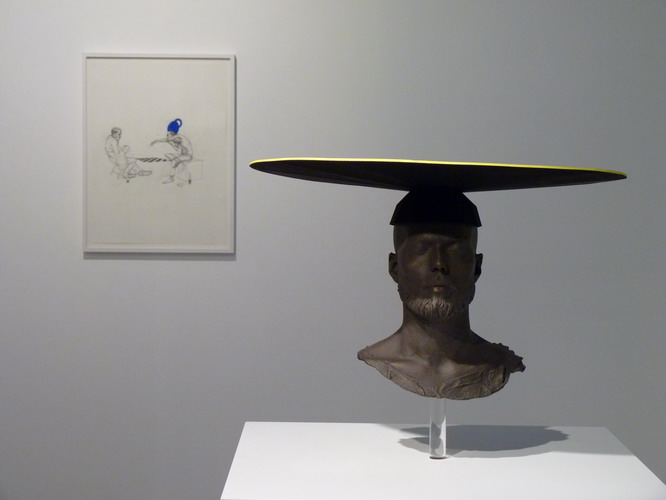
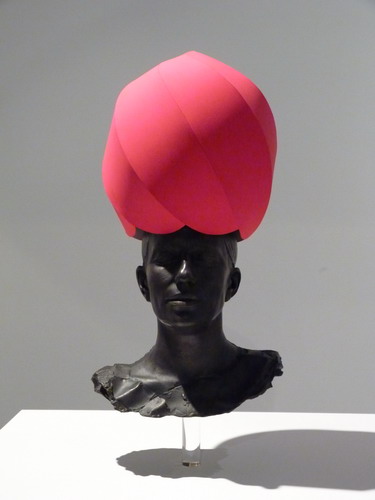
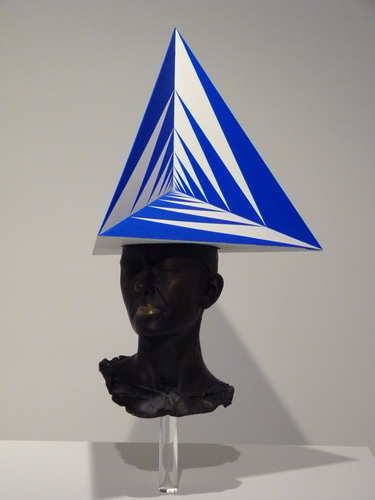
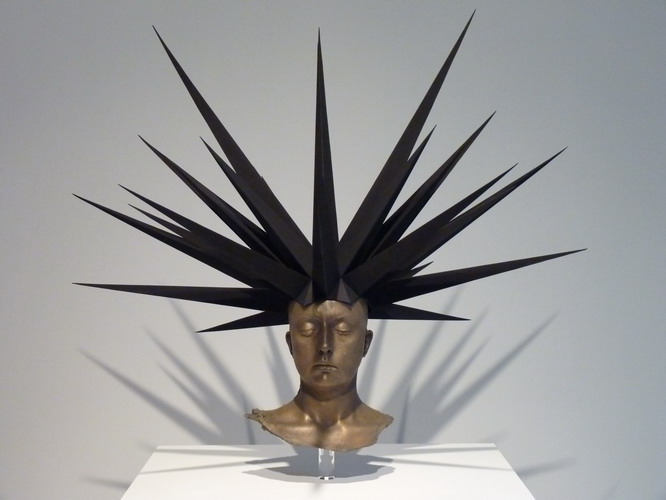
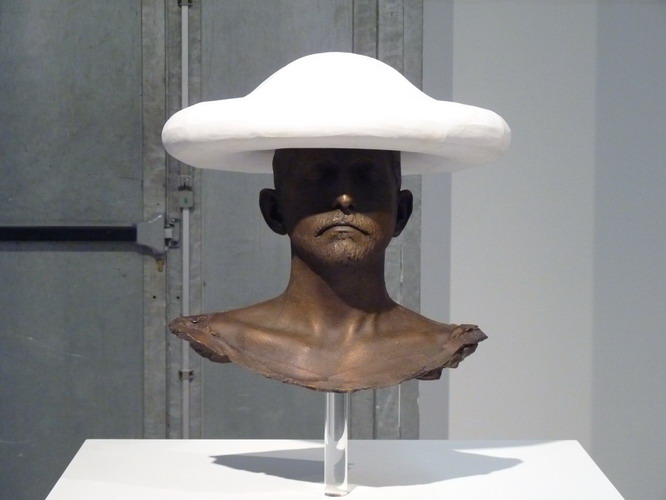
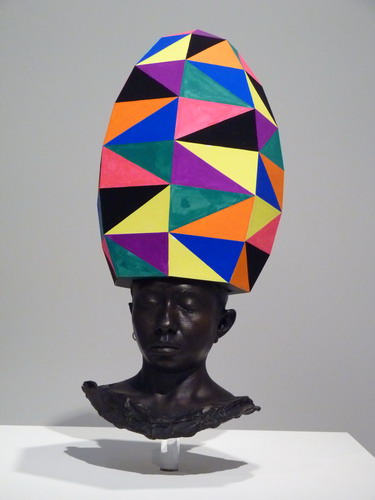
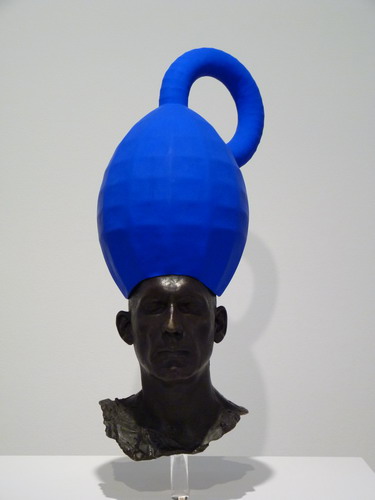
Among the crowd in "Onomatopoeia Port," one can identify some special characters wearing distinctive hats, each with their own specific social image and expressive archetype; Avery uses this to metaphorize the world of social order and rules. He materializes these characters into sculptures: yellow-circled disc hat - the Wise Man, small-brimmed black hat - metaphor for violence, tall cylindrical pink hat - the Stranger, triangular blue-and-white hat - the Status Quo (female), punk-style black hat - the Solipsist, triangular blue hat - the Nonsensical (female), multicolored top hat - the Atomist (female), white round hat - the Hunter, strangely tall round cyan hat - Klein. These emblematic characters encompass an individual's role within a dialectical system, and the archetypes of the overall social structure and hierarchical world. Clearly, travelers touring another world mostly do not carry any preconceived notions or their meanings.
After disembarking at the port, the tourists check into their hotels and begin their itinerary. The island's geographical landscape and culture, markets, and street scenes are essential for browsing and visiting, sufficient for understanding the local humanity and living conditions. Thus, at the end of God's Avenue, turning a corner brings one to the "Square Flea Market" (2007), a bustling, noisy market surrounding a modern building with a pyramid; on the building, groups of dog-like or cat-like animals play on the roof. The surroundings are lively with antique shops; the square's antique market is crowded with tourists and travelers from around the world searching for treasures, along with local smugglers surrounding stalls of rare and peculiar curios. Tourists always like to rummage through everything, while travelers feel around and search; the stall owners are always impatient. At this moment, a tall, bare-chested native in the center of the square holds a jar of something unknown, shouting loudly to sell it, attracting everyone's attention. A hunchbacked old man carrying gathered firewood passes by, followed by a herd of goats; in front, a gentleman in a suit and hat is selecting antiques; beside him, a mysterious figure wearing a straw hat and carrying a plastic bag—the Ghost—squats on the ground, who knows what he is doing? In this bustling market with people coming and going, it arouses even more curiosity and adds to the imaginative space. The artist uses this image to metaphorize the demise of human society and the guilt it induces.
Leaving the market, the traveler heads for a walk by the sea. Taking a shortcut into a tourist path, there are many roadside stalls; one person squats on the ground selling the island's famous "Mouse Stone" (2008). It's a semi-corroded, semi-mineralized fossil, also the island's most symbolic souvenir; it's said that under strong light it turns into an ordinary stone. Asking the price, it's not cheap, and authenticity is a big question. Many tourists have been tricked into buying fakes; it's better to be conservative. Continuing on, wandering east and west, one can see stalls selling boiled eggs everywhere. Turning a corner, a group of island residents are seen in a small square exaggeratedly licking eggs with wide mouths—"Three Men Eating Eggs" (2008). These are prepared according to a traditional island secret recipe: the eggs are soaked in gin and then pickled in sea salt; it's said eating them enhances sexual function, a tonic tribute for the island's men, and many tourists also give them a taste.
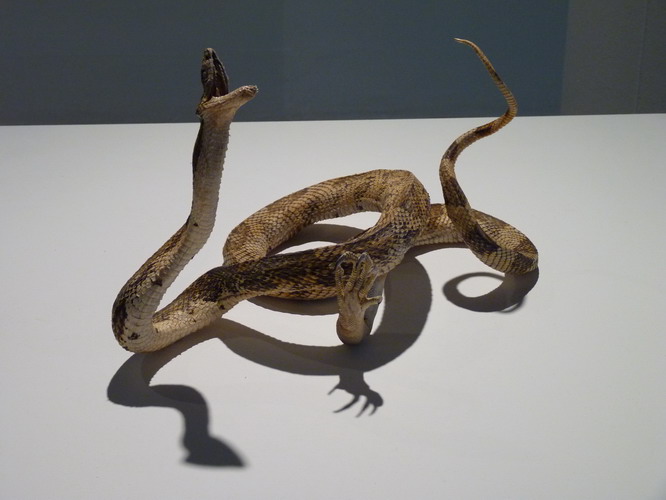
Arriving at the "Armed Snake Bar" (2009), a favorite gathering spot for tourists and travelers, the traveler sees an unbelievable scene in front of the bar: a short, bald, hunchbacked old man, seemingly blind and wearing black sunglasses, is strenuously dragging several crates of beer or other items, taking heavy, listless steps slowly towards the bar, looking somewhat pitiful. On the busy street, not a single person stops to help the old man; behind him follows a portly, well-dressed local gentleman. The class divisions and wealth gap in real society are clearly evident everywhere. What can a tourist do? Enter the bar for a drink first, and rest a while.
In the evening, as the weather becomes less stifling, the traveler, in good spirits, strolls along the island's main shopping street. Reaching the end and turning a corner into a small tree-lined path, he heads for the island's most charming and beautiful white sand beach to enjoy the island's unique sunset. Passing a small square frequented by tourists and travelers, with a few antique dealers, the traveler always looks curiously at the strange and rare treasures. As the traveler intently examines a vessel in his hand, a group of disheveled people push past him, almost knocking him over. "The Thieves" (2008)—stray dogs run about barking wildly, followed by a group of disheveled, excitedly shouting residents passing through the square. In the procession, two residents in black clothing carry a lion-like prey on a branch, followed by a crowd of onlookers. The traveler, curious, follows this group. As he is about to leave the small square, he discovers the mysterious Ghost figure stealthily hiding by the antique dealer's stall; truly unknown what he is doing, mysterious and shadow-like. What does this mean? Checking his backpack, he finds his camera and Walkman are gone. A small mercy, his wallet and passport are still there, thank goodness. The traveler thinks they were probably stolen during the jostling earlier; no doubt about it, this is the worst taboo of travel, and one can only resign oneself to it.
Curious, he follows the disheveled group through streets and alleys, getting farther from the city center. After a while, they arrive at a somewhat messy poor suburban area, with crude buildings constructed from many planks and cardboard boxes retrieved from the city. Under the starry moonlit sky, with dim lights, a crowd gathers around a campfire in a clearing, celebrating something. They hang the majestic lion-like prey over the fire to roast; everyone sits around drinking and eating, groups chatting and talking loudly, waiting to taste this mountain delicacy. Until midnight, the traveler for the first time shares such fragrant, sweet, delicious meat. He enjoys himself thoroughly participating, quite happy, experiencing the warmth and generosity of an alternative community, something ordinary tourists cannot experience. Unexpectedly, this incident, from the indifferent city to the enthusiastic fringe suburbs, allows the traveler to discover the truth of human nature, reveling with this crowd through an unforgettable sleepless night, returning to the hotel at dawn.
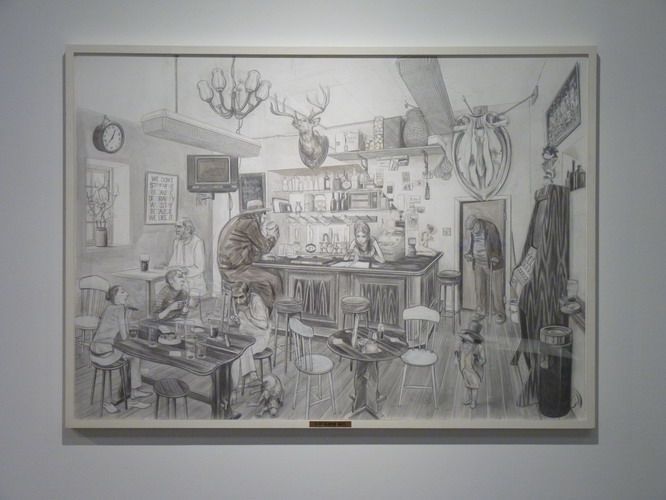
The next day, the traveler leaves the hotel again in the evening, going out with two young Western girls he met during his travels. The group goes to the island's most famous philosophy bar, "Magregor Bar" (2006). The interior is quite classically decorated, with only a few tables and chairs; many customers prefer to stand at the bar to talk with the female owner. In the corner is a slot machine, island sculpture works; the walls are adorned with: an island elk head, postcards of scenery, and a poster of the island's only football team. The female owner is an eloquent philosopher, reportedly a Ph.D. in philosophy from Oxford University, who likes to discuss current affairs and conceptual issues. She often boasts to customers about the island's football team from an alternative perspective, because this brave and skilled team once easily defeated the French team in the 90s. Who could have imagined, when competing against the world-powerful Brazilian team, they won the World Cup 3-2. That is to say, one cannot underestimate the enemy on the battlefield; all guarantees are unguaranteed, and there are many examples of unexpected failure, like Napoleon's Battle of Waterloo.
We drink beer and chat idly, the island's unique, lively music melody echoing throughout the space. Soon, a bald man in a white jacket with a white beard, resembling Plato, joins our conversation. From astronomy and geography to great truths of life, he talks volubly; many topics leave us young people half-understanding, sometimes completely baffled. Seeing that we seem unable to keep up with his topics, he becomes slightly annoyed and bored, turning to the female owner—the philosopher. Watching them talk quite happily, their back-and-forth dialogue quickly enters a philosophical debate atmosphere. As we are about to leave, a strange dwarf stands by the door, with a human body, duck's head, and wearing a gentleman's hat. What does this mean? This island is indeed somewhat absurd and magical.
Leaving the bar, we stroll to the seaside, lying on the comfortable white sand, admiring the poetic and picturesque landscape. The colorful sunset fills the sky; today's fiery red sun is especially large, passing through the clouds, slowly approaching the distant horizon. It's so beautiful; we all quietly watch the brilliant, colorful sunset before us until it is swallowed by darkness. Under the rhythm of the ocean tides, the delightful scenery cleanses people's body and mind.
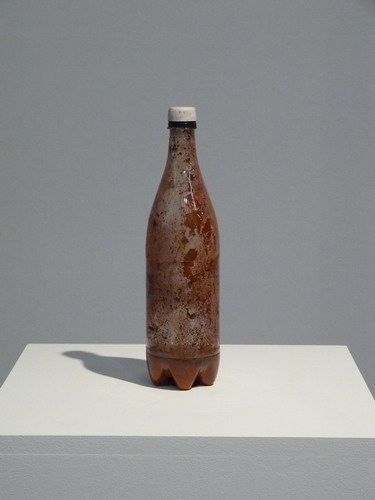
Soon night falls, a beautiful moon hangs high in the sky, the moonlight vast. The two female companions leave first. The traveler, lost in thought, strolls alone on the quiet beach. Absent-mindedly, he finds an old "Plastic Bottle" (2010) at his feet, drifted from who knows where. Looking at it, perhaps someone from some ocean or place sent a distress signal. He quickly checks if there is a message inside; there is nothing, but it is enough to become an object full of imaginative potential for the traveler's next virtual and imagined island exhibition. Carrying the found treasure, the "Plastic Bottle," he strolls under the poetic moonlight, with cool breezes blowing by, feeling extremely happy in body and mind.
Under the faint moonlight, the traveler follows a path through the lush green grassland beside the beach on his way back to the hotel. Suddenly, the grass rustles in the wind, something triggers the traveler's curiosity. Approaching to investigate, he unexpectedly sees an unusual "Armed Snake" (2009). The snake stares intently at the traveler, who is startled and surprised. He can't believe his eyes; it's said this is the island's mysterious and legendary treasure, not seen on the island for a very long time. Whoever encounters it will be blessed with luck. Unexpectedly, the traveler has such a miraculous encounter with the lucky snake; it seems fortune is imminent. Returning to the hotel filled with rich experiences and extraordinary perceptions, the island's spiritual feast journey is truly wonderful, unforgettable for the traveler, transforming into creative inspiration and a life imprint.