Chardin: The Provider
The Provider, 47 x 38 cm, oil on canvas, 1739. Held in the Louvre Museum.
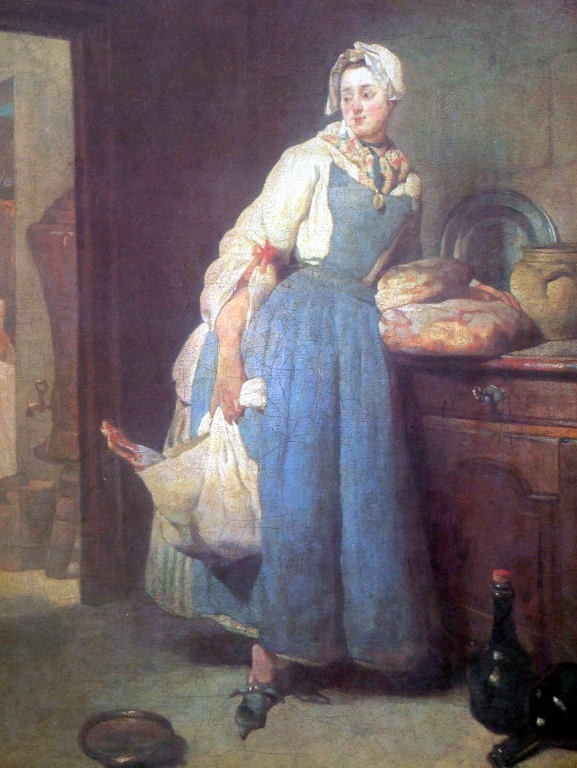
The Provider, 47 x 38 cm, oil on canvas, 1739. Held in the Louvre Museum. Jean-Baptiste-Siméon Chardin (1699–1779) was France’s most representative 18th-century painter of still lifes and domestic life. Influenced by Enlightenment empiricism, he interpreted the rhythm of natural living through delicate, realistic depictions, clear light, and plain tones. He emphasized that respect for people and things unfolds its sensibility within unadorned imagery.
This simple yet powerful work exemplifies Chardin’s empirical painting style, akin to 17th-century Dutch genre scenes. His plain realism depicts a naive young maid returning from the market: she holds two large bundles of country bread in her left arm, leaning against the table, while gripping a white cloth bag full of meat in her right hand. Beside the bread on the table sits a jar and a reflective coarse plate; at the table leg are two black bellied bottles, one standing and one lying down.
All these elements, arranged with the painter’s skillful rhythmic composition, form an outstanding and captivating still life, creating an extraordinary imaginative space within this orderly structure. The maid, wearing a white scarf, establishes the reasonable materiality of objects perfectly under bright light. In the context of the frivolous and luxurious painting trends favored by the French middle class in the 18th century, her image appears refreshingly authentic.