The Collapse of Anti-Technology and Technical Systems: "Chasing Napoleon" Exhibition (Part 1)
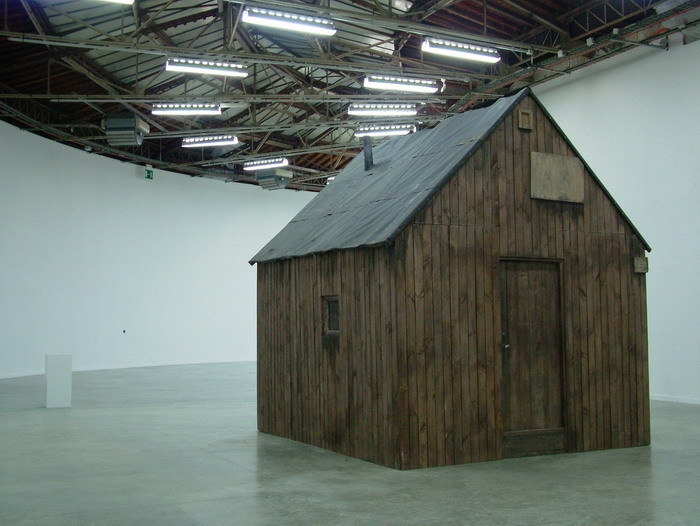
Robert Kusmirowski Unacabine Small Cabin 398x322x355cm 2008

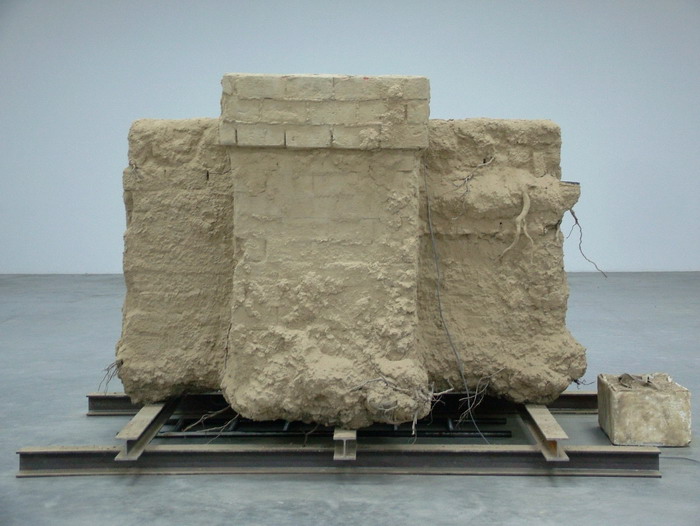
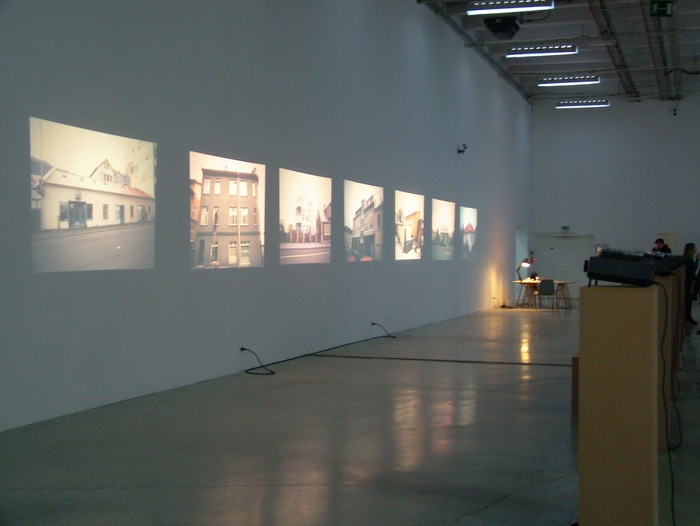
Preface: The special exhibition "Chasing Napoleon" was held at the Palais de Tokyo in Paris from October 15 to January 17, 2010. These exhibitions leave audiences bewildered, allowing them to glimpse the magic and mystery of contemporary art within a labyrinth. From thematic shows like "From One Revolution to Another," "Gakona," and "Enemy Codes" to today's superb "Chasing Napoleon," all operate under unconventional, alternative, and non-mainstream consciousnesses, reversing inertia and fashionable aesthetics, becoming examples of pioneering and expanding the scope of art. These thematic exhibitions at the Palais de Tokyo clearly break away from the single-line exploration of traditional narratives and poetic issue-based shows. They address current diverse social forms, contradictory and abnormal forms and values through more abstract, pluralistic shapes and perspectives, extending their infinite imaginative space across rich networks of literature, events, and science fiction, along with unique vocabularies, extraordinary scenes, and metaphors and allegories of complexity.
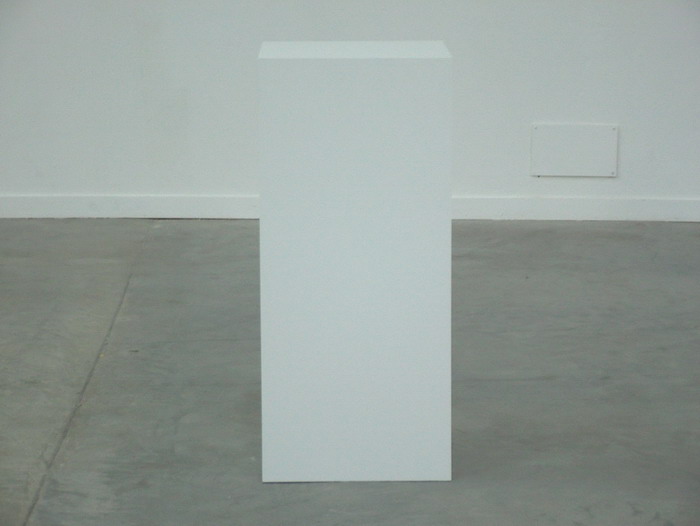
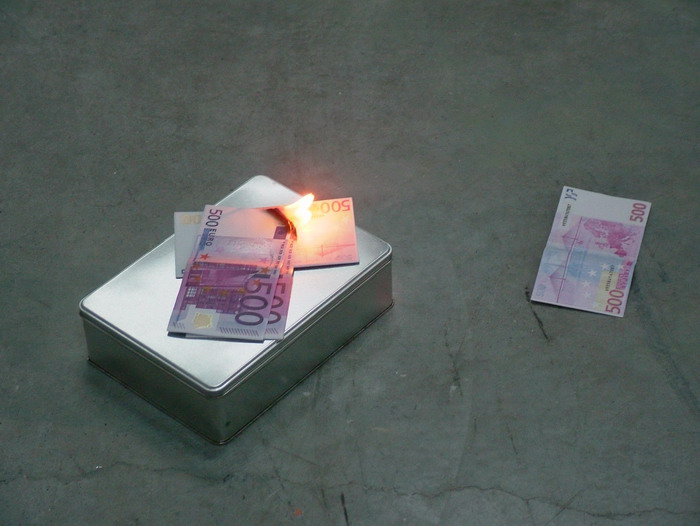
The "Chasing Napoleon" exhibition, like other solo shows at the Palais de Tokyo this year, features works that are not merely or completely visual spectacles; they even dissolve form or non-form (such as electromagnetic waves or sound). They become the cause and trigger of accidents, evoking deeper sensory and conscious levels, metaphorizing various event networks or referring to the metaphysical world. For instance, Dave Allen presents unheard sounds, Tom Friedman offers insignificant pedestals-objects, Micol Assael witnesses a freezing cold world, Tony Matelli depicts the burning of five hundred euro banknotes, Ryan Gander shows wildflowers spreading beyond walls, David Fincher portrays dramatic repeated lightning strikes, Hannah Rickards transforms natural phenomena on almost invisible edges, Robert Gober presents a puzzle-like small sink, Charlotte Poseneske displays sections of industrial ventilation pipes, Robert Kusmirowski exhibits a cabin not present on-site, Dora Winter creates a group metaphorical library, Dieter Roth provides an endless image database, Christoph Buchel offers referential cunning hideouts, and Paul Laffoley’s extraordinary five-dimensional and metaphysical paintings will be discovered for the first time, among others. The "Chasing Napoleon" exhibition unfolds an action propagating reality itself, amidst hesitant interpretation, inverted realistic values, and abnormal situations; everything passing through here is like the world transforming in contrast to reality.
The collapse of anti-technology and technical systems: The "Chasing Napoleon" exhibition revolves around the sensational case of Theodore Kaczynski, an extreme anti-social figure in the United States dubbed the "Unabomber." He is one of the most arrogant and sensational terrorists in American history. Starting in 1978, during his 18-year flight, he sent countless packages containing bombs, resulting in three deaths and 29 injuries of varying severity. It became the most extensive and expensive detective search operation launched by the CIA to catch him. After a series of dramatic twists and turns in the detective pursuit, the terrorist was finally arrested in 1996, a plot more thrilling than Hollywood police detective films.
Theodore Kaczynski (born 1942) was an outstanding mathematician and arguably the most famous intellectual terrorist in modern America. He opposed the evolution of Western industrial society and contemporary technological civilization. He believed such a society was against humanity and even threatened the freedom of all citizens. After a brief stint as a mathematics teacher, disillusioned by excessive consumption and industrialized society, he quickly entered a personal utopia. Resolutely deciding to withdraw from society, he returned to simplicity, living a natural, unadorned life without water or electricity, and began participating in an endless ideological battle within society, initiating radical actions to subvert the social system, aiming to realize his extraordinary idealistic society.
Kaczynski summarized his attempts into four main ideas: 1. Technological progress leads people to inevitable disaster. 2. Only the collapse of modern civilization can stop this disaster. 3. Leftist political thought is the primary counter-revolutionary force protecting the technological society. 4. There must be a new revolutionary movement dedicated to eradicating the technological society, which becomes the standard for distancing oneself from all leftists and their followers.
Kaczynski's prediction of the collapse of the current technological system actually stems from the utopianism of the New Intellectuals in the American liberal movement of the 1960s, giving rise to numerous concerns about facing the dominance of technological systems, including the development of technological logic, or the fear generated by overly technologically advanced societies, or doubts and anxieties caused by technology, and even more extreme anti-technology and anti-civilization sentiments, anarchism, ecologicalism, hippies avoiding modern society, new religions, new leftist utopias, alternative return-to-nature naturalism, and other marginal groups. All these belong more or less to the current "Theodore Kaczynski syndrome."
Writer Henry David Thoreau proposed in his diary: "Knowledge of nature is not just like this, but it confronts the ontology and existence brought by the world." "However, his deeper intuition is that humans only hope to exist substantially in the world, establishing a balance point between knowledge and ignorance." "What is practiced today is not a pure detachment, but a method to touch upon our true essence of existence, so as to better face our relationship with the social and political world we are in." (Note 1)
French sociologist Jacques Ellul also elaborated in his famous work "Technique": "We always believed that technology serves humans, but it will dominate everything, including the development of creating technological logic, unless we take necessary steps to avoid it; otherwise, technology will seize such opportunities in existing society." "The result will cause an intellectual explosion, a tragedy plundering the complexity of contemporary society." Like how we view current technology today: computers, metro systems, mobile phones, the internet. Social development is closely related to technology, but how can we master the technological system to benefit humanity?