A Visit to Chenonceau Castle
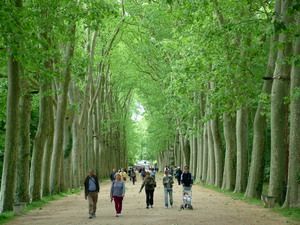
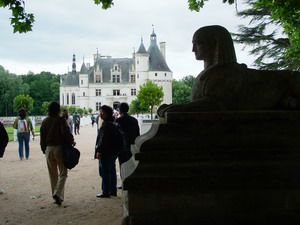
(Top left) Entering Chenonceau Castle along a lush, green shaded path. (Top right) An antique Egyptian sphinx statue at the entrance. (Bottom) A panoramic view of the poetic Chenonceau Castle situated on the Cher River.
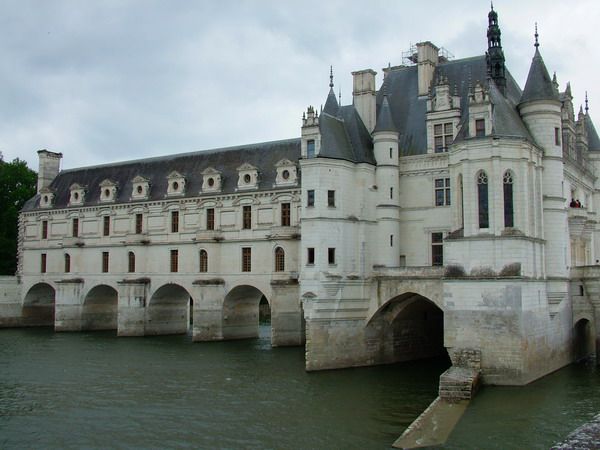
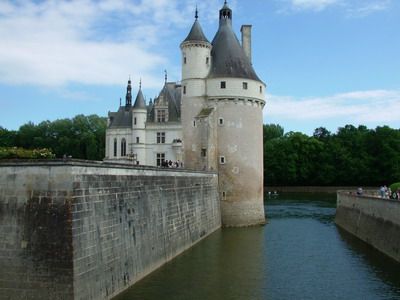
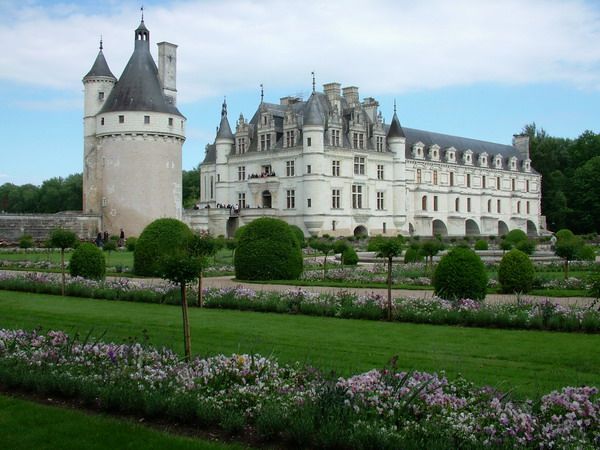
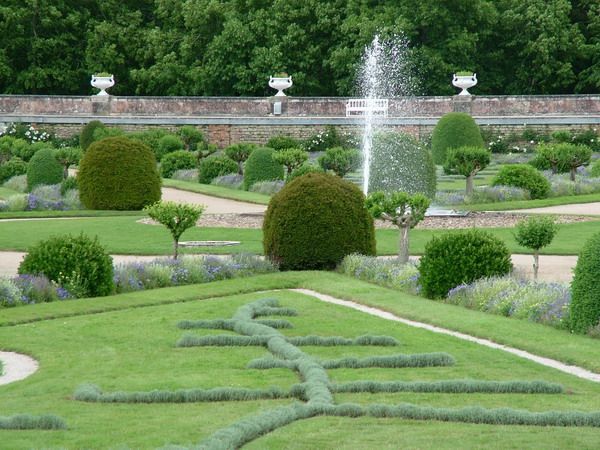
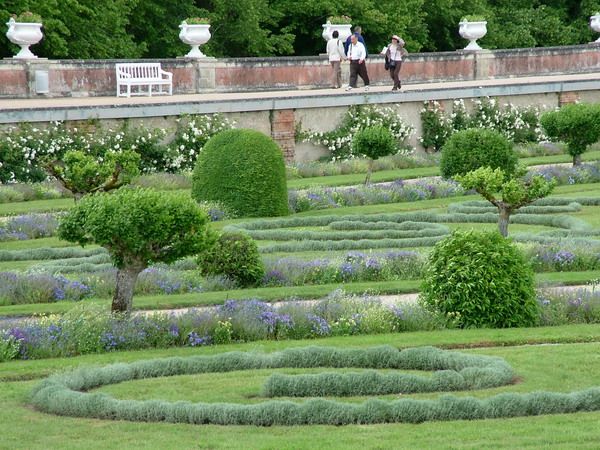
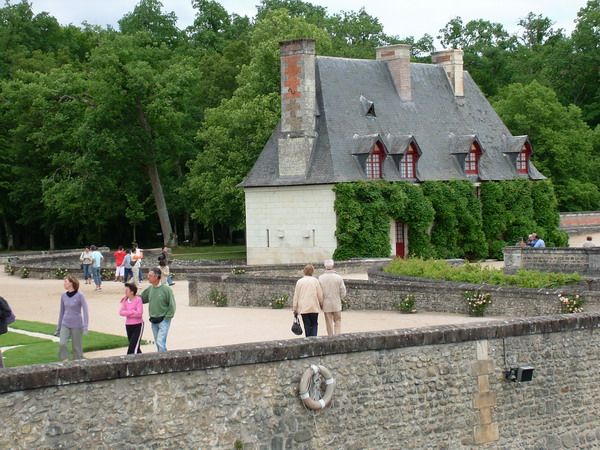
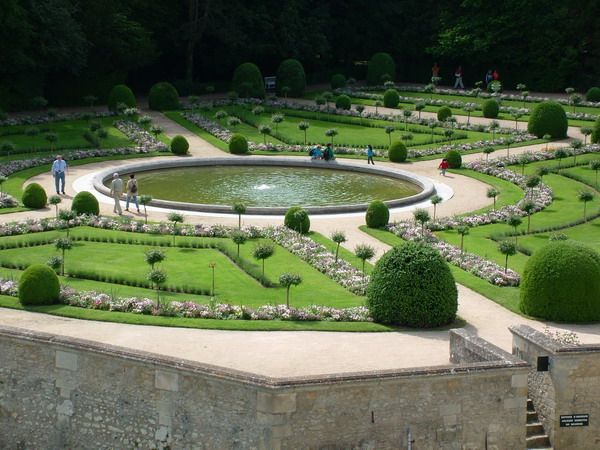
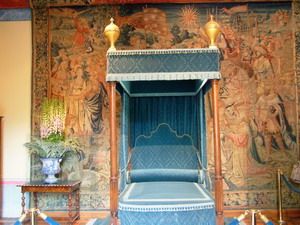
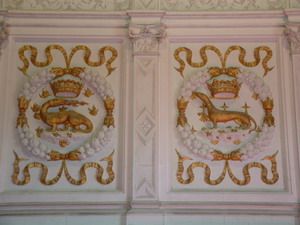
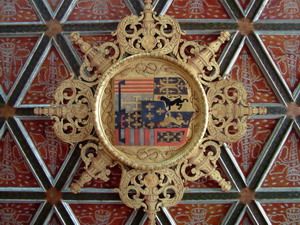
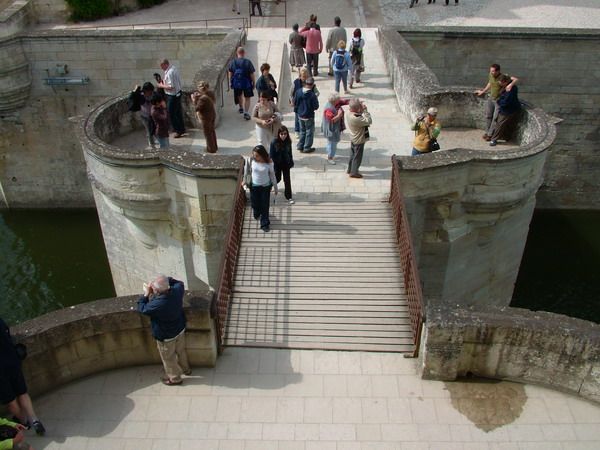
(Top left) The emblems of French kings Francis I and Henry II above the fireplace. (Top right) Royal French emblems on the ceiling of the Five Queens' Room. (Bottom) A scene on the moat bridge at the castle entrance. Chenonceau Castle is the most exquisite and elegant Renaissance building among the five major castles of the Loire Valley, and also the most feminine and poetic of the Loire castles. It features architectural characteristics of Venice, Italy, as the entire castle spans across the Cher River. Since the staircase is not the main structure of the building, it was the most original construction in France at that time. Besides its bewitching architecture, the poetic Chenonceau Castle has two colorful gardens and is famous for the dramatic love story of two noble women, which adds to its legend and charm.
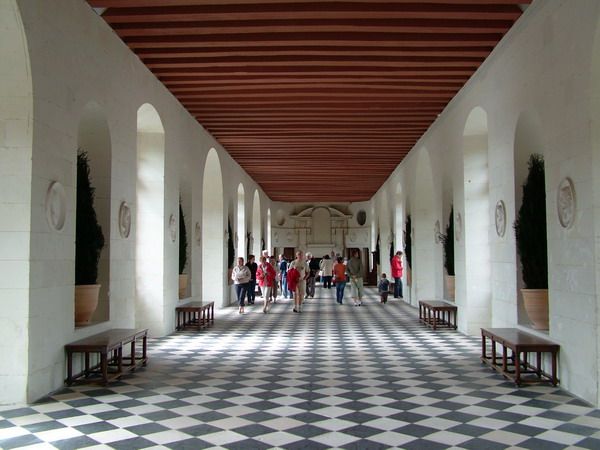
Chenonceau Castle was built by Thomas Bohier, the Finance Minister of Normandy, and his wife in the early 16th century, constructed on top of the Marques family castle and defensive mill, retaining only the main tower, which is today's Marques Round Tower in front of the castle. The Bohiers died successively in 1524 and 1526. In 1535, their son Antoine Bohier sold Chenonceau Castle to the state, and it became a leisure hunting palace for the young King Francis I. By the time of Henry II, in 1547, the king gifted this castle to his beautiful mistress Diane de Poitiers, making Chenonceau Castle the place where Henry II kept his mistress. Diane de Poitiers, as beautiful as water, was the most famous royal mistress in French history. She was the wife of Louis de Breze, the Grand Master of the French Court, the Duchess of Valentinois, and a lady-in-waiting to the queen. Not only was she beautiful but also very intelligent and shrewd, winning the favor of King Henry II (it is said she was twenty years older than the king). Under Diane's effective management (renting out land, cultivating crops, brewing wine, etc.), wealth rolled in, eventually making Chenonceau Castle the perfect object of her glorious desires. Construction projects began both inside and outside; the most famous architect from Paris, Delorme, was invited to design a long bridge spanning 60 meters to connect the north bank castle with the south bank of the Cher River, and the east side of the castle was developed into the most magnificent garden in France at that time. Chenonceau Castle thus became the sweet haven where Diane and King Henry II spent their most tender moments.
When King Henry II died in 1559, Queen Catherine de Medici immediately took the opportunity to settle her long-suppressed grudge, forcibly exchanging Chenonceau Castle for Chaumont Castle with Diane and driving away the king's mistress. The queen, seeing Diane as a thorn in her eye, immediately carried out renovations and redecorations, further expanding the castle project. Two levels of corridors were added on the existing bridge, turning the open-air bridge into a long hall, and a brilliant garden was opened on the west side of the castle (today known as the Catherine Garden), reflecting the flower-filled garden on the east side created by Diane. The current graceful and luxurious appearance of Chenonceau Castle is attributed to these two shrewd women's pursuit of art and life. Queen Catherine brought luxurious festivals and art to the highest realm here. Queen Catherine (mother of Francis II, Charles IX, and Henry III) was an ambitious queen who served as regent during Charles IX's minority. She possessed Florentine-style intelligence and ruthlessness. Chenonceau Castle became the place for her lavish banquets and luxury, such as the wedding of Francis II and the grand coronation ceremony of Charles IX. Almost all the most extravagant banquets of the 16th century were held at Chenonceau Castle.
The current appearance of Chenonceau Castle was completed under Queen Catherine's hands. After Catherine died in 1589, she bequeathed the castle to her daughter-in-law Louise, the "White Queen," who was the beloved wife of Henry III. The king was assassinated during religious conflicts, and Queen Louise retired to Chenonceau Castle to spend the rest of her life. Because she wore white clothes throughout her life, people called her the "White Queen." After Queen Louise, Chenonceau Castle was abandoned for a hundred years. In 1733, General Claude Dupin purchased the castle. General Louise Dupin was a wise hostess who loved arts and literature, often hosting friends from the literary and artistic circles in this poetic Chenonceau Castle. The castle became another stronghold of the French Enlightenment. Jean-Jacques Rousseau, a master of French thought, frequently visited here. He became the secretary of Madame Dupin and the teacher of her son. Rousseau wrote his famous work Emile at Chenounceau Castle. During the French social revolution, due to the general's wife's popularity and connections, the castle escaped this catastrophe. In 1799, the general's wife died at the age of 93. In 1864, Mrs. Pelouse bought the castle and conducted some controversial repairs and renovations, destroying the front wall of the east side. The interior decoration of Chenonceau Castle today is a product of the 19th century. In 1913, the assets of the famous French chocolate company Menier acquired the castle and carried out a true renovation project, restoring Chenonceau Castle to its past Renaissance appearance.
The poetic Chenonceau Castle is like a pearl on the Cher River. Here, one can witness five hundred years of history and stories of love and hatred. People can not only admire the magnificent Renaissance architecture but also stroll through the precious and brilliant gardens of two noble women, and enjoy the beautiful scenery of the lush green Cher River. Inside the castle: a small chapel, Diane's bedroom, study, riverside corridor, Francis I's bedroom, Louis XIV Hall, Catherine's antechamber, Catherine's bedroom, White Queen Louise's bedroom, Five Queens' Bedroom, and the kitchen on the basement level. Chenonceau Castle website: [[http://www.chenonceau.com]]