Christophe Chevance – "Untitled" Solo Exhibition
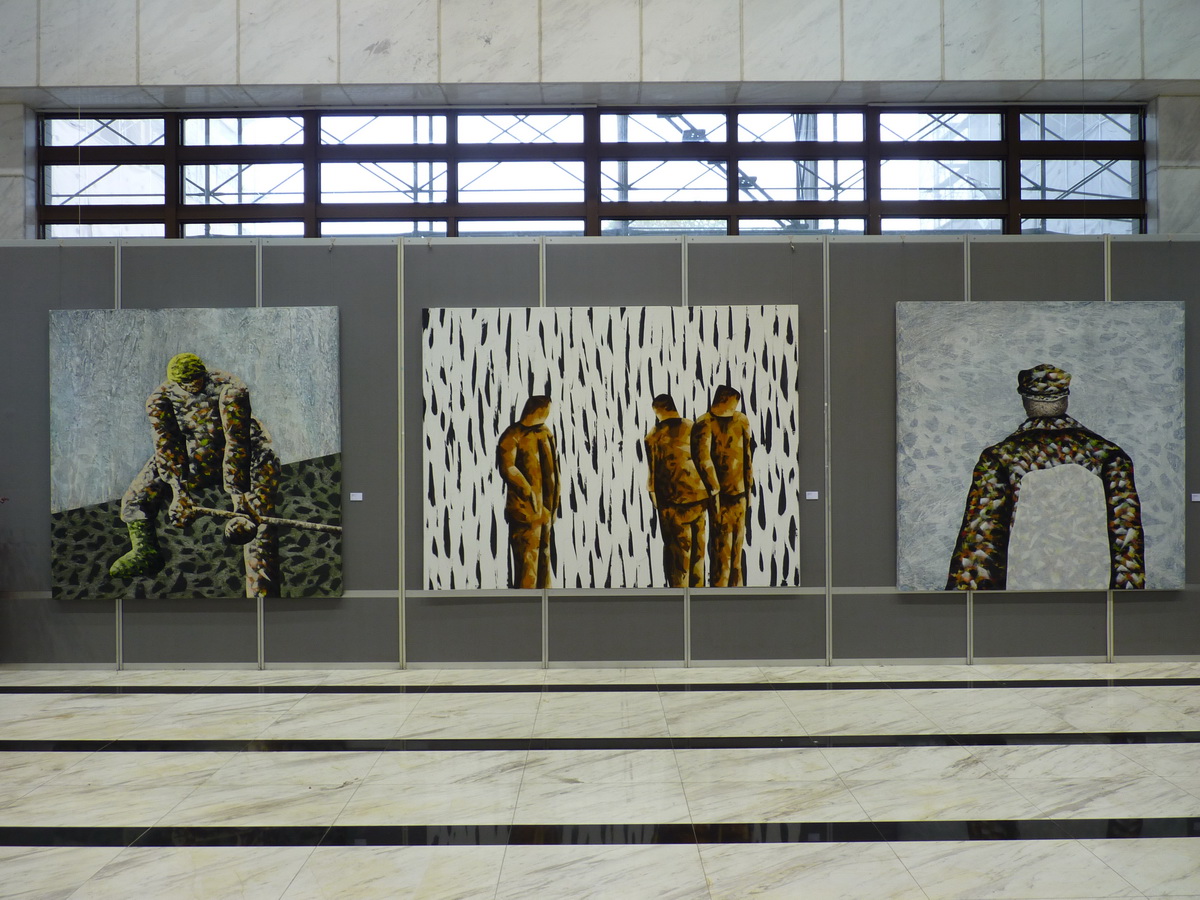
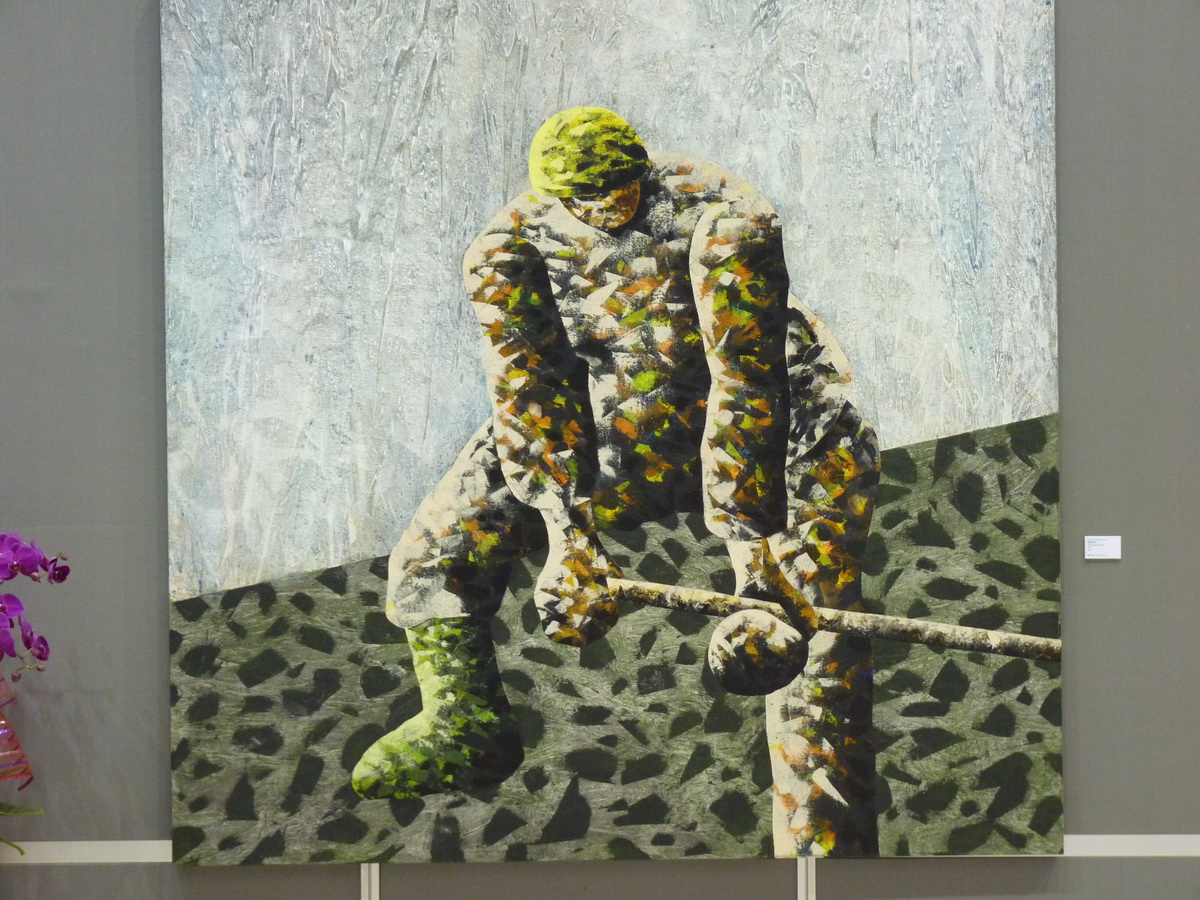
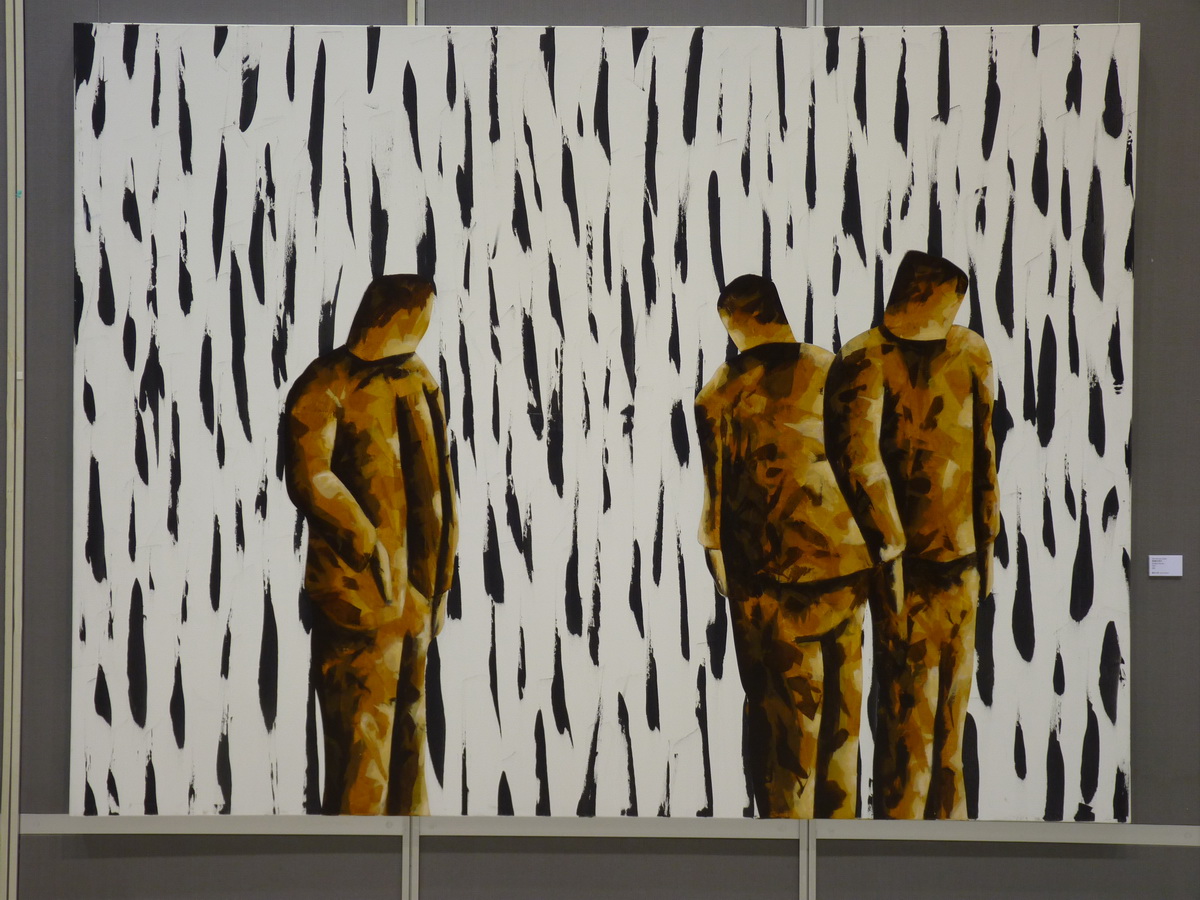
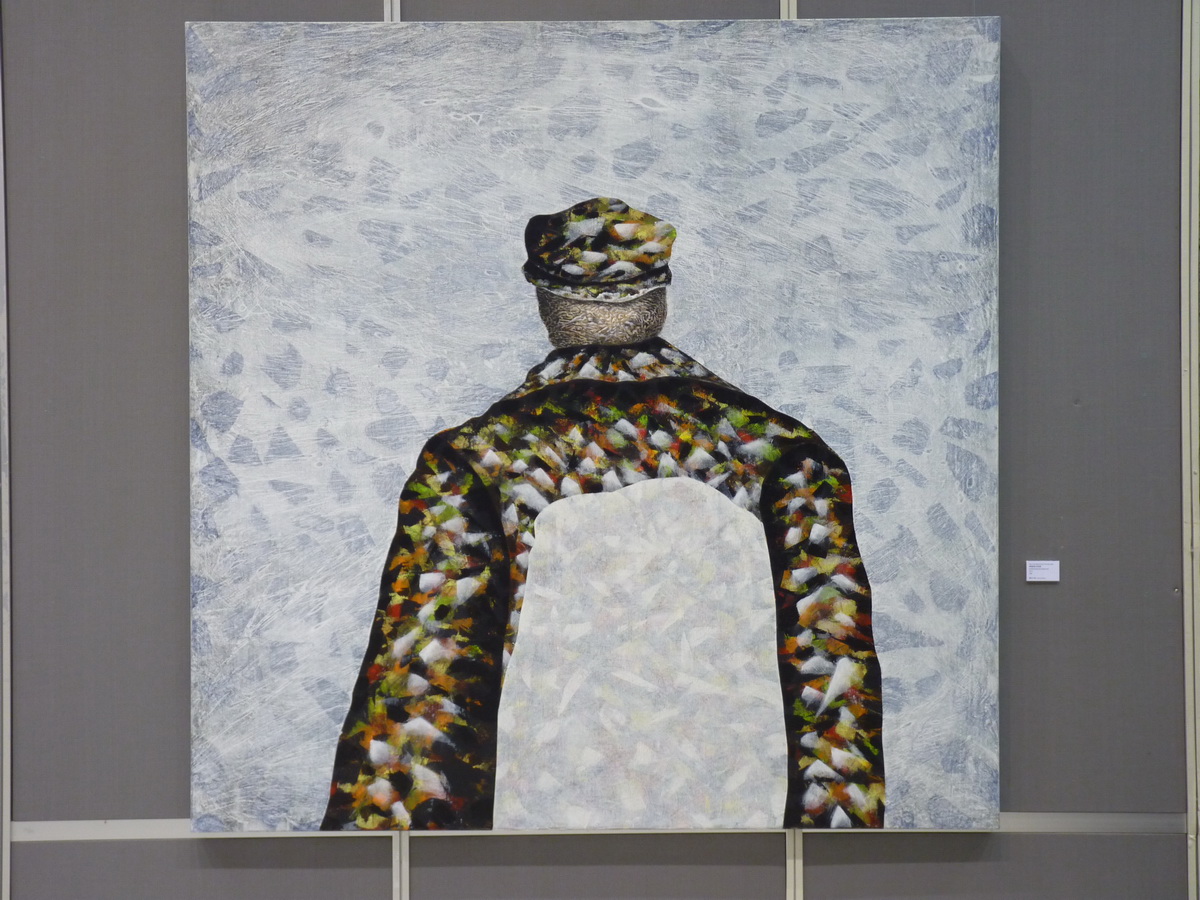
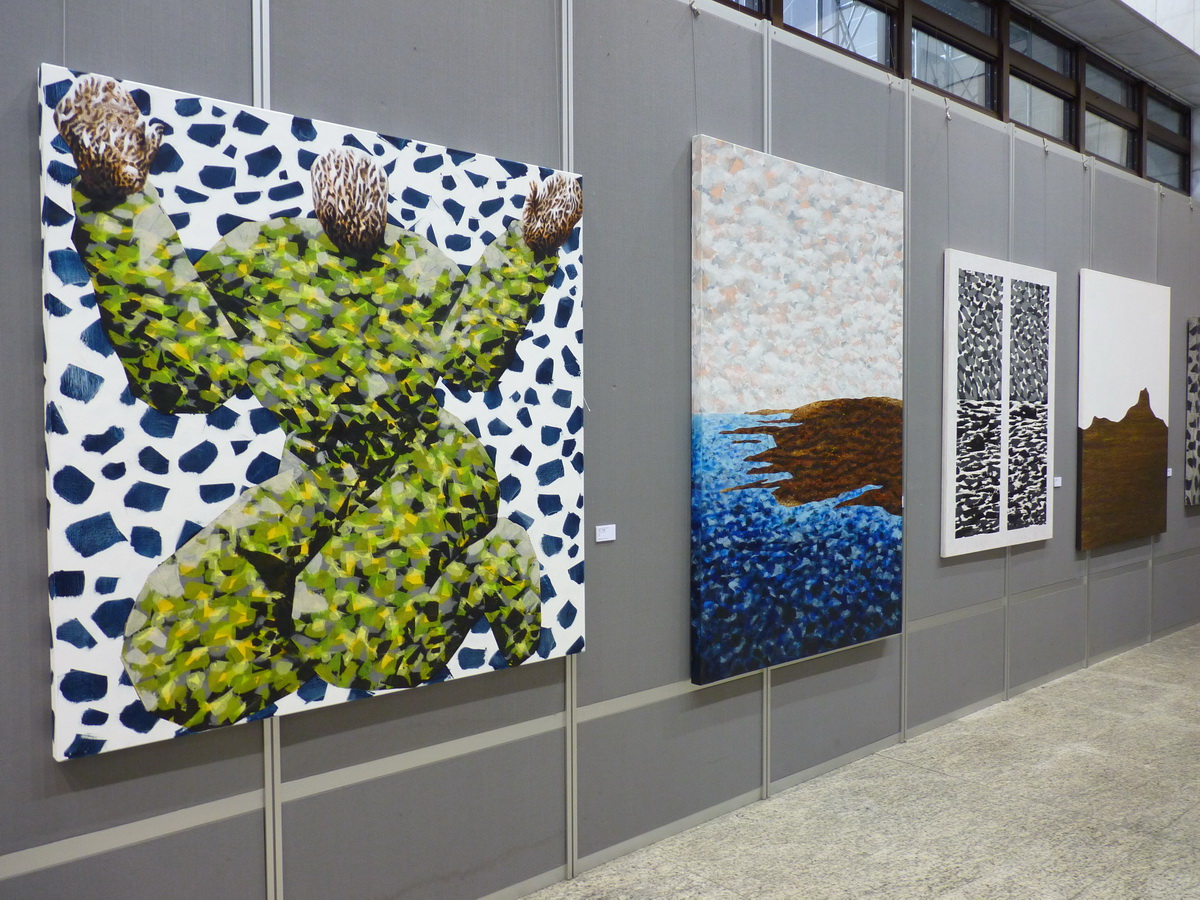
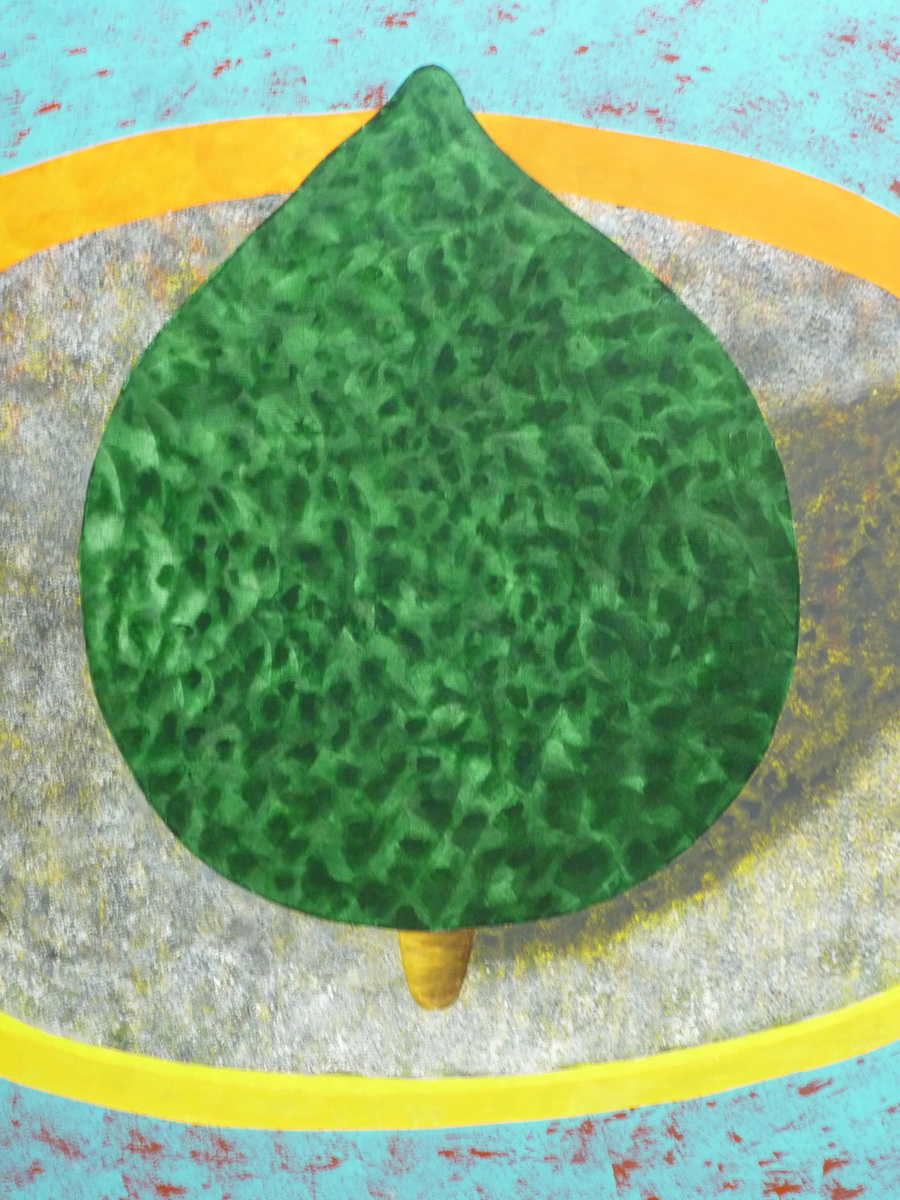
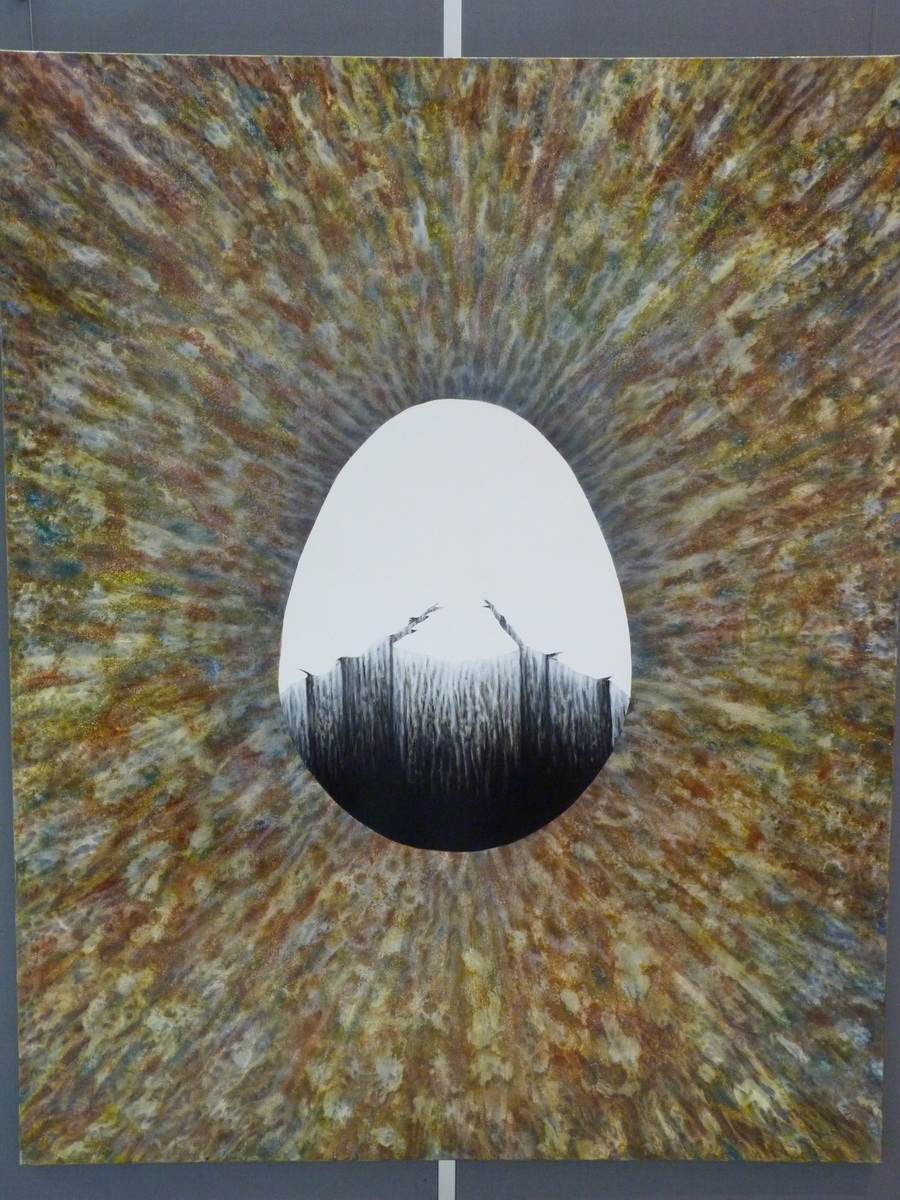
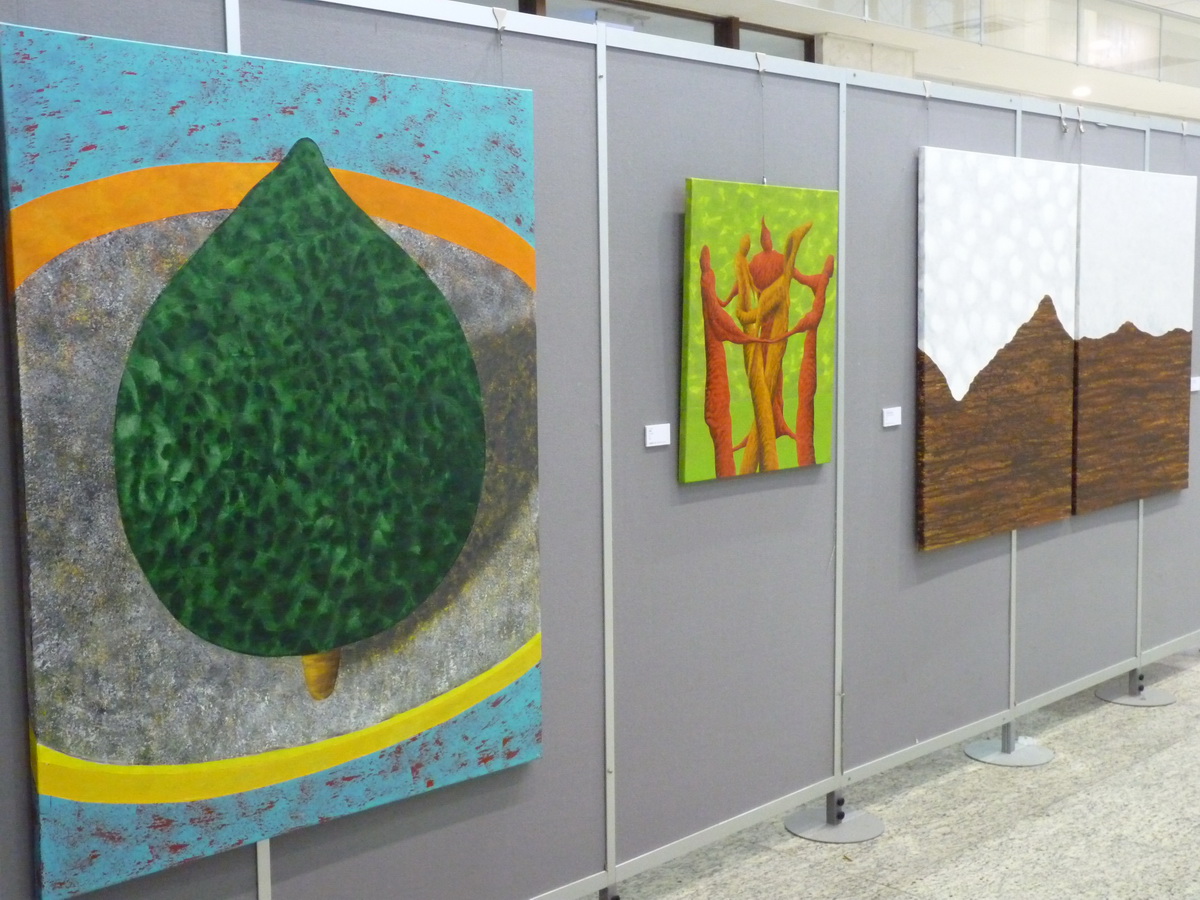
Left - Untitled - Hole 120s Middle - Untitled - In the Rain 200F Right - Untitled - Facing Background 120S 2018 Acrylic
Text and Photos / Chen Chi-Hsiang
"To understand an artwork, understanding the creator is more important than the creation."
Christophe Chevance (abbreviated as Toph)
Time: February 18 to March 15 Location: Hall of Chiayi City District Prosecutors Office Foreword - "Untitled": The "Untitled" solo exhibition echoes his "Untitled" paintings. "Untitled" does not mean empty; it is a silent language beyond words. Words are redundant. Diverse, rich, and unique visual vocabularies give the audience wings to soar, opening their perceptual and imaginative space for free interpretation. As an outsider, Toph has a unique attitude towards life, philosophy, and aesthetics. He believes his life is also "Untitled," because true existence is unsolvable. The painter says: "This 'Untitled' exhibition title, with many 'Untitled' paintings, stems from this untitled self that has no appearance and makes no concessions. It is considered, in the same way, to be rich and abundant, something one cannot lose. It is a rejection of others' ignorance, because we often intersect without truly meeting. This is a denial of the choice of ignorance, because in a world where information is so easily accessible, ignorance has become a choice. 'As an 'Untitled', it is free.'" (Note 1)
A French Painter's Story in Chiayi: Christophe Chevance, abbreviated as Toph, is a Frenchman from Da Nang who "married" a delicate, smart, and capable Taiwanese wife, Sunny. He drifted to a foreign land for love—the beautiful island. Home became a haven for the Frenchman, and he became a Taiwanese son-in-law. With three Taiwanese children, Taoyuan City became his home, a boat in the distance becoming my home. He is sensitive and perceptive, with sharp eyes skilled at observation and thinking. He is serious and meticulous. His French identity is hidden in fluent English. He intentionally chose not to learn (speak) Taiwanese or Chinese, lowering himself to be an elusive outsider. After hiding behind the complex social relations of Taiwanese society, he prefers solitude and family life, living a simple, rich, and free "Untitled" life. This is entirely a personal choice.
Toph has been obsessed with painting since childhood, fascinated by art all his life. To pursue art, he left his beloved coastal hometown of Brittany for Paris at a young age. Life's hardships led him through vocational training to acquire skills in theater stage design. Skilled in painting and renovation, he worked as a theater stage designer by day and passionately painted his art by night. Pursuing his dream, regardless of how difficult survival was, he never forgot his original intention—the dream of art. Painting is the outlet for existence, sailing into the vast ocean of consciousness. The path of art is arduous, longing for the future of life. After marriage, he drifted to Taiwan for love, first settling in Taipei to strive, then following his loving wife from the bustling metropolis to the southern island's town, finally settling in Taoyuan City—Chiayi, his wife's hometown.
Toph knows clearly that being a painter is not easy. Like most of us, whether we are artists or not, in any country, we must find a way to survive in society. Artists must find a way to live while continuing to create and participate in activities. Moving back to Taoyuan, he hit rocks in real life. For basic livelihood and creative resources, he entered the restaurant business, opening a tempting French cuisine place. Skilled in painting and renovation, he spent a year personally renovating an abandoned, dilapidated wooden house into a warm, personalized Chiayi French bistro. Business boomed, becoming one of the most textured and bright personalized small restaurants in Taoyuan City. Named "Le Petit Chat Noir" (The Little Black Cat) to recall Montmartre in Paris, after one year due to lease expiration, he surrendered everything built along with the house back to the owner.
He accepted fate's arrangement, starting from zero. The outsider inevitably cried out "Untitled" encounters. Carrying the power brought by heavy setbacks, he returned to a collapsed, dilapidated wooden house on Lin Sen Road to start over again. After more than a year of elaborate work, pouring his heart into renovations, he came back to life. "Le Petit Chat Noir" reappeared in Taoyuan. With his wife's strong assistance and support, the couple ran "Le Petit Chat Noir" with care. Like the rising sun, it gradually achieved success and good reviews, becoming a successful case study of local international marriage integrating into society, attracting attention from many local media. However, every news report about "Le Petit Chat Noir" Chiayi French bistro made Toph laugh and cry. Ignoringly calling him a French chef, the painter cried in his heart. Taiwanese tongue culture is too decadent. Fate played tricks; away from his desired painting creation for reality, his psychology was full of struggle and confusion. For more than three years, he often wandered in the art of midnight dreams, never forgetting the original intention of creation. Toph sincerely thanks the invitation from the Taiwan Chiayi District Prosecutors Office for this solo exhibition, allowing him to pick up his brush again to cultivate the artistic field he loves. The painter said: "For this, I want to thank... them for the invitation to this exhibition and their support for Chiayi artistic creation."
New Works of "Untitled" Silent Language: During the blank days of more than three years without creation, the unbearable lightness of life and the sedimentation of deep reflection on art nurtured his profound artistic philosophy and creativity driven by huge curiosity stimulated by strong imagination. Obviously, art is Toph's strongest silent language beyond words and inner call. Thanks to this solo exhibition and his wife's support, he opened his heart, gathered enough courage to pick up his brush again, overcome difficulties in creation, embrace his passion, and renew his creative vision, allowing his creation to be reborn. Appearance arises from the mind, environment changes with the heart. Liberated from the early theme of tangled trees (roots) as a symbol of drifting away from home, following instinctive and emotional expression, under strong feeling and awareness, he borrowed subjects to transfer emotions, express his feelings, and soothe his soul. Simply and profoundly explaining the outsider's consciousness of existence.
Toph believes our surrounding world is full of diversity, variety, and uniqueness. His creations and works are no exception. Deconstruction is the source of his creation. He only explores purely personal things, breaking free from all mimetic touchpoints and habitual pictures under subjectivity, instinct, sensibility, and expressiveness. Creative expression is diverse and varied. New series: Portrait Series, Landscape Series, and Storm at the Window Series. Under simplified forms, color is given an emotional meaning, intending to express the essence of everything and simultaneously respond to the intensity of emotional impact.
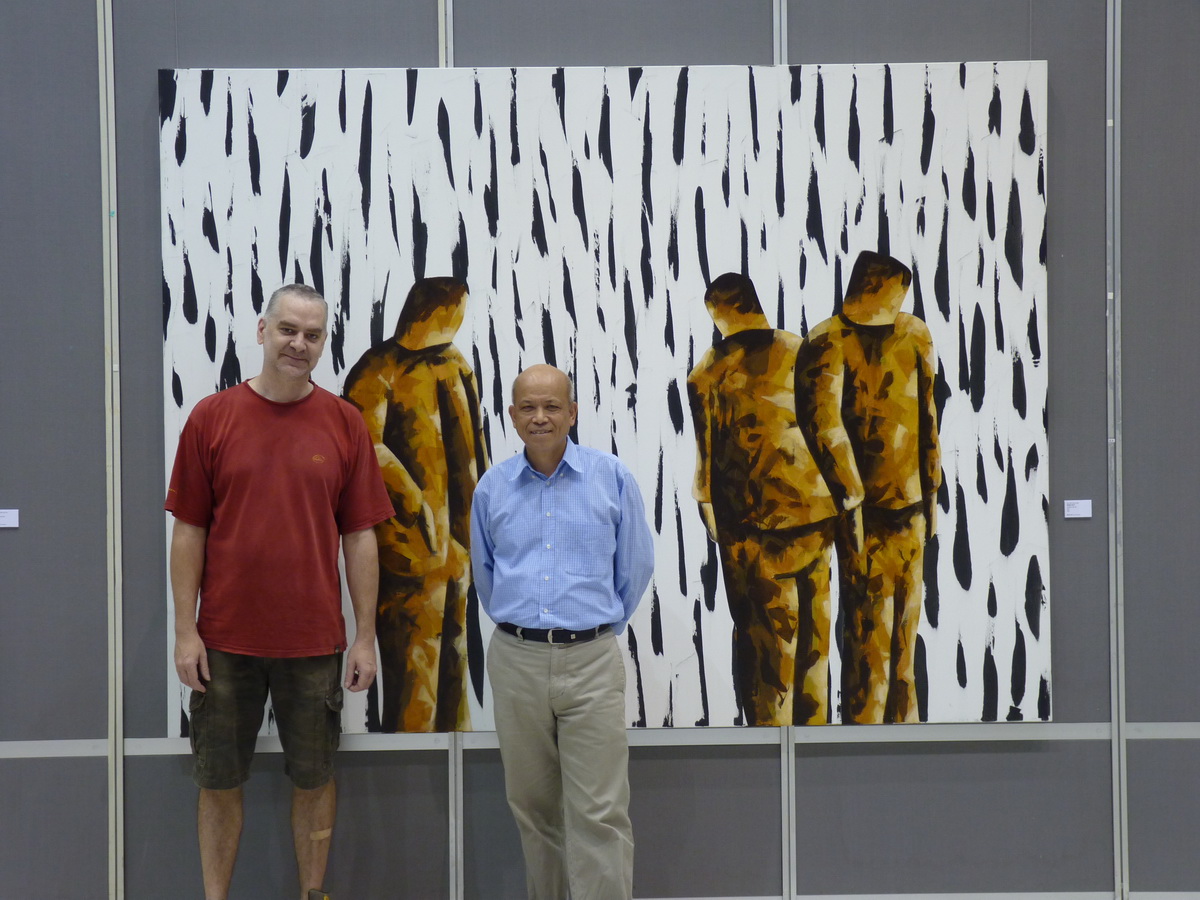
Portrait Series: Figures wearing grass-green camouflage like soldiers, figures whose faces are never seen in this cold and insensitive world, metaphorically referring to human nihilism and vanity. Simplified figure images and unreal bodies, walking dead often intersecting without truly meeting situations, present a strong tension in the picture. Three pedestrians swallowed by a rough black (brushstroke) rain space scene, one giant hollow figure facing away from the audience, and one figure full of body vocabulary enclosed by the frame. Another most symbolic worker holding an electric drill digging the road indicates care for this insensitive and ignorant cold society. It illustrates Toph's existential anxiety, loneliness, depression, distress, and helpless spiritual portrait as an outsider. The painter wrote: "What is important is that in a world often lacking emotion, unity, and moral supremacy, you yourself are far from everything external. Be yourself, feel yourself, converse with art."
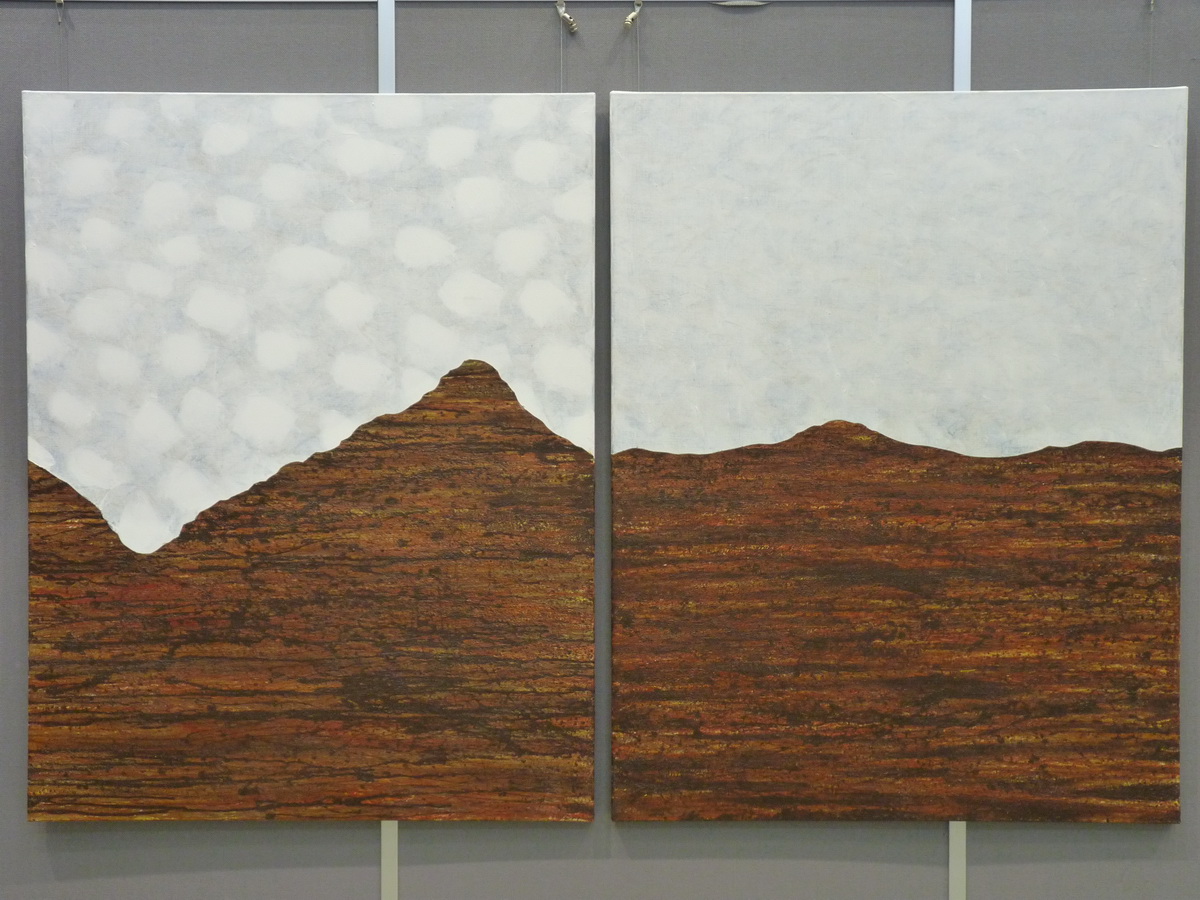
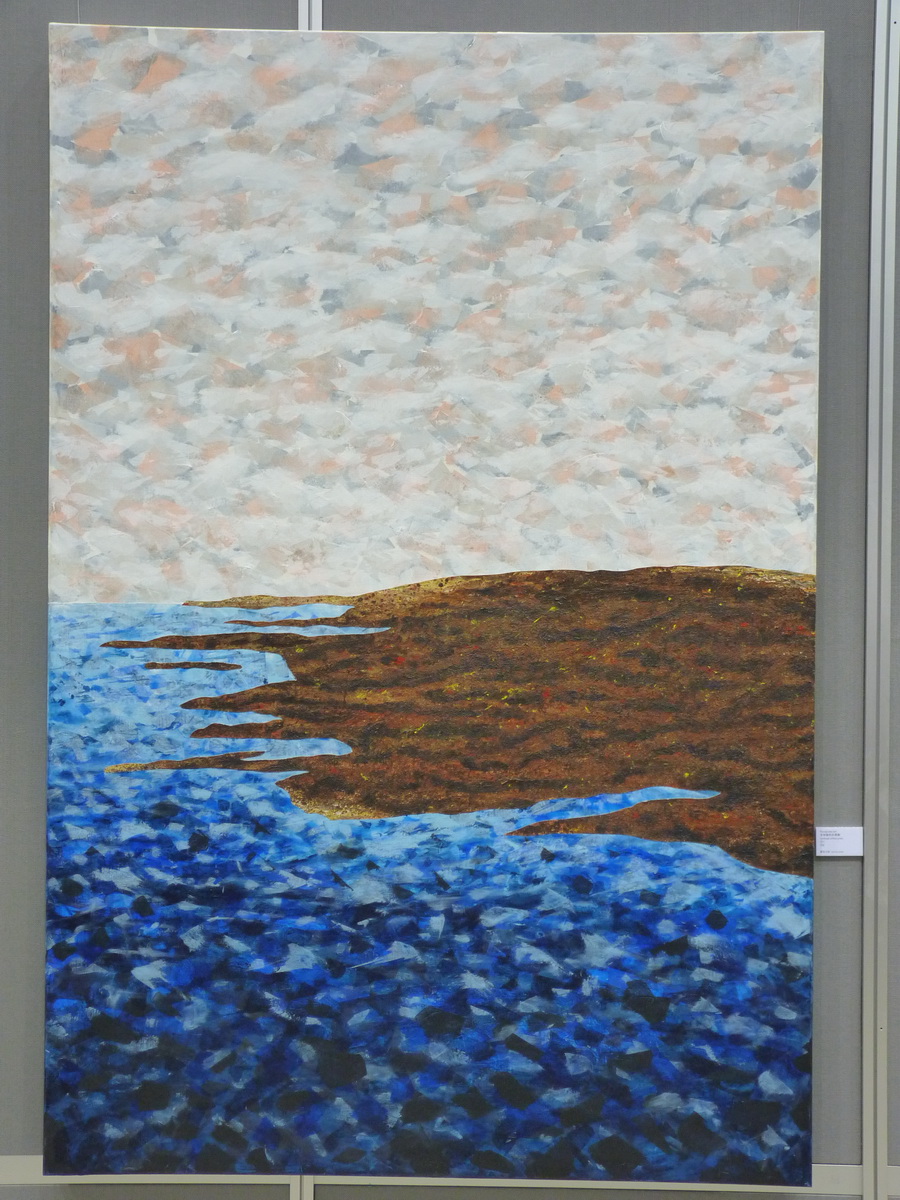
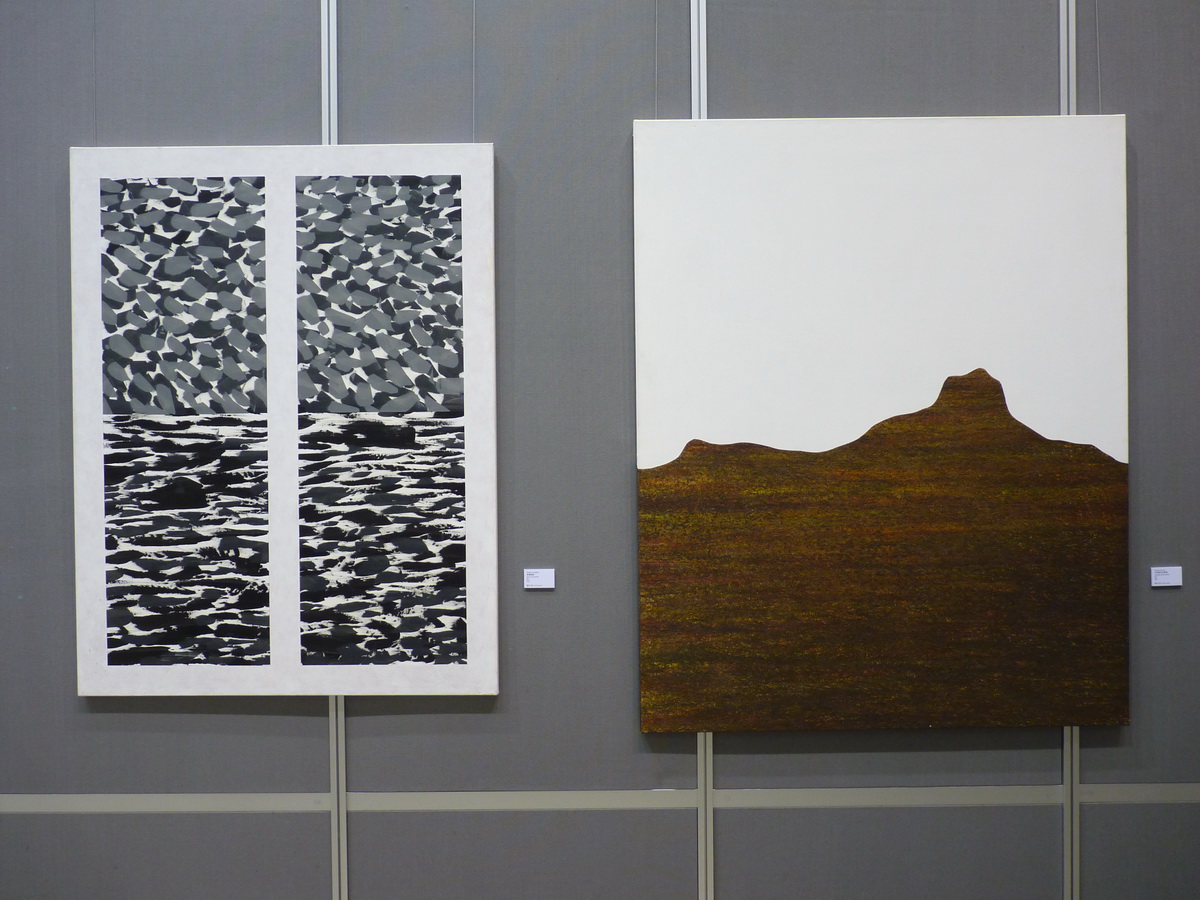
Landscape Series: Subjective consciousness of red soil plateau landscapes in post-natural surreal absurd situations, misplaced space and imagination, between reality and surrealism, abstraction and imagery. The painter invites the audience to question views on a world without green, and our position in nature where green disappears. Inviting us to ask questions about all forms of life and the lifestyle you want to live. One piece reminds Toph of the beach landscape imagery of his hometown, the situation of midnight dreams or the wanderer's nostalgia for home.
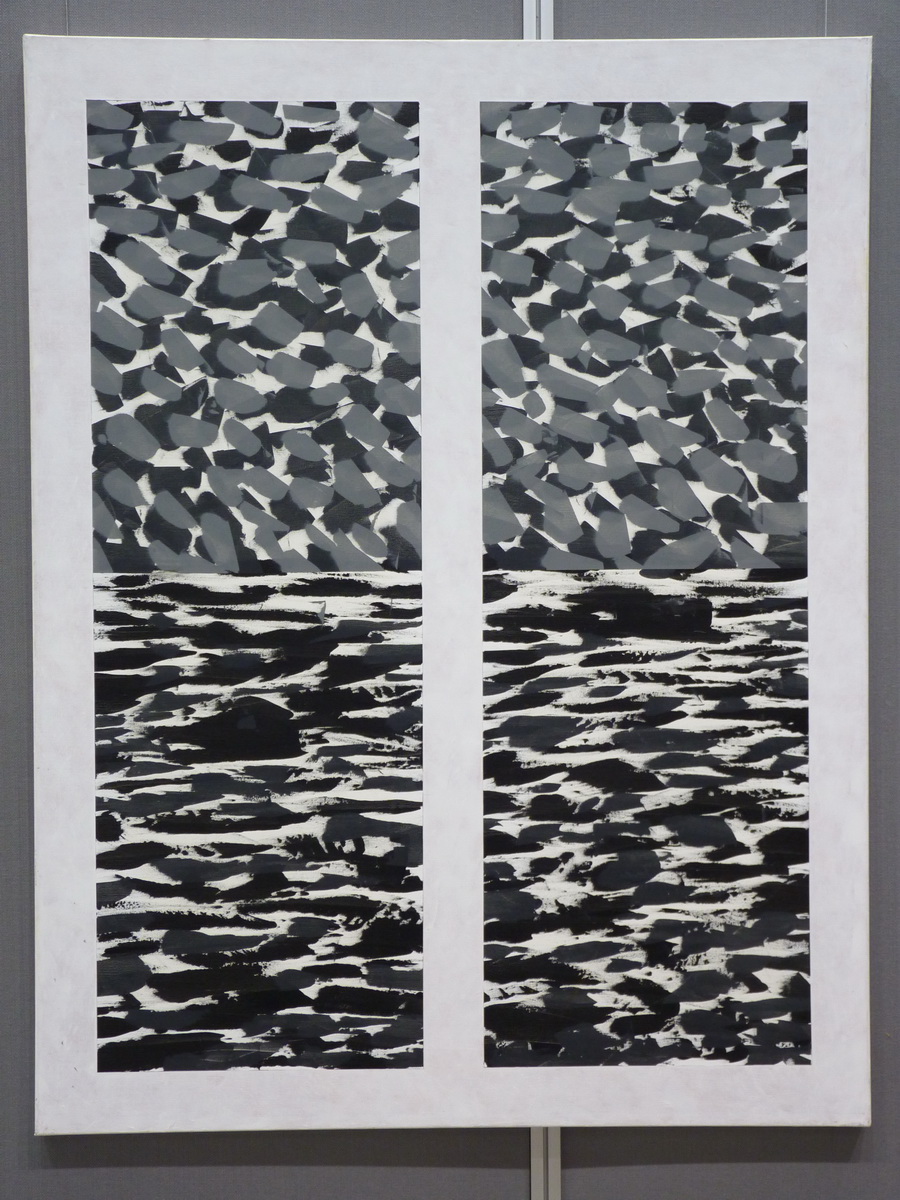
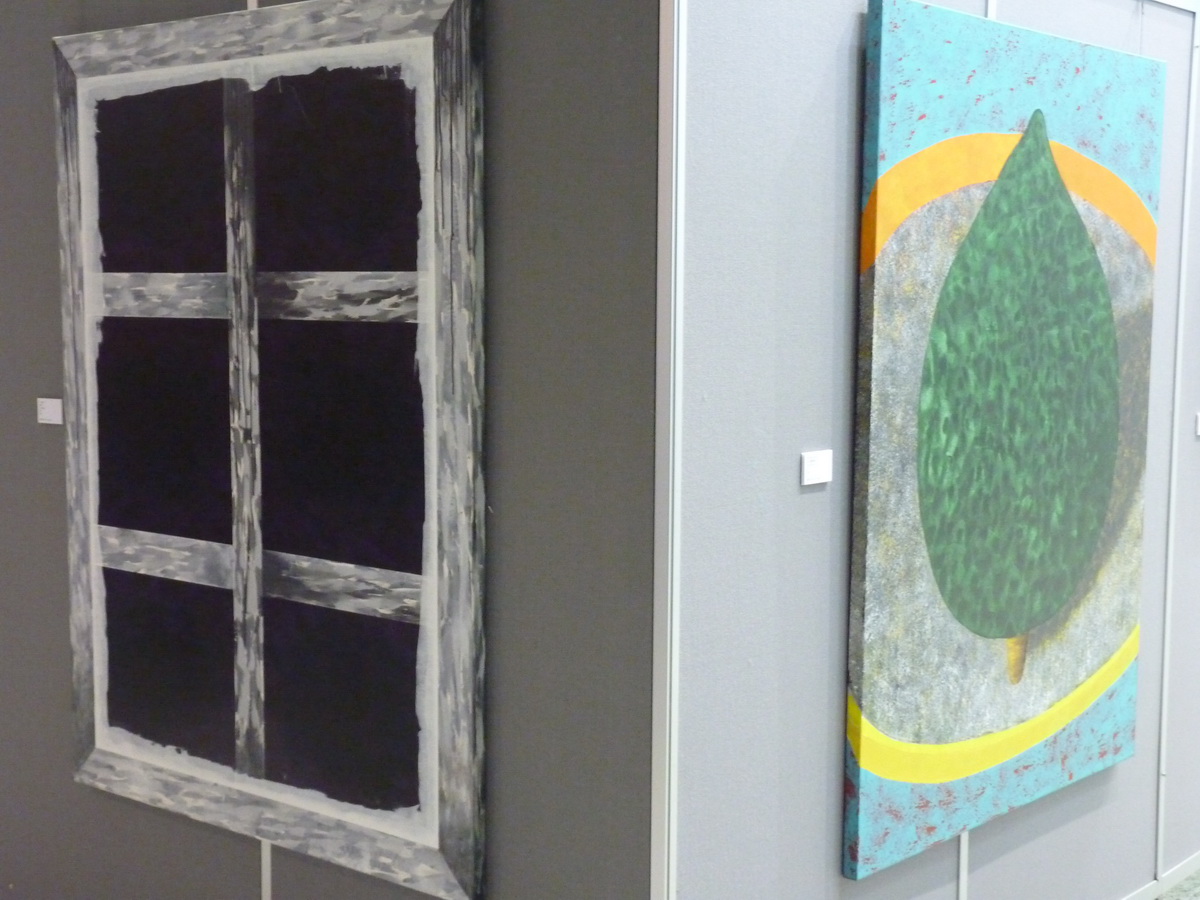
Storm at the Window Series: Formed according to the picture frame, vertically dividing the window structure with contrasting colors and large brushstrokes with personality. Borrowing scenery to transfer emotions and express awareness. Climate reflects people's strong emotional feelings like temper. The painter wisely uses this series to perceive his own inner emotional landscape, responding to the intensity of mood impact to sort out energy. The external environment is the manifestation of the internal, even more a portrait of the inner scene, illustrating the painter's life ups and downs. Through this, see oneself, listen to one's inner voice. The painter said: "We are all affected by emotions. This has nothing to do with conscience, nor is it related to anyone or anything outside of us. Sometimes, these emotions may be storms emitting energy that must pass through. If ignored or suppressed, this inner power becomes negative energy and often leads to withdrawal. No matter what our stance is in facing this storm, whether we are actors or spectators, we will suffer. If we fight against its power, it may be destructive, but if we let ourselves smooth it out naturally, it can also become a source of renewal." (Note 2)
Form, Color, and Texture: Instinctive and emotional large brushstrokes under symbolic figures, landscapes, or windows, all have characteristics of simplification, flattening, color-blocking, and subjectivization. Added with warm, speaking colors, grand composition, the picture is always covered with one or more layers of white hiding many large and small brushstrokes, delicate texture quality, highlighting the form of the subject. Form becomes the body of the painting, color becomes the soul, brushstrokes are the temperature of emotion, texture quality serves as the carrier of feeling. "The language of form, color, and texture quality can resonate with our senses. And no matter what the theme, this trinity of diversity, variety, and uniqueness can be applied. This diversity, variety, and uniqueness, the painter believes, is the essence of the world we should develop, the essence everyone should become. Opposing the consistency advocated by our society, this uniformity is expressed in monochrome in his artworks." (Note 3)
Insightful "Untitled" Artistic Thinking and Philosophy: Asking the painter Toph: What is "Art" to you? Unexpectedly, he handed me a four-page note of his heartfelt words on art. Profound insight into artistic thinking and philosophy, revealing his true knowledge and insight into artistic creation and art. Here I translate this wise French note into Chinese to share with everyone. Excerpts from the conclusion of this article are as follows, please savor and read carefully. A true artist evolves according to his aspirations, and his artworks evolve with him. To understand an artwork, understanding the creator is more important than the creation. Artworks or artists never change the world, and those who think otherwise live in an illusion, because the perception of art is individual, not collective. What art can change is your view of the world. What art can change is you as a person. Because if art asks you and raises correct questions, then you will not be greater and more humble in mastering yourself than those you practice. Just like the freedom of the artist in creation. You can freely love or not love. You can freely feel. You can freely question yourself. You have no explanation for the artwork. You have no imagination. You can freely adapt to the work. Art cannot give you freedom, because this decision belongs only to you. Must become freedom belonging to oneself. (Note 4)
Notes 1-4: From Toph's Artistic Thinking Notes 2019-02-10 Taoyuan City - Chiayi