Cyprien Gaillard "Between Documentation and the Archaeology of Ruins" Solo Exhibition
A view of the scene at Cyprien Gaillard's "Between Documentation and the Archaeology of Ruins" solo exhibition
Cyprien Gaillard "Between Documentation and the Archaeology of Ruins" solo exhibition: On display in Centre Pompidou's Gallery 315 from September 21, 2011, to January 9, 2012. Images and text by Chen Chi-Hsiang.
Foreword: Cyprien Gaillard (born 1980) is a French creator at the zenith of the new generation; having just turned thirty, he was crowned with the 2010 Marcel Duchamp Prize for contemporary art and is a rising star in the European art scene. He views the world as a type of ruin, targeting the traces of human activity in nature, exploring the rise and fall of human civilization—whether ancient or modern, Eastern or Western, distant past or present, architectural or natural scenery, object or material—comprehending that over the long span of time, whether destroyed by human hands or by nature, all will dissolve and transform, intending to reveal the illusory impermanence and elusiveness of the material world. With a romantic sentiment, he blends crossover from 18th-century Romanticism to the conceptual art and land art of modernism (especially the influence of Robert Smithson), and enters into the disorder of the diverse and divergent postmodernism.
Cyprien Gaillard is an alternative modern archaeologist and data specialist; his artistic creations are skilled in using video, photographic images, appropriation of objects, and actions to construct his works. Although all works require cultivation, collection, and fabrication outside, according to him: "He belongs to the inner artist." Gaillard's creative origin comes from the 18th-century French writer Denis Diderot: "It is necessary to ruin a castle in order to make it an inner object." In the current post-industrial society, surrounding us in the natural environment are those old and new industrial buildings, abandoned objects or urban renewals, even some historical monuments and cultural sites, etc., whether extraordinary or ordinary and common, exotic or mundane and unremarkable, near or ancient, all-encompassing. With his keen observational power and humanistic reflection, the artist delves into these environments intending to establish an extraordinary perspective on spatial understanding, leading us beyond habitual vision, elucidating the signs of a civilization tending toward destruction. From the start, Gaillard did not harbor romantic or nostalgic intentions; the artist says: "Timelessness is my way of resisting sentimental nostalgia." He does not particularly investigate a past that no longer exists; clearly, he lets the audience contrast the eternal conflicts, violence, and chaos of the everyday world, also posing: "Just like us, individuals, living in our ruins?"
The multi-layered meaning of "UR": In Cyprien Gaillard's "Between Documentation and the Archaeology of Ruins" solo exhibition, three major series are presented: upon entering, one is immediately attracted by two thick, precious marble slabs—one layered with ancient fossils from Tunisia in East Africa, the other a blue mirrored marble recycled from the renovation of the Central Market near Centre Pompidou—contrasting in their historical, geographical backgrounds and values. The marble is imprinted with the uppercase letters UR, an abbreviation for "Underground Resistance." These two words carry multiple sensations, polysemy, and referentiality, pointing to the young rebellious electronic music group from the now declining and abandoned American industrial auto city of Detroit, or meaning urban renewal "Urban Renewal," alluding to the optimistic progress of urban renewal since the Industrial Revolution in Europe and America from the early 19th century. Or it is the name of a holy site in Iraq, the birthplace of the patriarch Abraham; now this archaeological location has become a US military base. Artist Gaillard personally visited the site to take photos, presented in the "Geological Analogies" series.
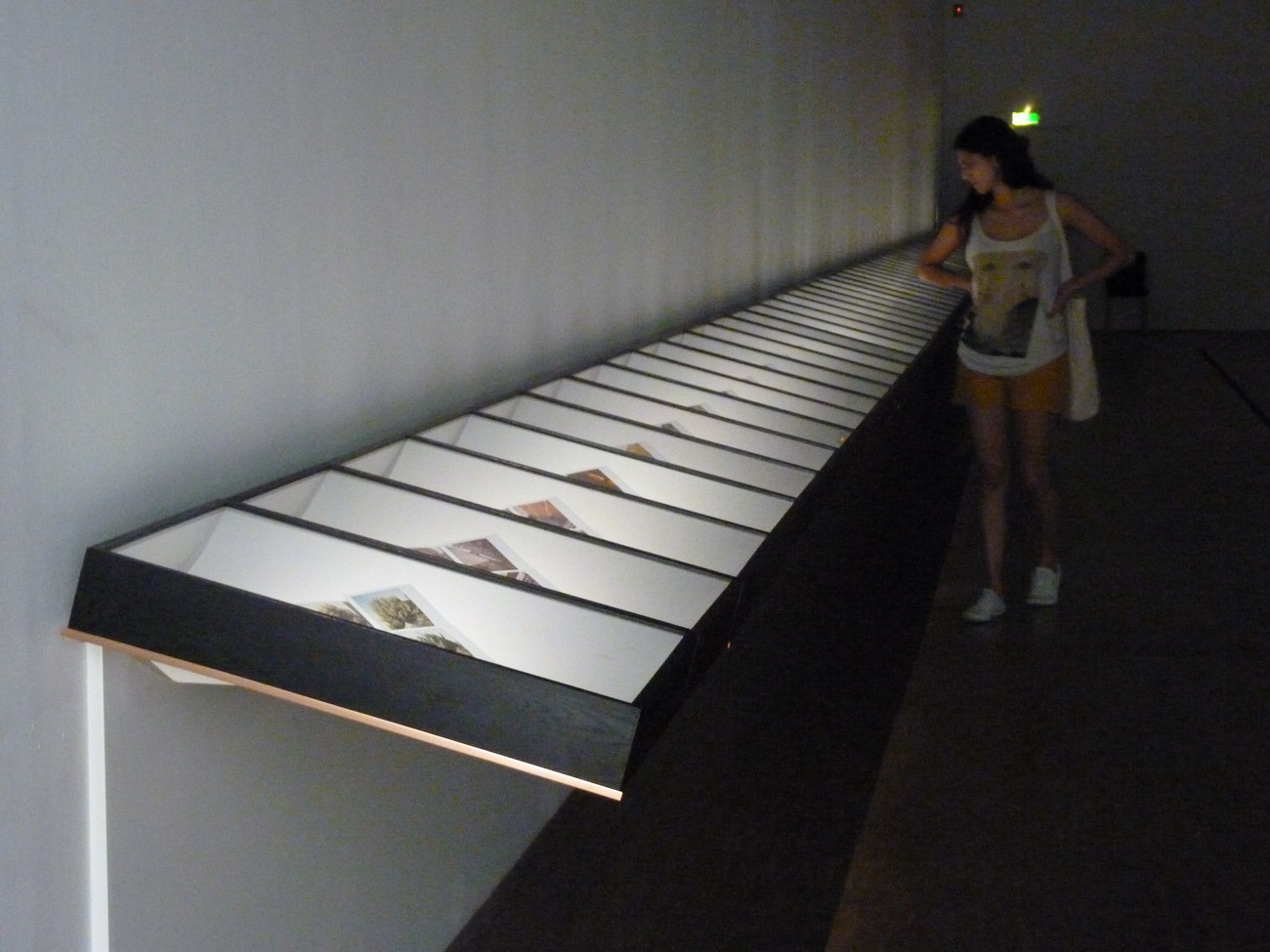
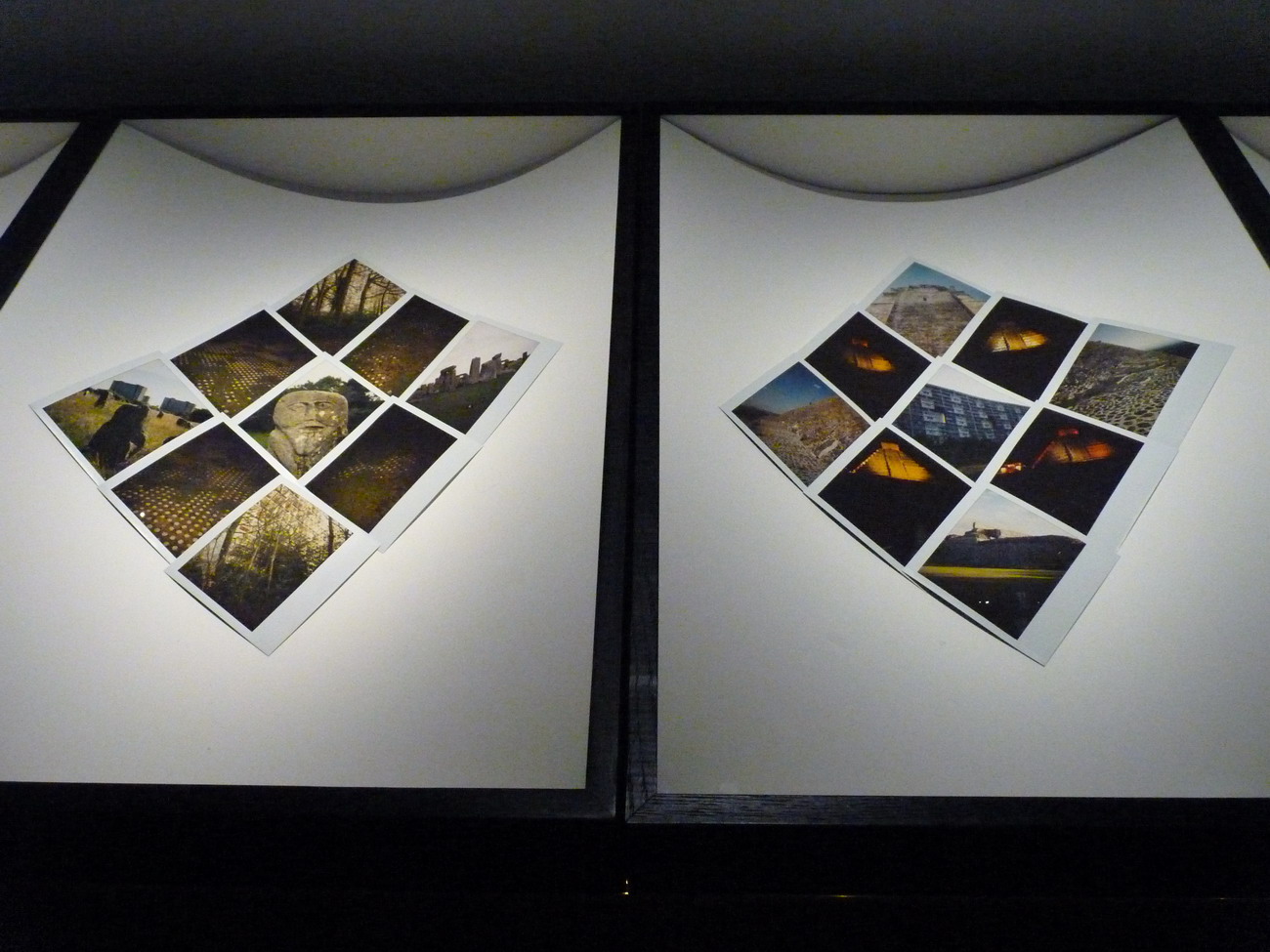
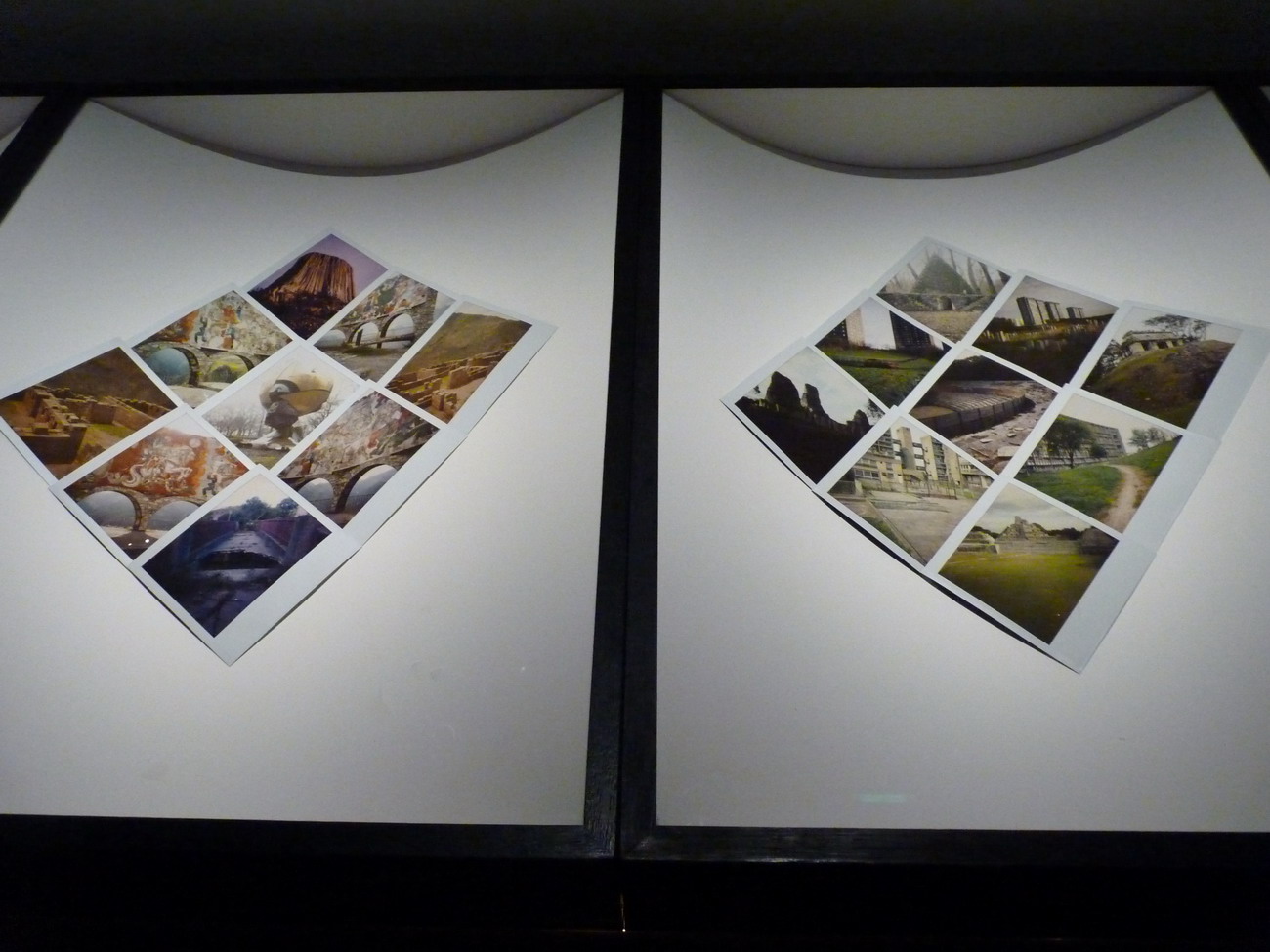
Between Documentation and the Archaeology of Ruins "Geological Analogies" series: Along the walls of the exhibition hall, in a series of white display case frames, nearly a hundred works from the "Geological Analogies" series are displayed. Each work consists of nine Polaroid photos arranged in a diamond shape, presented like an image data archive. Cyprien Gaillard's creative project began in 2006 and continues to this day, traveling to the ends of the earth in search of all possible images, such as monuments, ruins, ancient and modern building debris, urban objects, natural landscapes, cemeteries, statues, etc. From Egypt to the Angkor Wat in Cambodia, Glasgow to Peru, Mexico to Moscow. From fragmented walls of ruins to scenes of modern urban building debris, magnificent pyramids to Athenian temples, Inca ruins to Roman statues, the misty Caucasus steppes to cheap apartment buildings in the Paris suburbs, etc. From objective documentation to subjective intervention, through the artist's archaeological exercises and data analysis, classification, editing, and structuring, under the contrast of different cultural, historical, value backgrounds, and accidental forms and themes, new meanings are recombined. The exhibition format is like a natural history museum, where natural scenery transforms into relics, fragile objects are almost carcasses.
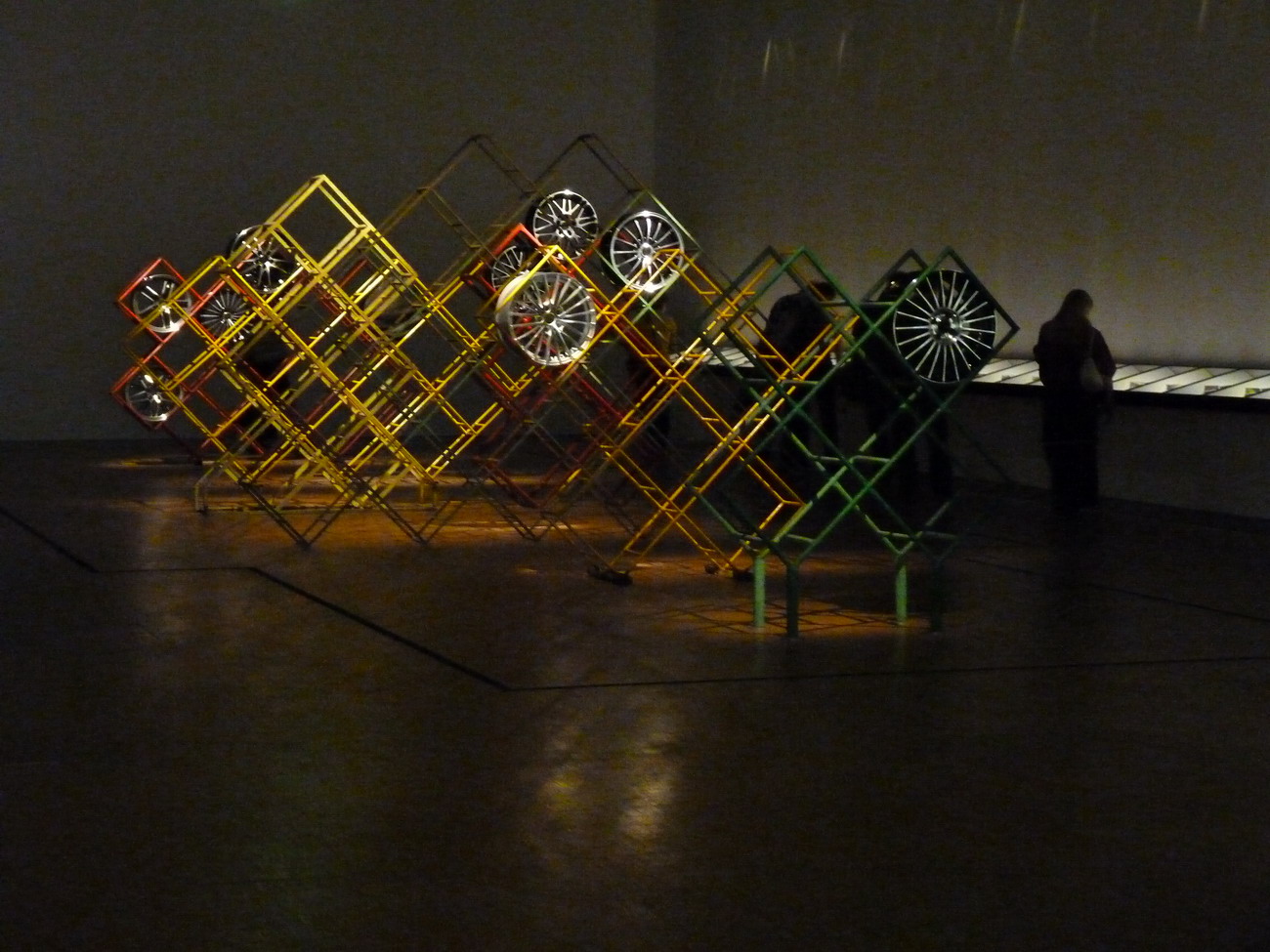
The metaphorical "Peru Structures": In the very center of the exhibition hall, a series of diamond-shaped metal grid structure platforms are displayed, on which car inner tire rims are presented in an orderly manner, titled "Peru Structures." These objects are readymades that Cyprien Gaillard directly transported back from Peru; through appropriation and transformation, they become object sculptures. Their diamond-shaped structure echoes the "Geological Analogies" series, while the car industry evokes the UR reference to the American industrial city Detroit. Through this action and attitude, the artist transforms their inherent value into artworks, reanimating Inca forms, intending that one day they become signs of civilization. And it contrasts with a Sumerian head statue on the wall opposite, on loan from the Louvre, symbolizing Western plunder from the colonial era. World antiquities, collected in their museums—through this anachronistic approach, a method of extraordinary critique of colonial behavior is added. Behind the preservation of ancient civilization, one inevitably thinks of the remaining stone body after the head was removed, just as Gaillard symbolically proposes: preservation and destruction are two sides of the same issue.