Thoughts on the "Damien Hirst" Retrospective at Tate Modern
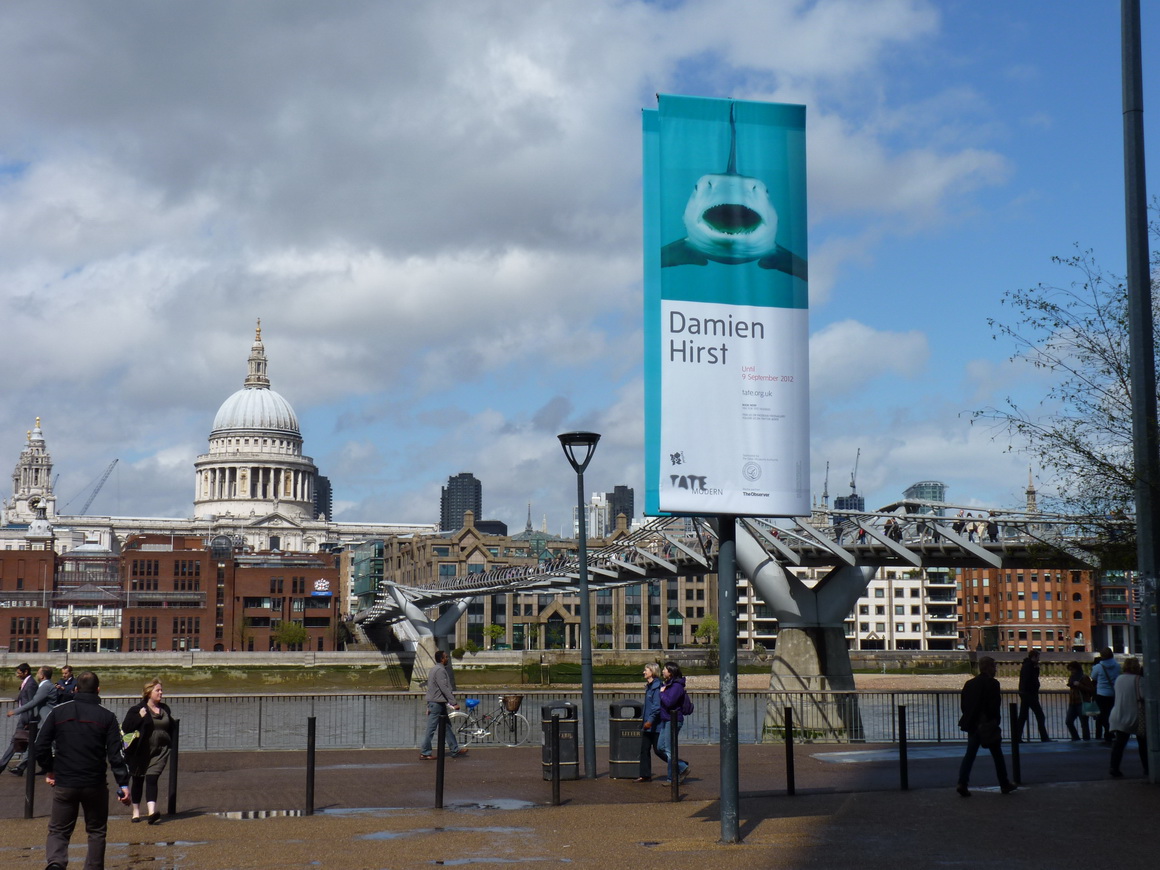
Tate Modern - Damien Hirst Retrospective: The Great White Shark Installation
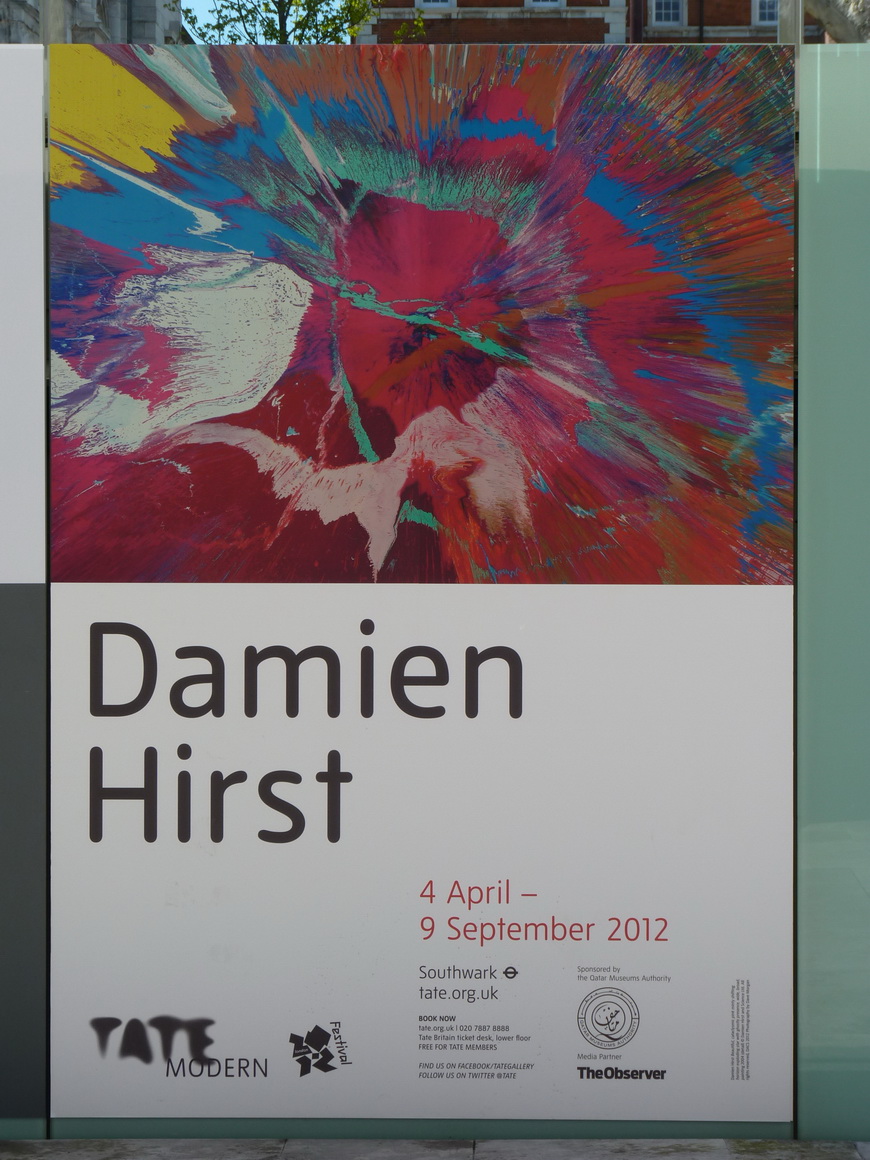
London Contemporary Art Journey – Thoughts on the "Damien Hirst" Retrospective: Location: Tate Modern. Dates: April 4 to September 9. Text and Images by Chen Chi-Hsiang. Curiosity about contemporary art or artistic trends remains undiminished, continuing to probe the present and the unknown world, becoming a form of life energy and vitality. The unknown is not unknowable; with curiosity and a spirit of inquiry, one will slowly see through the clouds to the sun. Confidence is inevitable, effort indispensable, patience required, only perseverance reveals the truth. Viewing itself is enjoyment; cognition is another matter. Understanding may be fragmented, but fragments weave into the whole. Art is certainly not knowledge; perception and experience in the moment are essential, which language struggles to convey. What can be explained is not art, like a finger pointing at the moon, or like the state of life: anatomy dissects the body, not life itself. Viewing is witnessing the present; the present is everything. Afterwards, it becomes memory. Travel is the same: each moment is not a fragment, but an existing whole. Life measures its existence within the physical.
London, like Paris, is a fashionable metropolis, a global tourist hub with numerous museums, art galleries, and exhibitions that never end. Besides art, there are many design shows, making it a place for leisurely walks and shopping paradise. Every time I come to London, I visit the New and British Tate as a pilgrimage site, the sanctuary of contemporary art and the benchmark of Western contemporary thought. Unlike France, where cultural and artistic policy leans toward nationalization (subsidies and collection), Britain operates entirely under liberalism. France is too French; Britain’s scope is broader (hard to define where it ends). Thus, leaving France makes it hard to see French art, while British art is rare in France. After a hundred years of war, historical entanglements seem still knotted; understanding suffices.
London may not be my beloved lover, but it has its bewitching qualities. It nurtures and expands my global vision. Repeated trips to Britain bring deeper familiarity and feeling, moving beyond the gaze and mindset of a tourist. Each visit to the New and British Tate brings excitement and curiosity, bathing in contemporary art, experiencing rebirth from fire each time. In early May, during this London art journey, I was honored to see several major and experimental exhibitions. Currently, Tate Modern hosts three retrospectives: "Damien Hirst," Italian Arte Povera artist "Alighiero Boetti," and Japanese artist Yayoi Kusama, whose work mixes art with psychedelia.
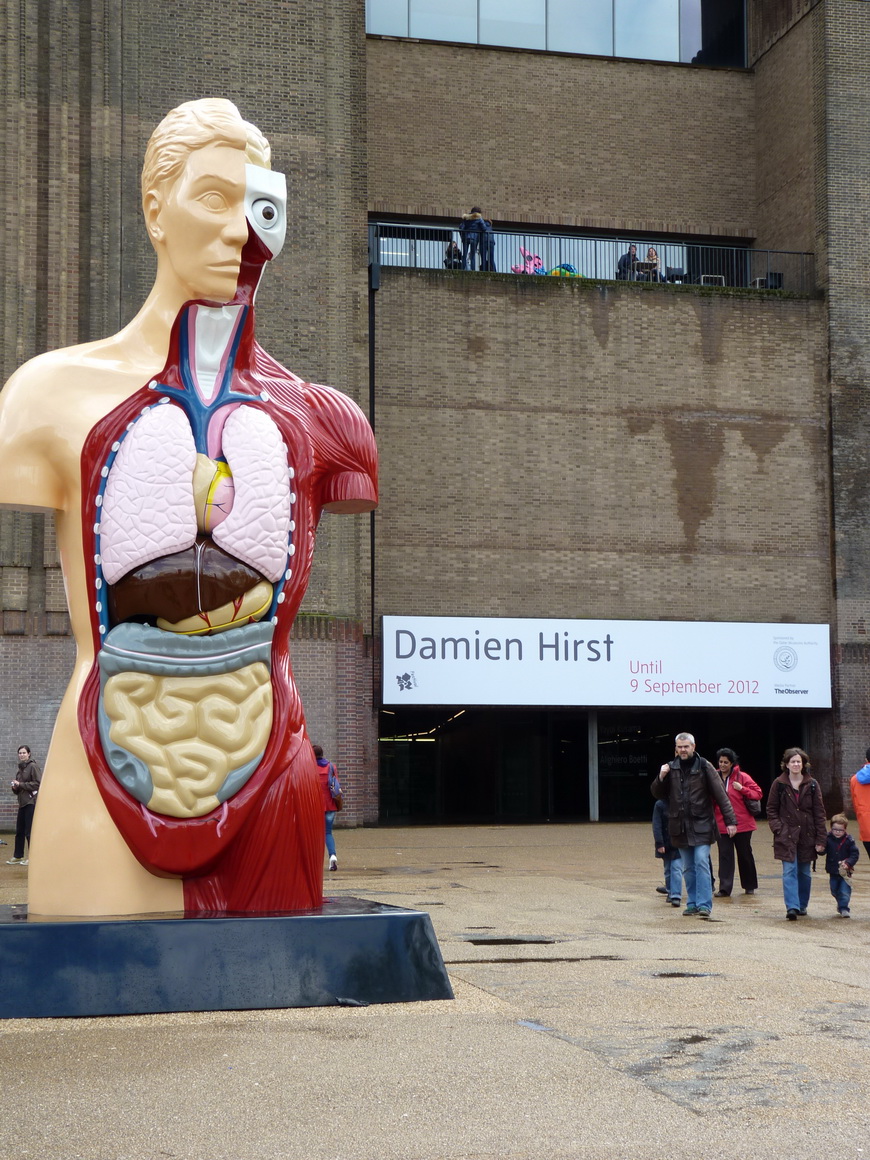
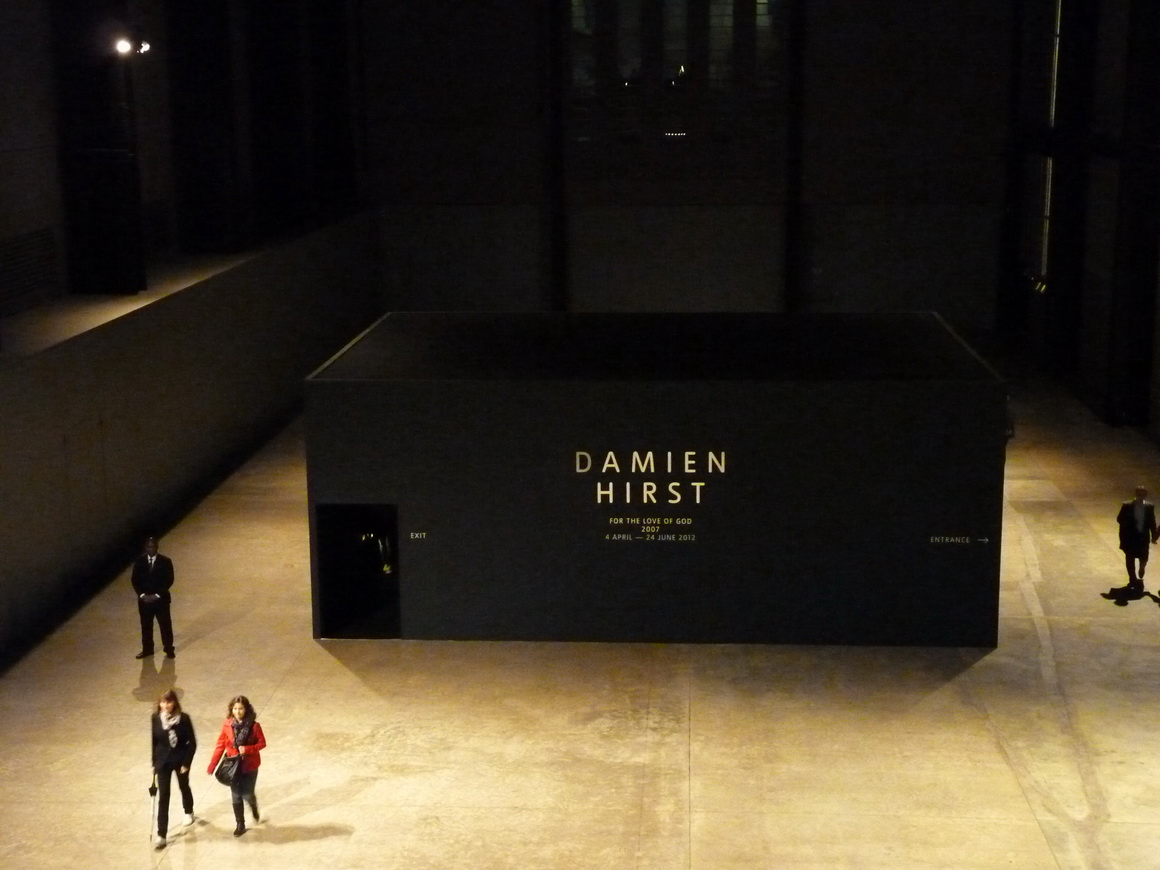
Naturally, the British contemporary star young artist "Damien Hirst" is the most dramatic and explosive, becoming the main draw for Tate Modern. Almost all visitors to the three retrospectives were attracted to this exhibition. (Upstairs, the Arte Povera show was empty, with few cats and bored staff yawning, yet it was a thought-provoking good exhibition. The Japanese artist’s exotic and psychedelic space failed to attract the crowd-seeking art lovers, leaving those two exhibitions somewhat neglected.) Is it watching the spectacle or appreciating art? Upon entering, two real "sheep heads" greeted viewers on the floor, followed by a large box of "black flies." Inside, a cow’s head lay in a pool of blood water, with flies scattered in panic—a shocking scene. Would cowards dare continue? It felt like watching a terrifying horror movie. Is it art? Doubt is inevitable. To the left, a massive dramatic display featured a tiger shark split in half, along with a "cow" and "sheep" immersed in formaldehyde preservative, appearing alive yet full of death metaphors, like natural history museum ecological specimens. Do specimens become objects, and objects become art? Because anything labeled art becomes art, especially under the museum’s guarantee. Are we not here to view "new" or "avant-garde" art? Do you believe your eyes? Do you see object forms or their referentiality?
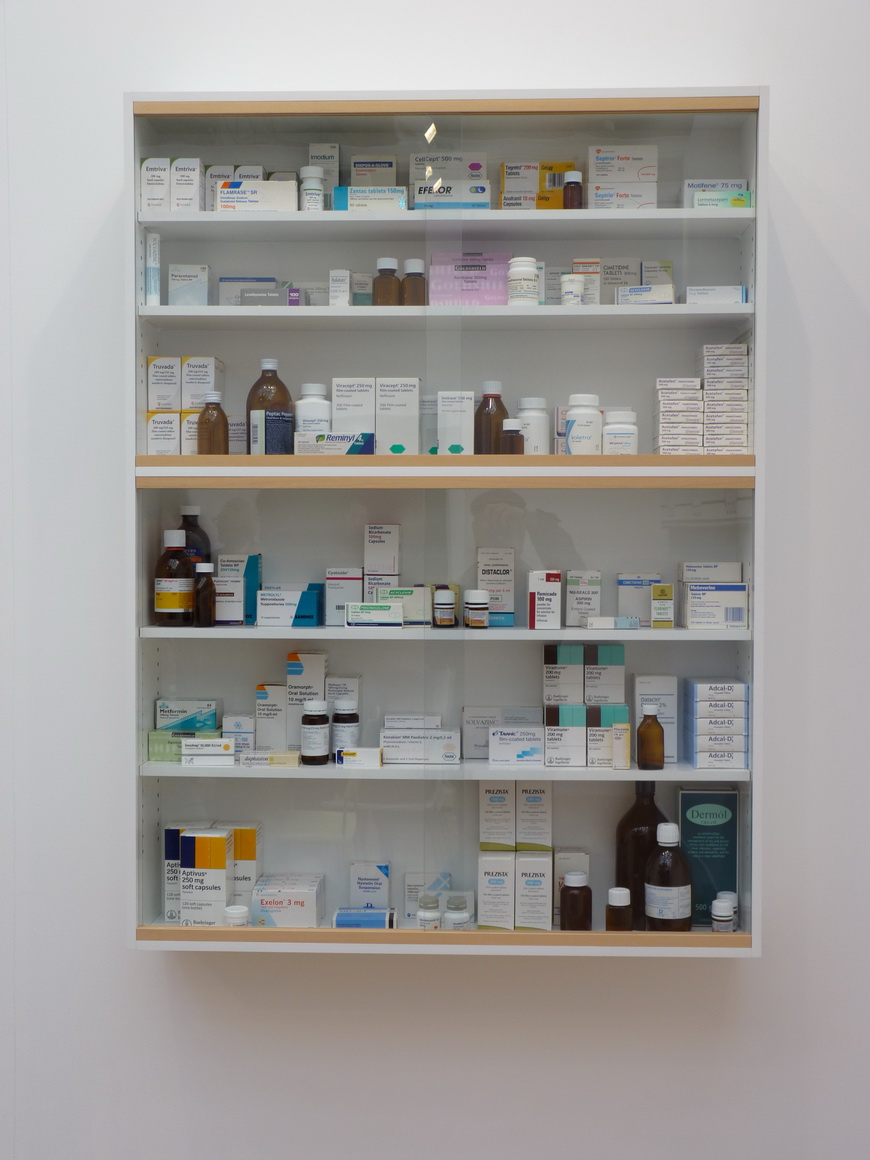
After the shock, the large visual dot paintings on the walls seemed harmless, just something to see. Then came poetic butterfly paintings, where butterfly colors became ready-made colors, amidst beauty and sorrow. Queuing into the Butterfly Garden, inside were not only flying real butterflies but also colorful non-flying insects performing. On the walls, series of white paintings stuck with cocoons, silk, and traces left by resting butterflies naturally became artistic images during the butterfly performance. Nature created them; imagination truly boundless. Exiting the garden, I stumbled into a traditional Western pharmacy. Did I take a wrong turn? I didn’t come to buy medicine, but to see the exhibition. Neat rows of bottles and jars, pharmacy displays turned into alchemy by the artist, no longer selling ointments but artworks. Touching my head to check for fever.
Paintings are not just for viewing but require stopping to listen and look. Two giant whirlpool-like Neo-Expressionist abstract paintings spun endlessly. A colored balloon painting floated on geometric facade paintings. Small techniques, big visual effects, dazzling new tricks, confusing and dazzling, clearly material and sensory. Then I stumbled again into a window full of Western pharmacy cabinets. Did I go to the wrong place? Orderly, neat rows of medicine boxes, with surgical instruments displayed in the center—scissors, pliers, and other tools. Many people gathered around. I thought Tate Modern was performing surgery on patients? A false alarm. Black humor, satire, or mockery? Unknown, just watch. Another wall displayed two-colored gelatin particles neatly arranged in mirrored glass cabinets. Not spectacular but durable to look at, full of reverie between paintings and objects.
Remember the poetic butterfly paintings? Visiting the garden of flying butterflies led to a surprising stained glass exhibition room. Looking closely, oh! They were composed of spliced and pasted colorful butterflies. Extraordinary care and delicacy, pleasing to the eye, superb craftsmanship, causing endless admiration, the highest masterpiece of this exhibition. Remember the skull constructed of diamonds auctioned by this artist recently? Diamond’s excellent and noble material becoming art creation material is unprecedented. Few artists have such capital for this kind of creation. Here, a series of sparkling diamonds are displayed in mirrored cabinets. Diamond auction? Diamond art or artistic diamonds? Does art surpass value? Pleasing to the eye, in art, material hierarchy doesn’t matter; what matters is what is presented. Here, double value and meaning seem present. Art becomes diamonds under capitalism in today’s financial storm; diamonds bear capital’s value. Art plus diamond quality is higher; art equals diamonds. Diamonds alone protect against art’s risks? What is the artist’s scheme? Investing in the embrace of capitalism, or striving for astonishing greatness? High-end goods carry the scent of money. Long live capitalism, Marx can sleep well now. Clearly, in today’s market-driven art, we must more carefully examine the meaning and essence of the word "art."