Daniel Dezeuze "Interval · Dao" 2014 Solo Exhibition
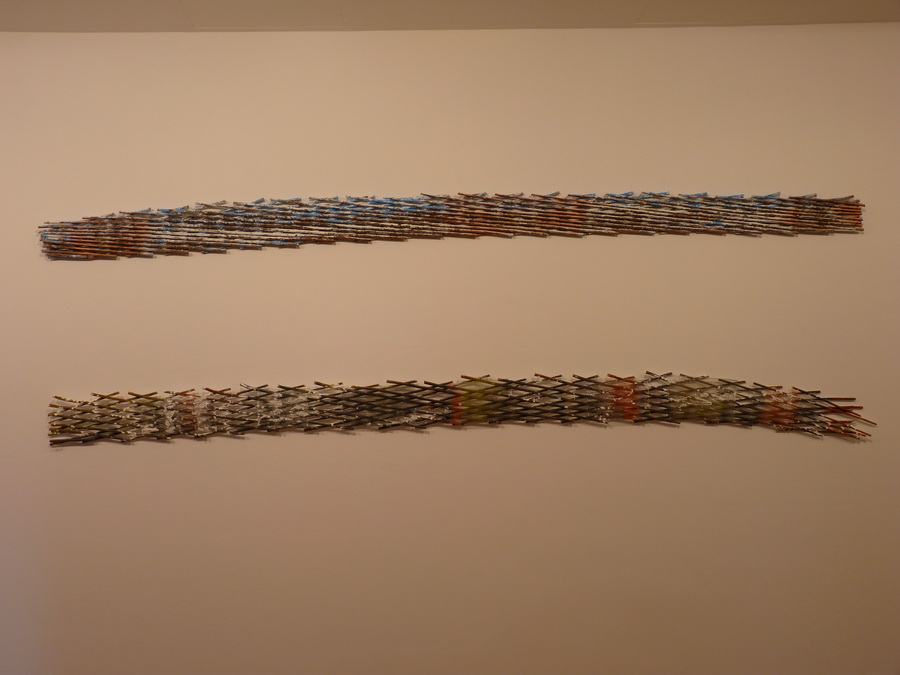
Scene from the solo exhibition of Daniel Dezeuze "Interval · Dao"
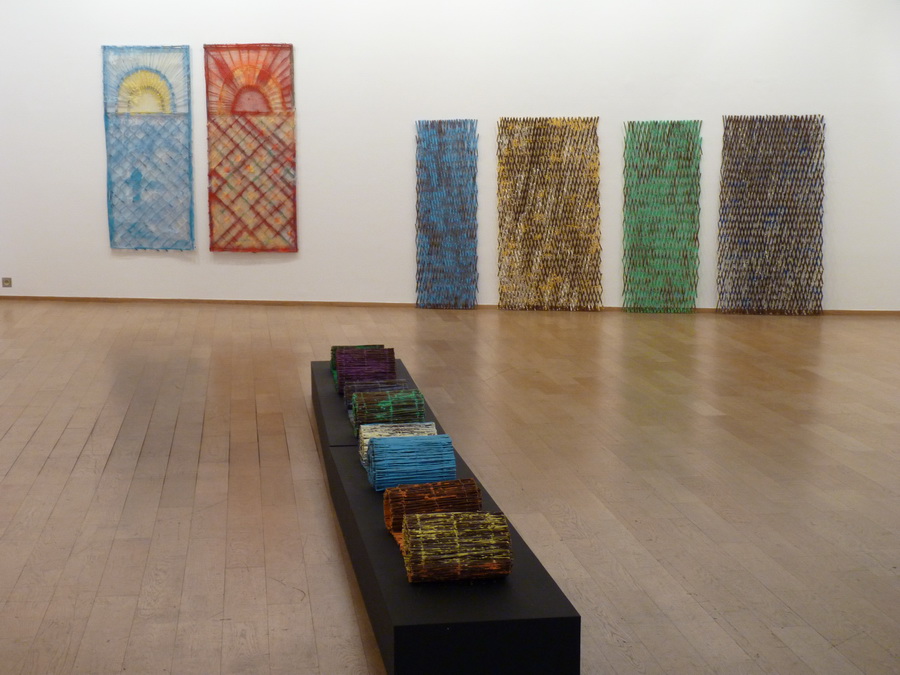
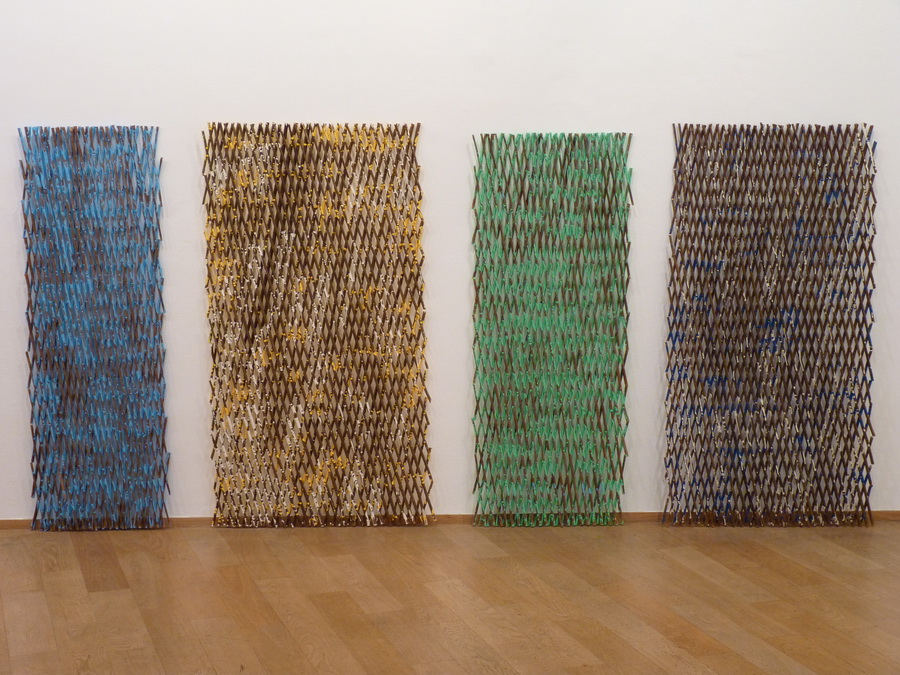
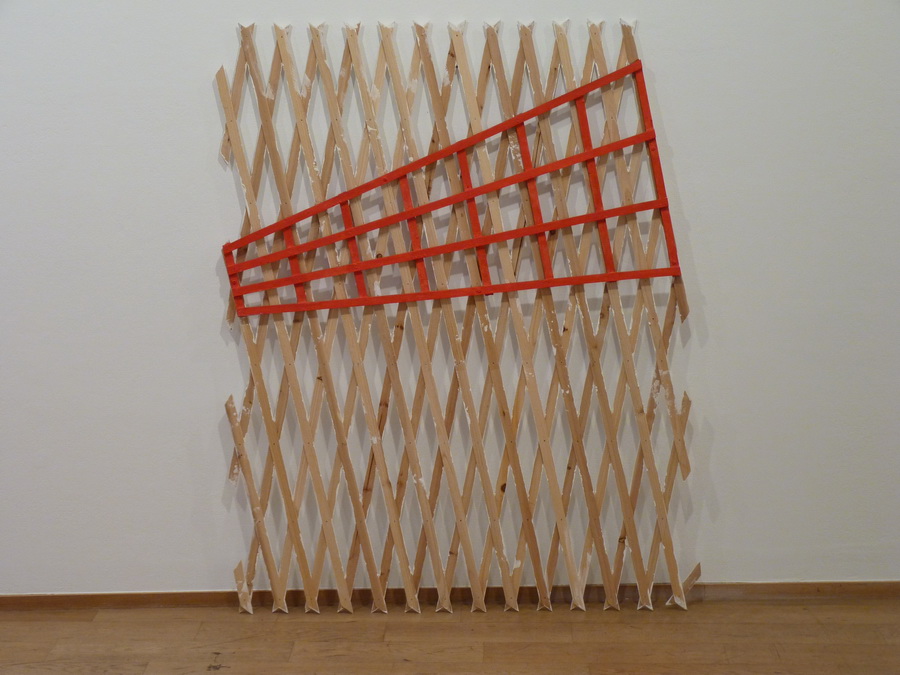
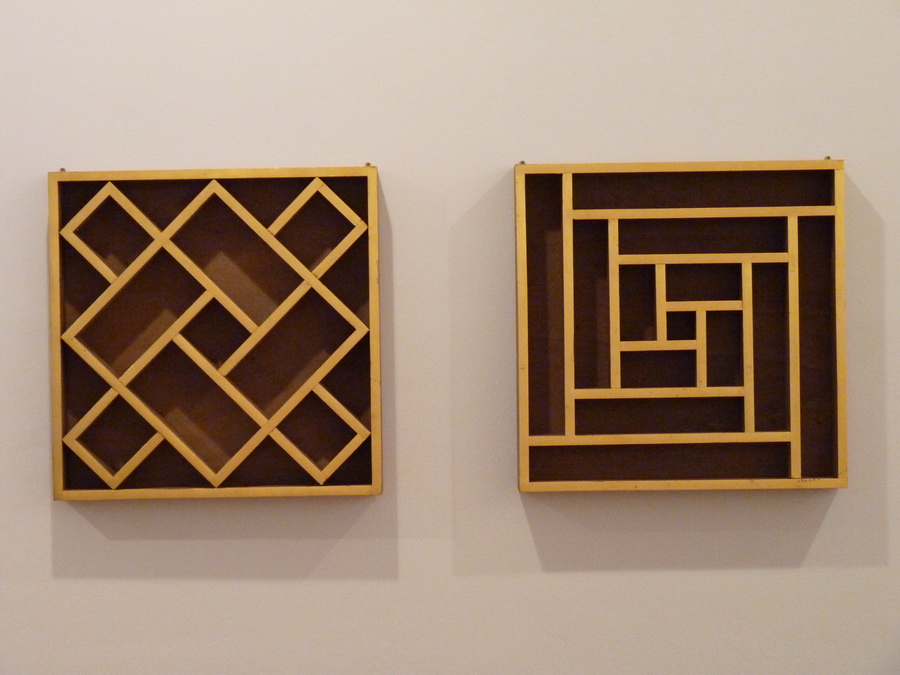
Text and images by Chen Chi-Hsiang. Venue: Daniel Templon Gallery. Dates: September 6 to October 25. Born in 1942, Daniel Dezeuze is one of the most representative artists of the French Supports/Surfaces movement. Along with Claude Viallat and Patric Saytour, he is a guardian of this movement. He presents canvases in various states, constructing art under deconstructed forms. Questioning the possibilities of painting and creating new painting has become the core of his work. Claude Viallat said: "Dezeuze paints on stretcher bars without canvas, I paint on canvas without stretcher bars, while Saytour paints on canvas imagined with stretcher bars."
Daniel Dezeuze adopted a critical attitude toward pictures early on, questioning the conventions of painting and directly attacking the traditional supports of painting. His greatest interest lay in the issue of the stretcher bar. In 1967, two debut works were created: one treated the stretcher bar itself as the painting, applying brown paint directly onto the frame; the other mounted a sheet of transparent plastic film on the stretcher bar, both treated as paintings. Through this act and attitude, he restored issues similar to those of "picture-structure." Dezeuze stated: "The stretcher bar is not a readymade, yet this object raises the question of the picture in a historical dimension."
In 1968, during this prophetic year, the series Parallel Bamboo Scrolls was presented. Evoking traditional Chinese landscape handscrolls, it could be appreciated from various angles, emphasizing materiality and form. It involved the conventions of three-dimensional objects: are they pictures or sculptures? The artist wrote: "The question raised by this work is simple: what is the nature of the artistic object or the artistic convention?" This questioning of the artistic object or convention became the energy for Dezeuze's forty years of continuous creation and formed his unique artistic style.
Within this stylistic paradigm, is further effectiveness possible? Is this also the greatest dilemma in creation? Is art temporal or eternal? Does art history seek paradigms or sampling markers? Can continuing within his creative scope for forty years still be called creation? Would there be a feeling of merely following the trend? In a world accustomed to routine, everything fades with time. Do past avant-garde or novel works continue to awaken people's awareness? Or when charm is overturned by purchasing power, what remains of art?
This group of French Supports/Surfaces artists, baptized by Mao Zedong Thought during the student uprisings of the late 1960s and calling themselves left-wing artists, were obviously influenced by Chinese thought, though whether materially or ideologically is unknown. Their creation seems to have been shaped under the backlash against American pop trends. Did artistic trends become evidence of political struggle? Among this group of Supports/Surfaces artists, only Dezeuze seemed full of curiosity about Chinese thought and philosophy, attempting to forge a path unprecedented in the West from Chinese painting concepts.
As early as the 1968 student uprisings, his prophetic Parallel Bamboo Scrolls series consisted of thin bamboo strips woven together, coated with several layers of transparent lacquer to form different tones. Half was rolled up, half spread flat on the ground, evoking traditional Chinese landscape handscrolls. Clearly influenced by Chinese painting forms, virtual and real space, and concepts, Dezeuze moved from being influenced by Chinese painting art to exploring Chinese philosophy. The series Small Works as Western Wind, Double Works, and Painting Meticulously Made in 2006 were the most obvious examples. Through precise thinking, these works resembled hanging assemblages. The exhibition construction concept drew attention to praising the transcendent Chinese Daoist concept of Yin and Yang.
Eight years later, Dezeuze further highlighted his understanding of the "Dao" and "Yin-Yang" of Chinese thought. The exhibition theme "Interval · Dao" suggests that the interval is a strong resonance of opening and closing the heart. The entire exhibition echoes the duality of Yin and Yang. In these new works, the creator becomes the world's creator, proposing pre-molded forms for us. "Dao," a powerful essence, flows gently into all things, whether alive or inactive. The artist said: "In the Dao - Low Forest (series), density, mixture, and vortex are evoked; conversely, the Signs (series) suggest a geometric order. I do not want to highlight a system, but I open a path." (Note 1)
In this new series of interwoven, tightened, or expanded thin wooden strips, Dezeuze refers to Kabbalah and follows the Jewish tradition's concept before the creation of the world: "God retreated to allow an inner reality to exist in itself, and to create the world." The series Butterfly Alley Alles de papillons, conversely, interprets existence within his intervals between saturated colors and light hues. Those forms, material choices, order, and disorder serve as keys to understanding these visual metaphors and spatial light rhythms. (Note 2)
Notes 1 and 2: Press release for Daniel Dezeuze "Interval · Dao" solo exhibition at Daniel Templon Gallery.