Daniel Dezeuze "Painting Treasures" Solo Exhibition
Imagination-filled Painting-Object Double Eyes, 2007, 20x20x20 cm
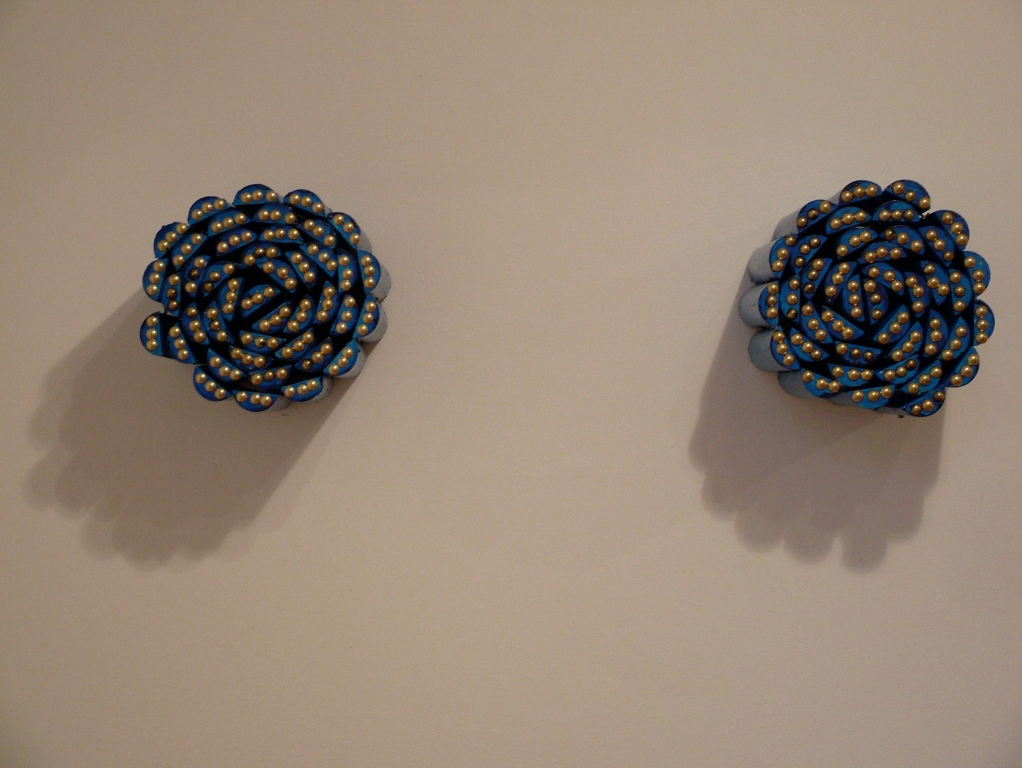
Imagination-filled Painting-Object Double Eyes, 2007, 20x20x20 cm

Painting-Object Dedicated to the West Wind's Small Ladder. Daniel Dezeuze "Painting Carefully Made" solo exhibition: on display at Daniel Templon Gallery from January 12 to February 26. Born in 1942, Daniel Dezeuze is one of the most representative artists of the French Support-Surface movement. Along with Claude Viallat and Patric Saytour, he is a guardian of this movement, presenting canvas in various states and constructing art under deconstructed forms. Questioning painting and the possibilities of creating new painting became the core of his work. Claude Viallat said: "Dezeuze paints on un-stretched canvases, I paint on canvases without stretcher bars, while Saytour paints on imagined stretched canvases."
Daniel Dezeuze adopted a critical attitude towards pictures early on, questioning the charter of painting and directly attacking traditional painting supports; his greatest interest lay in the problem of the stretcher bar. In 1967, two debut works were created: one treated the stretcher bar as the painting itself, painting it brown directly on the frame. The other mounted a transparent plastic sheet on the stretcher bar, both treated as paintings. Through this act and attitude, he restored issues similar to "picture-structure." Dezeuze stated: "The stretcher bar is not a readymade, yet this object raises the question of Jaeger's map painting within a historical dimension."
In 1968, in this prophetic year, another masterpiece by Dezeuze,, was woven from a series of thin bamboo strips coated with several layers of transparent lacquer, forming different tones. Half rolled up, half spread flat on the ground, it resembled Chinese traditional landscape handscrolls, allowing appreciation from various angles, emphasizing material and form. It involved the charter of three-dimensional objects: is it a picture or sculpture? The artist wrote: "The question raised by this work is simple: what is the nature of an artistic object or artistic charter?" (Note 44) Thus, the use of natural materials seemed like an echo of Italian Arte Povera, or perhaps invoking Eastern ideology to expose opposition to the industriality of American Minimalist objects.
In the 1970s, he expanded the constructive concept of the stretcher bar, recreating supports using soft cork in grid forms or ladder forms. In 1972, theseries consisted of 18 works made from mesh composite fabric cut into long strips, then cut into hollow grids or rectangles at intervals, dyed in soft pale green, white, and yellow tones. The series hung on walls until the hanging parts touched the ground, questioning painting charters and exploring material form and space. Critic Kaeppelin said: "It involves opposing the order of pictures, but more so opposing the blockade of nature."
Starting in 1973, he realized theseries, constructing grid fences with vertical and parallel supports according to spatial forms. Sometimes (mostly) hanging on walls extending to the ground and rolling, or laid flat on the ground, or half-rolled, resembling the form of Chinese vertical scroll landscapes, clearly emphasizing geometric descriptions of matter and demonstrating the relationship between solid and void. Dezeuze was full of curiosity about Chinese thought and philosophy, attempting to create a path unprecedented in the West from Chinese painting concepts. It is quite obvious that Dezeuze was influenced to some extent by the concepts of emptiness and reality in Chinese painting.
In 1975, theseries was lightly dyed red, green, and blue, metaphorically representing the materiality of painting, all within the concept of three-dimensional objects-pictures: "Treating his (painting practice) as art is like determining time and space, like writing, rather than technique, focusing on this affirmative product method's critical genealogy (...) allowing the addition of contemporary ideology, the deconstruction of painting through their different processes of metonymy and metaphor," all these works registered in a poetic and substantial way. Starting in 1976, he established himself between ideograms and geometry. In the 1980s, he tended towards material analysis and constructive forms, such as the 1985series, constructed from wood and rope into various bows and arrows, emphasizing formal tension and material form. Linear works resembled sketches. Dezeuze said: "Weapons mean the end of the visual system and serve as speculative activity; however, this extreme reduction of impulse does not allow the intrusion of tactile imagination."
Today, in this "Painting Treasures" solo exhibition, Dezeuze affirms forty years of exploration. Under the reasons of repairing space and anti-curve, he continues to use diverse techniques and possible materials for construction, challenging presentation methods, referencing ballistics and Chinese philosophy. This batch of new series falls under themes such as "Small Works as West Wind," "Diptychs," and "Painting Carefully Made." Through precise thinking, these works are like suspended collages. The exhibition's conceptual construction is like praising Chinese Daoist transcendent painting without drawing attention.