"Deadline": A Special Exhibition on Artists Facing Death
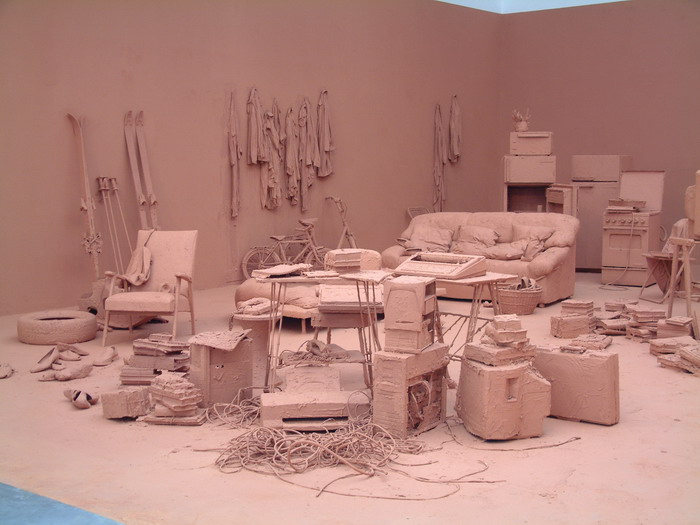
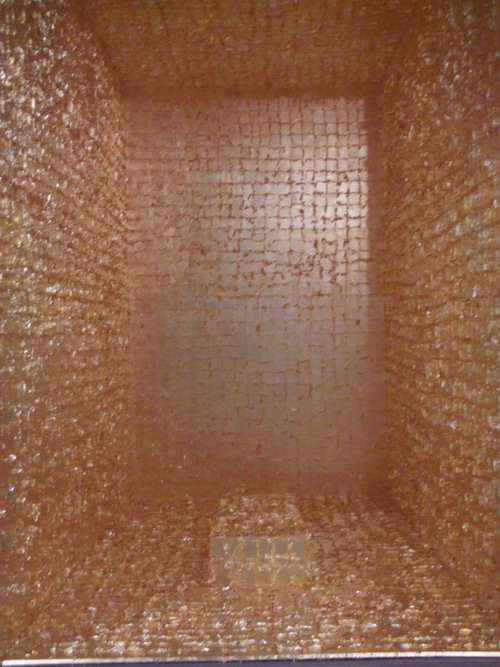
Chen Zhen Purifying Dreams Object-Space Installation 2000

The "Deadline" special exhibition was held at the Paris Municipal Modern Art Museum from October 16 to January 27, 2010. This unique special exhibition addresses contemporary artists facing their own death, responding to the trials and tribulations of war trauma, severe illness, or loss of independence. Through artistic creation, it attempts to transcend pain and the body, or to traverse the brilliance of life emitted by consciousness encountering death. The emergence of AIDS in the 1980s particularly changed people's attitudes toward the fragility of life. In the literary and artistic circles, where talent is abundant, famous artists who died young in the 1980s, such as two New York graffiti masters Haring and Basquiat, are obvious examples. Confronting the unease, confusion, and pain of life, enduring the torment of illness and the loss of independence caused by disease, or facing the situation of aging and disability, artists cleverly present the context and state of the world of life while firmly facing their own lives.
Since writer Gaetan Picon published "Praise for the Tremors of Time" in 1970, depicting birth, aging, sickness, and death, and the liberation of the physical body, the Maeght Foundation held a thematic special exhibition titled "Last Works" in 1989, taking a horizontal approach into the late artistic creations of artists. Today, this "Deadline" exhibition continues to explore these two aspects deeply, proposing a unique viewing experience of artists who passed away in the nearly 20 years prior, especially those who were aware of the shadow of death in their works or transcended themselves through them. Many works seem to become milestones of the journey to the end of life or final masterpieces, presenting an unprecedented illusion of liberation, bold as if transcending the space-time of existence, often like foreshadowing the truth of impending death. Indeed, death liberates people from past shackles and releases them from the prison of former bodies; artworks become the field and intensity of the release of the artist's final energy and will, serving as a magnificent witness to life.
Twelve representative artists are gathered here, including painters, sculptors, photographers, video artists, and installation artists. The oldest is American Abstract Expressionist de Kooning (93 years old), and the youngest is Israeli artist Absalon, who was not yet 30. Most continued to create strongly under the torment of illness until their last breath. Art became the most brilliant exit of life for these artists and the world where the soul gallops. The one who lived longest with illness and lost physical independence was French narrative realist painter Gilles Aillaud (28 years). His persevering artistic spirit not only moved people but also shook art itself. They all explored art with the intensity of their lives, intending to achieve a sense of fulfillment in life, expressing the truth of life as much as possible, and interpreting everything that exists. Some issues not raised before in this exhibition include: the state of the body devastated by illness, the shadow and performance of death, eternal references through art history, etc. Sometimes it is through the evolution of their creative process: suddenly slowing down or accelerating rhythm, adopting new medical technologies, a form almost exhausted, deprivation of painterly gestures, or using unusual forms and colors, etc.
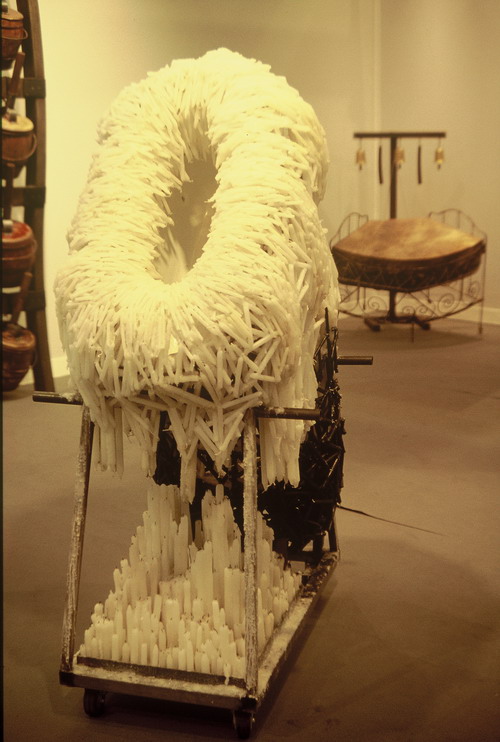
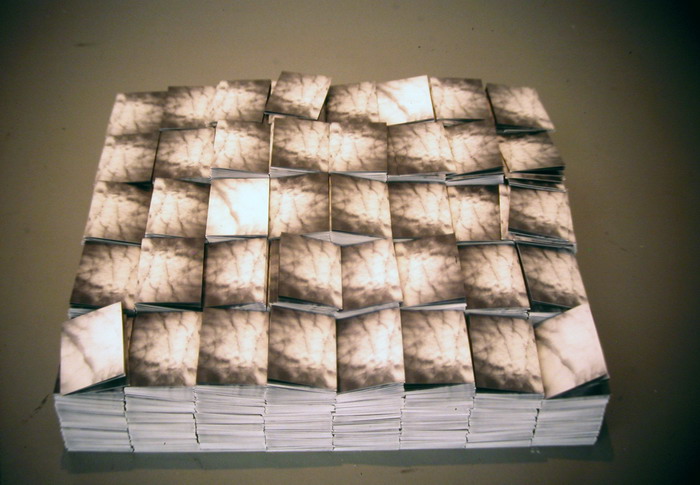
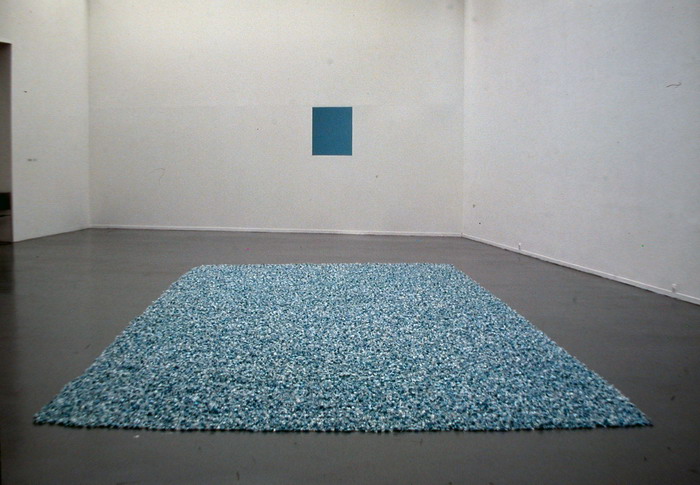
Martin Kippenberger (1953–1997) was a German neo-expressionist multi-form artist. Under the provocative subversion of Neo-Dadaism, he questioned the originality of works. He died young at 44 from acute liver cancer when his art reached its peak. His works were diverse and complex; his late works were full of the shadow of death, especially in the 1996 series referencing Picasso and Géricault's world-famous paintings. He reinterpreted Géricault's poignant and dramatic "The Raft of the Medusa," using photos of his own body to stage scenes of death on the raft, illustrating the tragedy of life and the shattering of existence. Felix Gonzalez-Torres (1957–1996) was the most representative new-generation artist in the US in the 1990s, focusing on objects and concepts, skilled atMastering everyday objects to create extraordinary meanings. Although carrying the HIV pathogen, he maintained an optimistic and progressive creative attitude. His works often embody concepts of love, loss, renewal, and hope, intending to share an open aspect through art. Experiencing the brevity and limits of life, its impermanence and flux, he ingeniously explored metaphysical or symbolic eternal existence through art, so many of his works retain their physical plasticity within temporality.
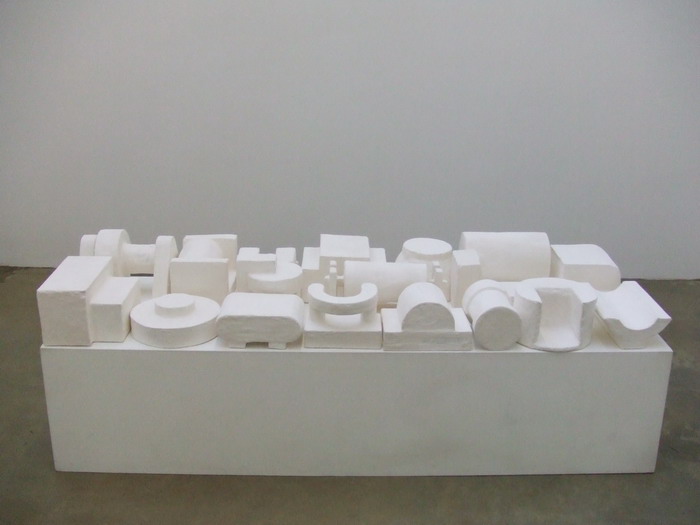
Chen Zhen (1955–2000) was the most representative Chinese artist living in Paris in the 1990s. Arriving in France in 1986, he initially developed a series of migration and displacement themes from his situation in a foreign land, constructing objects and installations within the globalized vocabulary of local signs. Soon after contracting an incurable disease, the pain of illness changed his overall creative direction, directly entangling with his inherent body, intending to convey the will to fight and the experience of anemia through his works. Coming from a family of Traditional Chinese Medicine practitioners, he also played the role of a doctor, hoping only to heal his own body, thus transforming his illness into inspiration and energy for creation. The artist optimistically said: "I accept another kind of blessing: namely this serious illness. Endless attacks, pain, physical and psychological difficulties are equally obvious, accompanying me for a lifetime and forging my willpower and spirit. It transforms into the source of my existential energy, this extraordinary energy allows me to continue living and still love art." Absalon (1964–1993) died young like Raphael in art history (only 29 years old), diagnosed with HIV at a very young age. His artistic career was like a flash of inspiration; in his short life, starting from 1989, he created rapidly, focusing on intense artistic creation, developing a utopian "Personal Dwelling" construction project series. This spatial state of body and spirit was like the artist's imprisoned body, because the volume of this white personal dwelling series began from the artist's limited body, referring to personal life prospects. The works were like a true portrait of the artist's personal life and another existing body. In his later years, the artist also extended to experimental video, presenting rebellion, violence, and unrest through his personal performances.
Robert Mapplethorpe (1946–1989) was one of the most famous photographers in the US today. Since the early 1970s, he was known for his black-and-white elegant works (famous portraits, sexuality, and still lifes), his works oscillating between aesthetics and provocation. Contracting AIDS in 1986, the illness made him exhausted, unable to continue photographing models. He began shooting surrounding symbolic objects, such as skulls implying the emptiness of all things, or marble and bronze busts metaphorically representing both timeless and mortal entities. His last self-portrait, holding a skull cane with piercing eyes, boldly presented the light of life and the truth of existence, becoming a milestone of the journey to the end of life or a final masterpiece. Hannah Villiger (1951–1997) was a famous Swiss photographer. She contracted acute tuberculosis in 1980 and was forced into isolation for several months. This gave her the opportunity to think alone and face her own state of life, carefully observing the phenomena of her body in this special environment, and keenly recording these unique series of bodily landscapes and situations with a Polaroid camera. The artist said: "When I create, I turn my body into an object: it becomes the material of my work. I manipulate it under its conditions: when sick, I am at a loss, even some poses become problems or more precisely, even simple bending is difficult."
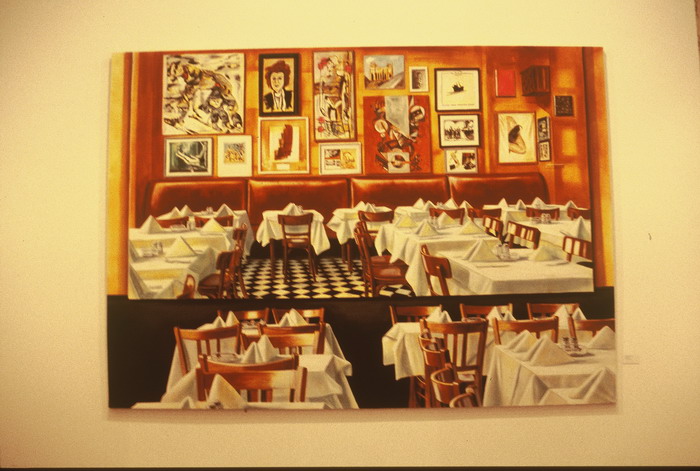
Gilles Aillaud (1928–2005) was one of the most representative French painters of European narrative realism in the 1970s and the most active promoter and theorist of this movement. His most famous work is undoubtedly the series of animals in the zoo. Starting from 1964 to the present, the animals he painted pitifully remained confined in iron cages, isolated from the natural environment, seeming to become various metaphors for human society and survival conditions. Suffering a stroke and hemiplegia in 1977, he began to accept the challenge of reality and the loss of an independent body. Disabled but not defeated, he continued his beloved art with brave willpower. Although his creative pace slowed, with the care of his family, he still completed some paintings. When healthy, he painted animals locked in iron cages; after becoming disabled, he painted flocks of birds flying freely in bright natural landscapes, metaphorizing the roaming and galloping of free minds and wills. Art became the exit of life and the high song of the soul. Maintaining his existential life for 28 years is truly unimaginable. Jorg Immendorff (1945–2007) was one of the most representative painters of German Neo-Expressionism in the 1980s, an artist with a left-wing political line, whose all creations revolved around Marxist and utopian ideal worlds. Painting inspiration came from modern German history; his most important representative work is the "Café" series. People are unpredictable and life is impermanent. In 1998, when the artist was reaching the peak of his creation, he contracted a rare bone hardening disease (the nervous system gradually shrinks). He continued teaching and creating with the help of multiple assistants, blessed with information image databases. From then on, all works reflected the worsening development of his condition, presenting symbols of the nervous system through collage-quotation. By 2004, the entire condition became more severe, with hardened and dislocated bodies; a self-portrait sitting in a wheelchair, suffering unbearably like entering a hellish dreamlike situation. Finally immobilized, he could only direct assistants to participate in creation verbally, as he said: "Like a conductor."
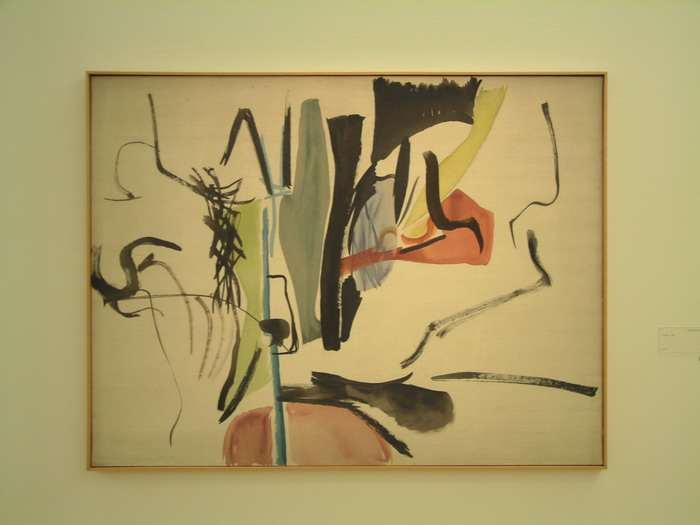
James Lee Byars (1932–1997) was the most paradigmatic loner in the Western art world of the 1970s, an American artist long active in the European art scene, a good friend of Beuys, integrating various creative expressions: conceptual art, performance art, object art, and installation, etc. He was a modern mystical alchemist, his creations close to Marcel Broodthaers and Beuys, his works outside all categories of contemporary art types. Lee Byars believed his thinking was Eastern, and his true creative stance was built on the philosophical thoughts of Stein, Einstein, and Wittgenstein. Contracting cancer in 1990, the shadow of death surrounded all his creations and projected his body disappearing into the works. He believed "Death is like an aesthetic concept, belonging to the part of life." His works were quite humanistic, targeting human spirit and spirituality, because his goal was to pursue human goodness. Joan Mitchell (1925–1992) was the most representative painter of American Abstract Expressionism in the 1960s. In 1960, she resolutely moved from New York to Vetheuil, the holy land of French Impressionism (not far from Monet's Giverny). Liberating subjective consciousness from natural environmental landscapes, strengthened forms and colorful, unrestrained colors fully displayed the tension of painting and extraordinary sensibility. Years later, facing challenging physical illness, the artist mustered enough courage to fight the illness to the end. She said: "I exist, we exist, we do not know what the future will be, but I fear death..." In her later years, facing the challenge of life, under this internal contradictory conflict, she used blank forms to contrast these overflowing dense brushstrokes and powerful colors, emitting theExcellence brilliance and consciousness of life.
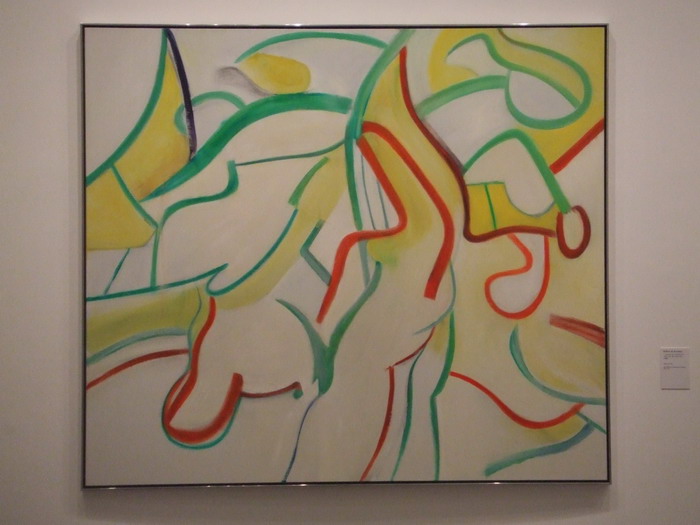
Willem de Kooning (1904–1997) was the most representative painter of American Action Abstractionism in the 1950s, famous for his iconic cool women figurative and abstract paintings. At age 76 in July 1980, he began mental degeneration, entering a personally extraordinary prolific creative stage. He continued to remain alert and focused on his beloved painting. However, he became slower and more careless, works losing past rigor and density, entering a distributed loose situation, which also formed his unique new style in later years: flattening, covering irregular color lines, simple structures, etc., quite consistent, overall calm and serene. The artist, based on rich painting experience, carried forward the past and opened up the future, developing the consciousness of existential life and artistic crystallization in a balance of tension and complexity. Hans Hartung (1904–1989) was one of the main figures of Parisian Lyrical Abstraction in France in the 1950s, one of the few vigorous creators in the art world (quite long-lived, 85 years old). Suffering a stroke and hemiplegia at age 82, he lost his independent body. After medical treatment and limb training, he returned to the studio, continuing to pick up the paintbrush with the help of assistants, driven by passion and willpower. In the short three-year final artistic career, he rapidly created a total of 650 works. Regarding this rich output, the painter said: "It is an extraordinary youthful vitality that allows me such creative energy, especially needing to paint large canvases." In his later years, he continued to expand new experiences in painting, attempting to use agricultural sprayers to create a comprehensive spraying system. This new tool allowed him to fully liberate extraordinary brushstrokes and rich, colorful series of colors, strengthening free consciousness and imaginative space, opening up a new world of abstraction, letting his artistic realm reach an unprecedented peak.