Dominique Gonzalez-Foerster: "Expodrome" Solo Exhibition
(Top left) "Solarium" (2007), a magical spatiotemporal installation on the grand staircase. (Top right) "Promenade" (2007), an empty large hall. (Middle left) "Panorama" (2007) at the large pillar turn. (Middle right) Detail of "Panorama". (Bottom left) The most striking is...

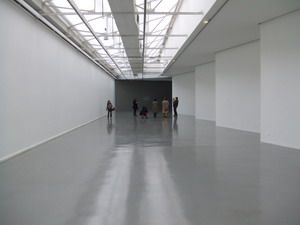


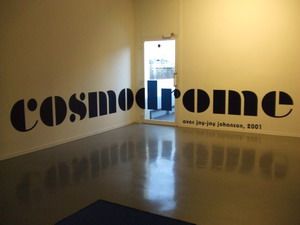

(Top left) "Solarium" (2007), a magical spatiotemporal installation on the grand staircase. (Top right) "Promenade" (2007), an empty large hall. (Middle left) "Panorama" (2007) at the large pillar turn. (Middle right) Detail of "Panorama". (Bottom left) The most striking is "Cosmodrome" (2001). (Bottom right) "Tapis de lecture" (work from 2000-2007). Dominique Gonzalez-Foerster's "Expodrome" solo exhibition was shown at ARC, Musée d'Art Moderne de la Ville de Paris, from February 13 to May 6. She is one of France's most representative video installation artists today (alongside Pierre Huyghe and Philippe Parreno; these three artists once shared a common 3D cartoon image character in the 1990s). Born in 1965, Dominique Gonzalez-Foerster began with narrative video installations in the 1990s, questioning art itself, and like many contemporary artists, expanded into other fields such as film, architecture, music, literature, and even fashion, exploring their possibilities. Particularly, she constructs her works through open spatial structures in unique locations, creating films and overall environmental spaces within architectural forms and special natural landscapes.
The new series of works by Dominique Gonzalez-Foerster presented at ARC, Musée d'Art Moderne de la Ville de Paris, were created through collaboration with an exhibition team, attempting to introduce the concept of "sharing space" and the "possibilities of co-displaying domains," placing the audience in the main role of her works. The "Expodrome" exhibition cleverly utilizes the ARC building space, featuring seven poetic themes: On the grand staircase of ARC, "Solarium" (2007), a work in collaboration with Nicolas Ghesquiere, installs a magical spatiotemporal field. A series of reclining seats along the stairs allow people to comfortably lie down and watch the changing sunlight reflected in the bright crystalline bodies ahead (video images), giving the audience a sci-fi feeling of being in a spaceship flying in outer space, enjoying a unique spatiotemporal domain. "La fee electricite" (2007), a collaboration with musician Bashung, is located in the oval mural exhibition hall of Dufy, surrounding Nam June Paik's video figure works. In Bashung's poetic musical editing, it makes one feel gently floating. In the ARC glass window, "La jetee" (2007), a work in collaboration with Nicolas Ghesquiere, presents a series of geometric triangular objects, depicting the natural landscape of the artificial world.
In "Promenade" (2007), an environmental space work in collaboration with Christophe Van Huffel, which is empty in the large hall, when people walk in this space, they can close their eyes and carefully listen to natural sounds such as wind blowing grass, insect chirping, bird singing, stream flowing, waterfall pouring, and strong wind and rain, as if in a lush green park. The audience bathes in the natural scenery stage, becoming another subject of the work. Next, in the space at the large pillar turn, "Panorama" (2007), a light city in collaboration with Benoit Lalloz and Martial Galfione, features a series of jumping lights when night falls, like the mesmerizing panoramic night view of a metropolis. The small square space is "Tapis de lecture" (work from 2000-2007), a series of psychoanalytic and metaphysical book stacks installed against the wall on a dark blue square carpet, clearly resembling a library where the audience can enter and read, under the participatory aesthetics concept popular in the 1990s.
The most striking is "Cosmodrome" (2001), an environmental field work in collaboration with Jay-Jay Johanson. In a pitch-black space, the ground is covered with black sand. In a continuous 9-minute dramatic field, lightning flashes left and right, stars fill the sky, and extraordinary intermittent sounds of the universe are heard. In the spacecraft, the sci-fi feeling is a feast for body, mind, and spirit. Finally, there is "Le cinema," where video art works by Dominique Gonzalez-Foerster from 1996 to the present are screened, including works shot in Japan, Hong Kong, and Africa, etc. (images and narrative plots), which are quite fascinating. Every Sunday afternoon at 15:00, works by artist friends such as Pirre Huyghe, Ange Leccia, Philippe Perreno, Philippe Rahm, Emilie Renard, Angeline Scherf, and Fabien Danesi are screened.
Clearly, through environmental images, objects, sounds, light and shadow, body, and psychology, extraordinary experiences of body and mind and imaginative spaces unfold in diverse time and space domains, all like a unique journey. Art critic Angeline Scherf wrote in the catalog: "One day Dominique Gonzalez-Foerster opens an exhibition, opens up space and manages the installation, she calls it 'exhibition'. But this could be an island, a unique journey, a city, a walk, a space flight, a park, a carpet, a hotel, an endless library, and incomplete... etc. She calls it Expodrome, because this is a platform only to fill time, exploring other types of exhibitions: from the sun, light, strong wind and rain to transparent skies."