Douglas Gordon – Solo Exhibition "The Anatomy of My Desire"
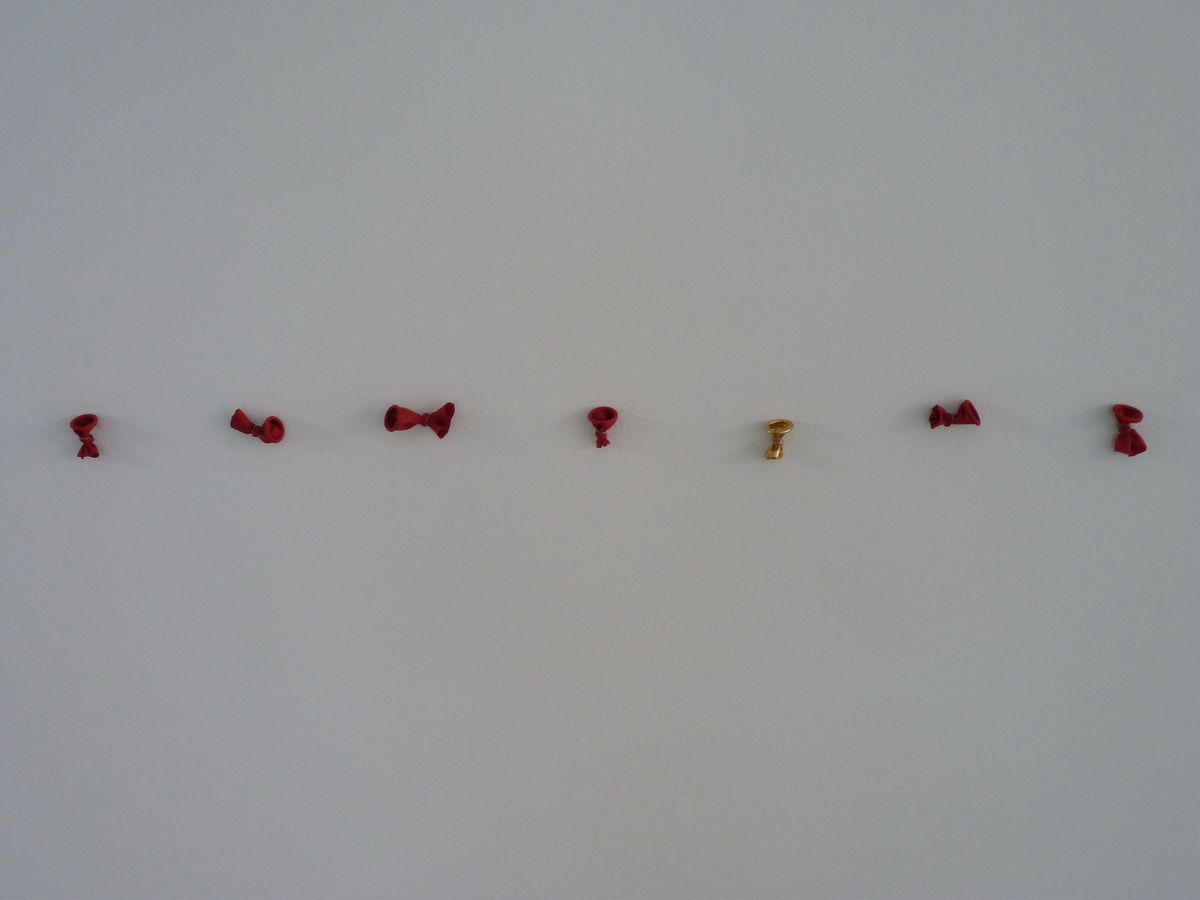
"All Yesterday's Parties" 2019 52 silver, among which only one is gold
Text and images / Chen Chi-Hsiang
"Life is a bundle of desires; if they are not satisfied, there is pain; if they are satisfied, there is boredom. Human life swings between pain and boredom."
Schopenhauer
Dates: June 7 to July 20 Location: Kamel Mennour Gallery Douglas Gordon (born 1966 in Scotland) is one of the most representative contemporary British artists today, famous for his video art. He was the only video artist to receive the UK's annual Turner Prize (1996).
His diverse practice includes video, film, sculpture, photography, text, painting, and spatial installations. The artist examines the fundamental conditions of human existence, such as memory and the passage of time, truth, life and death, good and evil.
"Undoubtedly, he is one of the most powerful conceptual artists today who rejects personal style.
He is dedicated to appropriating and transforming images, exhibiting them in different contexts," from this perspective, the exhibition becomes a basic element for the artist's expression. (Note 1) Desire is the energy and will of life, an immense force driving human existence in both consciousness and unconsciousness.
Under human greed, the fire of desire is hard to control, spreading like wildfire—illusory and dreamlike amidst the disillusionment of reality and illusion, yet desire satisfies people's arrogance and ignorance.
As the philosopher Schopenhauer wrote, "Life is a bundle of desires; if they are not satisfied, there is pain; if they are satisfied, there is boredom.
Human life swings between pain and boredom." This exhibition appropriates and transforms many scenes and objects from TV or movie series.
With the artist's commentary, one can delve deeper into its realm, dissecting desire through reference and metaphor, concept and literature, narrative and lyricism.
"The Anatomy of My Desire" is the artist's self-reflection on existential doubts that began last year after more than thirty years of creation.
Desire has become the core of his work; he wants to know what his desire is—an unconscious, indestructible energy that supports existence.
The artist says: "I want to understand, I try to see whether desire is diverse or always repeats the same things." (Note 2) The solo exhibition begins with memories from Douglas Gordon's personal past that are unforgettable.
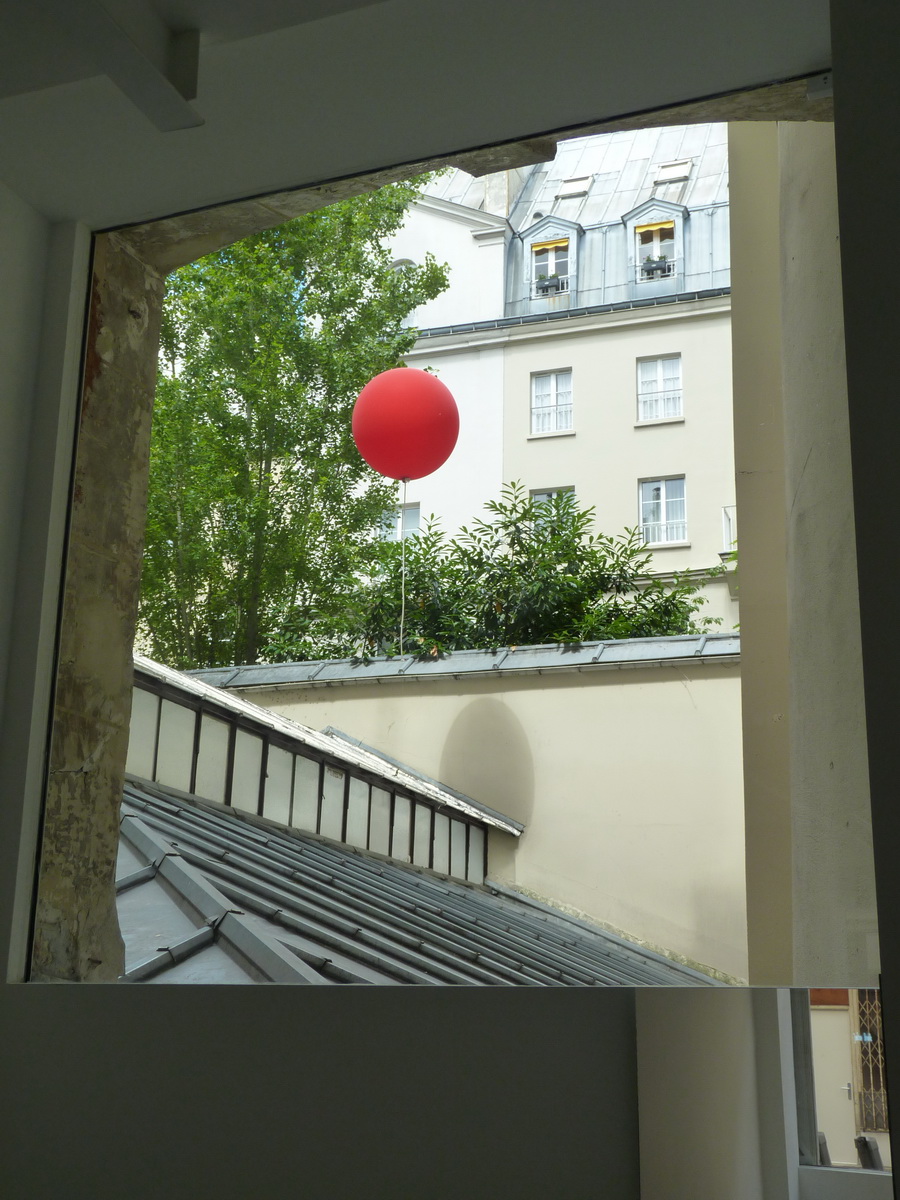
When he was six years old, he and his sister accidentally watched a French TV series The Red Balloon (1956) by Albert Lamorisse, which tells the story of a six-year-old boy who falls onto a balloon connected to a mirror while going to school.
This magical balloon constantly takes the child on new adventures. The exhibition is shown in two spaces; the main hall is a play area, while the smaller gallery is passed through clear, precise, and cruel fog. The main hall is like a theater.
The exhibition opens with the small red balloon knot work "All Yesterday's Parties" (2019) on the wall. Among the 52 silver ones, only one is gold. Does it describe the number of party attendees?
And does it imply that among the disillusionment of many desires, only one is valuable?
However, looking at his creative process, in 2007 he engraved forty star-shaped propositions on a skull titled "Forty." Thus—searching for clues—he suddenly realized this was the artist's 52nd birthday. This kind of annual time encryption reminds people of human vanity.
In front, a group of white neon writes "Selfish (nom(bri) du monde)" (2019), describing how all desires take the self as the core.
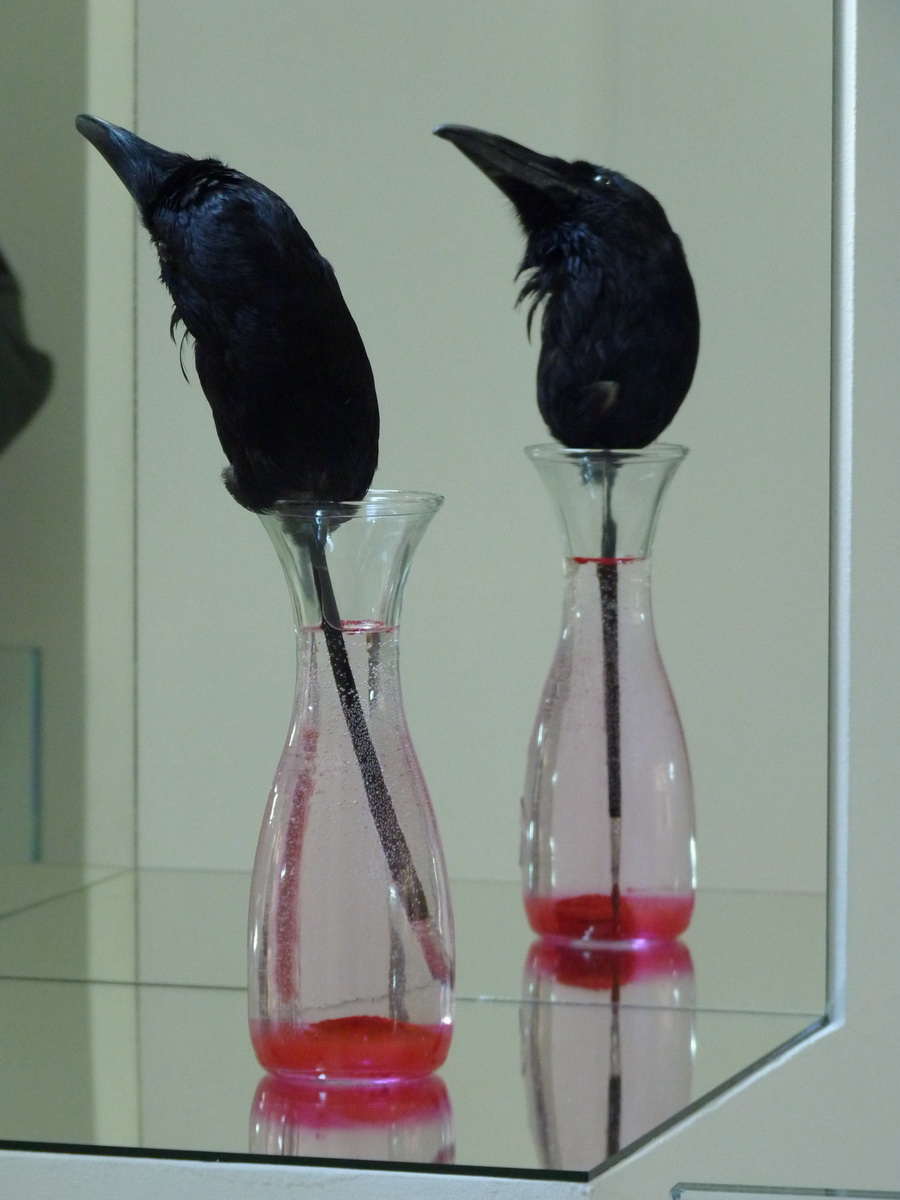
Between the column foot and mirror surface by the window sits a jar of red water with a pen topped by a black crow's head, a dreamlike surrealist scene. The artist pays tribute to his high school teacher couple, whose guidance opened his vision and skylight.
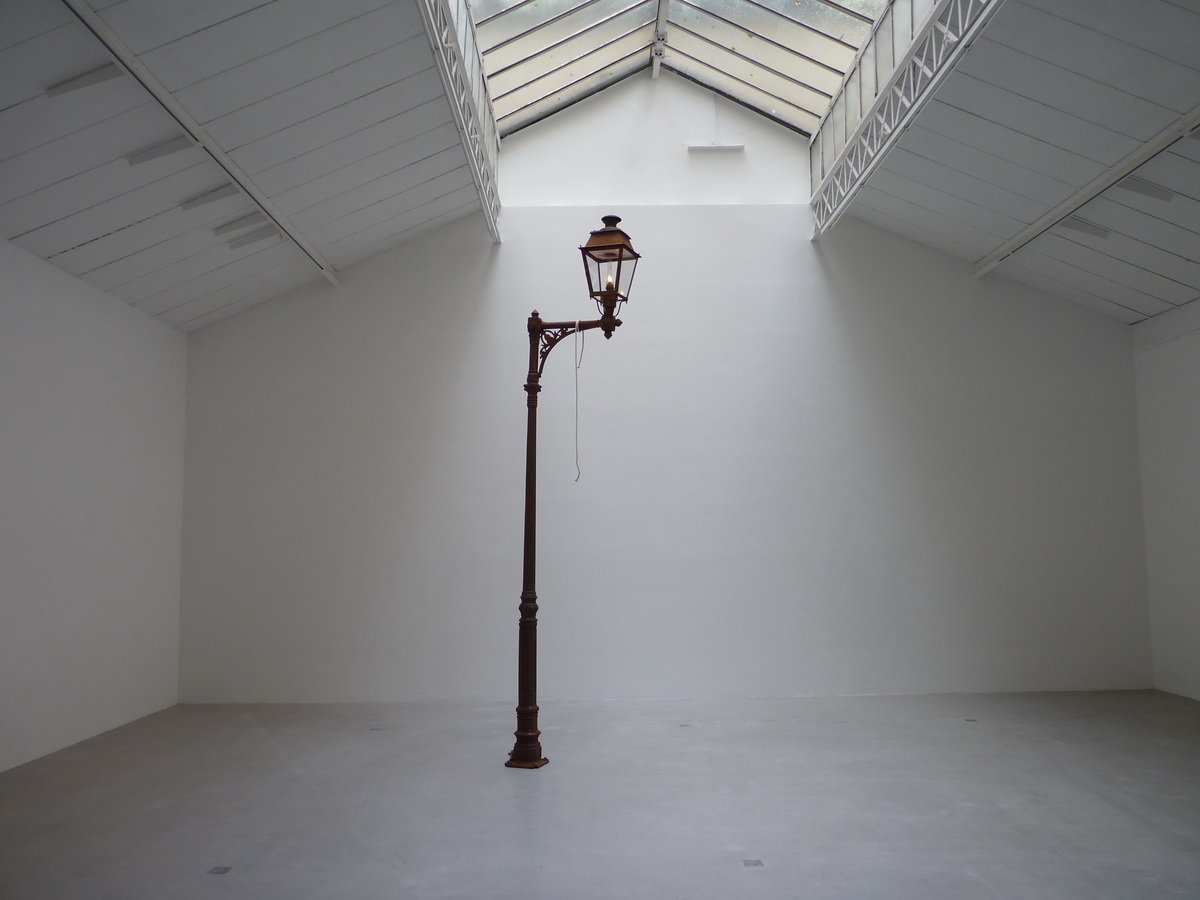
Going downstairs, we enter the dramatic "Reverb" (2019) film scene, returning to the artist's childhood TV series memories. Under a transparent glass house stands a kerosene street lamp (with a rope tied to the pole). The imaginative rope refers to a broken-string balloon.
People see a faint shadow of a red balloon on the glass. The balloon is a pure metaphor for desire—elusive, unpredictable, and challenging people's wishes.
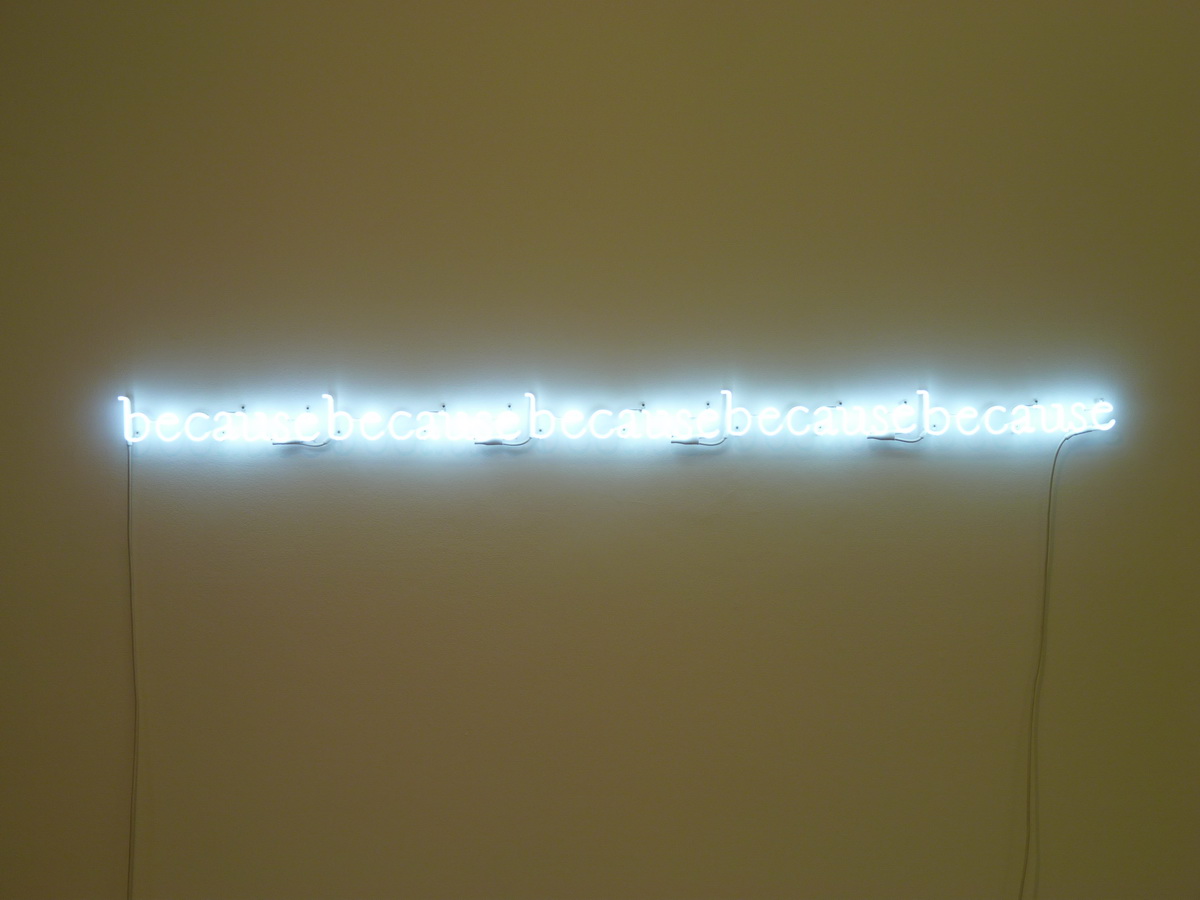
The other exhibition space is passed through clear, precise, and cruel fog, attempting to analyze the prototype of desire. Upon entering, one is greeted by white neon tubes writing "Because because because because because" (2019) five times.
When we try to explore desire, we always make excuses starting with "because...". This phrase comes from a questioning line in The Wizard of Oz series: "Why?" That is the real question.
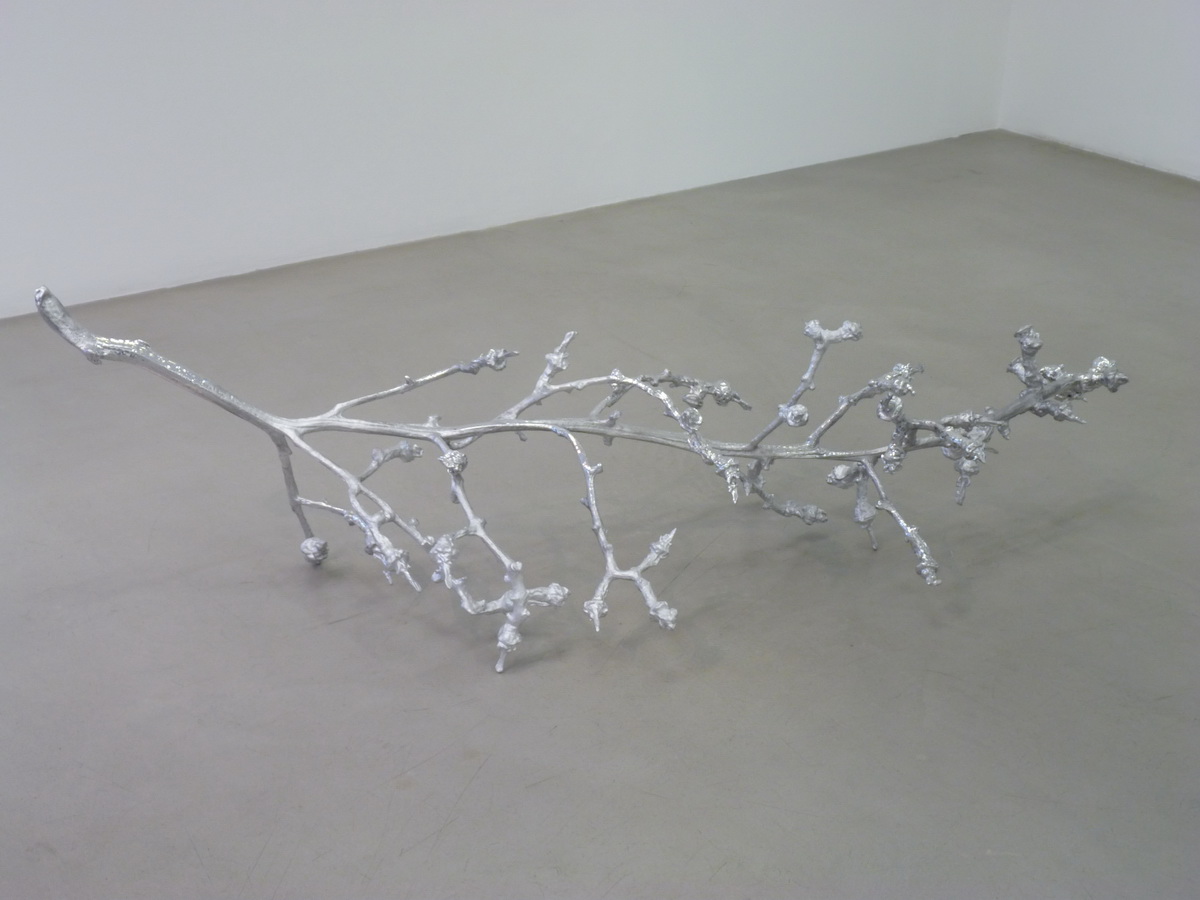
"Stolen Fruit" (2019) features a resin tree branch, broken on the ground and as tall as the artist, with some fruits and strange shapes like eagle claws. Desire no longer bears great fruit.
Thus, desire has its own memory, logic, mystery, and lack of reason; there is nothing to explain. Indeed, stolen fruit tastes best, or perhaps the unattainable is the sweetest. 'Greed' is the prototype of human desire.
Desire is full of eternal mysteries, and its exploration requires a special ethics.
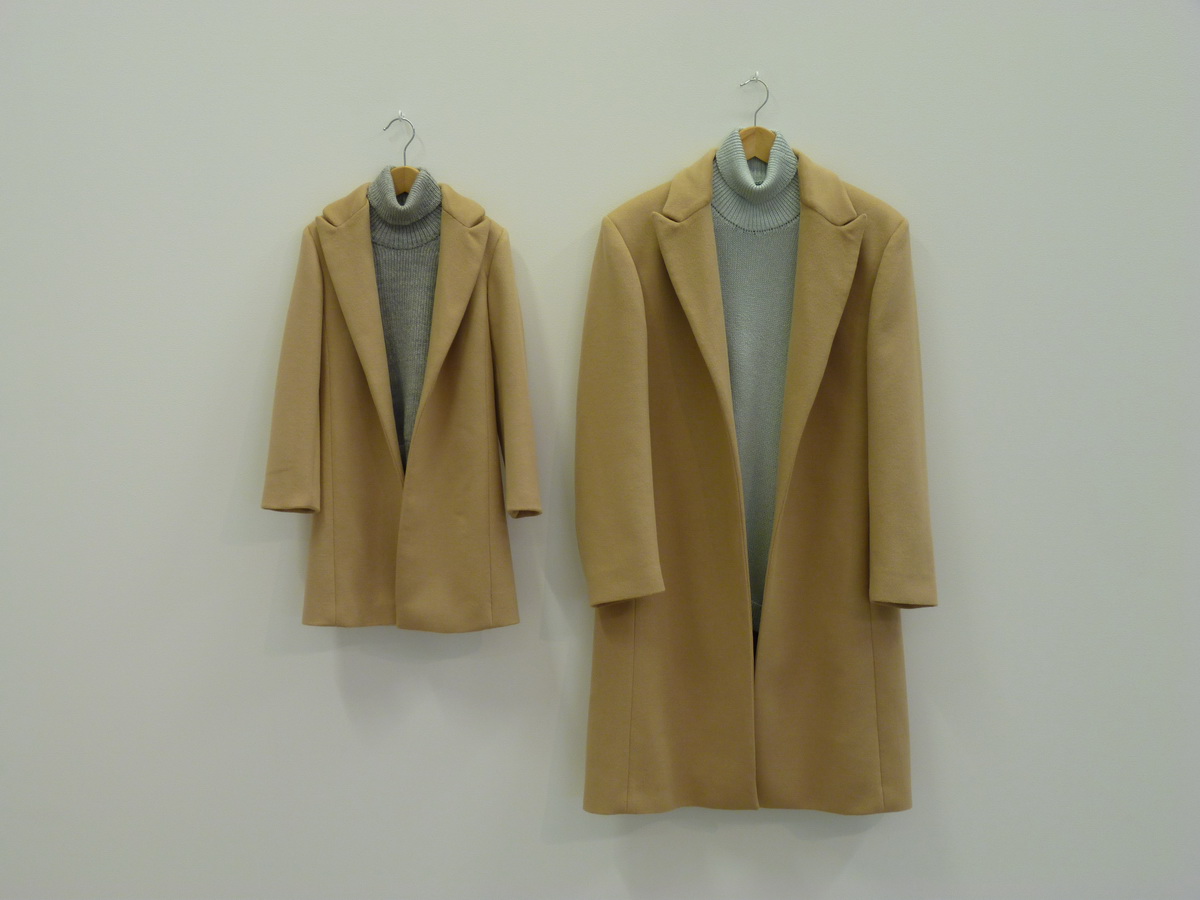
On the wall hangs "Look No Hands - Paul and Pascal" (2019), two garments (one large, one small) of the same homogeneous cut and grey color hanging together. The small one belongs to Paul (six years old), and the large one to the adult Pascal (forty years old).
Looking closely, neither has buttons nor pockets. What about our hands? These two clothes come from two characters in the series Last Tango in Paris. It also describes how children grow up and adults obsess over childhood.
Even though the organization of sexual desire differs, human desire knows no age difference.
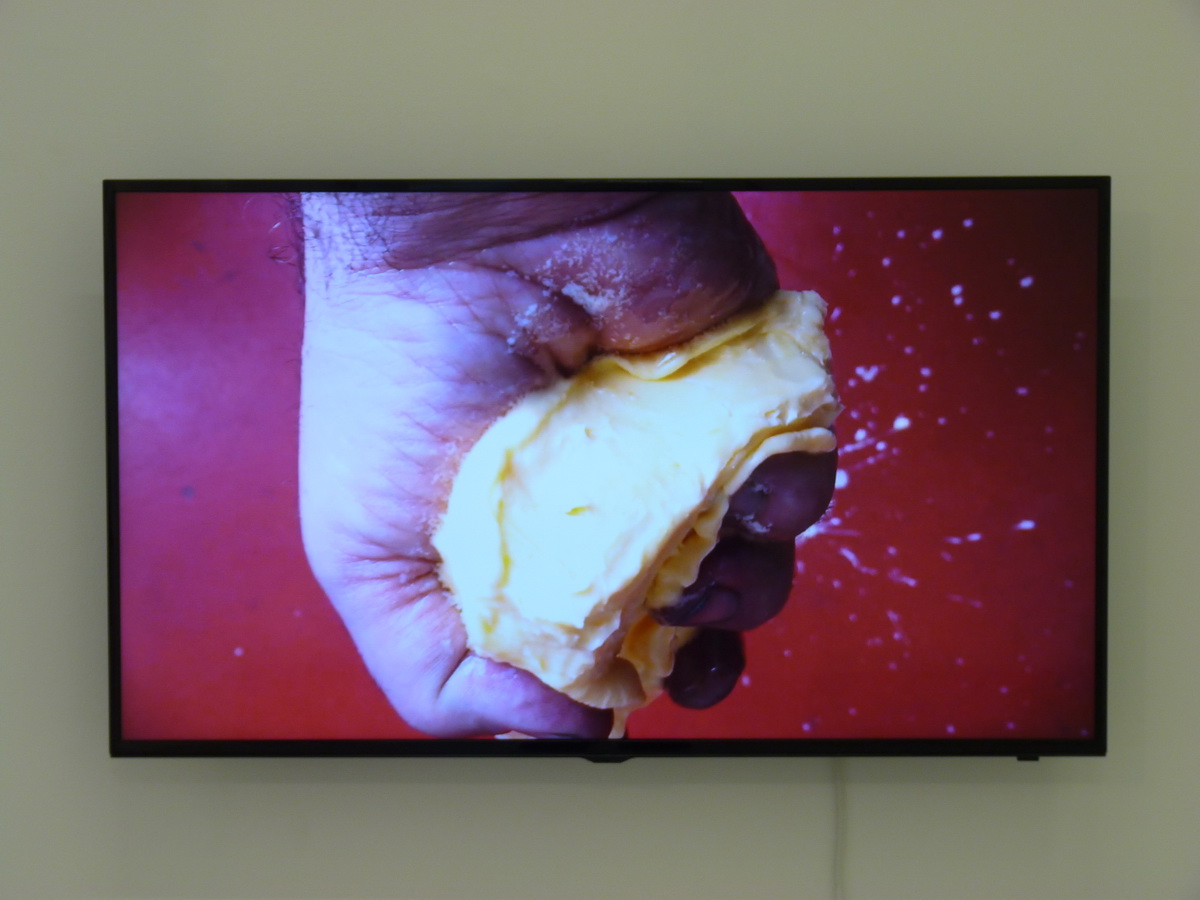
Two outstanding video works, "Solid Milk" (2019), represent Douglas Gordon's most unique video style: holding a camcorder in the left hand, cleverly filming the right hand tightly gripping a piece of solid butter in a performance action.
As the solid butter is squeezed and kneaded by the hand, it becomes highly sensual and erotic. Gradually, the energy of the butter flows out as lubricating juice. In this erotic context, it expresses an erotic behavior. Sexiness, hypocrisy, love-hate-sorrow-conflict-themes, etc.
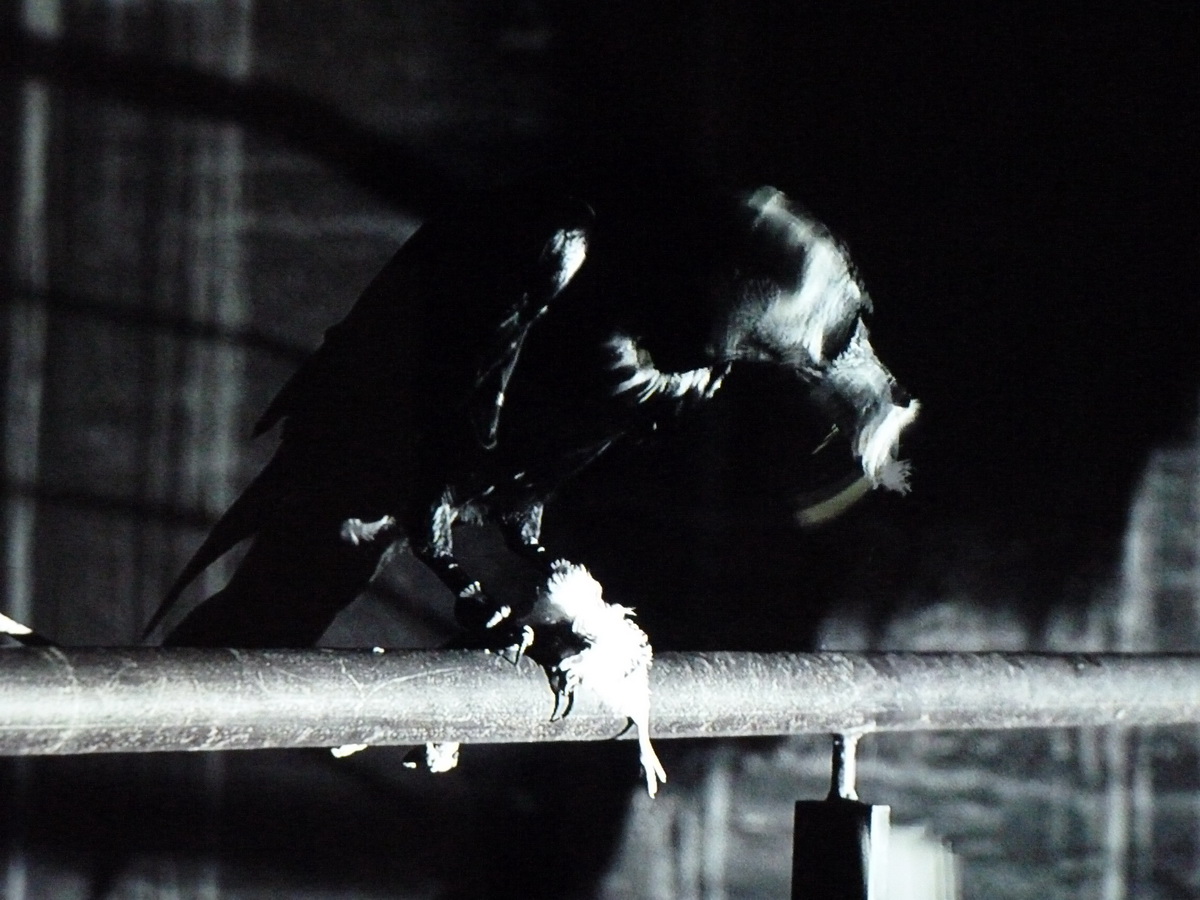
So what is desire? This is the eternal mystery. In "Silence, Exile, Deceit" (2013-19), a video depicts a black crow swallowing a small golden canary. A big bird eating a small bird seems like natural ecology; is it called "cruelty"?
But survival of the fittest is the law of the world, for continued survival or protecting one's own existence.
Then this video evokes James Joyce's book hero Stephen Dedalus's important decision, portraying Dedalus or the artist as a young man: "I will tell you what I will do and what I will not do...
I will try to express myself in some way, in some manner of life and art, protecting myself with my own gift. The only weapon I give myself is silence, exile, and cunning." Is this a special existential ethics? (Note 3)
Note 1: From Wikipedia Note 2: Exhibition press release text Note 3: Exhibition press release text