Douglas Gordon Solo Exhibition
(Figure 1) Installation work Left not right from the omnipotent hands, 2007.

(Figure 1) Installation work Left not right from the omnipotent hands, 2007.
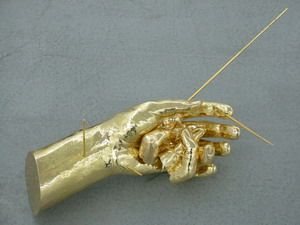
(Figure 2) The left hand and right hand have left one Anothe from the omnipotent hands, 2007.

Doubly metaphorical installation work Fourty one, 2007


Detail of the doubly metaphorical installation work Fourty one, 2007. (Figure 2, right) A pool of fresh blood — installation work Another path of least resistance, 2007.
The Douglas Gordon solo exhibition was on view from September 8 to October 13 at Yvon Lambert Gallery. Douglas Gordon (born 1966 in Scotland) is one of the most outstanding British video artists of the current youngest generation. His early investigations were founded overall on film and cinema archives; through the analysis and interpretation of archival imagery, within the postmodern deconstruction of memory and recollection, he adopted deconstructed images to construct contemporary consciousness and meaning, revealing psychological states and spiritual landscapes across various levels of society — as in the 1993 work "24 Hour Pscho," which analyzed Hitchcock's paranoid imagery. In 1995, he reused early-century medical footage to construct the work "Hysteria." Or referencing classical cinema, the 1996 work "Wordsn and Pictures I&II" and the 1999 work "Through the Looking Glass" — all reside in the memory of cinema.
Recently he has turned to exploring diverse forms of creation, grounded in spatial scene installations of objects, concisely and powerfully conveying states of existence and spiritual landscapes through symbolism and metaphor. This solo exhibition presented two major works: the hand series "Left not right" and "The left hand and right hand have left one Another," installed on the floor before and behind a partition wall in a small exhibition room (one hand in front, two behind, one of them incomplete), metaphorically suggesting the dual implications of the omnipotence of both hands and their mutilation — dexterous hands being the creative faculty of all human affairs. Then, in the center of the spacious exhibition room, inside a striking transparent glass display case, sat a mesmerizing skull, its cranium carved all over with stars of various sizes, titled "Fourty one" — a double metaphor between thought (the brain's capacity for thought as the driving force of life, thought as vast as the sea) and death (the skull as a symbol of death, death as the way of life, death not being a reduction to nothingness but leaving infinite memories for those close by) (or perhaps beneath a sky full of stars there are other poetic implications, or a sublimation of death). In one corner of a wall lay a pool of dried blood, manifesting an extraordinary act of violence, titled "Another path of least resistance" — of course, where there is oppression there will be resistance, and violence becomes the manifold metaphor and sign of the spirit of resistance and the sacrifice of death.