Duane Hanson's "Lost Illusions" Solo Exhibition (2)
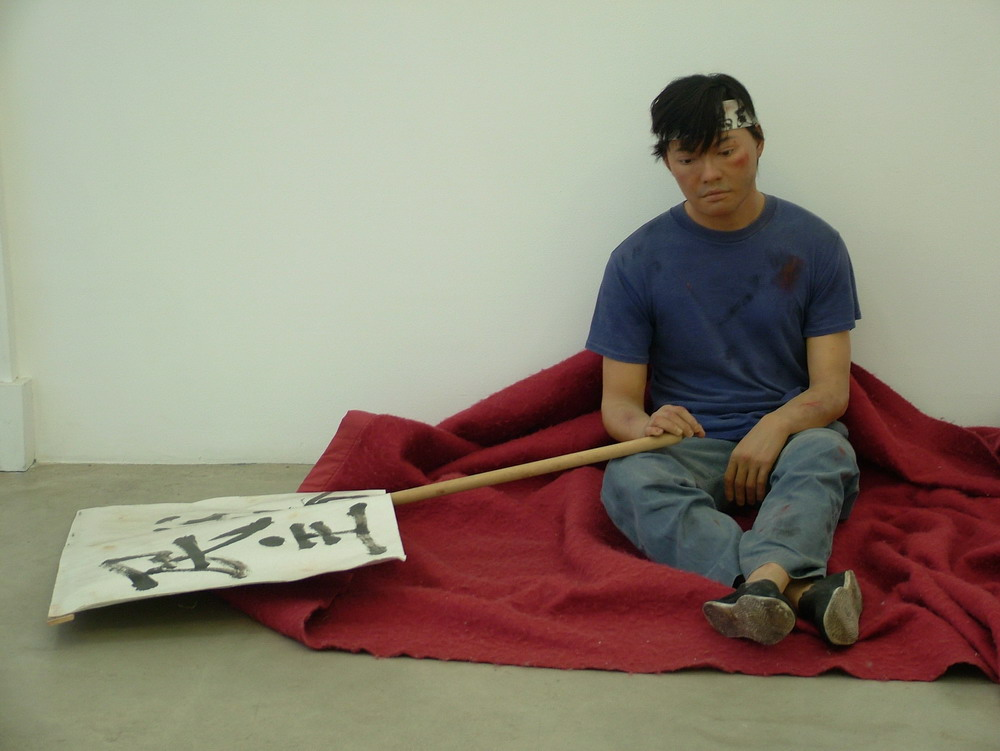
Chinese Protest Students, partial. 80x55x102 cm, 1989.
Text/Photos by Chen Chi-Hsiang. Dates: May 23 to July 11. Venue: Emmanuel Perrotin Gallery.
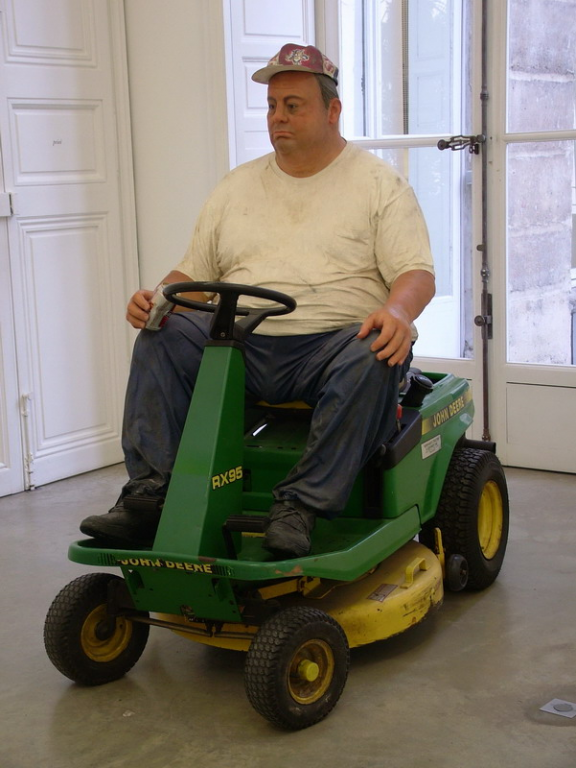
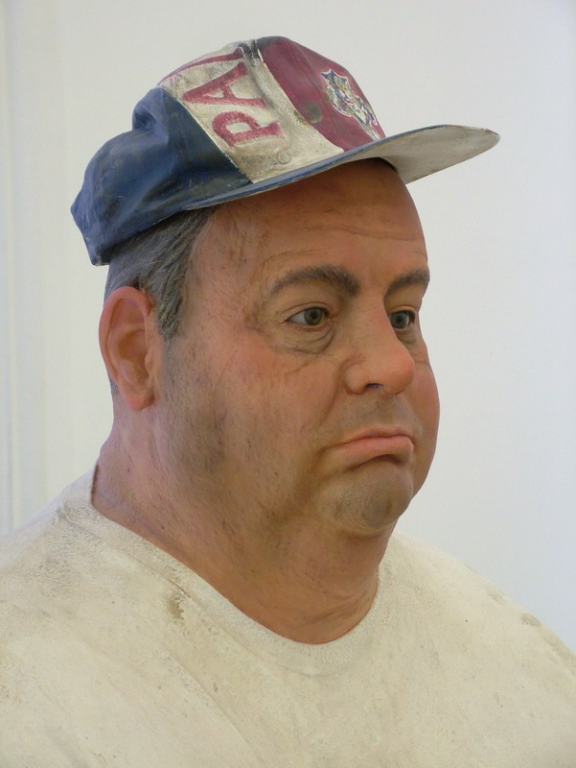
Duane Hanson (1925–1996) was a master of American 1970s super-realism sculpture. He cast figures from real people using resin, sprayed them with skin tones matching humans, dressed them according to social class themes, and placed them in realistic social environments. His hyper-realistic works, which blur the line between fake and real, mostly depict characters from the consumer society under capitalism and the ordinary masses of the lower-middle classes.
Early works focused on contemporary social events, such as a corpse of a woman who had an abortion covered by a white sheet, or several drunkards lying slumped on the street with dirty clothes and empty bottles scattered around. Following the American Black riots (especially after the assassination of famous Black pastor Martin Luther King Jr. in 1968), he created realistic scenes like a white police officer brutally beating a Black man lying on the ground with a baton, turning these into eternal monuments to American social events.
After this focus on social events, his focus shifted gradually to depicting the American consumer society and the ordinary masses of the lower-middle classes: painters, cleaners, office workers, tourists, or obese women pushing carts full of goods out of supermarkets. These figures were posed according to their thematic clothing, hairstyles, and environmental objects, embodying the true appearance of things. The artist stated: "The public, workers, elderly people—I find them quite amiable and likable. Clearly, these people struggle hard against life's hardships, showing frustrated appearances and long-term arduous labor. This involves all human activities; the truth is that we will all be like this."
These lifelike sculptures, representing "typical American figures saving all beings" (at actual human scale), are placed in realistic scenes. If visitors stand still, they might mistake them for part of Hanson's work, achieving a somewhat dramatic effect where visitors themselves become living sculptures. When the fake becomes real, and the real becomes fake, isn't this a fictional displacement or an illusion of reality? Hanson said: "The intention of my sculptures is to reflect the values of the American lower-middle class. I want to express the profound sense of ordinary people. My works reveal emotion to capture the truth of living life."
American magazine American Way of Life wrote: "Hanson transforms daily life scenes, or provocatively places them in art museums or artistic institutions, ultimately making them immortal."