"Dynasty" French Young Contemporary Art Exhibition (Part 1)
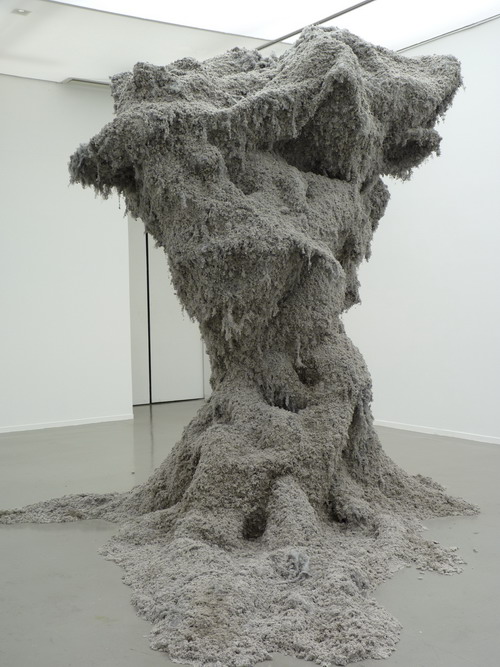
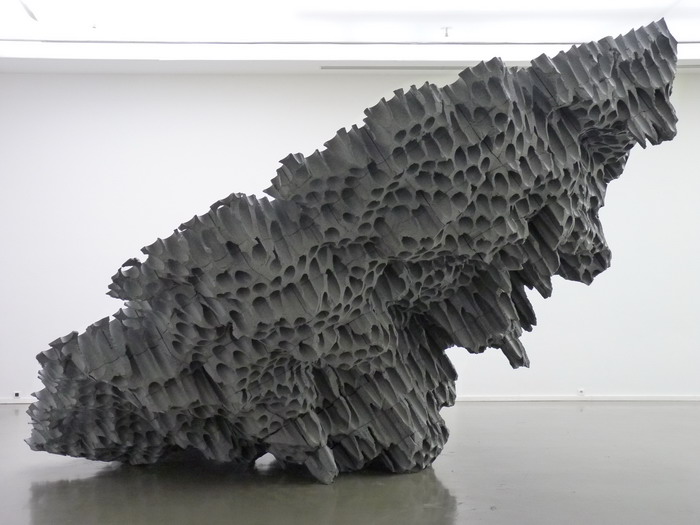
Before - Julien Dubuisson Exterior of a Cave Visit Sculpture 2010 After - Yuhsin U. Chang Tokyo Palace Dust Object-Sculpture Spatial Installation 2010
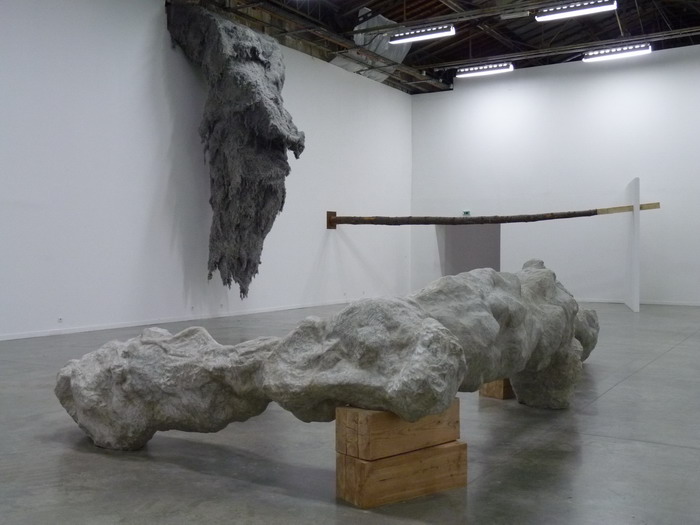
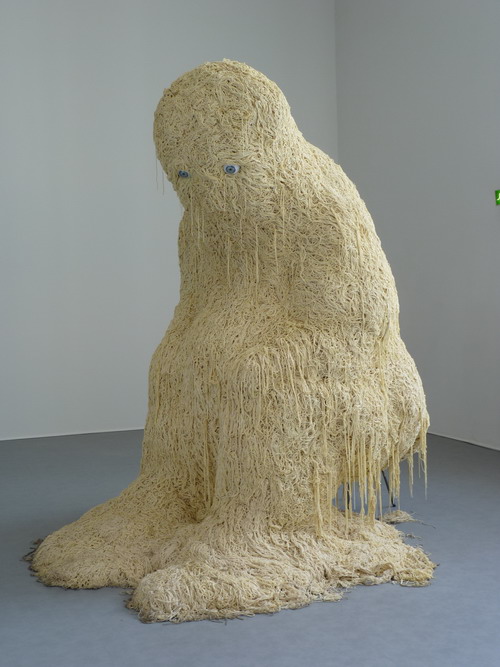
Camille Henrot Dear survivor Sculpture 2010 "Dynasty" French Young Contemporary Art Exhibition: June 11 to September 5, co-organized at the Palais de Tokyo and the Paris Municipal Museum of Modern Art. Preface: The "Dynasty" youth exhibition stems from the "Atelier" series held biennially by the Paris Municipal Museum of Modern Art's ARC since 1977 (discontinued in the mid-1990s) and the "Modules" series at the Palais de Tokyo since 2006. Both aim to promote emerging young contemporary artists in France, elucidate diverse current creative trends, and attempt to point out future artistic paths and prospects. This is an exhibition that simultaneously functions within two artistic institutions (the Palais de Tokyo and the Paris Municipal Museum of Modern Art).
"Dynasty" presents the broad new creative faces of contemporary France, featuring 40 groups of young artists (average age around 33) from across France, with 80 proposed works (one proposed work exhibited at each venue). Their training education is almost exclusively from French fine arts academies or university visual arts departments, except for American artist Ali Momeni Truce (University of California, Berkeley) and French artist Alexandre Singh (School of Visual Arts, New York). Only Theo Mercie lacks formal academy training (graduated from the National Superior School of Industrial Creation), along with two non-academy-trained audio-visual artists Robin Meier (Conservatoire à Rayonnement Régional de Nice and Sciences Po) and Ali Momeni Truce. There is one artist each from the USA, Japan, Spain, UK, China, Taiwan, and French-Algerian, Syrian, and Zimbabwean backgrounds; no artists from other European countries or South Africa are visible. Especially in today's globalized perspective, this exhibition is indeed very French.
The "Dynasty" exhibition reveals the type of formation education of contemporary artists within France, clearly showing that the Paris Academy of Fine Arts focuses on painting (three out of eight painters) and object-sculpture, while Fresnoy National Studio of Advanced Studies excels in video (four out of eight videographers), especially video and photography. The Cergy Academy of Fine Arts near Paris leans towards conceptual (two out of four) and object construction, while the Bordeaux Academy of Fine Arts tends toward objects or object installations. Other provincial academies do not have clear data distributed across all possible types. Most artists live and create in Paris, with Gaelle Boucand and Pierre-Laurent Cassiere in Berlin, and Alexandre Singh in New York.
This exhibition presents current multidimensional possibilities: flat, three-dimensional, audio-video, video, conceptual, spatial installation, and new technology. Through diverse material media: from handmade to industrialized, fragile to sturdy, natural and organic. "Dynasty" demonstrates the innovative vitality and perspectives of the new generation, engaging in contemporary politics, society, aesthetics, and intimate personal worlds, broadly receiving all possible cultural resources, ranging from Minimalism through conceptual, performance, attitude, object, to folk popular culture. In this exploration of diversity, there are painting, sculpture, objects, concepts, images, sound, video, and environmental spatial installations.
Diverse conceptual explorations: In this post-modern and widely globalized artistic trend, amidst the internet, information, new technology, and digitalized generations, the new generation not only inherits the past and opens up the future but is also more extensive than past creators. They touch upon vast knowledge and information in all directions without boundaries, mastering new technology and ubiquitous information like never before. They are often interdisciplinary, synthesizing and intertwining to nurture the diverse creative thoughts and worldviews of the new generation. Thus, whether from concepts and materials, form and meaning, there is a sense of diverse construction and perspective.
In the current globalized artistic trend, anything can undergo more diverse exploration. While wanting to subvert history, history follows like dreams and bubbles. Delving into modernist creation, entering the situation after post-modernism, and injecting local cultural contexts and differences under globalization, adopting plastic behaviors and attitudes, comprehensively transforming into new possible forms, proposing individual era-specific viewpoints, and injecting a novel new feeling and imaginative space.
With the various possibilities brought by informatization, image-ization, and digitalization new technologies, contemporary art continues to evolve with technological changes, especially with today's diverse forms of digital video and imagery, even exploring audio and sound, developing extraordinary informational and digital-type art, converting them into understandable spaces and objects, developing turbulent emotions, new experiences, and imaginative spaces, opening up the possibilities of art in the new century.
Diverse object-sculpture explorations: In this "Dynasty" emerging artist exhibition, the most prominent are objects, object-sculpture, object spatial installations, and sculpture, accounting for slightly more than one-third of the exhibition. The new generation's diverse objects are not readymades; they belong to reconstruction and construction, mostly falling into object-sculpture and established spatial or environmental installations. Through traditional and modern or special material media: the most striking is Taiwanese artist Yuhsin U Chang's alternative "dust" material, Theo Mercie's polystyrene, and Vincent Mauger's Styrofoam. Intending to shape their concepts and forms, expressing emotion and empirical experience between the concrete and abstract, natural and imagined, humanistic and industrial, exploring material media, form, and space.
In object-sculpture, Taiwanese artist Yuhsin U Chang (born 1980) is particularly noteworthy, presenting two dust-established spatial installations. "Tokyo Palace Dust" resembles an extraordinary waterfall, majestically surging down from the wall eaves. "Museum of Modern Art Dust" is sculpted into a vivid, amorphous figure. Supernatural, unfinished, instantly changing and amorphous, it presents an introspective landscape and witnesses the fragility, variability, and uncertainty of life within Buddhist subjective conviction. Vincent Mauger (born 1976) also ignites his creative energy in daily life, where accidents become possibilities and turn into poetry. All objects hide their rich lives, finding bright landscapes in the familiar. Exhibiting two "Untitled" works formed from seriesinstalled wine Styrofoam amorphous structures,phantom hair virtual scenes, resembling giant icebergs floating between floor and ceiling or imagined hives, between objects, form, and imagination.
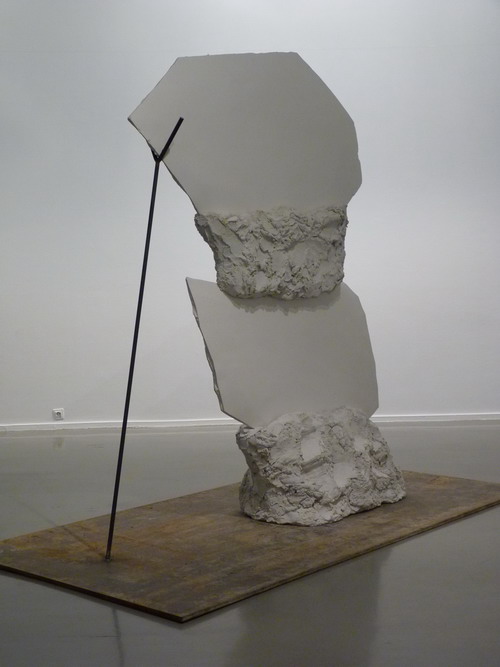
Julien Dubuisson (born 1978) focuses on unconventional contemporary sculpture, walking between extreme modernity and traditional craftsmanship, skilled in using material media, hard like stone, fragile like clay, immaterial like sound. Exhibiting "Exterior of a Cave Visit," an amorphous mixed-media sculpture, and "Ghost Dance," which carries bodily action memory, leaving traces of walking on ceramic boards. Another striking work is Camille Henrot (born 1978)'s white sculpture, quite abstract, composed of two amorphous white plaster slabs connected by white plaster, slightly tilted, supported by a thin black iron cane, poetically existing between void and reality, form and imagination, fragility and unease. It attempts to elucidate myths of human origins, objects, and symbolic traces.
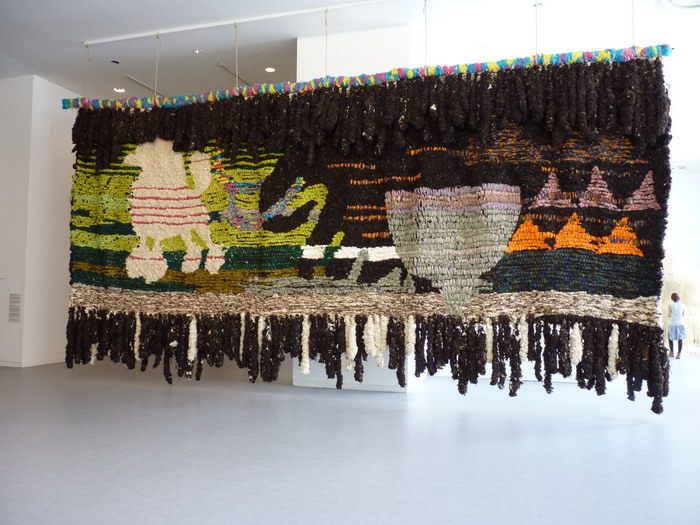
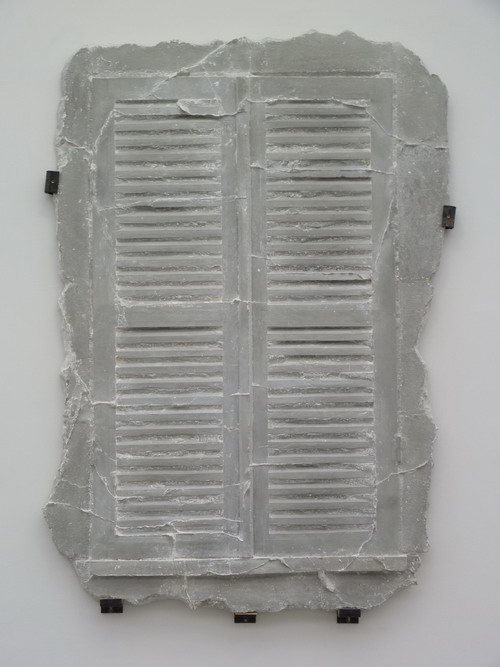
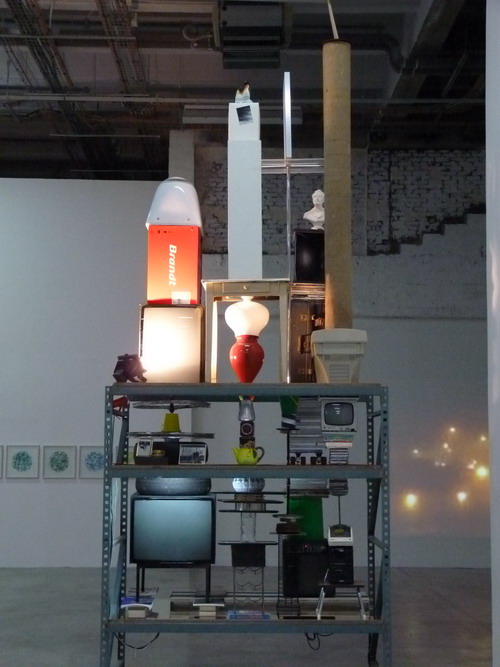
Japanese artist Masahide Otani (born 1982) practices sculpture as a repetitive experience, conducting a copy, a resonance, a world of re-expression. Like the "Closed Outer Window" series, these fake readymades are built on primary double statements and tautologies. Jorge Pedro Nunez (born 1976) borrows geometric abstraction and folk popular culture to express diverse modeling languages, constructed through everyday object combinations, in post-Pop object types. Daniel Dewar (born 1976) and Gregory Gicquel (born 1975) diversely reference popular culture, focusing on hybrid artistic creation concepts, works carrying strong South American color imagery-objects, such as this monument-style Peruvian tapestry "Mammoth and Bowl" with exotic style, prioritizing dialogue among separated elements.
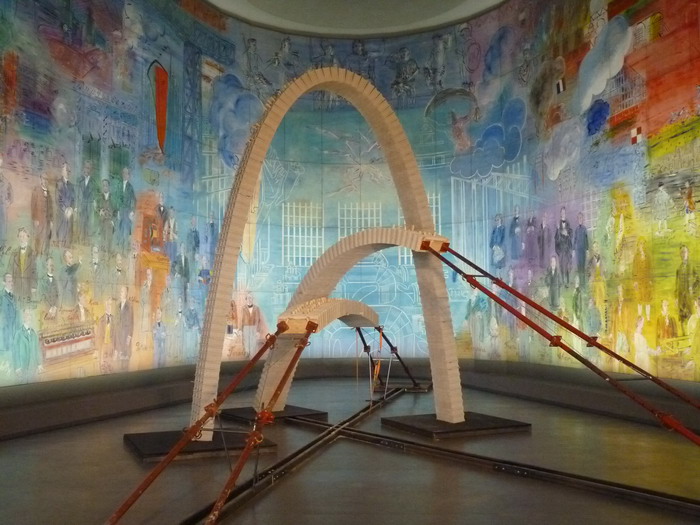
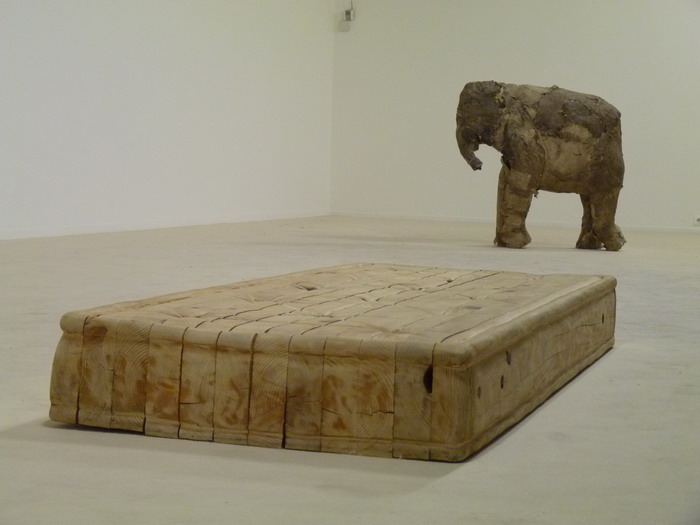
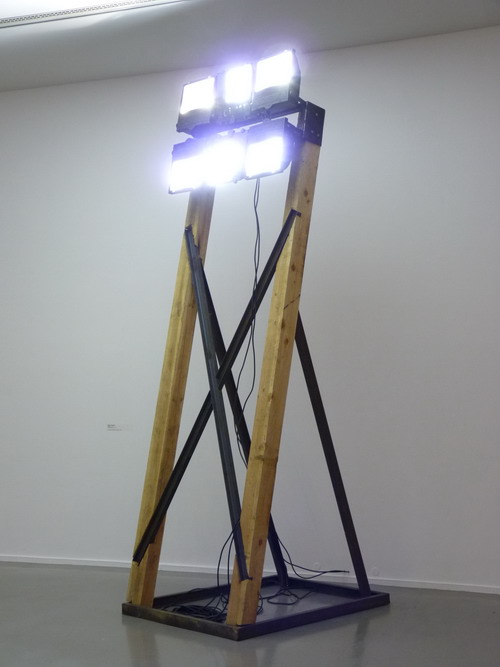
Laurent Le Deunff (born 1977)'s sculptures evoke distant ancestral images, following ancient prehistoric paths, established between nature and humanity through exquisite folk craftsmanship, such as the prehistoric "Mammoth" statue. Theo Mercie (born 1984) is a self-taught sculptor, creating dramatic free-form figures with a strong cartoon flavor, mocking the human world with humor. Vincent Ganivet (born 1976)'s works span sculpture and architecture, developing an absolute and phenomenological art, starting creations from everyday objects, constructing objects like architects, "hanging" under rigorous architectural structures, composed of cement bricks arranged into three mutually intersecting arched structures, evoking Roman church beam support construction sites. American artist Osca Tuazon (born 1975)'s works often exist within minimalist frameworks, spanning sculpture and architecture, some works having the appearance of large models, such as domestic plans or ruin constructions. Sculpture often highlights spatial tension, such as "Untitled" placing six high-pressure searchlights on a wooden frame, infecting the entire exhibition space and altering perception, experience, and function.