"Dynasty" French Contemporary Art Exhibition by Young Artists (Part II)
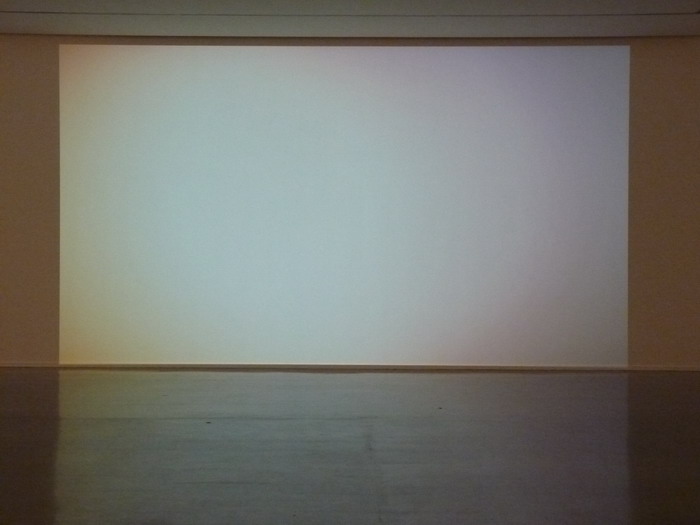
Fabien Giraud and Raphael Siboni Untitled - La vallee von Uexkull 1920x1080 2009 video Full HD color 39.42
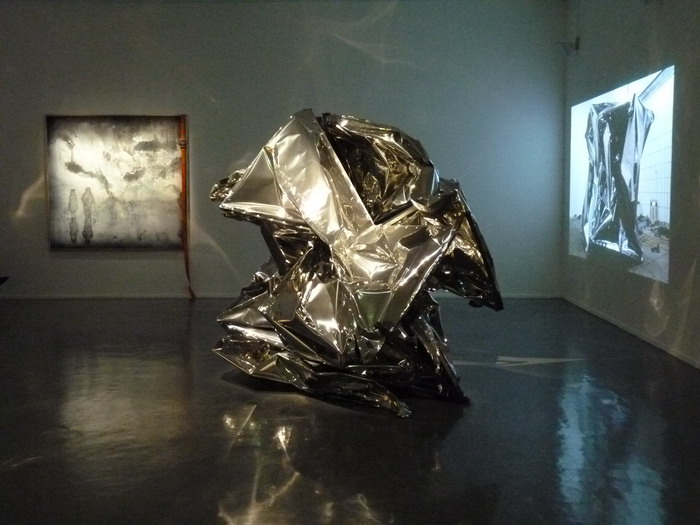
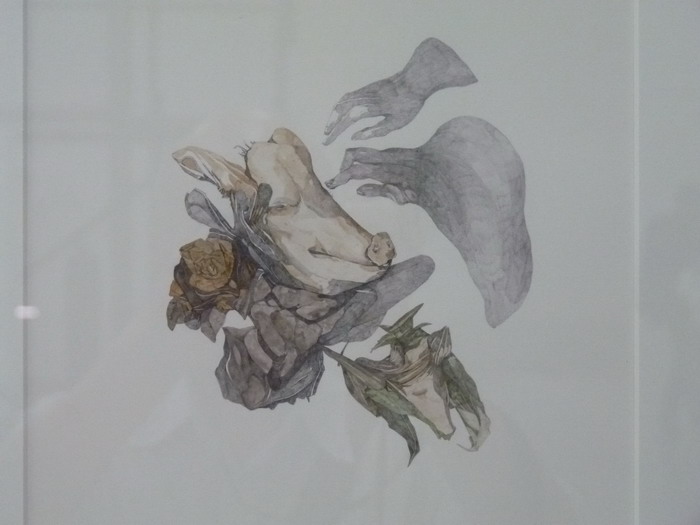
Melanie Delattre -Vogt Instruction 27.9x24.9cm Sketch 2010
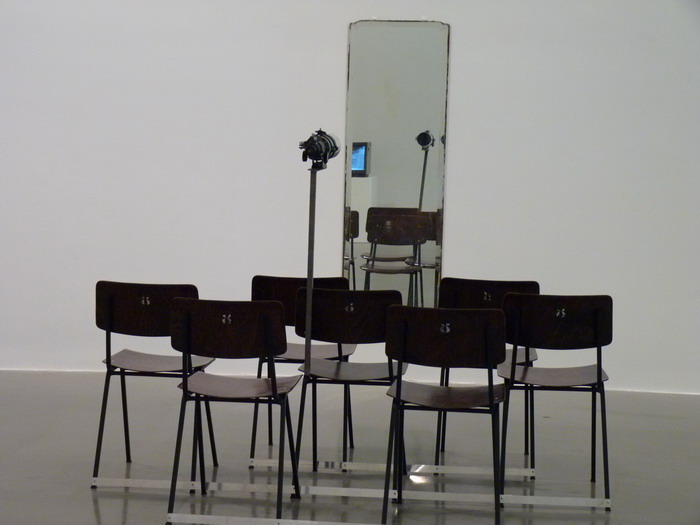
Diverse Video Art: Blessed with the various possibilities brought by today's digitalization and new technologies, video art seems to have greater potential. On the edge of diverse sciences and arts, it crosses disciplines and categories while intertwining various themes, becoming the core of creation for many newcomers who attempt to transform and explore new forms and their new meanings. This exhibition presents several types: documentary, expressive, social, and abstract. The works of Abrantes and Crotty are the most fascinating, featuring excellent Hollywood imagery, touching storylines, and contemporary thematic explorations. Mohamed Bourouissa offers a novel approach by creating videos with mobile phones and incorporating SMS expressions. Most striking are Giraud and Siboni, who convert computer programming into abstract videos of understandable spaces and objects.
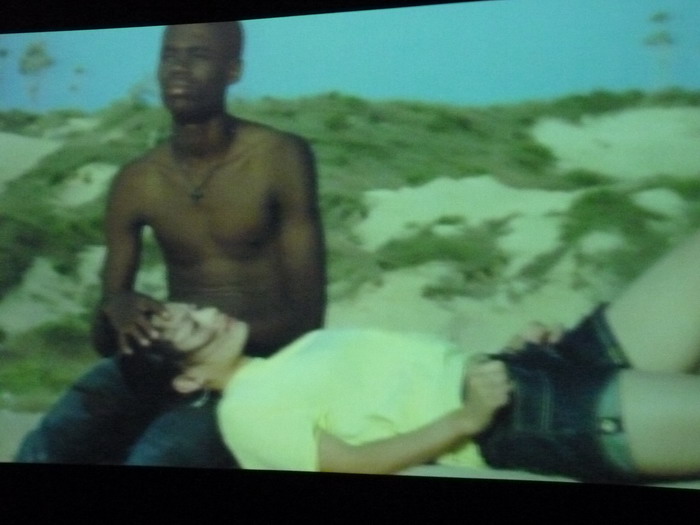
Gabriel Abrantes (born 1984) and Benjamin Crotty (born 1979) present the most captivating works, possessing the aura of American Hollywood cinema. Both films are profound and thought-provoking. "Freedom": Depicts a Chinese girl living in Angola falling in love with an African handsome man; amidst a romantic tone, it elucidates differences in cultural backgrounds and social values. "The Iraqi Perspective" narratively describes the mindset of young Portuguese people preparing to leave their families for the battlefield in Iraq, presenting the psychological states of both the youth and family members under contradiction and unease. Both hold strong socially critical viewpoints.
Fabien Giraud (born 1980) and Raphael Siboni (born 1981) create rare abstract videos. They believe the world is a constantly flowing landscape; this feeling applies equally to information processes, where nothing is fixed and everything transforms. Two works are exhibited here: "Untitled (Von Uexkull Valley 1920x1080)" and "Untitled (If some parts some things simply replace you)." On two large cinema screens, appearing empty at first glance, very slowly, a thin layer of reddish sunset tones gradually rises from the edges and corners. In this poetic and picturesque context, they gradually transform, resembling a huge monochrome painting. These two works establish a world where computer programming is the scale: subtle differences exclude human systems and reactions from its periphery.
Florian Pugnaire (born 1980) and David Raffini (born 1982) create art that is like a game or a battlefield, focusing particularly on the manufacturing process of the work. Their intimate connection lies in practice, action, and performance. At the Centre Pompidou, they contrasted performance videos with sculpture and painting. At the Palais de Tokyo, they screened a documentary reconstructing battles from the Napoleonic era. Pauline Curnier Jardin (born 1980) presents a "performance-film" video installation, using continuous actions and fragmented images to rapidly narrate an extraordinary situation within a lyrical musical rhythm.
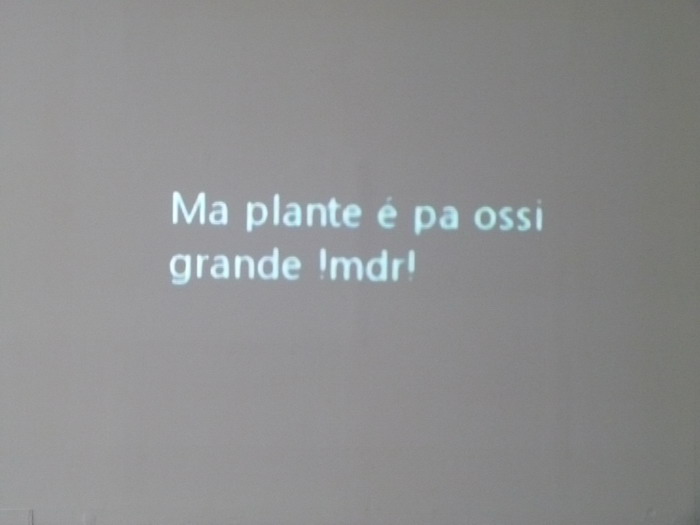
Mohamed Bourouissa (born 1978) is the artist with the highest academic credentials among those exhibiting, holding a doctorate in visual arts from the Sorbonne University in Paris and having studied at the Fresnoy National Studio of Contemporary Arts. Through behaviors and attitudes, he conveys momentary emotions and tension via video. Particularly regarding life in the suburbs of Paris, he treats the suburbs as a geographical and spiritual realm, akin to a conceptual object. For the Palais de Tokyo show "Stagnant Time," he recorded scenes of trucks passing through the suburbs using a mobile phone, intercut with dialogues with friends in prison. Within the language of SMS and crude imagery, he opens up an extraordinary imaginative space.
Chinese artist Chen Yang (born 1979) draws creative inspiration from personal memories. In a mood of nostalgia and sadness, such as in "A Beautiful Day": On a construction site, an aquarium contains a group of fish swimming freely to the song "A Beautiful Day." Sugar cubes are added to the water one by one until the aquarium is full, immobilizing the fish, strongly metaphorizing the distress and unease of residents facing relocation plans. Rebecca Dige (born 1982) attempts to excavate time and space through fixed, repetitive, and slow imagery. In "Raise Hands Without Moving," she depicts a young person facing forward with hands raised in an ambiguous state of immobility, seemingly facing an inspection. Bertrand Dezoteau (born 1982) constructs unreal situations and imaginations through diverse types of data imagery and fragmented collages.
Innovative Sound Installations: Sound exploration has a long history, from Italian Futurist noise and Rosenberg's sound collages to the various avant-garde sound and music explorations of the international Fluxus group. Since the 1990s, sound exploration has sparked widespread interest again. The popularity of technical music, combined with the possibilities brought by contemporary audiovisual new technologies, has triggered unprecedented explorations of sound or sound-installation art. In these sound formations, emphasis is placed on discovering new sound elements from new technologies through technique or intent, and redefining sound, while attempting to develop new sensory and auditory experiences. Here, Robin Meier and Ali Momeni Truce conduct highly professional sound explorations (both graduates of music conservatories), emphasizing the edge between art and science on new technology, exploring various possibilities of sound and audiovisual media. In contrast, Pierre-Laurent Cassiere's (a graduate of the Nice School of Fine Arts) works appear quite handmade and simple, containing a certain playfulness and conceptual nature, emphasizing new listening experiences and sensations.
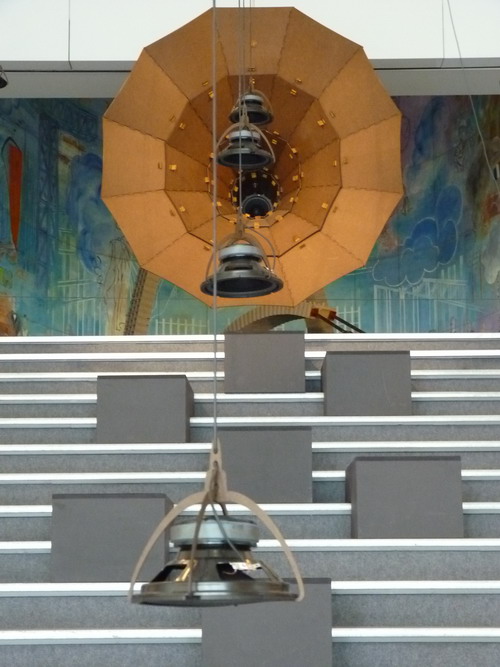
Robin Meier (born 1980) and Ali Momeni Truce (born 1975) operate on the edge between art and science, focusing particularly on the mutual influence between humans and machines, attempting to explore various possibilities through new technological processes. At the Taipei Fine Arts Museum, "Attempt to Call Others" is a monumental sound space installation. On the grand staircase in front of the building's oval power hall named after Dufy, rows of speakers hang suspended. In this sound environment, people hear sounds of storms formed by electromagnetic waves, songs, spells, and ritual sounds of Asians and Indians, placing them in an alternative imaginative space. At the Palais de Tokyo, "Tricks: Strategies for Post-Apocalyptic Time Calculation" is a highly technical and scientific audio-visual installation featuring light bulbs, speakers, and three microscope stands. Under the microscopes, people can see insect-like forms, with images projected on the walls, while also hearing mysterious traditional Indian music. Pierre-Laurent Cassiere (born 1982) questions various different sound vibration fields, displayed on the boundary of awareness. His sound space installations provide audiences with extraordinary listening experiences and prompt new sensory capabilities. For example, in the TFAM installation "Mag-Net," he surrounds the entire exhibition space with a hidden copper wire loop, attempting to directly receive electromagnetic waves in the space, manifesting subtle and sensitive sounds through a remote-controlled sound device. At the Palais de Tokyo, "Transport" combines sound and light, assembling a light bulb and a mica heatsink. Via a laser, under the effect of light, the heatsink is disturbed and vibrates, generating a unique sound in the air.
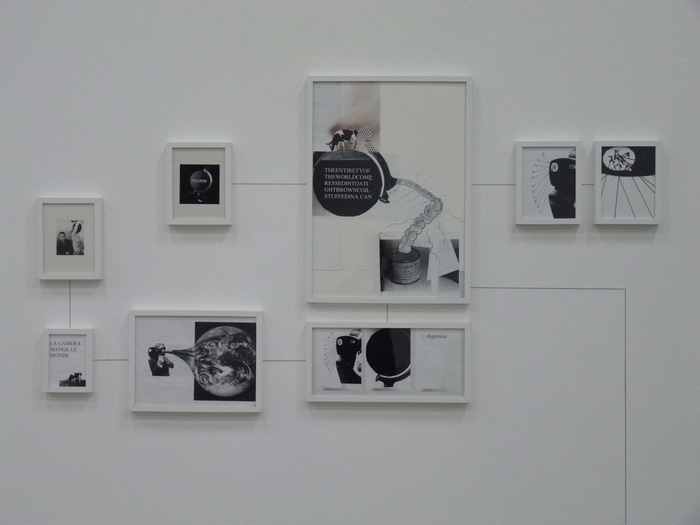
Post-Conceptual Explorations: Contemporary "post-conceptual" art carries forward the past and opens up the future. On the diverse potential aspects of "post-conceptual," it adds contemporary sensibilities and insights from unique personal vocabularies, maintaining a fresh expressive power. Benoit Maire (born 1978), a graduate of the Nice School of Fine Arts with a Master's in Philosophy from the Sorbonne, undertakes conceptual explorations of "different aesthetics." Diverse forms of expression: collecting notes, sketches, collages, paintings, photographs, objects, sculptures, etc., as careful balanced arrangements of image and concept, attempting to find an aesthetic emerging between spirituality and form. The concept of "difference" borrows from postmodern theorist Jean-François Lyotard, allowing for two paradigm structures of post-conceptual art: relativization and linguistic forms.
Laetitia Badaut Haussmann (born 1980) practices diverse conceptual explorations within the forms of post-conceptual art, openly accepting all possible media: sculpture, video, text, or photography, gathering vectors of current issues to become depictions of historical memory. In this exhibition, she questions the historical memory of these two locations. She planted a cedar tree in front of the Taipei Fine Arts Museum, representing the memory of the location in 1937. At the Palais de Tokyo, she used a piano sonata to evoke the incident during World War II when German Nazis hid confiscated Jewish pianos in the basement of this building.
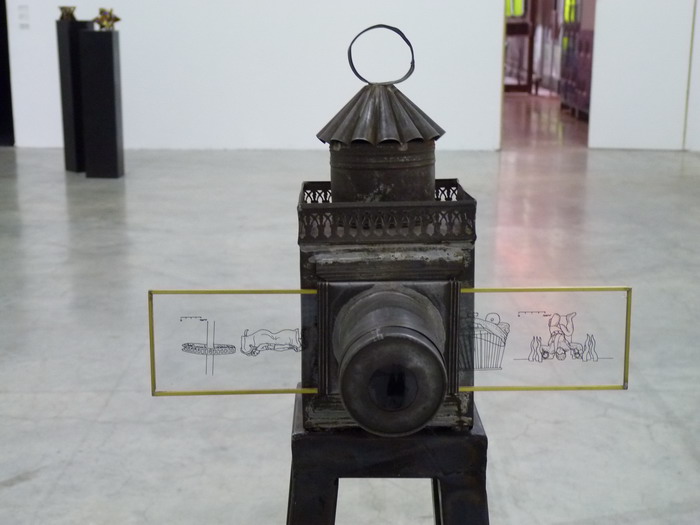
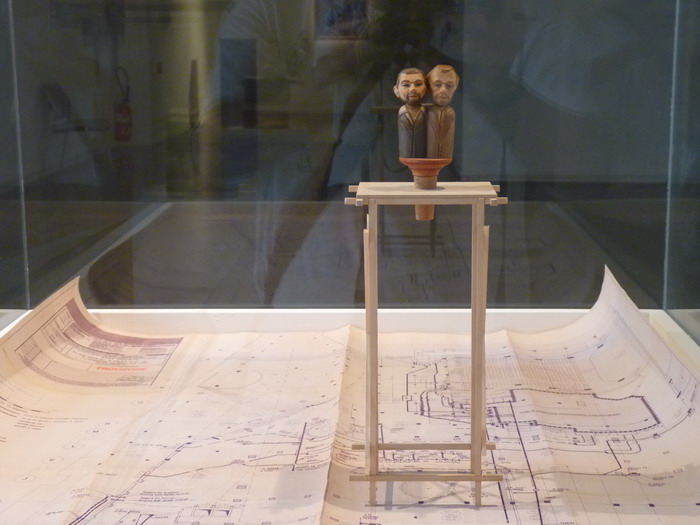
Louie Herve (born 1981) and Chloe Maillet (born 1981) engage in diverse conceptual creations, mixing archaeology, historical stories, and fiction, creating various possibilities starting from sampling materials from their surrounding environment. For instance, at the Palais de Tokyo, they converted Arabic oil lanterns into projectors to periodically project "The Strongest Man." At the Taipei Fine Arts Museum, they used lecture projectors to project "The Strongest Man - Hercules and Masties," intending to reveal the rapport between this film and the architecture. Cyril Verde (born 1986) has collaborated with Mathis Collins Tuyan (born 1986) since 2007, often revolving around historical anecdotes. This exhibition specifically re-explores the history of Paris, particularly the story of the Artois wells at the end of the 19th century. At the Palais de Tokyo, they used object and pattern installations to reference the Artois well being located there. At the Taipei Fine Arts Museum, they presented a series of all collected data and objects regarding the eighth Artois well.
Alain Della Negra (born 1975) and Kaori Kinoshita (born 1970) engage in diverse forms of creation, including photography, video, and objects, exploring an invisible potential world. Alexandre Singh (born 1980) combines concepts in a spiritual architectural form, constructing collages, images, and sentences. He conducts an alchemy-like imagination, converting visual codes, systematically composing geometric forms under a system; his works often concurrently emit a flickering illusion effect.
Paintings in Captivity: Amidst the storm of object and video-image spatial installations, painting is dying, weak and listless, surrounded by diverse forms post-postmodernism. Most of the paintings in this exhibition fall within the figurative category, emphasizing anecdotal and narrative qualities. Aside from the intention to propose new sensations, few diverse perspectives and possibilities of painting are seen beyond the French context. Ironically, in today's art market, painting remains the main body devoid of novelty. Who can say painting is dead? Indeed not.
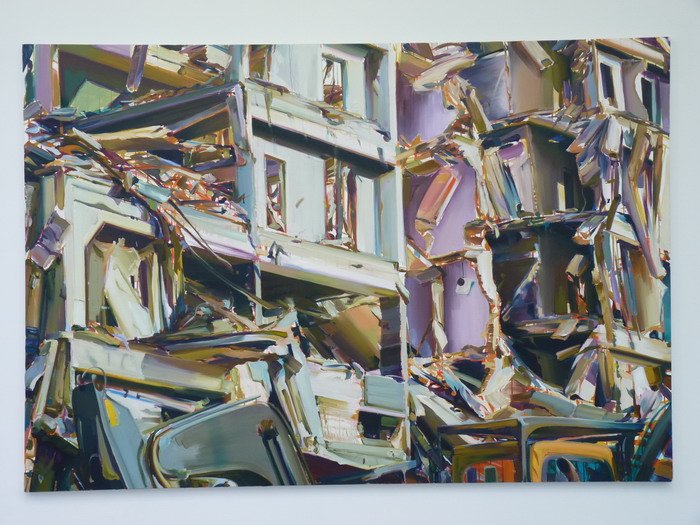
African Zimbabwean artist Duncan Wylie (born 1975) creates paintings with "Earthquake" as the theme, specifically using rough brushstrokes and intense colors to depict buildings and houses collapsed and tilted after the quake, highlighting the expressive power of painting. He explores structural space and personal experience within a utopian painterliness, established between figuration and abstraction, reality and imagination, the individual and the world. Syrian painter Farah Atass (born 1981) uses lines and color planes of indoor doors, windows, tables, chairs, furniture, and objects in these private and public impoverished spaces to demonstrate rigorously constructed geometric form paintings. She calls this "Places of Transformation," existing between form and color plane, space and structure, figuration and abstraction.
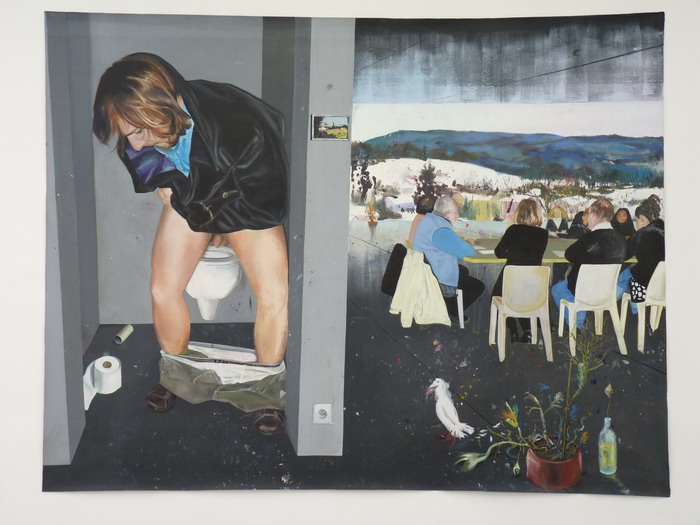
Jean-Xavier Renaud (born 1977) operates within the traditional taste of "bad" painting, using sensitive expressive painting and poetic sketches to attempt to develop social conventions and relationships between humans and their limits under a satirical and critical stance, such as in "Gathering" and "Scream." Guillaume Bresson (born 1982) employs a narrative photographic realist style to display dramatic urban violence, particularly in "Dispute Duel Scene in Underground Parking Lot," referencing multiple facets of painting history in a post-historical form: Poussin's structure, Caravaggio's chiaroscuro, and Géricole's tragic themes. Armand Jalut (born 1976) creates diverse types of painting, mixing Pop Art and cartoons, borrowing from French folk art and American cinema. Under a postmodern form, his work is humorous and satirical, sometimes comical and sometimes grotesque, oscillating between figuration and abstraction, reality and imagination.
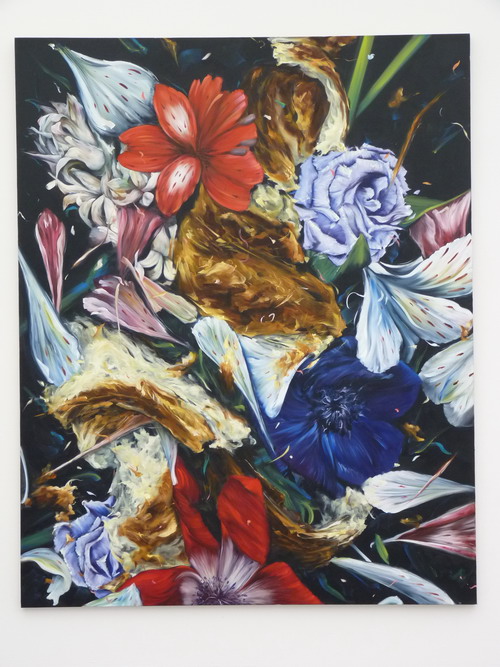
Raphaelle Rico (born 1973) is a free-image graffiti painter of the new generation, inspired by broad popular and subcultures, cartoons, comics, advertisements, and movies. Her work is quite instinctive and emotional, often juxtaposing two paintings, and occasionally pasting small dolls onto the canvas. Her strong artistic imagery possesses a shocking power. Melanie Delattre (born 1984) focuses on sketching. These motifs derive from photo and magazine picture imagery. Through fragmentation of various attribute categories, she forms deconstructed images, thereby intentionally and unintentionally composing alternative imagery. Her works possess a surreal imaginative space.