Lejeune
Rural 130x160cm 1953 Saint-Etienne Museum Collection
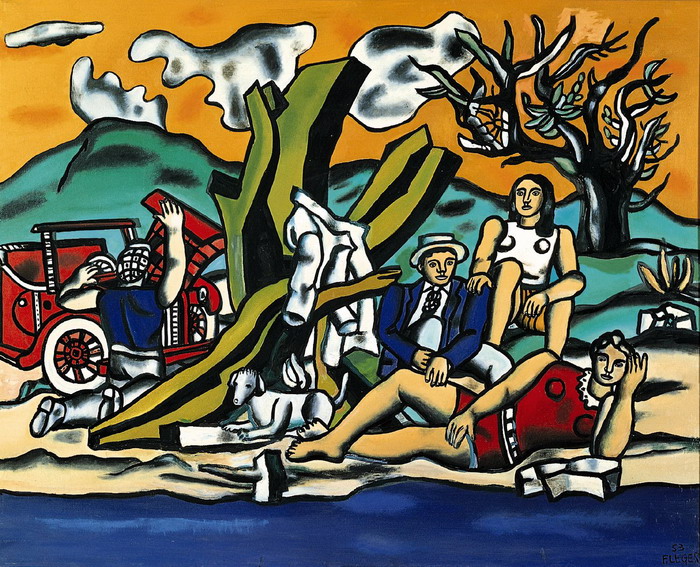
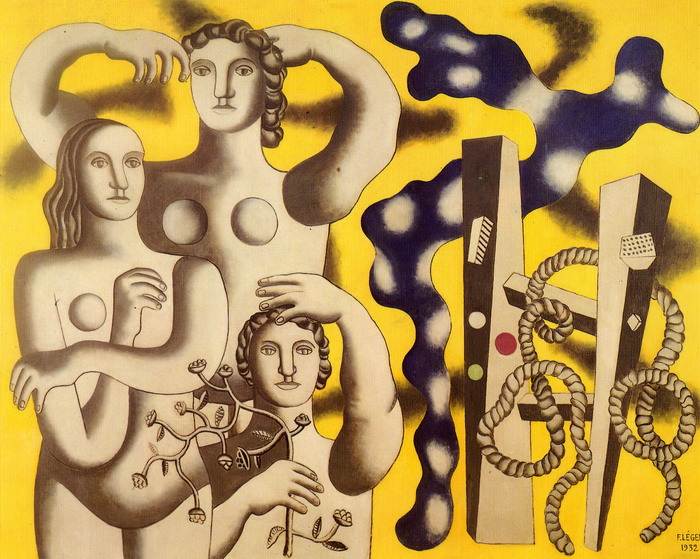
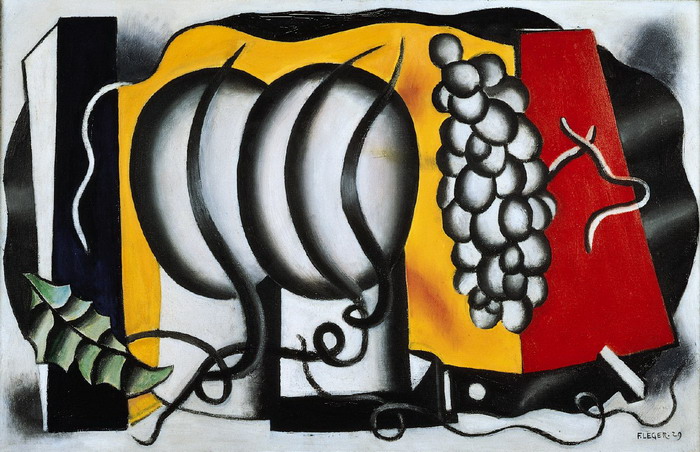
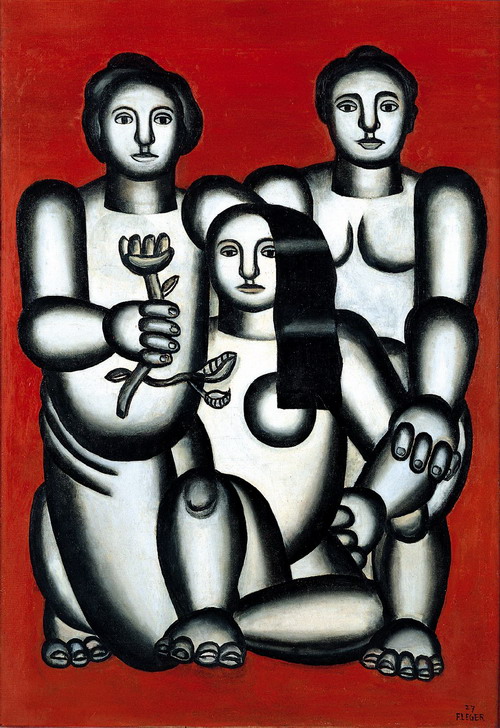
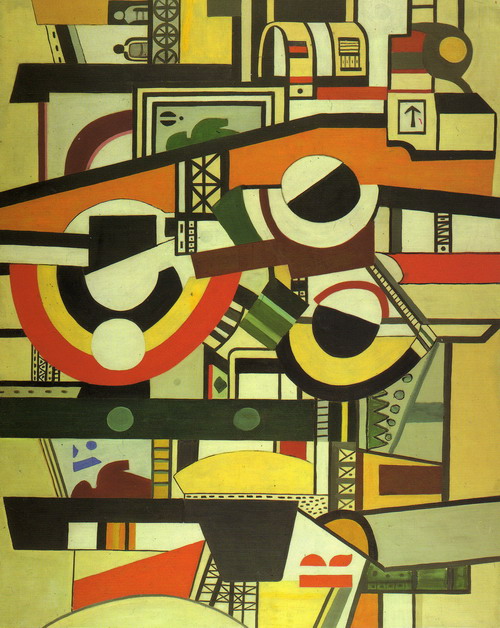
The French painter Lejeune is the most unique painter in Cubism, deeply influenced by Cézanne, especially prioritizing form and volume through simple forms, colors, and cylindrical geometry. As seen in wedding banquet paintings from 1911-1912, a different image of scenes focused early on the movement of life and objects. This evolved into realizing fragmented objects based on a series of contrasting structures; works like Contrasting Forms (1913) and Woman in Red and Green (1914) can be understood as opposing forms, colors, and content akin to these almost abstract paintings. The construction of geometric forms during the Mechanist period, built on geometric mechanicality—such as Medrano Circus (1918) and Discs in the City (1920-1921)—vividly displays precise panoramas mixing forms, volumes, and divided colors. In 1924, figure paintings were purely set against these geometric lines, such as women resembling circular metal. The artist stated: "Portraits for me, those bodies are no more important than these nails or these bicycles; it is nothing else, all are formal values that must be dominated according to my will." In 1930's Object Contrast, vitality was given to static elements: "Objects are the true subject of my paintings; I understand objects, I detach from painting, placing this object on the plane and in air without supports." Bodies and floating objects are presented together in an imagined space; the most famous representative work of this period is Composition with Two Parrots. Due to the war, Lejeune went to New York, USA, at the end of 1940, impacted by the New York metropolitan landscape. The painter said: "In New York, I was impacted by the advertising projections on Broadway sweeping across the streets. A person suddenly becomes blue, then passes, another color comes, and it becomes red, yellow." He began liberating color, as in Forest (1942), further developing figures in his spaces and the diving series: Grey Acrobat (1942-1944) and Black Big Diver (1944). The painter explained, "These divers here are all liberated; acrobats, cyclists, musicians, I am more flexible, no longer so stiff." In 1946, bidding farewell to America and returning to France with Goodbye New York, later inspirations came largely from society, especially leisure workers of social classes. Works like Theme of Leisure (1948-1949), depicting holiday bicycle rides, returned to folk life situations. Azure skies and naturally stylized images alternated with clothing colors, bicycles, and metallic grey bodies. Lejeune said: "Art does not need to participate in battle; rather, it must be a rest after your daily work fatigue." In the 1950s, late structural paintings appeared, such as Rural (1952-54) and the monumental Grand Parade (1954). Simultaneously, he began creating painted sculptures and mosaic paintings. He developed a special language, building works on the driving force of modern life, using his meaningful contrasting forms and rough, powerful colors as final social moral values.