Fabrice Gygi – “D-Concept” Solo Exhibition
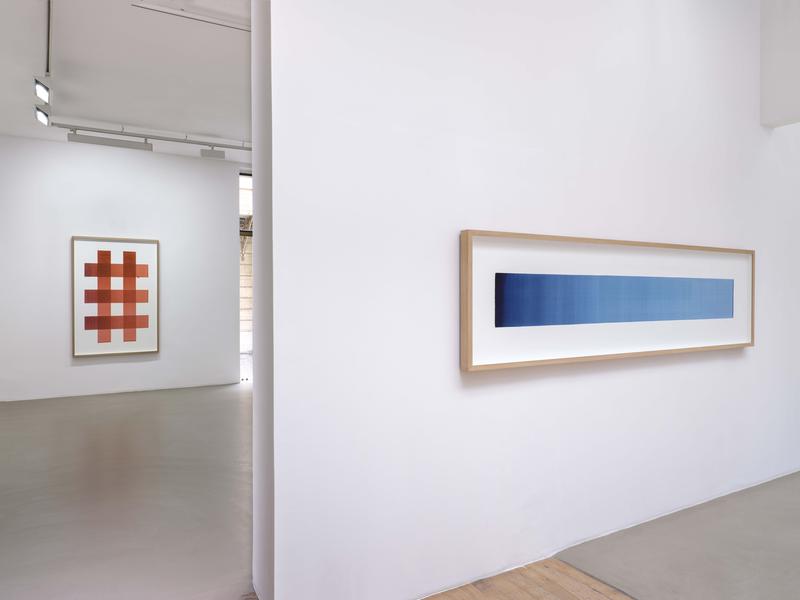
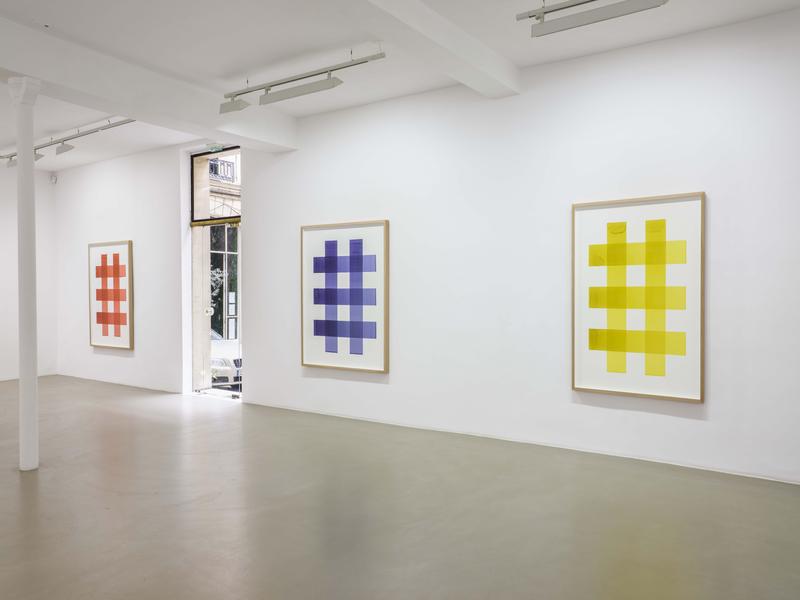
Fabrice Gygi – “D-Concept” solo exhibition site scene. Image from Chantal Crousel & Niklas Syrnnung gallery website.
Text and photos by Chen Chi-Hsiang. Dates: June 1 to July 11. Venue: Chantal Crousel & Niklas Syrnnung Gallery. Fabrice Gygi (born 1965) is one of the most representative artists of Switzerland’s new generation, skilled in printmaking, printing, performance, object installation, painting, and sculpture. His artistic training began with printmaking; deeply influenced by it, he formed an artistic style characterized by “very graphic thinking, very black and white, and very clean-cut cutting.” In the 1980s and mid-1990s, through printing projects and self-organized activities, Fabrice Gygi consistently claimed that his work had social and political dimensions. (Note 1)
In 1998, he began creating structures made of industrial materials, including PVC and stainless steel plastics. His repertoire (airbags, landmines, tents, etc.) and public installations (podiums, barriers, bleachers) were replicated using minimalist aesthetic means and structures of social control. With a concise, powerful, and effective quasi-military appearance, his works offer an extraordinary consistency of plastic language, devoid of thematic ambiguity. Thus, La vigie (2002), exhibited at the 25th São Paulo Biennial, is a massive 12-meter-high work composed of a mast and a mobile control tower, giving passersby the impression of emphasizing the totalitarian temptation related to our society’s security responses to public order issues.
After abandoning his installations post-2010, he focused on three-dimensional sculpture. He spent several years creating jewelry before developing a systematic logical approach to creation, constructing basic geometric abstract forms. He developed refined and elegant cubic and parallelepiped sculptures, close to modern architectural structural models, aspiring toward objects devoid of sensibility or any bodily analogy.
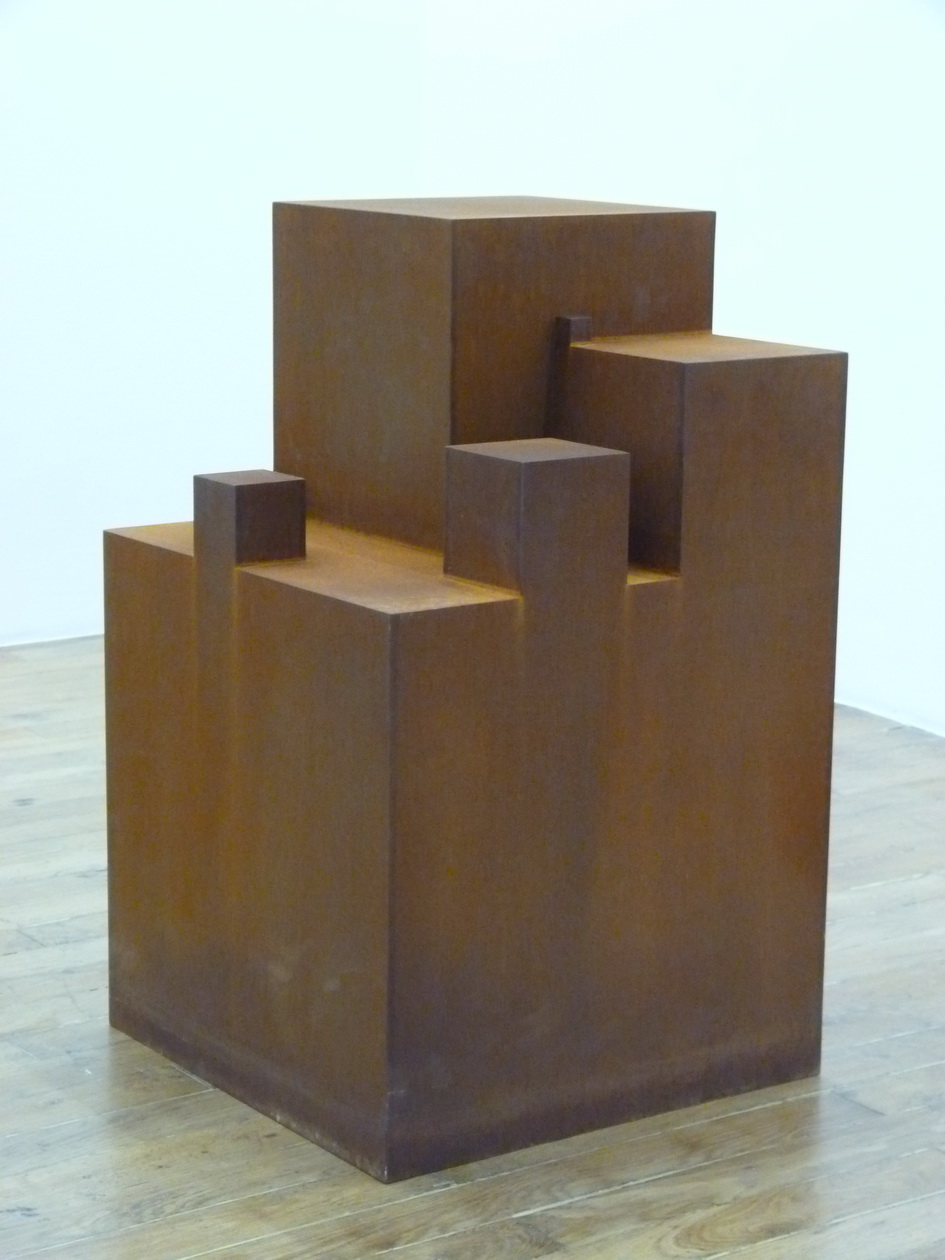
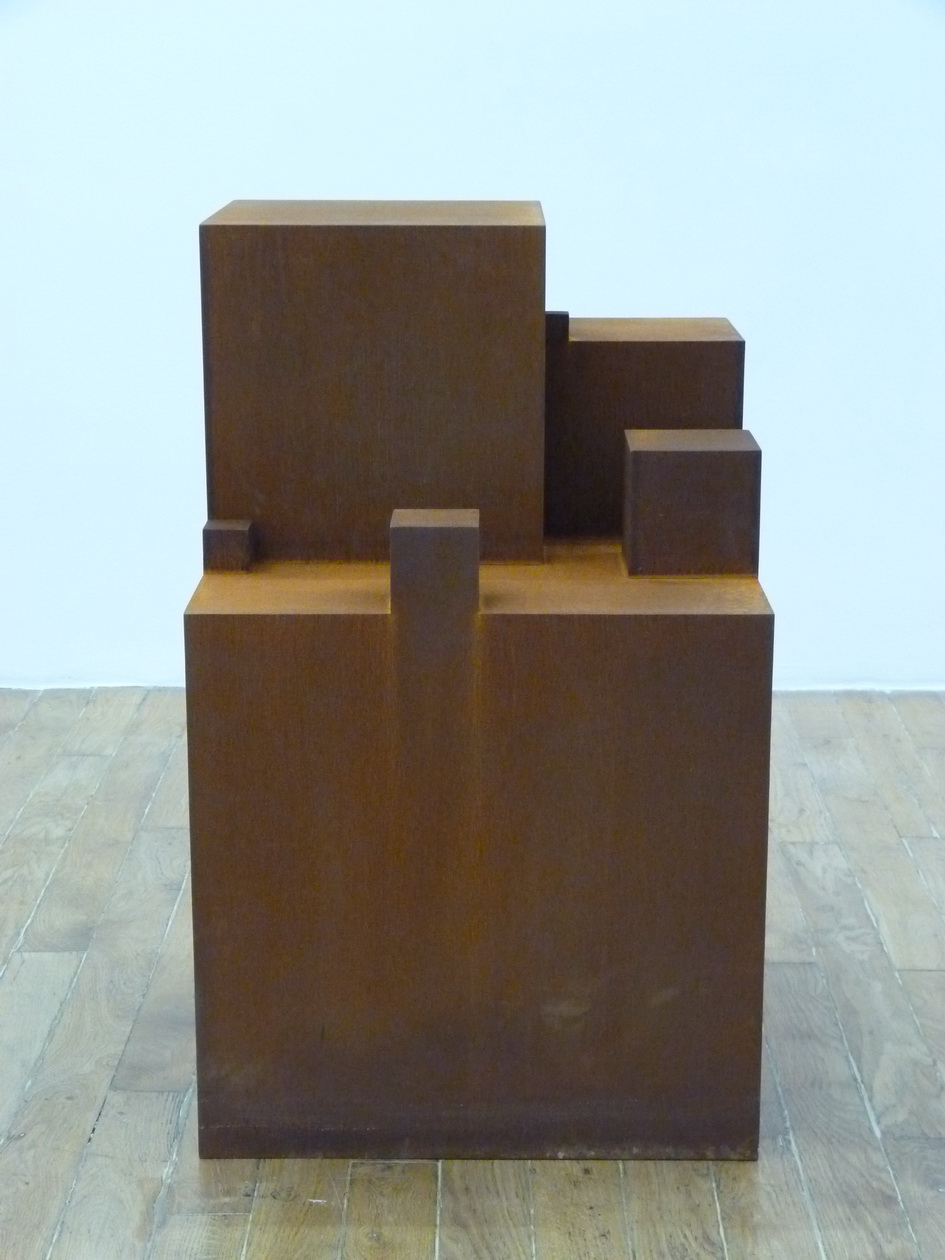
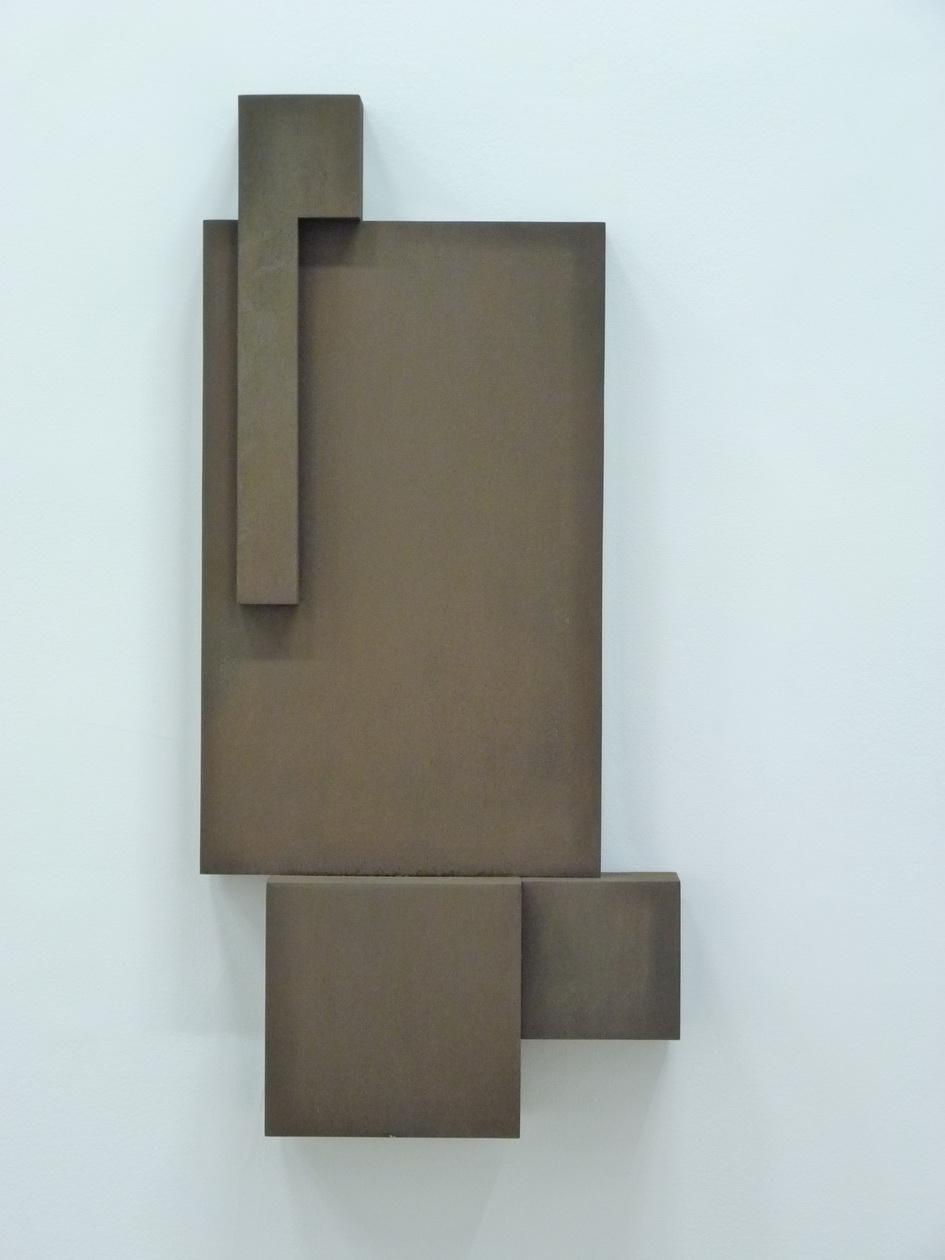
The proposition for this new solo exhibition, Fabrice Gygi’s “D-Concept,” involves ideas and form, constructed according to a systematic mathematical logic. The exhibition features a square, pedestal-like three-dimensional sculpture based on numerical logic, constructed from four cubes of decreasing size joined by hinges according to the golden ratio rule, manifesting a prototype spatial structure of virtual-real modular architecture. On the wall stands a structural facade relief, primarily consisting of large and small rectangular blocks, combined vertically with three blocks of varying sizes, resembling a modern architectural model. Both the sculpture and relief demonstrate a unique geometric formal beauty.
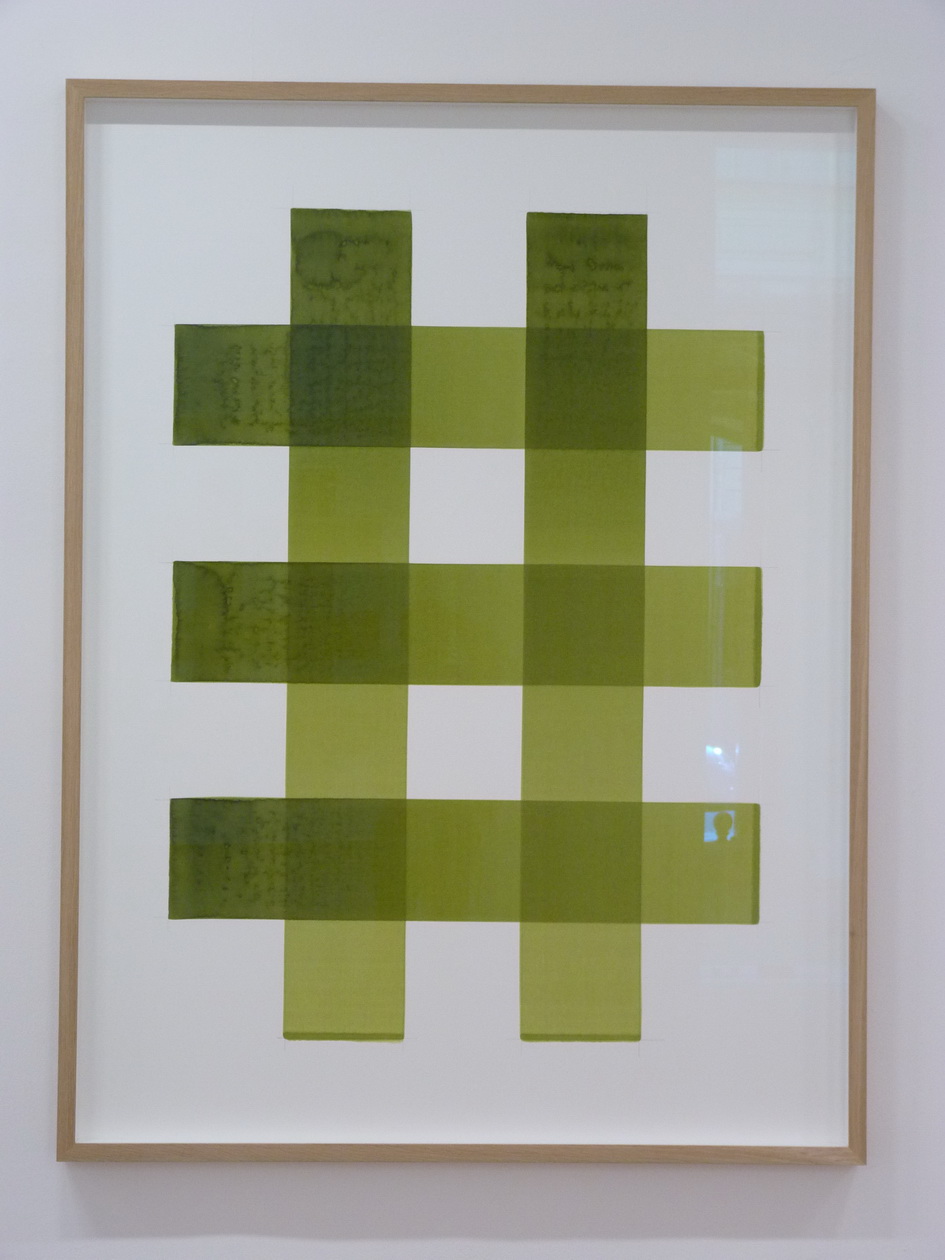
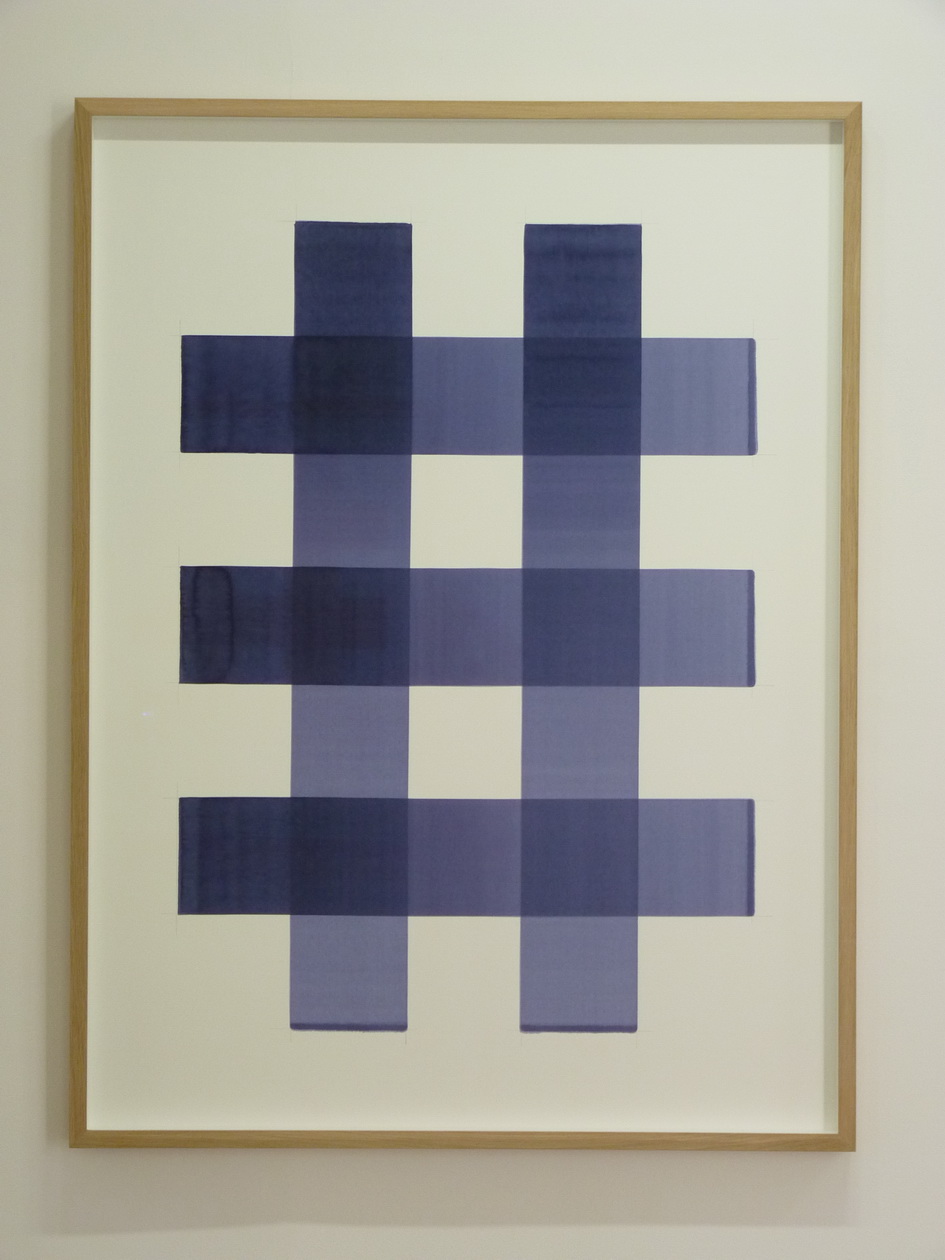
This exhibition also presents Fabrice Gygi’s striking new series of watercolors. Created after months of travel in the African Chihuahua Desert, these works employ the same formal rules, discipline, and determination as his previous sculptures. The rigorous and focused creative spirit enters an extraordinary state of meditation. Rejecting curves, he focuses on the constructive combination of parallel and vertical lines, intersecting into square forms. These works are drawn with single lines in superimposed layers, with manual consistency precisely controlling density and tension. Using a single color (six colors in total), multiple washes create layers from dense to light. Each work exists in a state of perfect balance between perfection and accident, creating a constant energy reinforced by life. The absolute perfection of lines and tonal gradations leads viewers into a personal meditative state. (Note 2)
(Note 1 – From Wikipedia) (Note 2 – Referencing the gallery press release for the solo exhibition)