Fauvism
Matisse, The Piano Lesson, 245x213 cm, 1916, MoMA collection

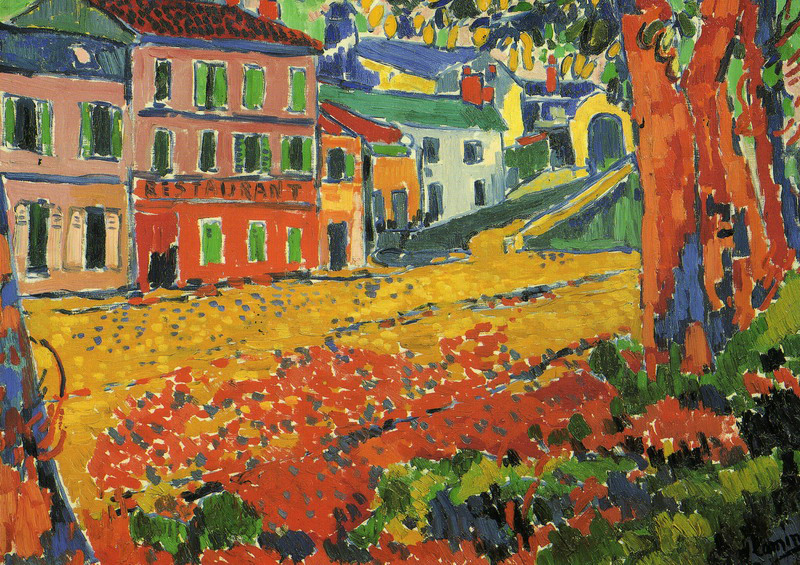

Fauvism emerged at the 1905 Salon d'Automne, when art critic Louis Vauxcelles described the works of Matisse, Derain, and Vlaminck as "beastly" paintings. Thus, the name became the label for this style. These artists grasped "color structure" from Cézanne and learned "thought and imagination of color" from Gustave Moreau. Matisse stated: "Fauvism is about breaking free from the tyranny of Divisionism." In 1906, the color magician Bonnard explained: "Fauvism aims to surpass Impressionism, because in those naturalists' color impressions, art would equal nature." They boldly abandoned naturalistic and simplified forms, establishing color as their primary structure. Color, color, became their exploration of painting's essence.
The general reasons for Fauvism's emergence: First, influenced by Gauguin's color planes. Second, opposing Seurat and Signac's overly methodical Neo-Impressionism. Third, updating the era's environment; ancient artistic vocabularies no longer fit modern consciousness, requiring new linguistic symbols, syllable by syllable, image by image, until art once again served social and individual needs. Fourth, influenced by humanism; Matisse said: "He was interested not in still lifes, nor landscapes, but in figures."