Fischli & Weiss – "Flowers and Problems" Retrospective
(Top) Studio 1992-2000. (Left) Organic Organ 1986. (Right) Egg 2006. (Left & Right) Unfinished Work Images 2004. (Bottom) Cat Video Art 2001. Fischli & Weiss – "Flowers and Problems" Retrospective runs from February 22 to May 13 at the Paris Municipal Modern Art Museum...
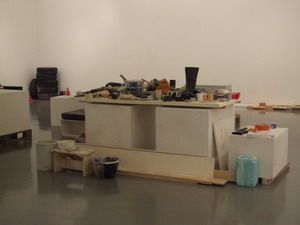
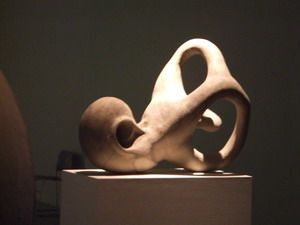
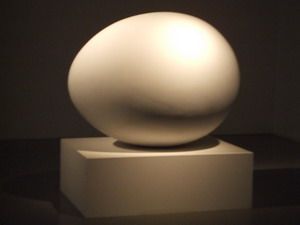
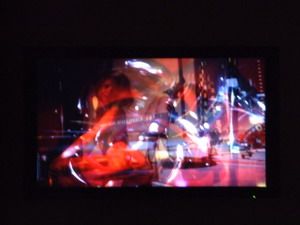
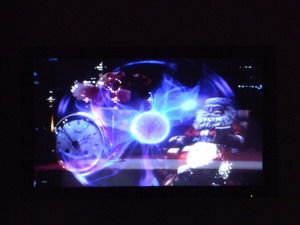
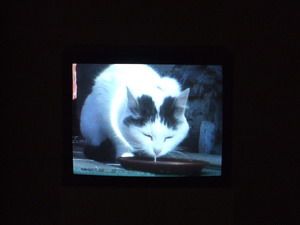
(Figure 1 Top) Studio, 1992–2000. (Figure 2 Left) Organic Organ, 1986. (Figure 2 Right) Egg, 2006. (Figure 3 Left & Right) Unfinished work images, 2004. (Figure Bottom) Cat video art, 2001. The Fischli & Weiss retrospective "Flowers and Problems" is on display from February 22 to May 13 at the Musée municipal d'art moderne de la Ville de Paris. Fischli & Weiss are among the most representative Swiss artists from the 1980s to the present, having collaborated since 1979. Their work often involves shifting and relocating the most mundane everyday objects, mixing cultures within an encyclopedic approach to objects and images, harmonizing time and concerns with traditions deemed trivial, endowing them with a magical volume and revealing the extraordinary poetry and imagination of daily life. This retrospective does not follow traditional chronological order but, per the artists' wishes, highlights several series across thirteen consecutive exhibition rooms: object sculptures, photographic images, video art, projections, books, and installations.
The first series transforms various-sized objects from daily life and natural environments into unique object-sculptures, cast in unusual black rubber (most notably half-rough tree trunks and small roots, 1986–87). These deceptive objects possess a solid sense of weight, disrupting perception and references to familiar everyday items. Next, a large series of photographic images mixes the Flowers series (1997–98) and the Airport series (2006); the Flowers series presents reality and unreality through multiple exposures and double images, while the Airport series reveals reality and imagination through documentary imagery, evoking time and space. Following this, a large series of anecdotal small ceramic sculptures (1981–2006) is displayed on pedestals, humorously depicting folk tales, myths, festivals, religion, music, and outdoor sports, thoughtfully presenting human conditions and scenes under social satire.
Next is the early video art "On a Country Path" (1982–1983), where Fischli & Weiss play a mouse and a bear in a scenic countryside, engaging in humorous, satirical play and debate. Then comes the earliest 1979 series "German Sausages," where sausages become subjects of amusing photographs as cars or toys. This leads to the highly dramatic film "The Way Things Go" (1986–87), featuring a variety of objects (tires, bottles, wooden boards, buckets, chairs, dry ice, stairs, ropes, balloons, fire, wood, etc.) cleverly combined in a domino-like sequence; for example, a tire hits a partition which hits a balloon, which explodes and pulls a rope that falls into a bucket, continuing endlessly in a theater of objects blending play and imagination. Next is the imaginative "Balance" photographic series (1984–85), balancing reality and imagination, humor and wit.
"Radio" (1993) receives sounds of music and news broadcasts, transmitting irregular sounds under rhythmic lighting. The "Visible World" series (1987–2000) consists of 3,000 photographs of vacation and travel scenes, continuously played on two large flat-screen TVs, displaying the superficial nature of contemporary tourism records within a postcard landscape image world. "Studio" (1992–2000) deceives perception and vision; based on their Swiss studio installation, various sized objects are piled on the floor and shelves. Upon close inspection, these are not ready-mades but reproduced ready-mades, disrupting perception and deceiving the eye, filled with imagination and surprise amidst the ordinary and extraordinary. The "Problems" series (2004) features text projections, systematically and structurally projecting multi-European language sentences onto large screens, raising metaphysical questions devoid of meaning.
Early large sculptures such as Animals-Bear, Egg, Organic Organ, and Water Tank (all circa 1986) exist in pure form, between concrete and abstract, object and sculpture. Finally, the most poetic "Cat" video art (2004–2005) shows a white cat with black spots on its ears repeatedly licking milk.