Giovanni Bellini: The Transfiguration of Christ (1485)
The Transfiguration of Christ (1485), 115×15.1 cm, oil on panel, National Gallery of Naples. This is Giovanni Bellini's masterpiece, where perfectly soft forms replace the rigid realism of his early period.
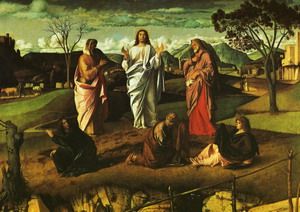
The Transfiguration of Christ (1485), 115×15.1 cm, oil on panel, National Gallery of Naples. This is Giovanni Bellini's masterpiece, where perfectly soft forms replace the rigid realism of his early period, presenting the most outstanding figures through delicate realism and gentle tones. It depicts the miraculous and extraordinary scene of Jesus Christ's transfiguration from the Bible, set against a dramatic dawn (or dusk) light that illuminates the natural depth of the landscape. Jesus leads his three faithful disciples, Jean, Pierre, and Jaques, up the mountain of Thabor in Galilee, revealing his divine power before them. Suddenly, his face becomes radiant and shining like the sun. The three saints, startled by the sudden miracle, stagger and fall to the ground in shock. With a dazzling face and raised hands demonstrating the power of transfiguration, he wears a white shirt and a pale blue robe, facing the audience as the central core of the composition. Moses, wearing green and pink robes, accompanies him on the left; Elijah, wearing red with a green cloak, stands on the right, both turned toward Jesus Christ. In this theater of lush green hills, there are cliffs in front, a building on a hill in the left corner, a farmer driving an ox, and a prominent dead tree. On the right foreground, a dense tree stands near a geometric building where two figures chat. Distant rolling hills are dotted with cylindrical tombs and churches. Against the background of dawn and dark, tragic light, the sacred atmosphere of the Transfiguration is intensified. Through detailed and brilliant realistic figures, contrasting colors, opposing forms, and chiaroscuro, the artist expresses his deepest emotions and the finest humanistic spirit of the Renaissance.