Giuseppe Penone "Nature and Body" Solo Exhibition
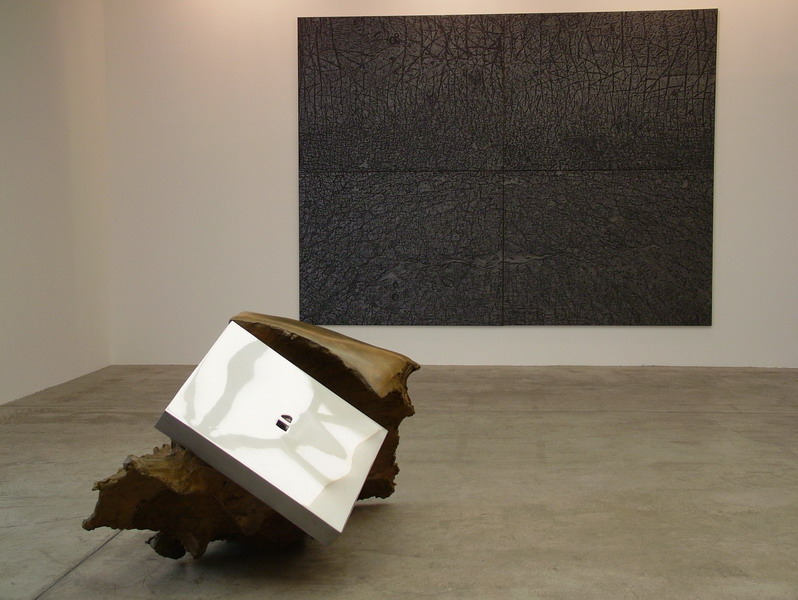
Scene from Giuseppe Penone's "Nature and Body" solo exhibition; foreground features the sculpture "Geometry in Hand"

"Cedar Bark" Sculpture-Installation, detail 145x80x170x24 cm, 2001. Giuseppe Penone "Nature and Body" Solo Exhibition: On view at Marian Goodman Gallery from May 30 to July 12. Born in 1947, Giuseppe Penone is one of the most representative artists of Italian Arte Povera and the youngest among them. Exploring the intimate relationship between nature and humanity through a performative creative process, he presents a novel causal relationship via autobiographical and anthropomorphic plant forms. Questioning the conventions of art and the mutual influence between humans and their environment, he dialectically explores nature versus culture, action versus trace, space versus movement, and assistance versus viewing.
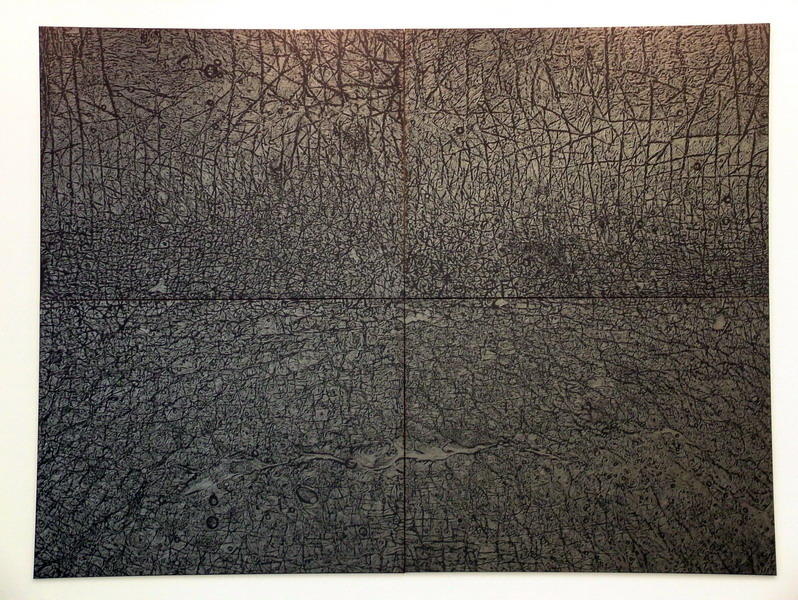
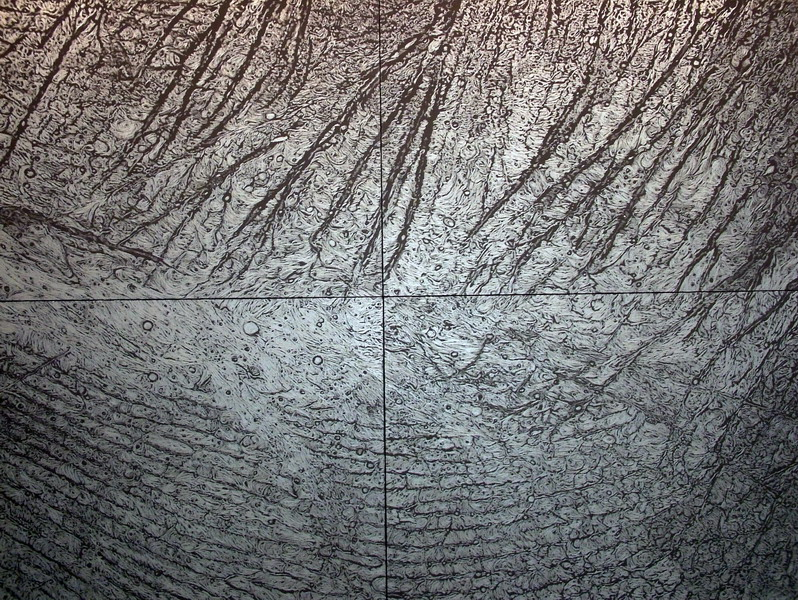
In this "Nature and Body" solo exhibition, Giuseppe Penone once again surprises with extraordinary works: three large, outstanding pencil drawings titled "Skin Patterns" (2003-2006), drawn directly on black paper. Composed of dense curves, irregular shapes, and negative space, organized by contrasting pencil luster and matte background, they construct a tangible bark texture. From this superficial graphic representation, they embody inner depth, volume, and remarkable sensation, filled with infinite imaginative space.
At the center stands an organic-form sculpture, "Geometry in Hand," neither natural nor artificial, subtly existing between the two. Crafted from the artist’s favored clay and bronze, it skillfully harmonizes signs of natural expansion with mathematical architectural geometry. Through contrasting material and form, geometric and non-geometric, natural and cultural, it presents an extraordinary volume and metaphysical metaphor.
The basement features a monumental "Cedar Bark" sculpture-installation, consisting of 24 cast bronze rubbings of rough cedar bark arranged orderly on the floor. One piece near the edge is supported by branches to form a facade, covered with a soft animal hide. Constructed upon a dialogue between interior and exterior, material and form, appearance and spirit, time and space, it reinforces tactile qualities. Within this paradoxical softness and roughness, the artist explores the dual characteristics of objects, deeply investigating the natural aesthetics of humanity’s presence in and transformation of the world.
French critic Daniel Souutif wrote in 1986 regarding Penone’s work: "His work exists in the visual traces where natural life and art originally resemble each other, arguably reintegrating humanity into the world." Penone’s method of presenting form is sometimes aesthetic—Kant wrote: "Nature is beautiful when it has the appearance of art... The naturalness of art, which awakens a sense of lost identity, is often moving. Thus! His infinite will is to provide it with the necessary return."