Hampton Court Royal Garden "The Yew Avenue"
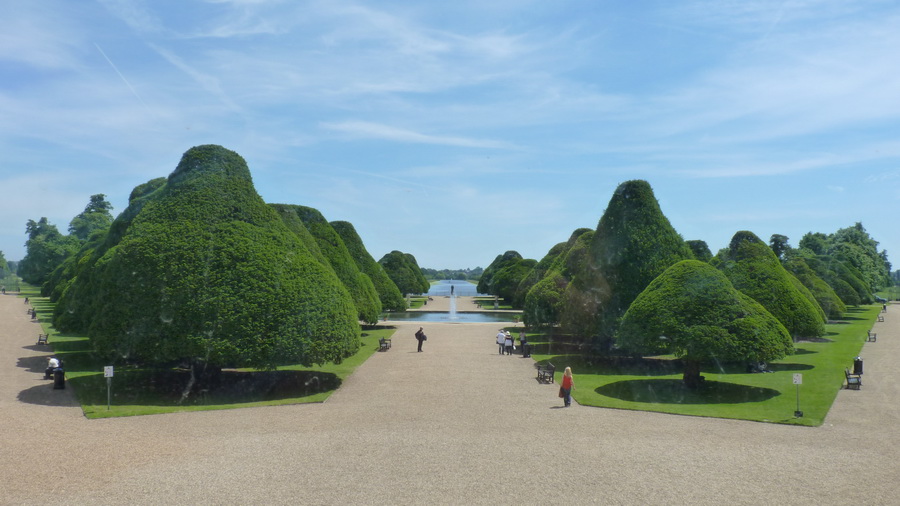
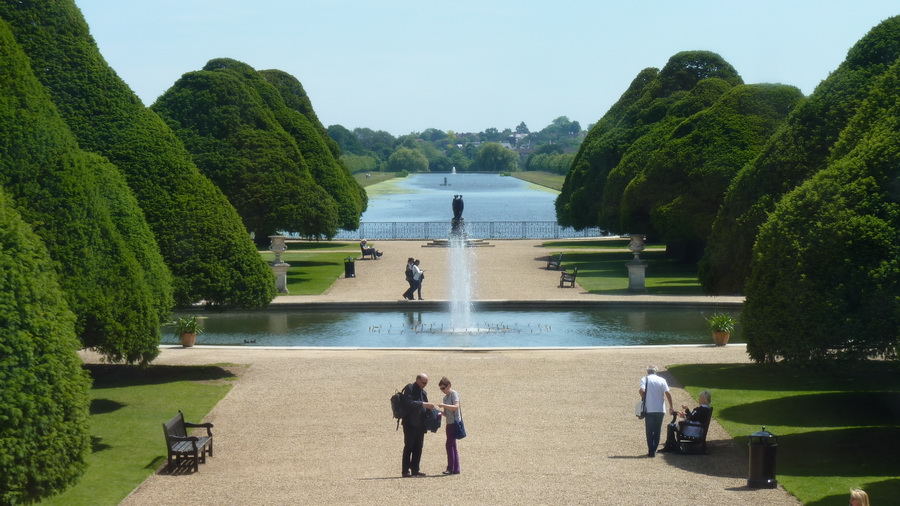
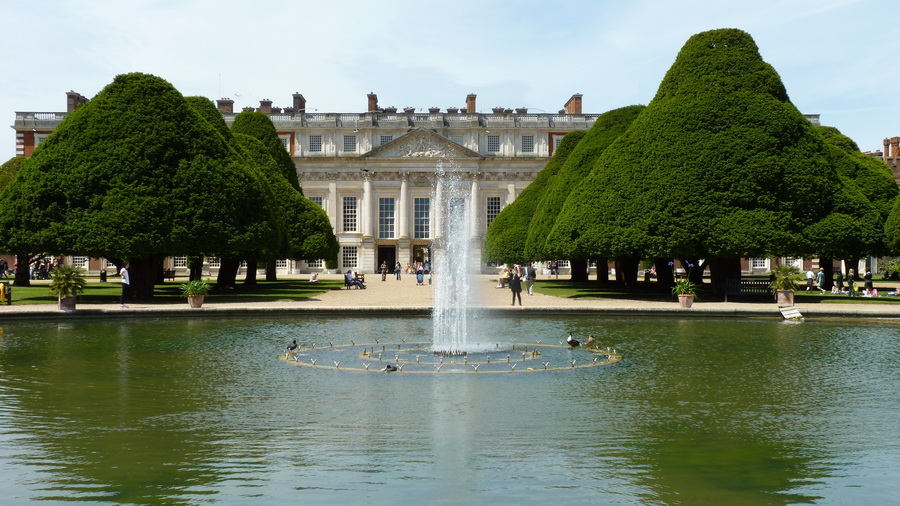
The yew-lined avenue in the center, looking out toward the canal.
Text and photos by Chen Chi-Hsiang. In recent years, due to my daughter working in London, I have had frequent opportunities to visit this other major European metropolis. I go at least several times a year; with the convenience of the Channel Tunnel connecting Paris and London, it takes only two and a half hours—closer than Paris to Marseille, which is hard to imagine. London has unexpectedly become my most frequently visited city in Europe. No longer rushing through as a tourist, I now have ample time for leisurely visits, always bringing affection (to see my daughter) and a sense of novelty. Like Paris, London is a river city (the Seine in Paris, the Thames in London), and its charming riverbanks are spaces where I often walk to unwind. The abundance of magnificent historical monuments, top-tier art museums, and rich collections (such as the British Museum and the National Gallery) make artistic pilgrimage inevitable, immersing me in joy. My curiosity about the development of modern and contemporary British art and its policies reveals endless exhibitions in London, but Tate Modern and the Saatchi Gallery are essential stops for probing the current state and trends of British contemporary art. I find that Britain’s art policy differs significantly from France’s; Britain leans toward neoliberalism, while France governs artistic development through state systems.
Britain offers a peaceful and beautiful living environment, with many homes featuring front and back yards, reflecting a unique philosophy regarding flora. British horticulture is particularly exquisite. London itself resembles a large park, lush with greenery throughout its parks and gardens: Hyde Park, Kensington Gardens, St. James’s Park, Green Park, Regent’s Park, Victoria Embankment Gardens, and Kensington Gardens, among others. Do not forget the world’s largest and most beautiful royal botanical garden, Kew Gardens, with its avenues and green spaces. As an amateur gardening enthusiast, I am strongly attracted to these places. Every visit to London includes a stroll in a park or garden to unwind. After visiting exhibitions, I often spend time staring blankly at the verdant nature or walking in the parks to refresh my mind.
This spring, taking advantage of the warm weather, I specifically visited Regent’s Park to admire London’s famous Queen Mary’s Gardens. During the blooming season, when colorful roses fill the air with fragrance, immersing oneself in this sea of flowers allows one to enjoy nature’s superior beauty, and having a picnic in the rose garden adds special charm. Beyond London, numerous royal castles and gardens surround the suburbs, such as Windsor Castle and Park, Hampton Court Palace and Gardens, and various forest parks. They are all charming and easily accessible, reachable within about half an hour by car.
On a sunny day, I visited the famous Hampton Court Palace and Gardens, Henry VIII’s retreat. The architecture resembles Windsor Castle (Henry VIII’s style features tall main entrances flanked by two defensive towers). What is most striking at Hampton Court is not the royal palace buildings themselves, despite their rich artifacts and orderly display of royal history. Facing this scene and space feels like standing in an open cemetery, prompting reflections on where past generals and ministers are now, buried under grass. Like many Western royal castles today, it seems intent on reconstructing history through assembled artifacts merely to attract tourism value.
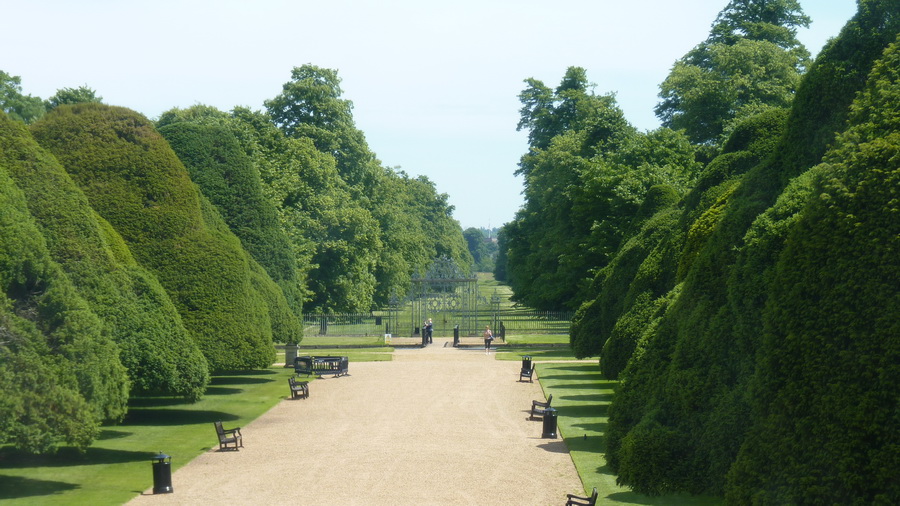
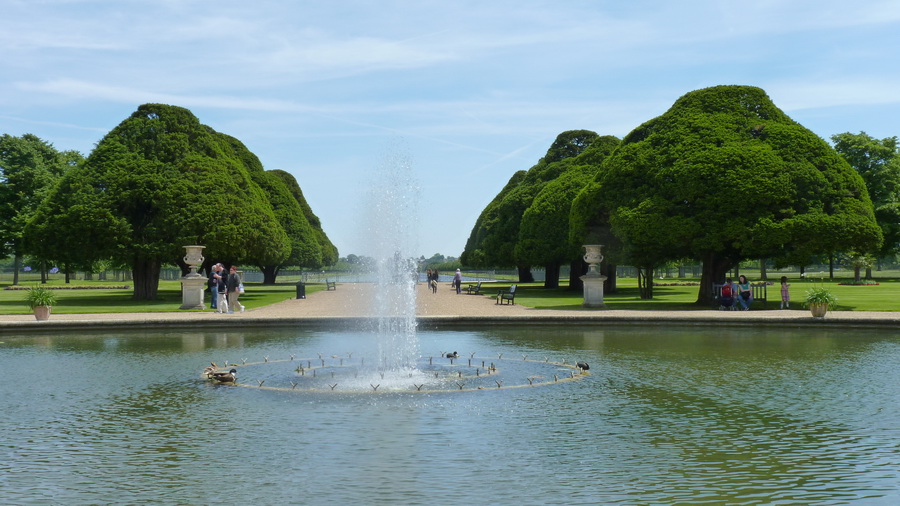
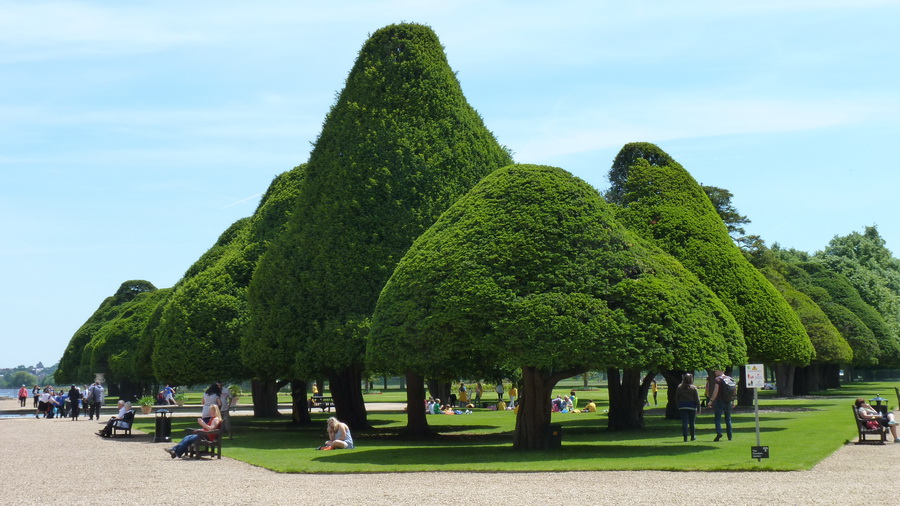
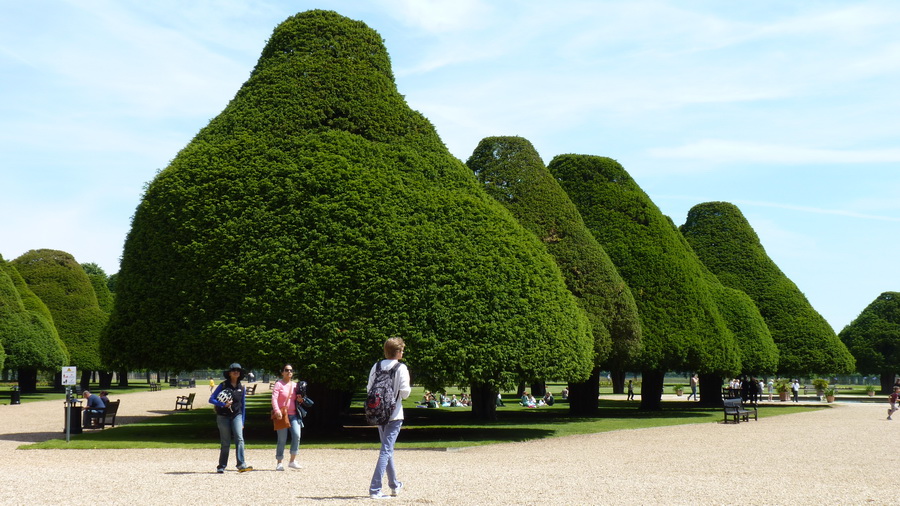
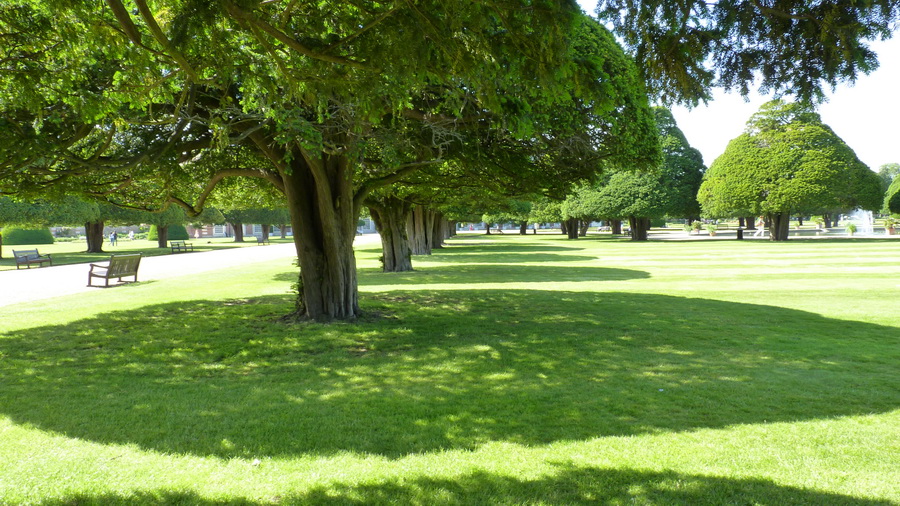
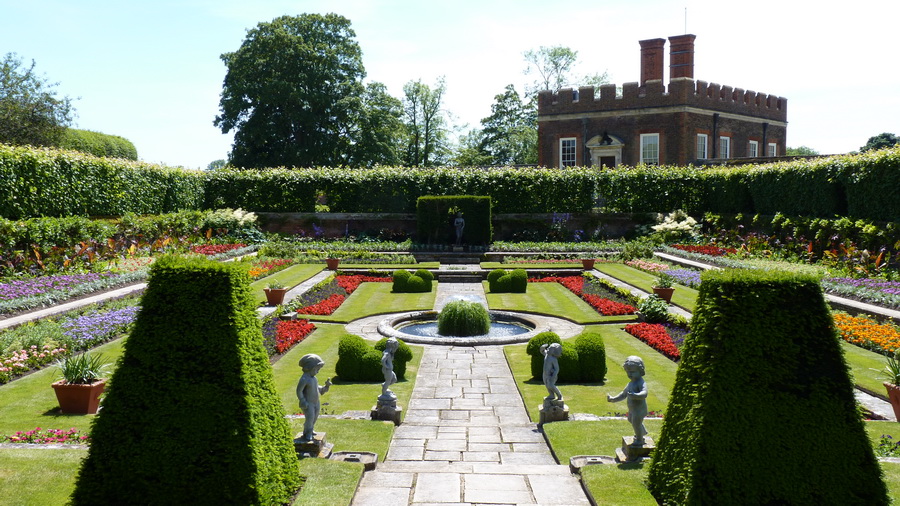
What is truly captivating at Hampton Court is its vibrant backyard, the "Yew Avenue," shaped like a giant mushroom. This magnificent yew-lined avenue centers on the castle, extending past the fountain to the canal, symmetrically divided into three perfect avenues forming triangular green spaces on either side. Yews are trees that do not grow tall easily, yet it is astonishing that after three hundred years, small shrubs have become giant trees. Records indicate they were planted between 1702 and 1710. These century-old trees have witnessed countless dynasties and tests of time, making it hard to imagine that this avenue has seen three hundred years of British history. Looking at these vigorous, massive yews and thinking of humanity, everything seems illusory. How great and powerful humans are in the torrent of time and space, yet it is hard to imagine otherwise. Borrowing couplets from painter Huang Jinhe’s works "Donghai Hall" and "Nanshan Building"—"Gold is not a thousand-year legacy, the red sun can fade the frost on your temples" and "Glory ends like a dream at midnight, wealth is like frost in September"—one realizes the impermanence of life and the illusory nature of fame and profit in a flashy world. Compared with nature, humans should reflect more deeply on the meaning and value of existence.