Henrique Oliveira's "Baitigogo" Solo Exhibition
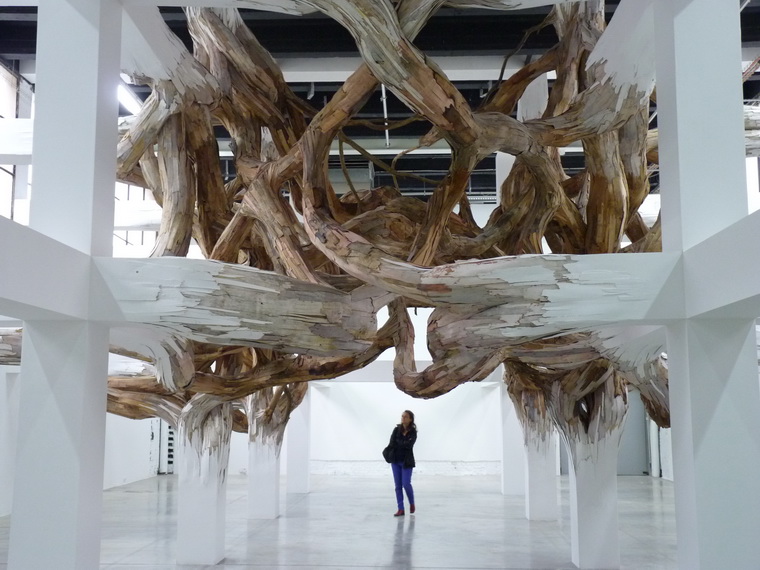
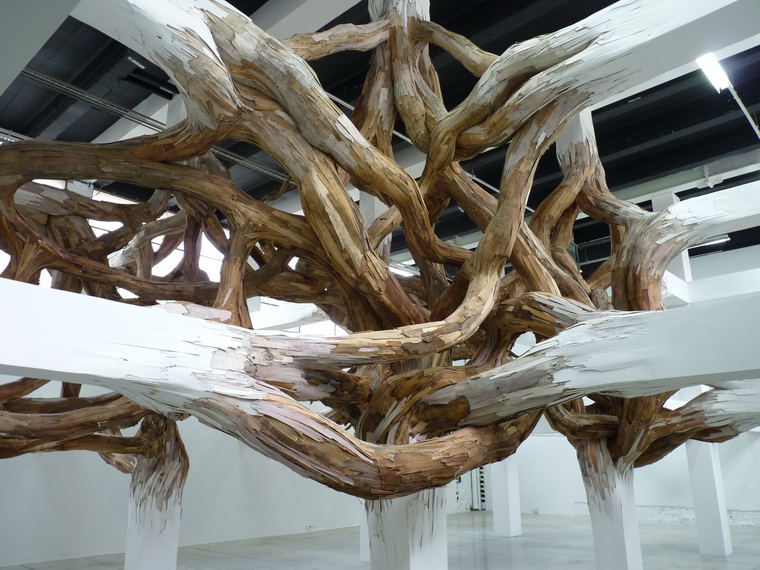
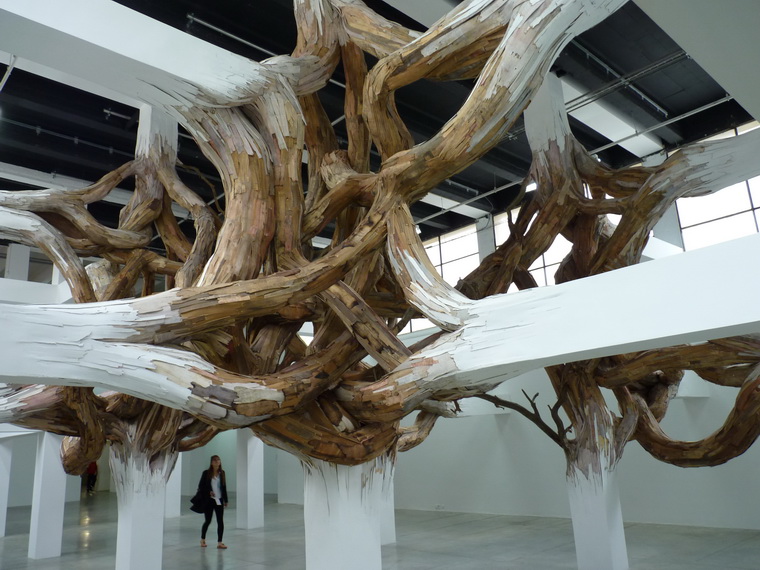
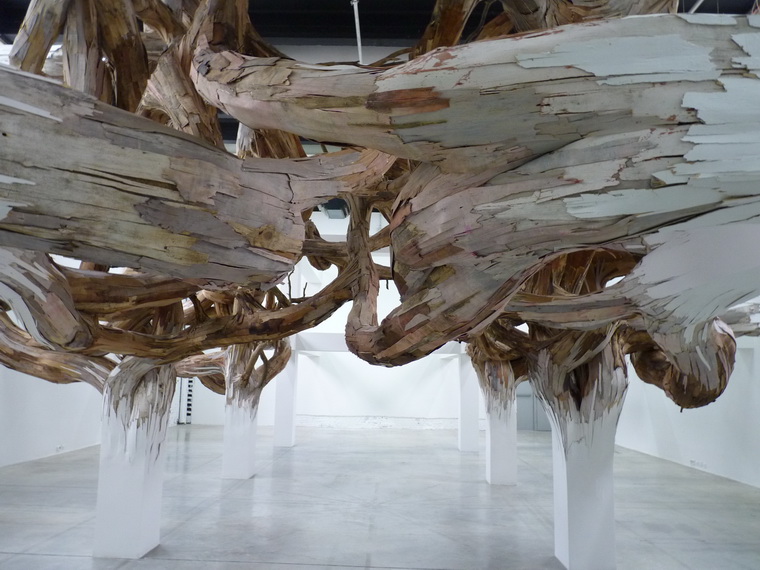
The monumental "Baitigogo" installation at Palais de Tokyo in Paris.
Venue: Palais de Tokyo, Paris. Dates: June 21 to September 9. Text and images by Chen Chi-Hsiang.
Henrique Oliveira (born 1973 in São Paulo) is one of Brazil’s most representative contemporary artists, known for his cross-disciplinary dramatic spatial installations. His work blends urban planning, plants, organic forms, structure, art, and science, engaging with nature, humanity, architecture, and space. Since 2006, he has collected rough wooden boards discarded by the urban architectural environment (construction sites or favelas), organizing them through ingenious design to create magnificent, giant trees from exhibition walls and spaces (a meditation on primeval forests). Early relief-like tree bark techniques appeared in series such as Tapumes (siding/fence) (2006), followed by the abstract expressionist Turbilhao para Turner (2007), Triptico (2008), and Tapumes (2009), creating spectacular works that bridge the figurative and abstract, flat and three-dimensional, painting and sculpture.
His first monumental work establishing space, Tunnel (2007), opened a new exploration of space. In 2010, at the São Paulo Biennial, Oliveira created the extraordinary internal and external space Origem do Terceiro Mundo, inviting viewers into an inner space akin to the human body or a wandering imagination of primeval forests, where one could travel, touch, and observe. Within these imaginative paintings-reliefs-sculptures, an incredible magical world is presented, resonating in the forms of painting, sculpture, and spatial installation.
Baitigogo, the monumental work at Palais de Tokyo, establishes the site-specific space, shaped by the venue’s structural beams. Magnificent rough trunks extend vertically and horizontally from white columns in all directions, branches intertwining seamlessly with the building, forming an organic volume that appears naturally crafted. This constructs an extraordinary rhythmic force of nature and architecture, revealing exceptional visual tension from macro to micro levels. Blurring natural architecture and architectural nature, reality and imagination, it leads viewers into a contemplative symphony of the primeval forest.