The Birth of a New Aesthetic - Impressionism
Monet, Woman in Shadow, 131x88 cm, 1886, Paris Marmottan Museum
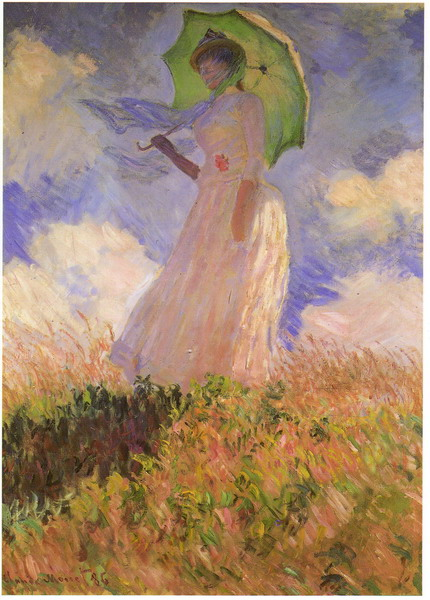
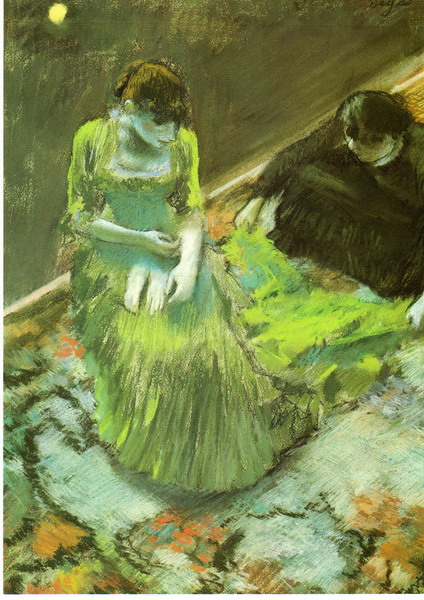


Pissarro, Pontoise Old Cemetery Landscape, 55.8x91.4 cm, 1872, Carnegie Institute Pittsburgh. Guided by Romanticism, the Barbizon School, and Courbet’s realism, outdoor sketching pointed toward a new future aesthetic—Impressionism. Emerging around 1870, Impressionists held their first group exhibition from April 25 to May 15, 1874, at Nadar’s photography studio. Participating artists included Monet, Renoir, Pissarro, Sisley, Cézanne, Degas, Guillaumin, Berthe Morisot, and others. Art critic Louis Leroy, after viewing Monet’s Impression, Sunrise (painted 1872), remarked, “It is merely an impression!” Since Monet transformed natural scenery into a sensory impression, the term “Impression” quickly became synonymous with this style, thus giving birth to Impressionism.
However, while Impressionist painters bridged past and future, they no longer treated subjects as ends in themselves, as the Barbizon School had. Instead, they extracted impressions from themes, depicting sensations, light, atmosphere, and effects like water reflections blending with sky and horizon. The key difference from the Barbizon School was that Impressionists did not reject modern social issues; rather, they actively liberated form and subjective color. Rough brushstrokes, emotional colors, dazzling light, and poetic atmospheres defined this new painting paradigm, closely resembling Corot and British landscape painter Turner.
Simultaneously, Impressionist modern art was influenced by Japanese ukiyo-e prints. The subjective simplification, patterned imagery, flat color treatment, and expression deeply inspired new artistic concepts and practices of the era. Subsequently, Post-Impressionism and Neo-Impressionism radically innovated, making Western modern art more brilliant, radical, and avant-garde. Exploration through innovation became the path for modern art.