Arp (J. Arp) - "Dancer"
Dancer 149×112.5cm, 1925 Centre Pompidou Collection
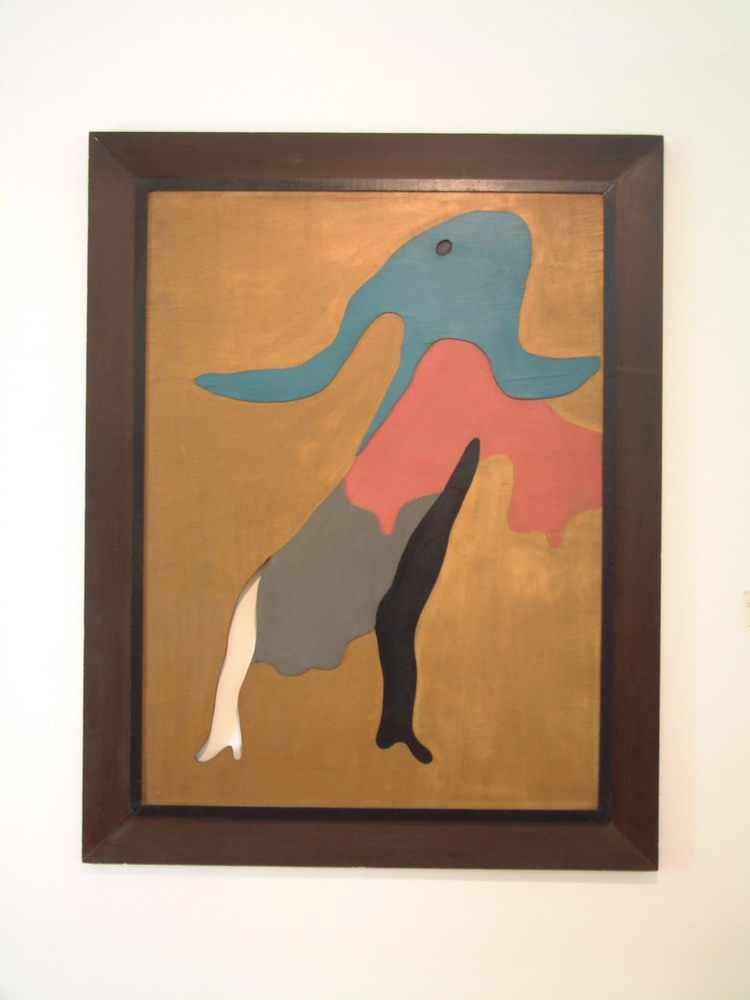
Jean Arp (J. Arp, 1887–1966) was a French artist, poet, and co-founder of Dadaism, later participating in the Surrealist movement, famous for his non-figurative sculptures and relief paintings. Relief painting stems from Arp's spiritual inclinations; through his most effective use of materials, it emerged during his Dadaist activities between 1916 and 1917. By cutting and coloring wood boards into irregular forms, shadows are cast in the light, enhancing depth. This work, Dancer (Arp’s wife was a dancer and painter), is one of his most mature pieces. He uses undulating curves to form dancing shapes, suggesting the theme. The cleverness lies in cutting out forms on the wooden support frame, revealing the white wall behind; these forms resemble the jumping legs of a dancer, contrasting with the black leg on the right, deepening the artwork’s meaning and offering viewers extraordinary imaginative space.