Joan Miró – The "Constellations" Series
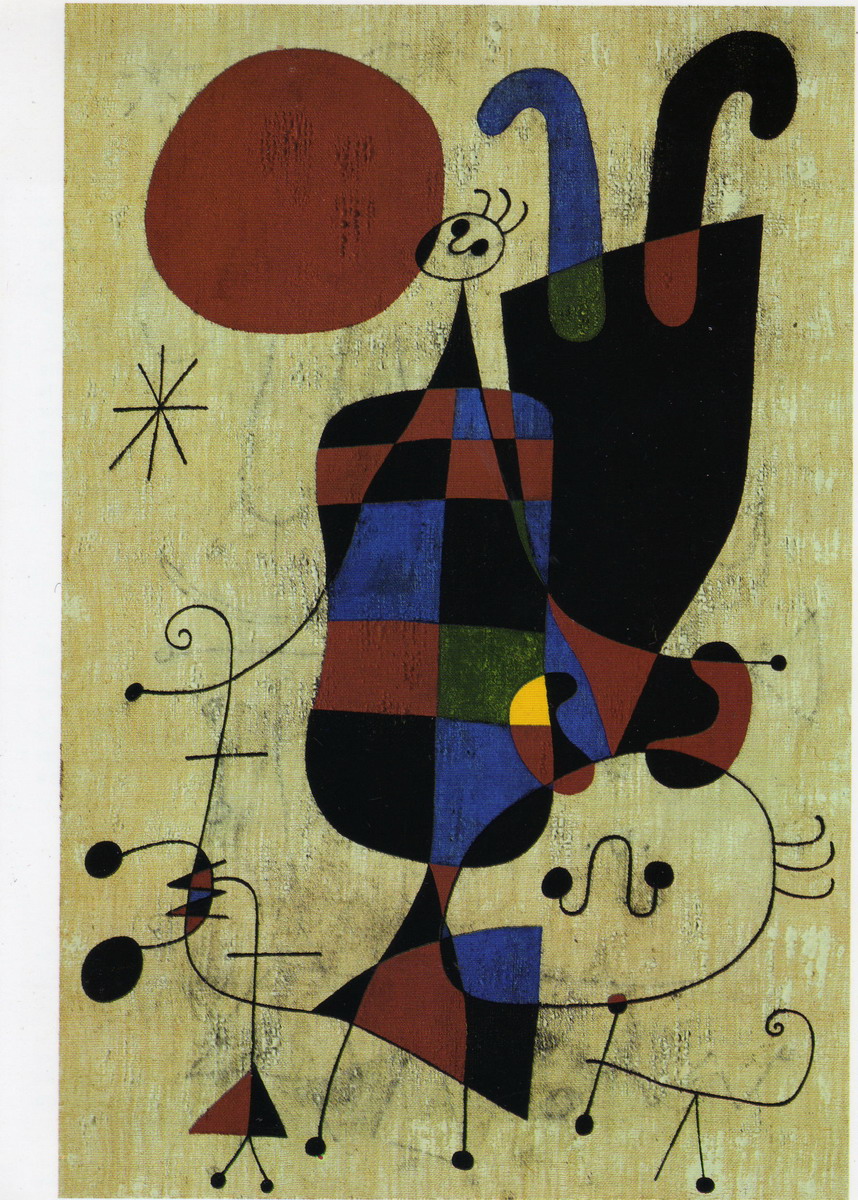
Two Figures Thrown by a Star, 130x162cm, 1949, Collection of the Museum of Modern Art, Basel, Switzerland.
"There is no difference whatsoever between my painting and poetry."
Joan Miró
Joan Miró (1893–1983), a Spanish painter and sculptor, was the closest friend of Surrealism. Under the liberating technique of automatism, he created an exceptional pictorial language, establishing these symbols between optimism and humor, and revealing another constant form in the use of curves and dots. In the mid-1920s, he further purified his formal language, creating a series of works between painting and poetry, more concretely constituting a visual revolution. Under an irrational logic, fragmented symbols, forms, clear lines, spots of color, and written space combined like a dream and playful delight.
In the paintings of the 1930s, mixed and implicit symbols coexisted with anthropomorphic and biomorphic forms. During World War II, the Bullfight Series—mentioning Spain inevitably brings bullfighting to mind, a theme many Spanish painters have addressed, and Miró was no exception—transformed this dramatic tragedy into painting. Miró said, "There is no difference whatsoever between my painting and poetry." In The Bullfight, on a slightly bluish-gray transparent ground, Miró outlines with his adept lines, adding tense colors (black, red, green), creating humorous and witty visual symbols. Miró wrote: "For The Bullfight, I expressed some poetic symbols: the bullfighter is like an insect, the bull like a pigeon's wing, the wounded horse like a huge eye... The splattered blood is like an ideogram, yet it transforms into stars..."
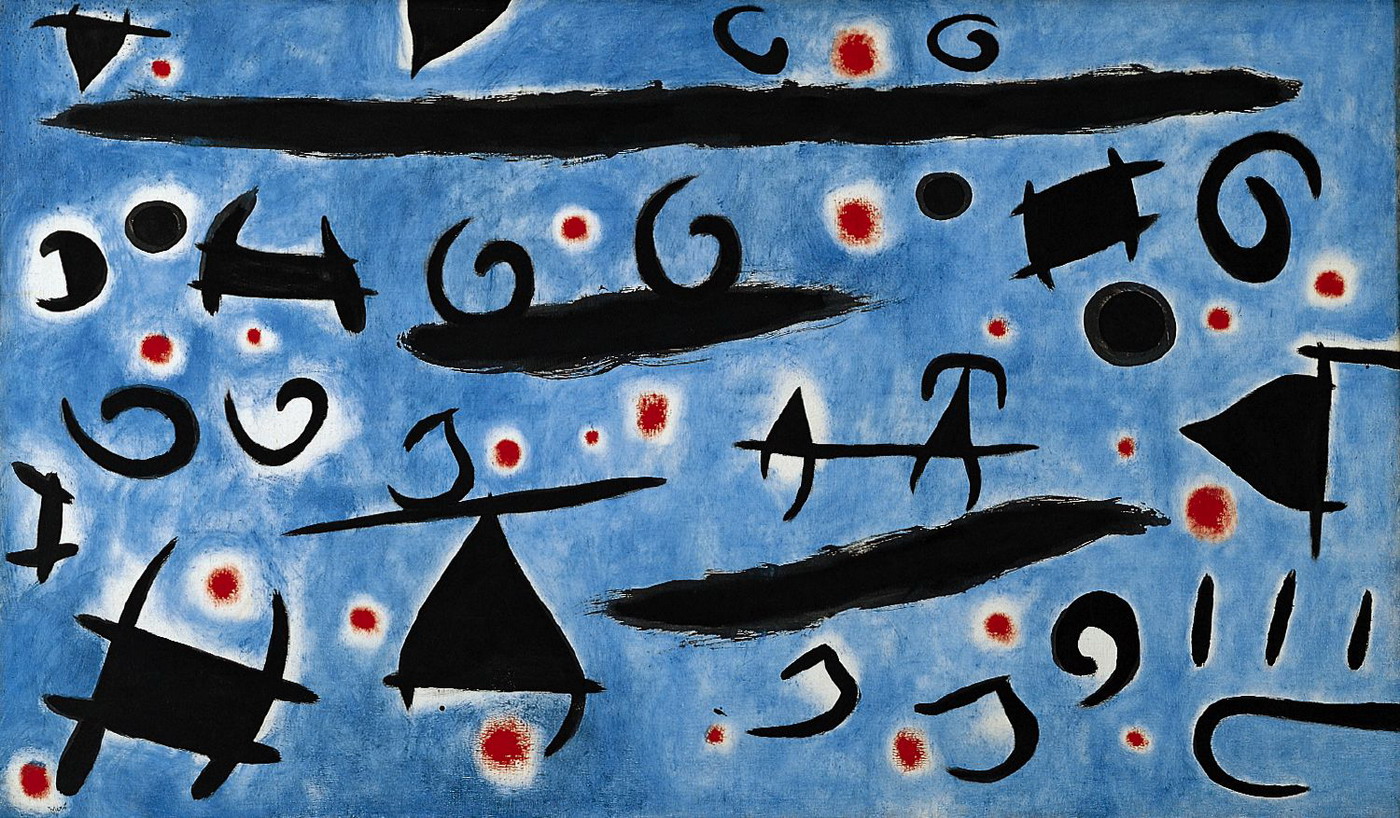
Subsequently, the famous Constellations series, within simple painted geometric forms, freely combines elements of deformed reality on these non-objective symbols, dotted with all the most beautiful colors from the palette, poetic and picturesque, full of imaginative space.
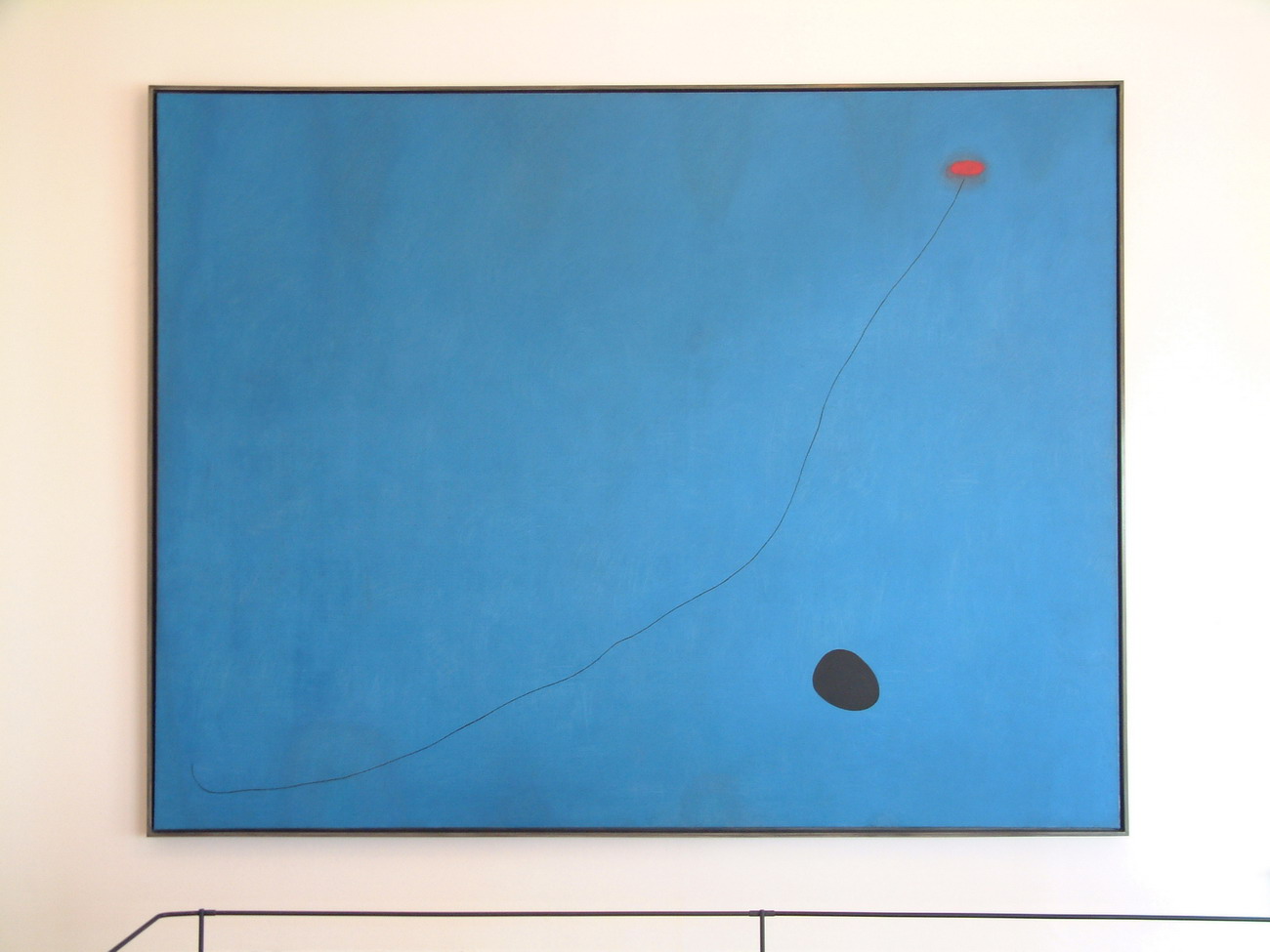
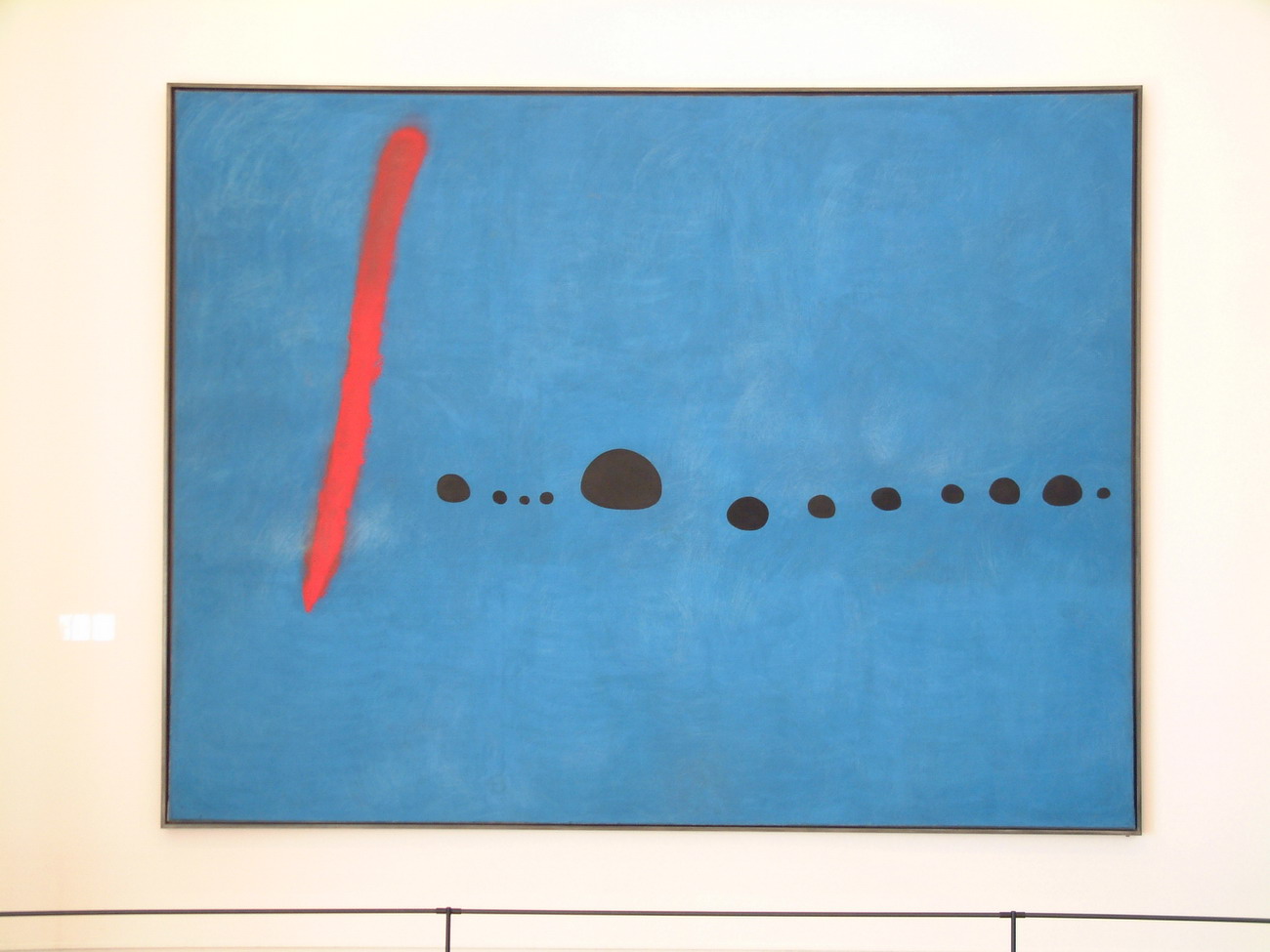
The crystallization of Miró's lifelong aesthetics, three grand deep blue works brimming with cosmic energy, stem from his belief since 1925 that "deep blue is the color of his dreams." Here, Miró, through a minimalist formal language and spiritually rich colors (black, red), achieves the most effective composition. Miró wrote: "I spent a lot of time on these creations, but not in painting them, rather in reflecting upon them." These works seem to rediscover an inherent function, inviting contemplation and meditation.