Jammes Turrell Solo Exhibition
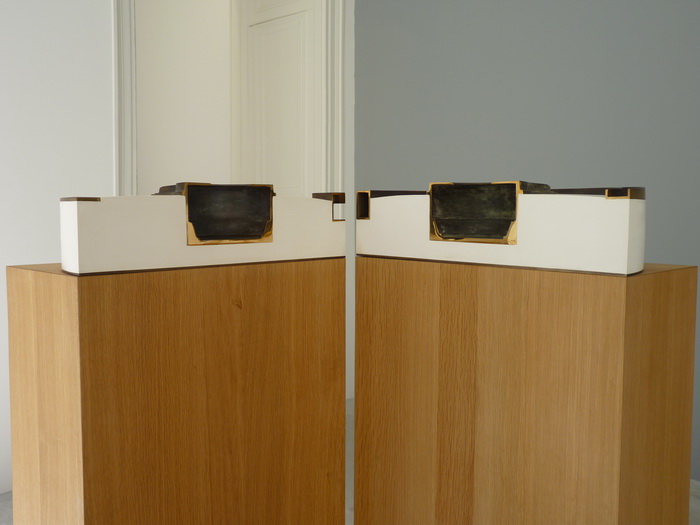
Crater's Eye 14 x 26 x 52 cm 2007 Bronze, plaster, wooden plinth, in 2 parts,
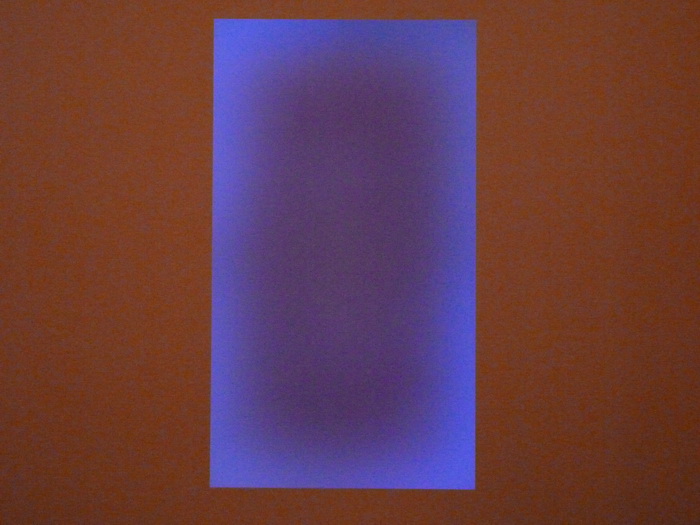
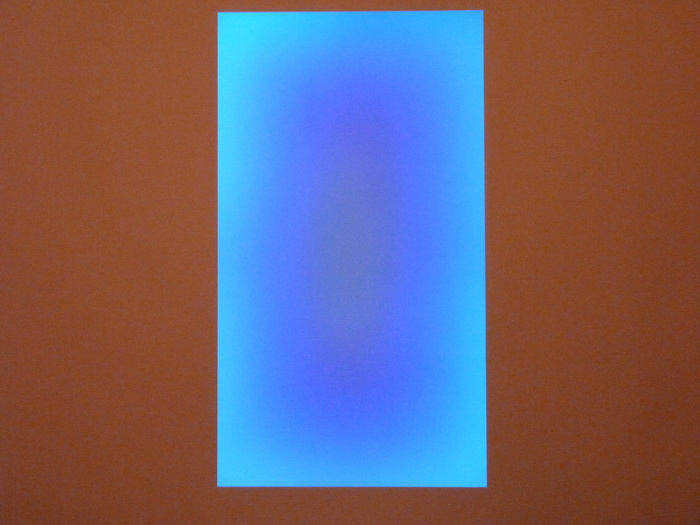
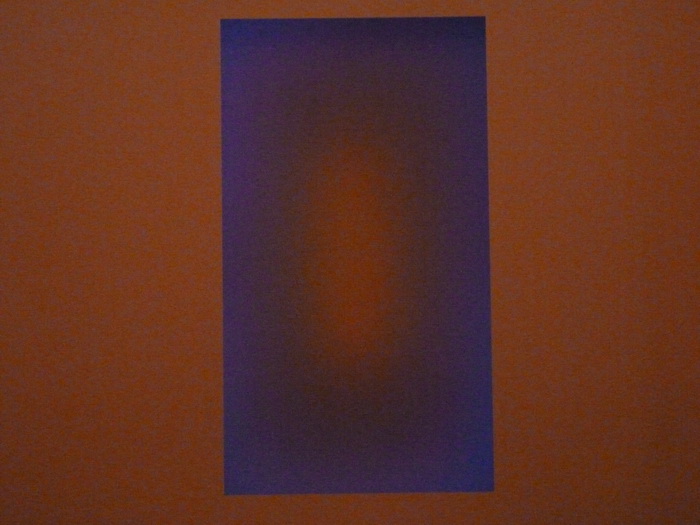
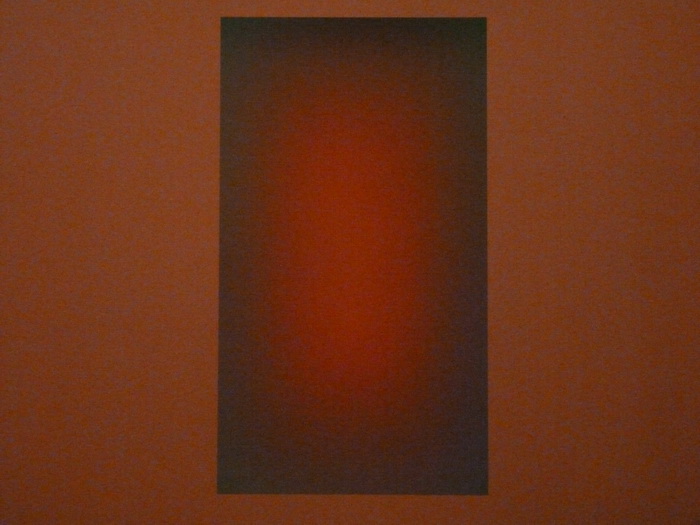
Venue: Almine Rech Gallery. Dates: June 1 to July 13. Text and images by Chen Chi-Hsiang. Jammes Turrell (born 1936) is one of the most innovative American artists of the 1970s and a leading figure in spiritual exploration within American art on the West Coast. Settled in Arizona, he was among the first Western artists to utilize light. Within the radical aesthetics of minimalism, his work represents the purest and most spiritual manifestation in the American art scene. He states: "I perceive this medium from the light materials I use. My work has no theme; perception is the theme. There are no images, as I am not interested in associative thinking." (Note 1).
His approach involves exploring "environmental sensation" through scientific inquiry and psychological perception, analyzing various mutual influences between space and light. His most famous works are "Light Pieces," spatial installations that reveal large, mesmerizing monochromatic paintings in dark, enclosed spaces. As viewers' eyes adjust to the dimness, metaphysical surfaces and deceptive colors slowly emerge, revealing an unreliable depth. When touched, these images do not physically exist; they are invisible depths created by uniform color-light diffusion through light-box environmental installations. Poetic and imaginative, they present a unique spiritual field. Turrell writes: "Sensory space accepts all the light of the exhibition room; it is external and becomes such a representation. We observe the interior of the space by observing the space itself, where we find space as a feeling." (Note 2).
Turrell began using light projection in 1966 and 1967, with early works being white. In 1968, colored paints appeared; each work projected four halogen lamps, placed diagonally in walls or flat, almost always presenting geometric shapes, often a deceptive monochromatic "red." His first exhibition in 1967 at the Pasadena Museum of Art allowed him to continue experimental research in the Science and Technology unit of the California Institute of the Arts, where he met artist Robert Irwin and perceptual psychologist Edward Wortz. This enabled him to truly experiment with the effects of colored light in pitch-black rooms and observe environmental vision, allowing him to develop new projected works for environmental spaces (Note 3).
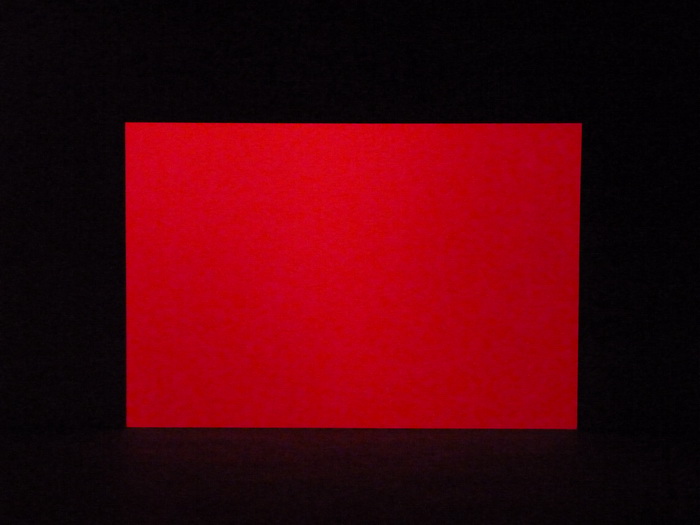
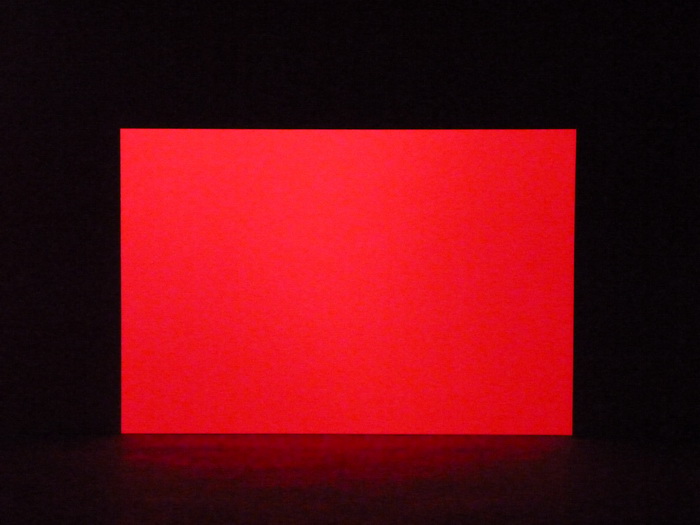
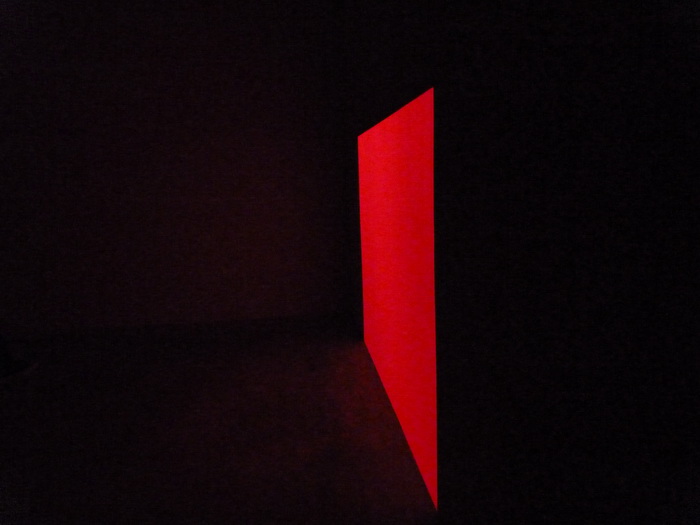
In this solo exhibition, Turrell presents a historic classic of light projection environmental spatial installation, "Prado, Red" (1968). A vibrant red rectangular shape is projected in a pitch-black room, turning the chamber into a space for contemplation. Alone facing the work, surrounded by silence, viewers delve into the essence of visual consciousness and enter metaphysical color planes. Two sculptural objects, "sun and moon space" (2006) and "crater's eye" (2007), are reduced architectural models based on his observation decks in the Arizona desert hills. They suggest pioneering actual light observation into an extraordinary cosmic mystery. The black-and-white photographic series "stone moon side" (1999) and the color photographic series "ellipse" (2012) also explore subtle aspects of celestial light.
Note: Turrell's most representative work is "Roden Crater" (1977), a light observation deck grand enough to resemble land art. Gifted by two American foundations, he purchased a hill in the Arizona desert to realize his major light pioneering project, akin to the interior of ancient Egyptian pyramids. Eight continuous exhibition halls were built inside the crater, allowing visitors to observe nature's ever-changing light. All light is "not a carrier of manifestation, but manifests as itself," with each hall possessing a unique natural light phenomenon. Art critic Claude Gintz described this work in "Absolute Light": "During the visit in this narrow internal tunnel, one only perceives light. One seems to slowly approach the light. Under certain solar-lunar conditions, the lunar layer moves southward, and our satellite disk aligns perfectly with the tunnel (...) When emerging from the crater and contrasting with the confined space, one suddenly experiences such an active sensory test, as if passing through a taut membrane of the sky" (Note 4). This seems to transcend all artistic categories, reaching an extraordinary cosmic mystery.
Note 1: Almine Rech solo exhibition press release. Note 2: Dictionary of Painting and Sculpture, published by Larousse, Paris, 1991, pp. 74-75. Note 3: Almine Rech solo exhibition press release. Note 4: "Monochrome Painting," Artstudio No. 16, Spring 1990 issue, p. 44.