Jan Fabre "Incarnation of Angels" Grand Louvre Special Exhibition
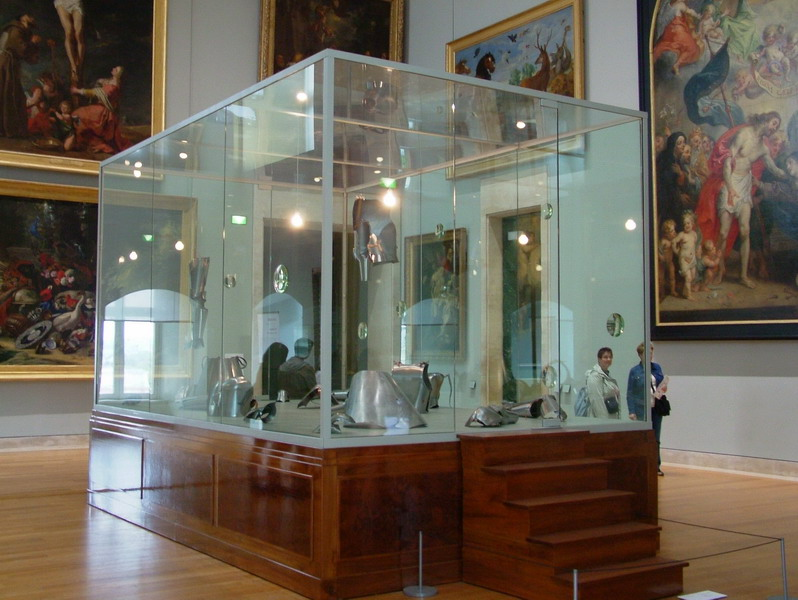
"Virgin-Maiden Warrior," 2004, is a groundbreaking object.

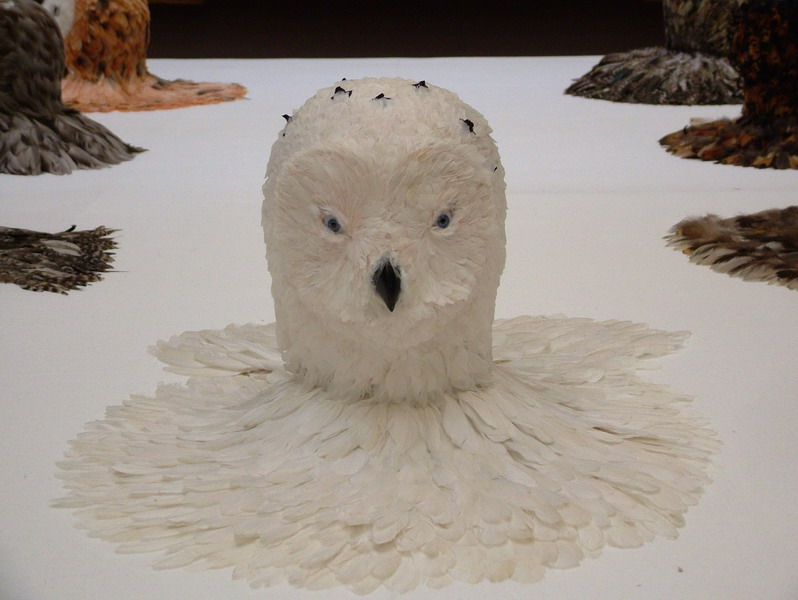
"Message of Beheaded Death," 2006, detail. Foreword: Jan Fabre "Incarnation of Angels" Special Exhibition: On display from April 11 to July 7 in the Northern European Painting Collection Room at the Grand Louvre. Born in 1958, Jan Fabre is one of Europe’s most representative contemporary Belgian visual artists, painters, performance artists, theater actors, choreographers, and directors. An extraordinary interdisciplinary artist, his strikingly polymorphic works are driven by unconventional concepts and subversive behaviors, often provoking both admiration and debate. His remarkable experimental theater is particularly famous for its raw violence; invited to perform at the Avignon Festival in southern France in 2005, his dramatic and ritualistic action theater sparked social controversy and shook the theater world, becoming one of the most unforgettable seasons in the festival's history.
The artist’s inexhaustible creative source: After graduating from the Royal Academy of Fine Arts in Antwerp and the Royal Academy of Decorative Arts, Fabre began his subversive and provocative action performance art. He stated, "At age 18, when I visited Bruges to see early Flemish Renaissance works, I saw the wounded body of Jesus and the scourging. There, I discovered performance and body art." During this period, he demonstrated his talent as a painter with the Blue Ballpoint Pen series. Simultaneously, within the Troubleyn Experimental Theater Group, he freely directed and choreographed unimaginably radical dance dramas, crossing boundaries and breaking through all artistic genres, emerging as a dissident figure in the 1980s Flemish New Art movement. Fabre seeks to be like a contemporary mystic, akin to the magical worlds of Flemish masters Jerome Bosch and Pieter Brueghel. In this postmodern era that liberates all thoughts from past and present, East and West, the perceptive Jan Fabre began referencing all eras, fields, creations, and explorations: art, natural science, philosophy, literature, and religion. In this remarkable world, he adopted symbolic figures such as knights, angels, beetles, or owls for interpretation. He revolves around metaphorical and literary themes such as life and death, humans and animals, or the artist’s role in society. By chance, he discovered the works of the famous entomologist Jean-Henri Fabre, who was passionate about the microscopic world, attempting to elucidate the mysteries and wonders of life through this tiny realm. From the late 1970s, the groundbreaking beetle became his favored medium for creation up to today. Under humanism, humans become the core of all his creations. Through deep exploration of physical and spiritual bodies, in many of his body performances and films, he naturally pushes his own body to the extreme, attempting to interpret the consciousness and possibilities of existence.
Grand Louvre’s new exhibition strategy: The Jan Fabre "Incarnation of Angels" special exhibition is held at the Grand Louvre. Recently, the Louvre’s art exhibition policy has no longer confined itself to existing ancient art collections but seeks new perspectives and audiences for exhibitions, specifically introducing contemporary art exhibitions to create mutual illumination between past and present, bringing unexpected surprises and extraordinary confrontations to visitors. Following the sensational exhibition of German artist Anselm Kiefer last year, inviting Jan Fabre for a special exhibition this year also garnered audience applause and more surprises. This "Incarnation of Angels" special exhibition is held on the second floor of the Richelieu Wing in the Northern European Painting Exhibition Room. Because Jan Fabre hails from the vibrant city of Antwerp (Anvers), which was the location of the Northern Renaissance in Flanders (present-day Netherlands and Belgium), he inherited Flanders’ unique artistic traditions, especially Jerome Bosch’s symbolic fantasy world and Pieter Brueghel’s magic filled with symbolism and imagination, along with Magritte’s surreal situations, which became the source of his artistic creation. Through contrasting artistic presentation, based on the form, style, and concept of the works, they are placed in the Northern European Painting Forest exhibition hall, intending to achieve an extraordinary contrast. Through humor, satire, tragedy, wit, poetry, literature, symbolism, metaphor, and reference, it often uses the past to satirize the present or explores humanity’s eternal dilemmas and existential unease, perfectly reflecting humanity’s eternal condition and state of mind. It allows the audience to clearly understand the commonalities, existential conditions, and spiritual verification between past and present or East and West. Although the forms of creation differ with the background of the times, essentially they are close. This contrast opens up a novel exhibition method and layout.
Appreciation of "Incarnation of Angels" works: The special exhibition begins with the self-statue "I Empty Myself (Dwarf)" (2007) before entering the Northern European Exhibition Hall. The humorous artist himself becomes a quirky dwarf, wearing a black trench coat and jeans, his body pressed against the wall, inexplicably pressing his face tightly against Rogier van der Weyden’s portrait, as if seeing the painting clearly this way, implying a collision with history. Bizarrely barefoot, with a pool of bright red blood beneath his feet, the artist empties himself, as if feeling very empty and void when facing the Flemish masterpiece. This work is a sense of bankruptcy, defeated before even fighting. "I-Dream" (1978): The artist dreams of becoming a microbiologist, which is actually a portrayal of the famous entomologist Jean-Henri Fabre. A microbiologist in a suit and top hat sits at a research desk, fantasizing about what can be seen under a microscope. Indeed, everything visible can be imagined (dreamed), but not everything imaginable can be seen. Strikingly, the entire sculpture is constructed from small gold tacks and nails; without careful attention, it looks like a bronze statue, further highlighting the fragility of the body itself. Here is also a cute little parrot statue "I-Dwarf Parrot-I Never Repeat" (2006), indicating his focus on originality in creation, just like the theme’s portrayal. Next is the statue "The Regeneration of Alphonse de Lannoy" (1997) from the groom in the world-famous painting "The Wedding at Arnolfini" by the most famous Flemish painter Van Eyck, paying highest tribute to the master here. The surreal Alphonse de Lannoy is a three-like figure—bird head wearing armor, with a string of white vertebrae behind his head like long white hair. The statue is constructed from Fabre’s idol—the beetle, resembling the whimsical figures in Bosch’s paintings, between dreams and unease, questioning and imagination.
"Sarcofago Conditus – Statue on His Tomb" (2003): The fully dressed full-body statue of Conditus lies solemnly and sacredly on the table, hands placed on his chest (like a tombstone statue), quietly and peacefully surrounded by images of martyrs, the Resurrection of Jesus, the Virgin Mary, and angels, creating a novel religious atmosphere, becoming a field for contemplating the magic and mystery of death. The entire statue is constructed from inverted gold tacks and nails, entirely composed of fine needles forming a precious collection item, creating a distance between the audience and the work, between magic and symbols, matter and spirit, imagination and metaphysics. The extraordinary "Salvator Mundi" (1998) on the wall features a mysterious hand (armor) holding a sphere composed of beetles. On the gold-blue and gold-green spheres stands a string of white vertebrae. Under the artist’s clever use of three favorite materials, it resembles a priestly object, symbolizing the sign of Jesus Christ on the cross, presenting a solemn and sacred death. The most striking "I Am Blood - sum sanguis" (2004) sculpture installation is obviously an eternal religious theme, referencing Van Eyck’s famous painting "The Adoration of the Lamb" (1432). Witnessed by Northern European infant saints and Virgin Mary portraits, two bronze lambs are placed in glass cabinets—one lying dead on the ground on the left, the other looking back at the left one—its double death, metaphorically representing life’s sacrifice and resurrection. Like a clown, the lamb wears a traditional Flemish carnival horned hat and a bow tie, this disguise showing an intention of incarnation.
Next comes the imaginative space of "Bruges 3003 - Bone Monk" (2002) and "Bruges 3004 - Bone Angel" (2002). Two souls constructed of white bones float and wander in this Jesus Christ Resurrection exhibition room. The monk and angel are symbols; the monk is male, the angel female. 3003 and 3004 indicate the future. One man and one woman create paradise on earth. In this distant future, the bodies of bone monks and angels are emptied, becoming a coat, hinting that future human bodies will no longer be so fragile, possessing a metaphysical idealism and utopian concept. The future is always beautiful; as the Taiwanese saying goes, "It’s beautiful to have dreams," but when dreams turn to bubbles, it is unimaginable. The monument-style "Beetle" (2001) work is placed before the Last Supper. A huge sphere composed of beetles has a string of white vertebrae standing in the center of the sphere—the angel’s white hair whip, hinting at Jesus the Savior. The glittering golden beetle sphere resembles an extraordinary sacrificial object or the light of God Jesus, placed on a soft spring bed, forming a powerful visual effect. The bed references sleep, dreams, insomnia, etc., and attempts to interpret the relationship between deep sleep and death. In the complex scene of the Last Supper, it leads to a religious, literary, and philosophical space, allowing the audience to freely expand their imagination and interpretation. "Can Feet Meet?" (1997), a quite literary title. Before this Rubens mythological hero and sexy fairy painting, a bewitching female angel-warrior built from armor (quite abstract), draped in contrasting white long hair, stands on a semi-circular beetle platform on a mirror base, showing fighting spirit and excellent spirituality. It is said its inspiration comes from the image of a dragonfly touching water, between symbolism and allegory.
Arriving in the French Queen-Medici Exhibition Room, the eye-catching "Self-Portrait of the World’s Largest Worm" (2008) object-sound installation monument is a major work specially created by Jan Fabre for this exhibition. A pile of crooked and desolate marble tombstones, inscribed with the names of all insects, mixed with the names of philosophers and artists like Sartre or Duchamp. In the center of these pushing tombstones crawls a large and long self-portrait earthworm, crawling through this extraordinary magical dream scene, while occasionally hearing the artist mutter, "I want to cast off the historical segments lingering in my mind." Expressing his humility as a contemporary artist facing historical masters. The earthworm symbolizes its perishability and fertility of the land, because it ensures the quality of the land it inhabits, thus presenting a contemplation of the opposition between ontology, life, and death. Full of imaginative space, it questions the value and meaning of existence in humor and wit.
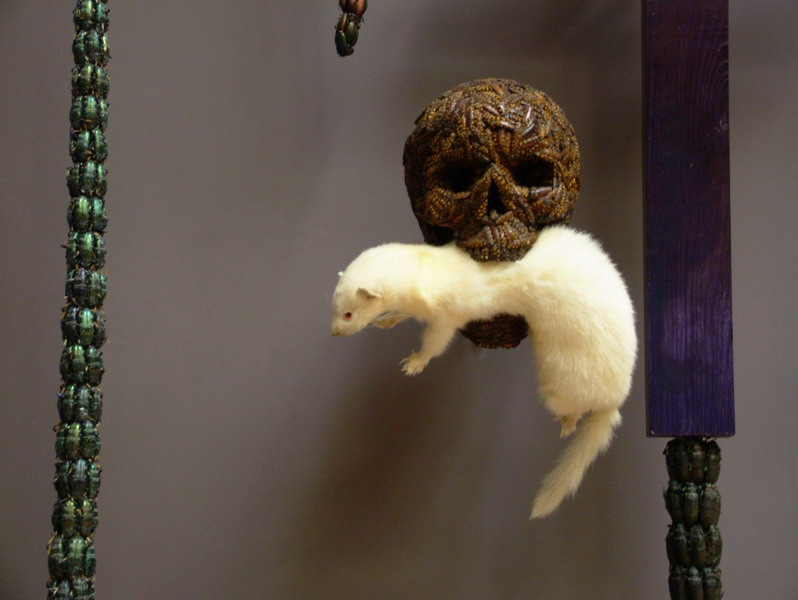
"Virgin-Maiden Warrior" is a groundbreaking object and video art work, exhibited at the Palais de Tokyo in Paris in 2004. In the center of the exhibition hall is a large glass window, inside displaying dismembered animal-patterned armor parts, like object-sculpture. Screens on each surrounding wall play the process of the artist and famous body artist Marina Abramovic performing dramatically in animal-patterned armor. The themes revolve around warrior, virgin, dedication, and forgiveness, engaging in positive dialogue with the gentle Virgin Mary and Child Jesus and the warrior angels surrounding them. Arriving in the Northern European Bright Landscape Exhibition Room, two beetle battles "Waterloo Campaign" and "Strategic Battlefield" (1998), inspired by war maps, using wax and beetles to reenact Napoleon’s famous Battle of Waterloo. On the undulating terrain of three-dimensional space, groups of beetles dramatically face-to-face battle, under humorous and poetic reference, using the past to satirize the present, or elucidating human dilemmas and existential unease. "Tomb (Skull, Sword, and Cross)" (2000), a dramatic work. The entire wall is covered with crosses. Beneath the crosses magically grow sword-shaped tails (composed of beetles). Among them, a series of skulls composed of beetles tightly bite a small white animal, an extraordinary death monument-wall tomb. This work forces a kind of contemporary arrogance, facing the inevitable battle of death in the Final Judgment. Although the cross symbolizes death, Jesus Christ promises a resurrection. The sword-shaped tail under the cross hints at an endless battle against death, revealing humanity’s complex situation facing death between death and resurrection, fear and unease, questioning and imagination. Finally arriving at another monument, "Message of Beheaded Death," this series comes from the creation dialogue with works collected by the Royal Museum of Fine Arts Antwerp in 2006. Unusual works, cleverly crafted owls (human imagery). In folk tradition, the owl symbolizes wisdom and the messenger of absurd information. This nocturnal, insatiable symbol often appears in Bosch and Bruegel’s paintings. On the other hand, the nocturnal owl symbolizes the supernatural and spiritual. Here, the owl is placed on an abnormal theme to convey the meaning of death and violence scenes. Under humor, mystery, metaphysics, and the metaphor of death, it opens an extraordinary dream world, poetically inspiring more questioning and imaginative space.