Tulip Garden—The Dutch "Keukenhof"
Colorful tulips attract flower lovers from all over the world.
Text and photos by Chen Chi-Hsiang
Preface: The Netherlands is the world’s largest flower market nation, Europe’s largest agricultural country (the kingdom of vegetables and cheese), and a famous producer of tulips. It is also the homeland of great artists Rembrandt, Van Gogh, and Mondrian. The picturesque pastoral scenery—with its numerous canals, windmills, pastures, flower fields, and greenhouses—is breathtaking. Every spring when flowers bloom, the colorful Keukenhof Garden attracts tens of thousands of visitors from around the world, who feel as if they have entered a paradise on earth, leaving them with unforgettable memories. Since 1992, Dutch growers have established another grand floral exhibition, "Floriad," in Aye (Haie). This created an even larger showcase center for floral products (covering 70 hectares), becoming another tourist destination for those who love horticulture and plants, ensuring visitors linger longingly. The picturesque Keukenhof Garden is a world-renowned "tulip" garden and the place where the most diverse bulbous plants gather; it can be said to be a unique garden. Whenever spring awakens the earth, branches flourish and colors dazzle; bathing in the spring breeze makes one intoxicated. If there is such a thing as heaven on earth, this seems to be it.
Garden Anecdotes: The picturesque garden was once a hunting forest of the Dutch royal family. In the early 15th century, Duchess Jacqueline de Bavière built her magnificent castle here as a space for hunting, farming, and leisure, planting fruits, vegetables, and herbs for the castle’s consumption. The name "Keukenhof" derives from this: "Keuken" means "kitchen," and "hof" means "garden." As the name suggests, it meant a "vegetable garden." Of course, the castle’s attached garden not only provided food but also served as a place for relaxation and entertainment. Today, the castle next to the garden was built in the 17th century.
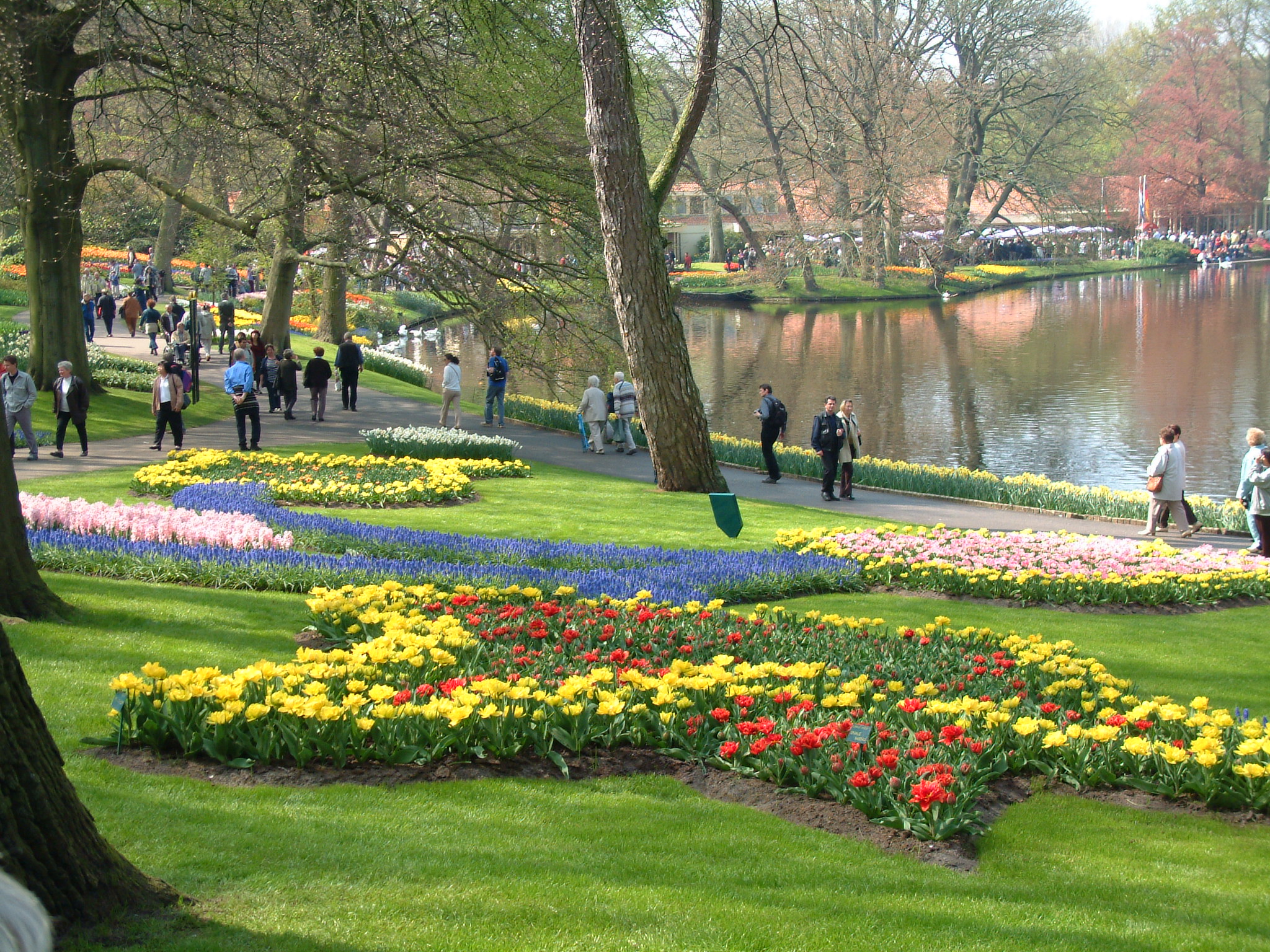
The current Keukenhof Garden was planned and constructed by German landscape architect Zocher in 1830. In the style of English landscape gardens, it features shimmering lakes, winding tree-lined paths, lush lawns, modern sculptures, fountains, small waterfalls, rivers and streams, colorful flower beds, windmills, pavilions, annexes (growers’ exhibition halls), mazes, children’s playgrounds, and a spectacular avenue of century-old trees, all surrounded by dazzling tulip fields, which are truly enchanting.
After World War II (in 1949), more than ten bulbous plant importers and major growers decided to create a park for displaying Dutch floral products (a flower show). They chose to display all bulbous plants every spring at Keukenhof. In the first year, dozens of regional grower enterprises participated in this plan; today, over a hundred enterprises participate in this annual colorful tulip exhibition. These growers are the honorary providers of "bulbous plants" at Keukenhof each spring, guaranteeing quality and displaying their best and most beautiful products. Each year, seven million bulb flowers bloom in countless colors, unimaginably beautiful, making it Europe’s (or perhaps the world’s) most glamorous, magnificent, and beautiful place in spring. Thus, Keukenhof has become the showcase window for Dutch bulbous plants, especially delicate tulips. New varieties are continuously researched and developed, presented annually in the colorful garden to share results with flower lovers.
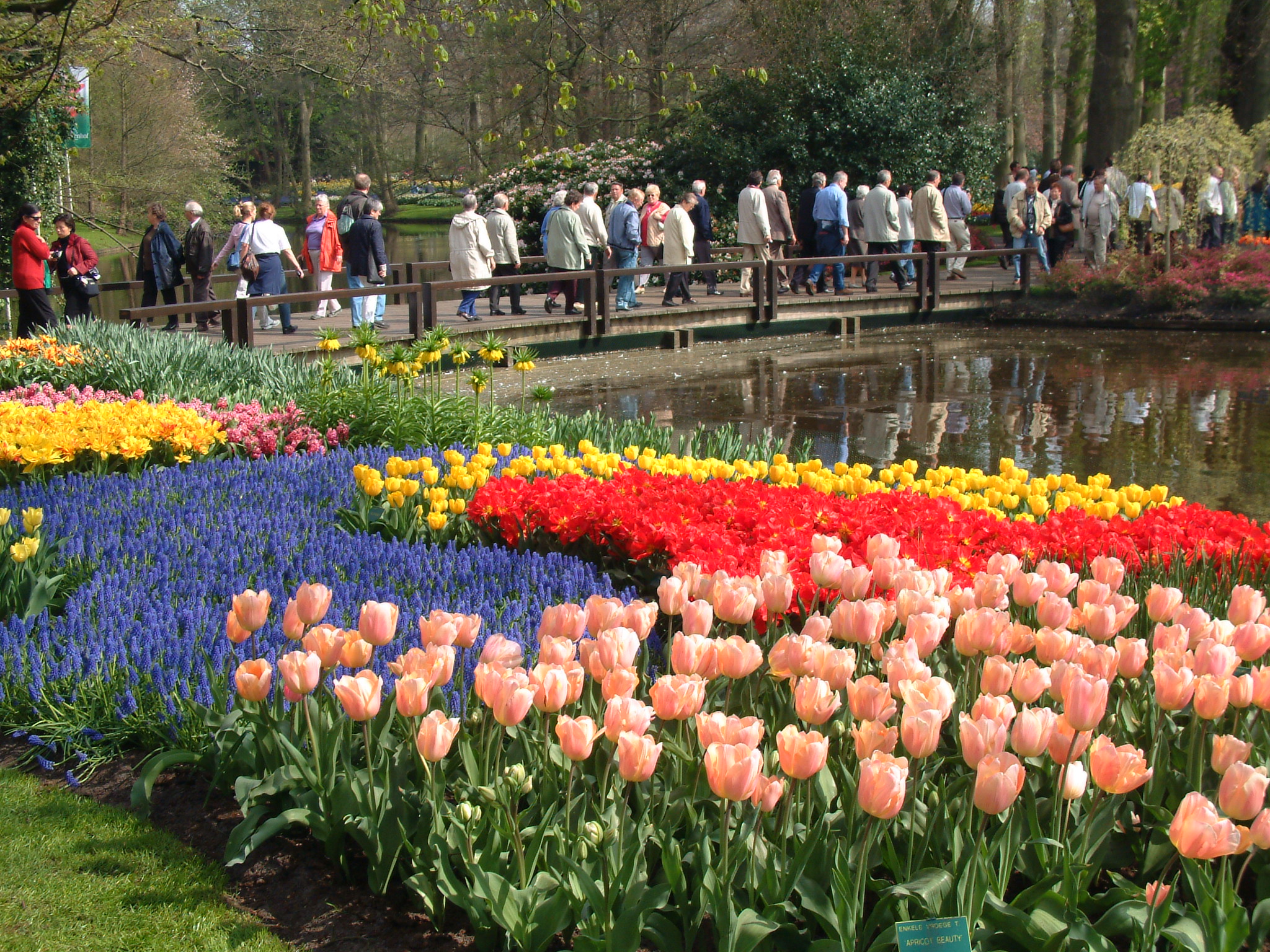
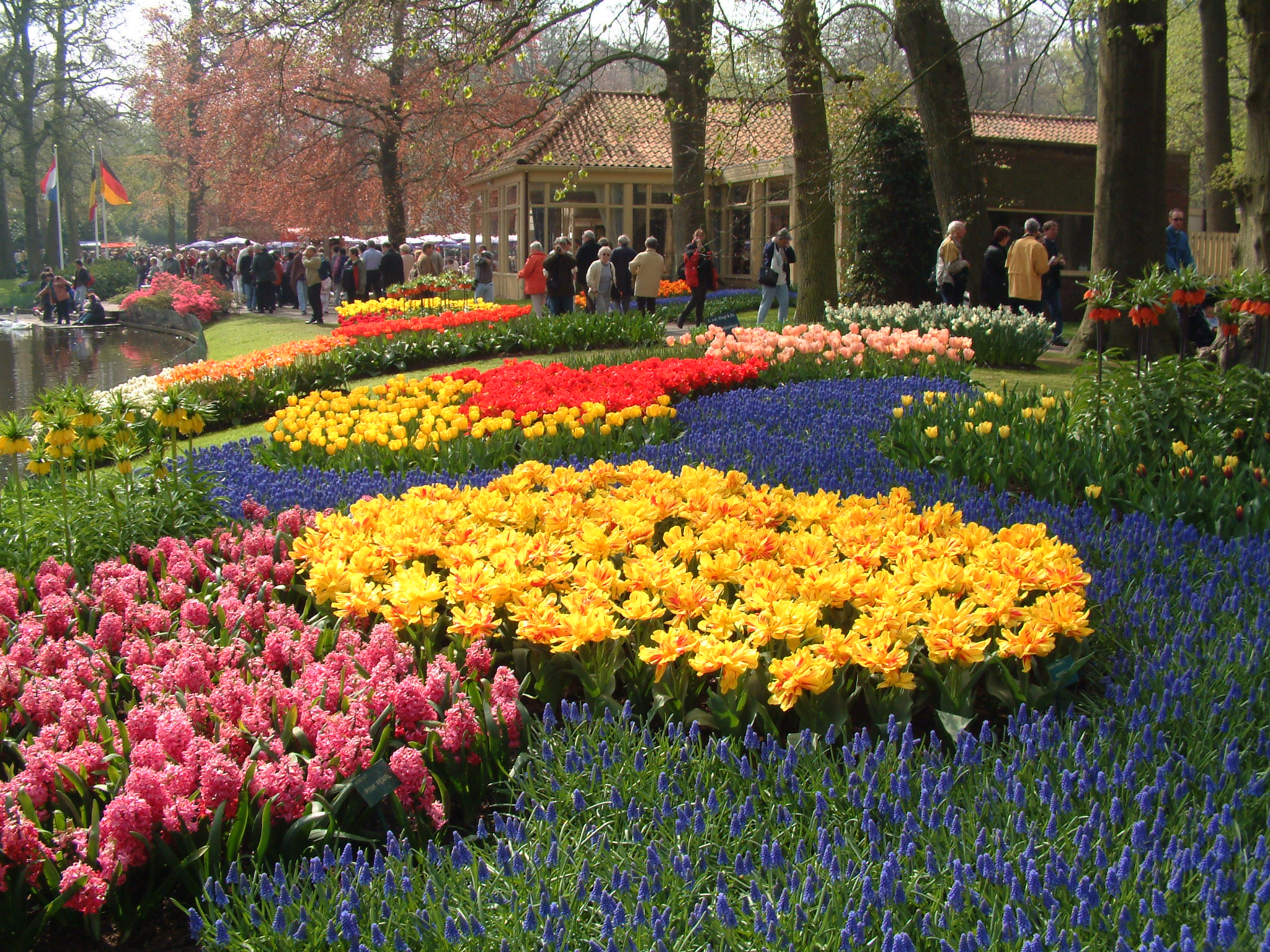
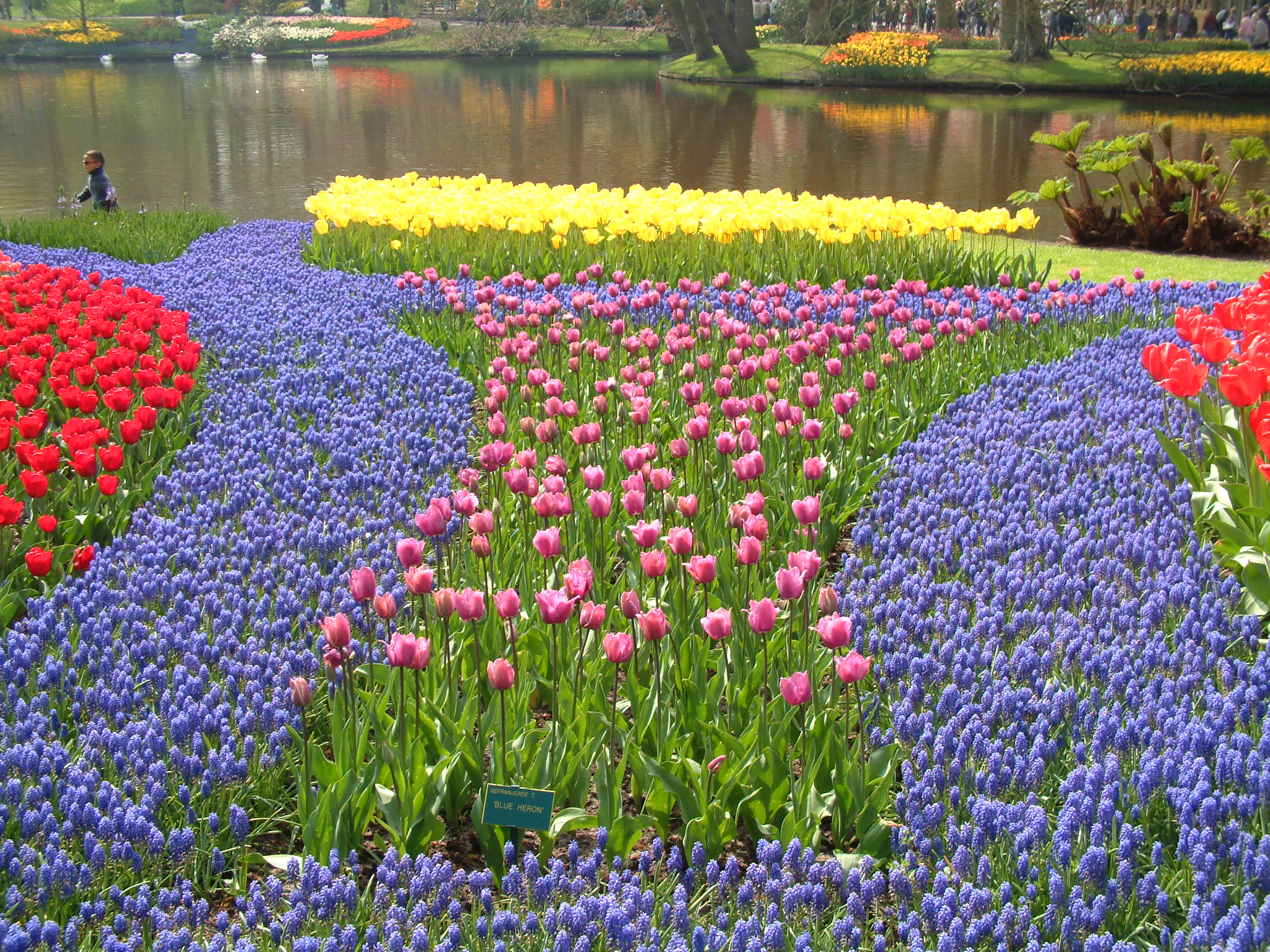
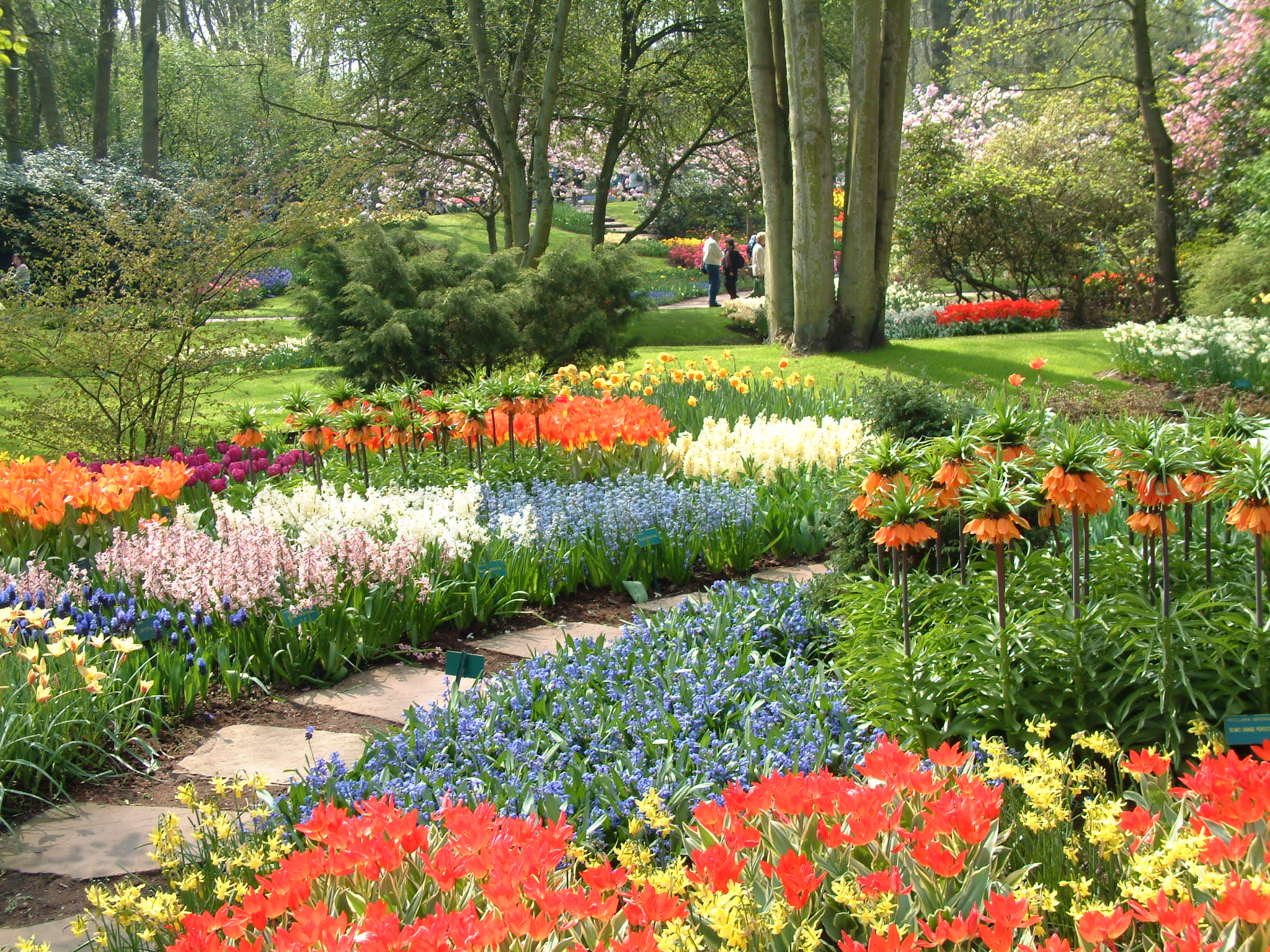
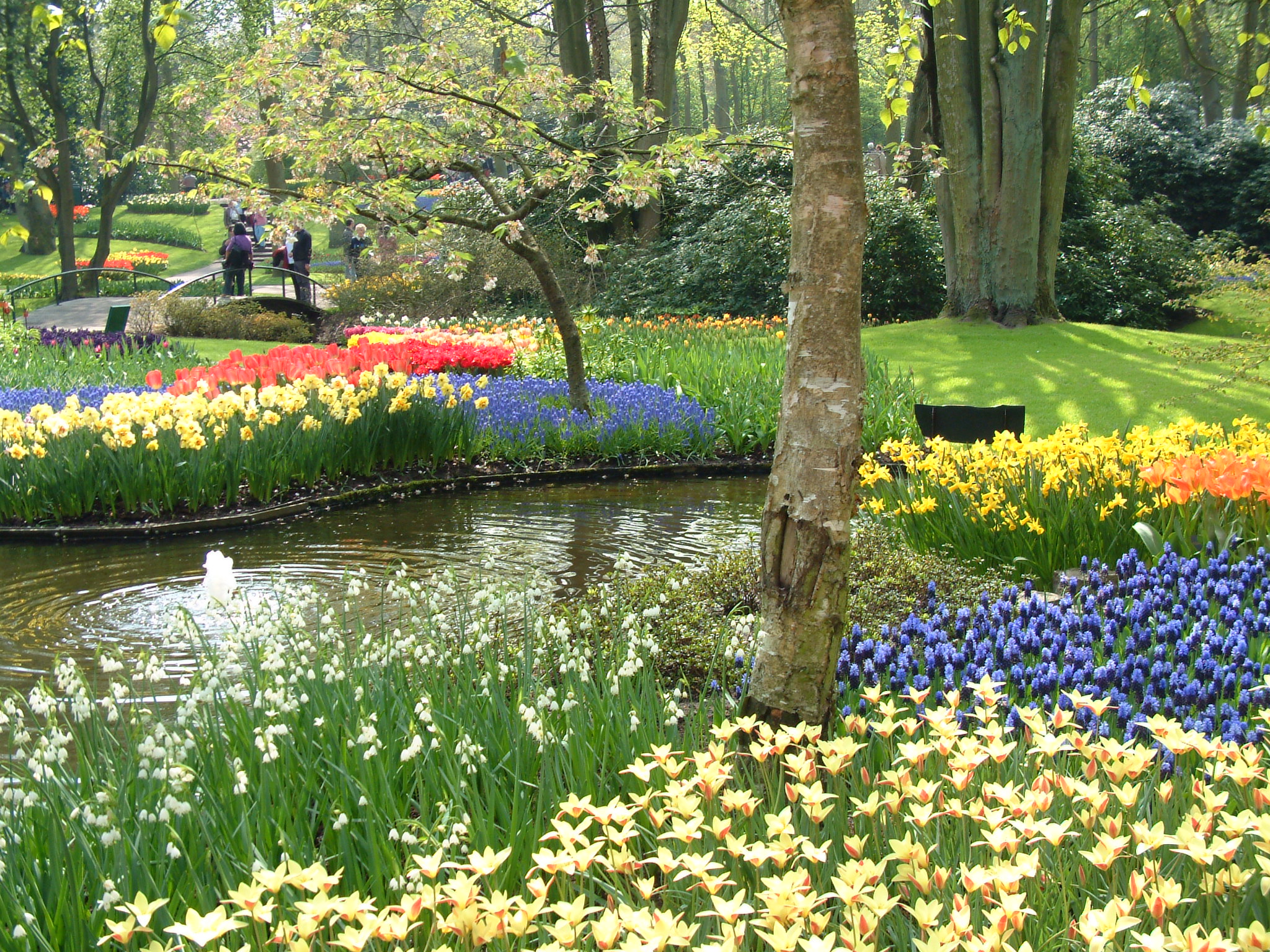
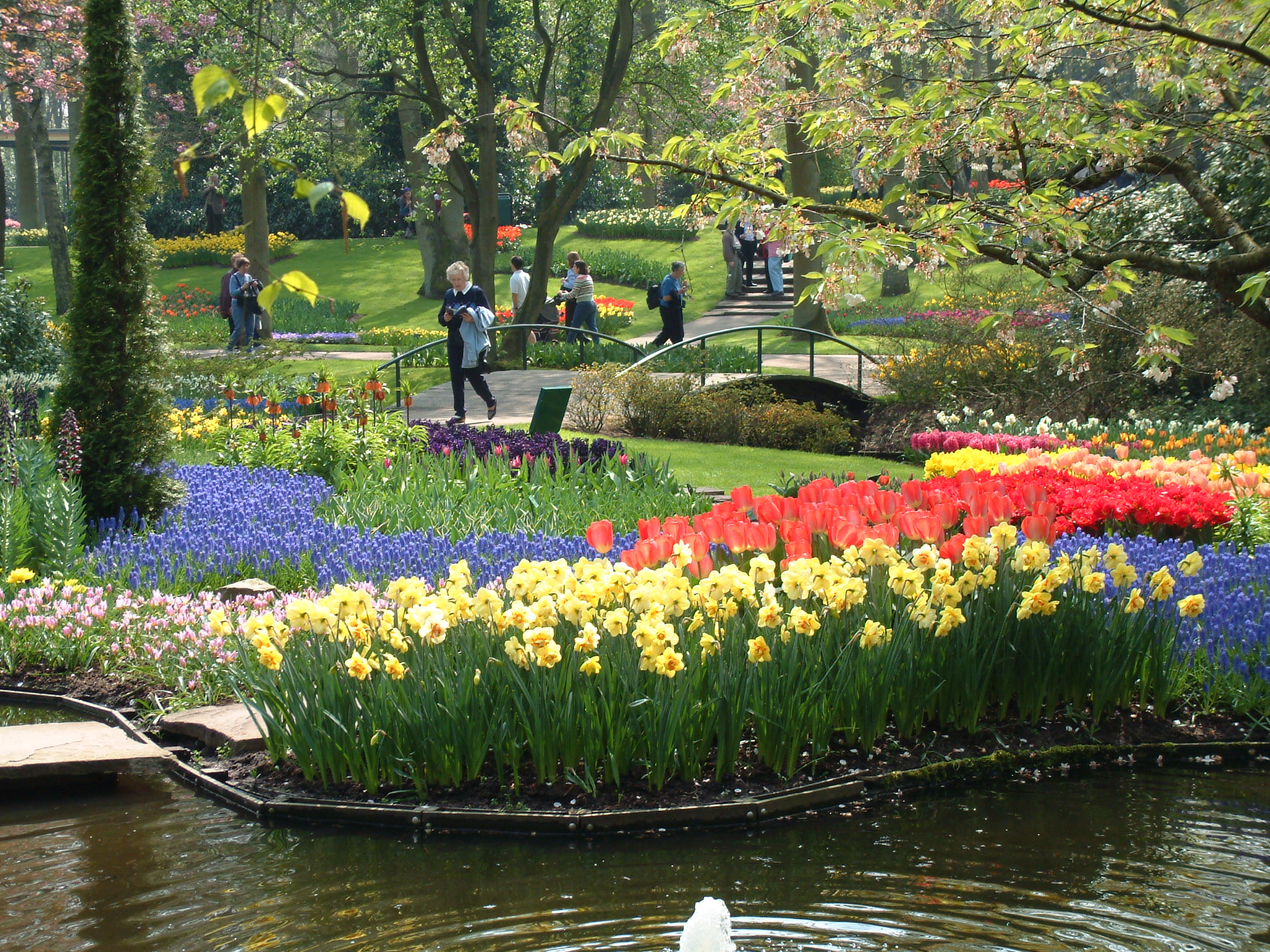
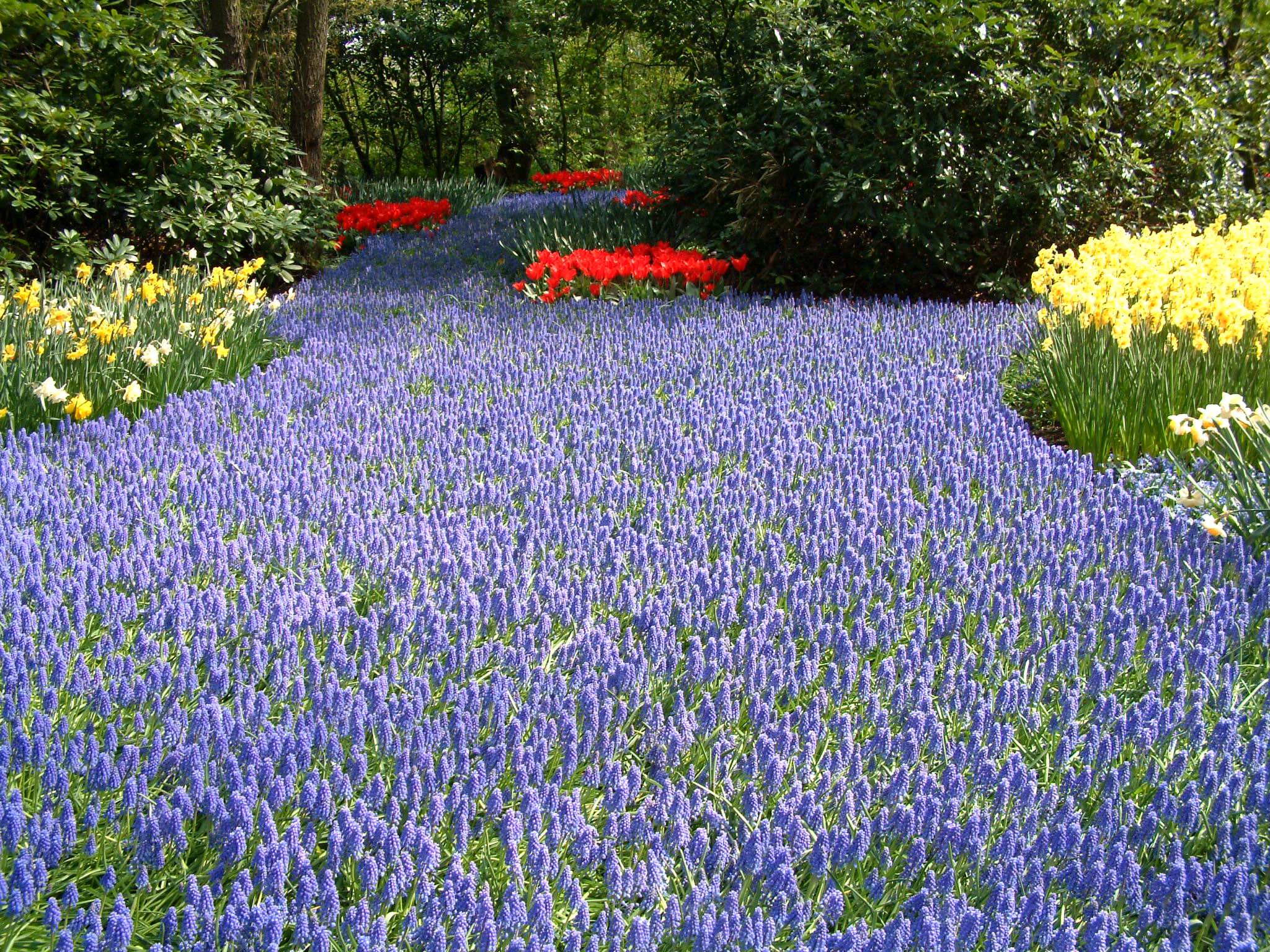
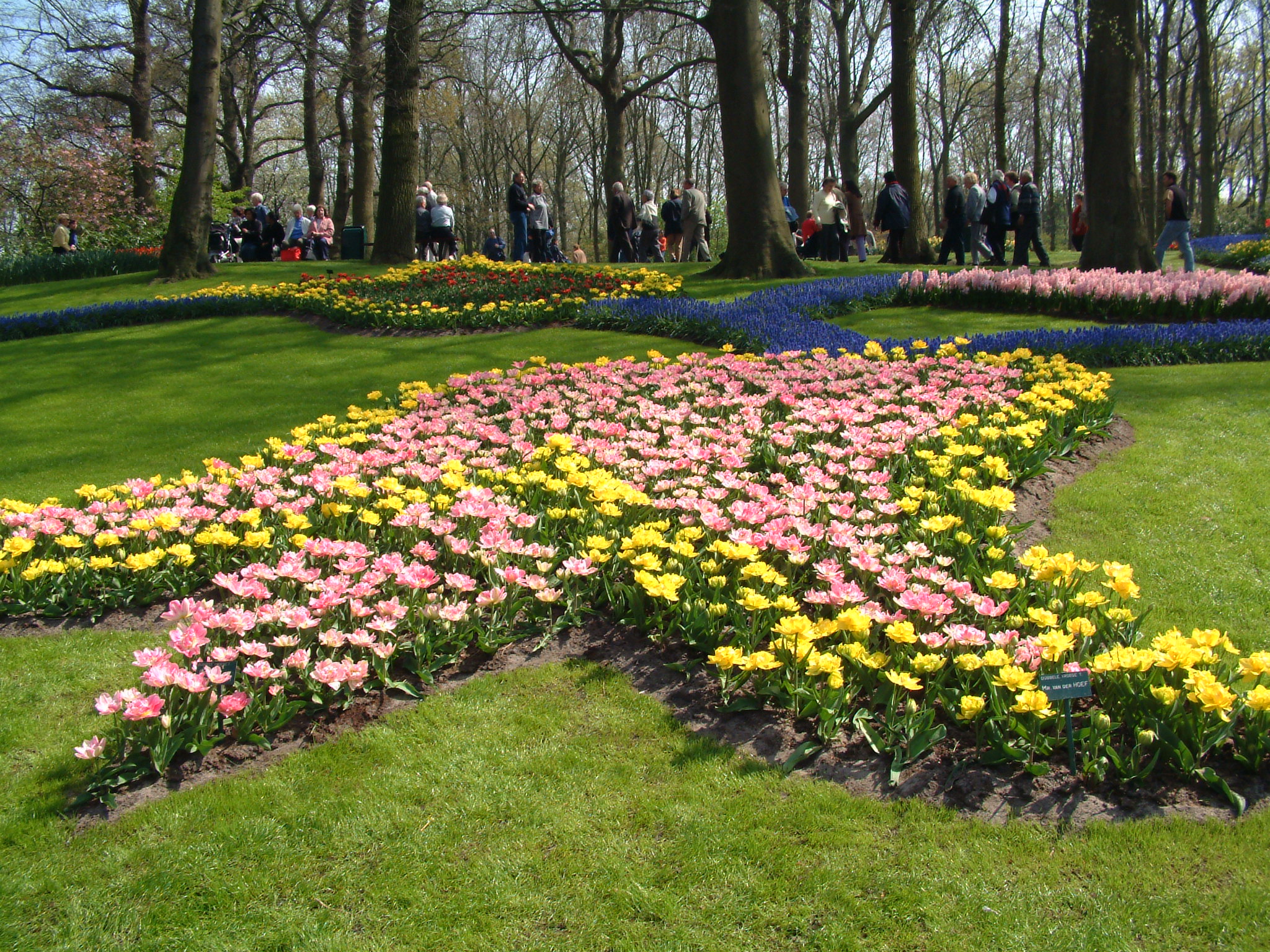
Paradise on Earth—The Garden: The entrance to the colorful garden is a sea of flowers and a shimmering lake. In this world of birdsong and floral fragrance, a dozen white swans roam freely. Small bridges flow with water, pleasing to the eye like a fairyland. If Tao Yuanming’s Peach Blossom Spring existed, this might be its realm. Peaceful and tranquil, this is the site of a 15th-century castle ruin; old walls are hidden among grass and bushes. Surrounding the lake are vast patches of flourishing, colorful flower beds arranged in geometric forms, especially variations of circles and ellipses, dominated by various tulips, along with daffodils, hyacinths, and muscari. Their brilliant bright colors (red, pink, yellow, white, deep blue, etc.) resemble emotional abstract paintings, or rather Mondrian’s palette. One becomes intoxicated. Modern sculptures dot the flower clusters, picturesque and dazzling. Here, ancient tulip varieties are planted, allowing people to rarely see series of small, vibrant wild tulips, which are quite mesmerizing.
Walking gradually into the forest, in the beech tree-lined path area (at the end of the avenue is Queen Beatrix’s annex, dedicated to exotic orchids), shrubs line the path with blooming azaleas. Series of Western cherry blossom trees bloom like a sea of flowers under which lie colorful tulips. On the lush green lawns, orderly rectangular flower beds are formed, resembling Van Gogh’s painted vibrant world, dazzling to the eyes. Until reaching typical Dutch countryside windmills (from which one can overlook the surrounding tulip landscapes), lies the thematic garden. The fragrant herb garden: Emotionally combining various herbs among colorful tulips, it is novel and engaging. The generous monochrome garden: Patches of geometric red, pink (tulips), yellow (daffodils or tulips), and deep blue (hyacinths) single tones, like monochrome pictures offering contemplation. The Renaissance garden constructed from boxwood: In rigorous, perfect forms, colorful plants are combined and composed into painted tulip patterns. The rock garden: More emotional, constructed from many small rocks, with flowing streams, dotted with poetic tulips, daffodils, hyacinths, or muscari. The modern garden: Colorful mixed-form flower beds dotted with powerful modern sculptures. Finally, arriving at a surprisingly delightful music garden, surrounded by beautifully painted flower beds and pools and small fountains, lined with comfortable chairs inviting people to rest, with automatic light music playing to relieve fatigue, truly unimaginable.
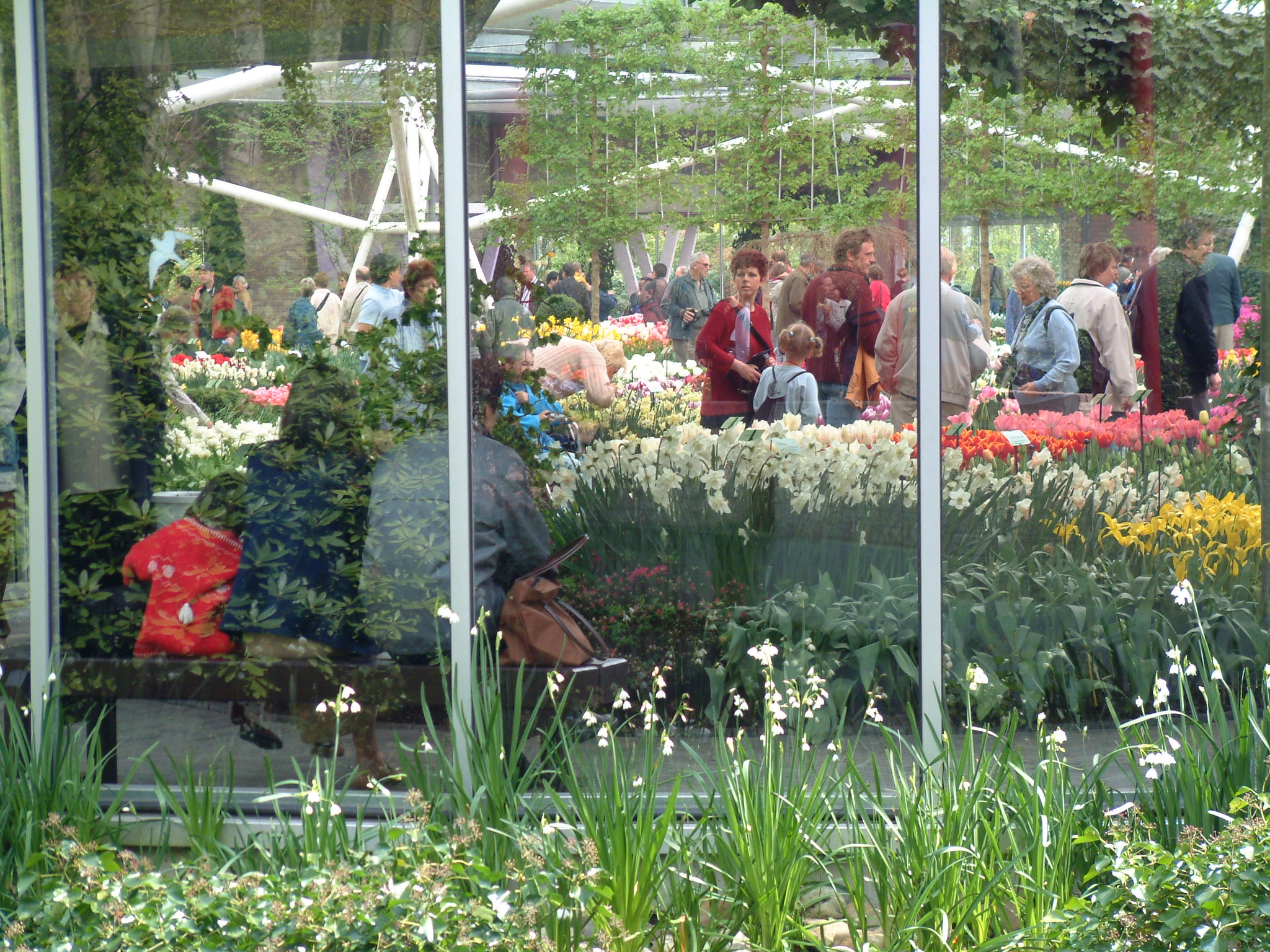
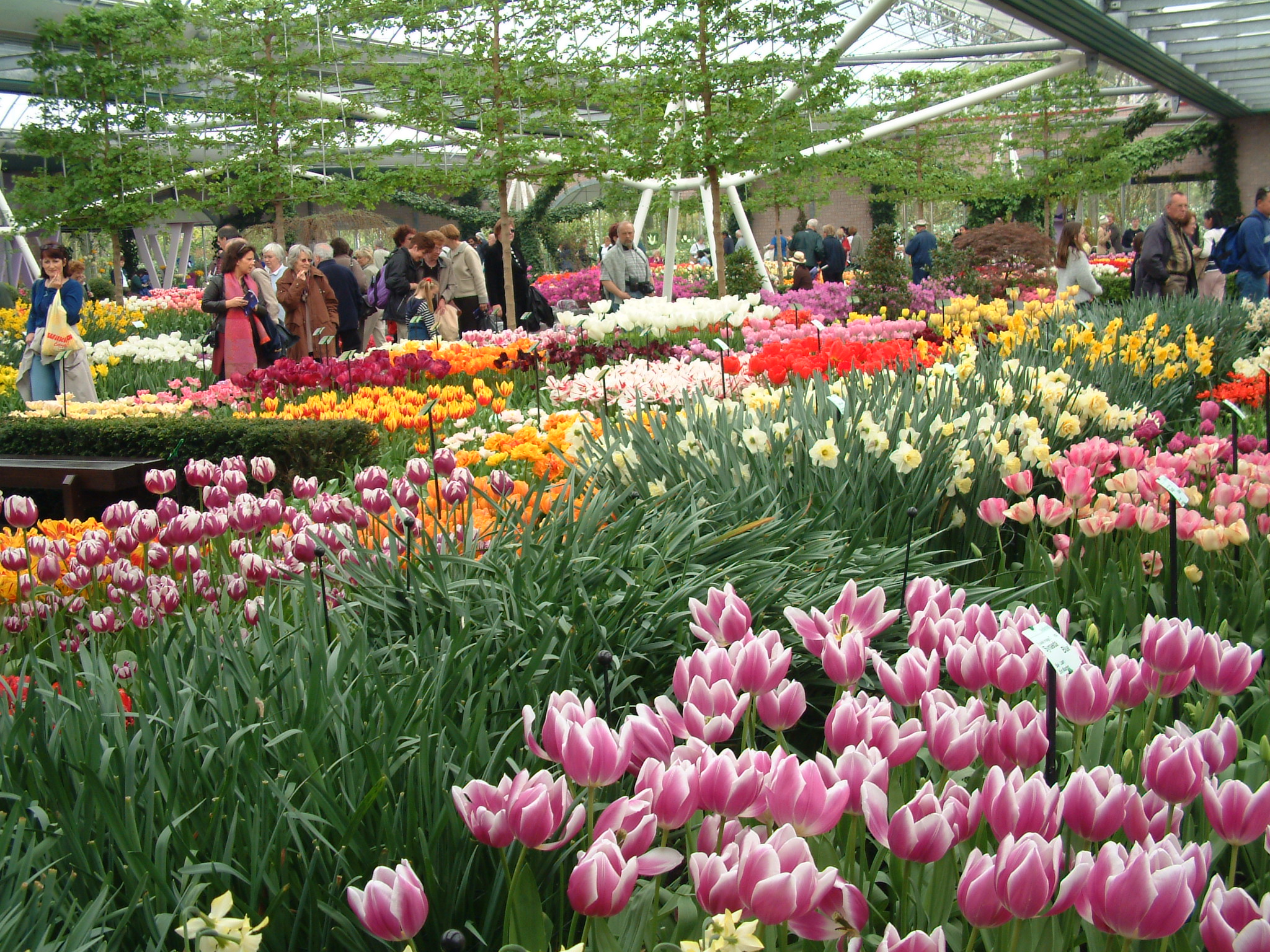
Following the winding flower paths leads to a magnificent greenhouse of Prince Willem Alexander, a large exhibition hall composed of modern glass buildings. Product exhibitions by Dutch growers are held here year-round, making it one of the important showcase windows for Dutch growers. The entire large greenhouse blooms like a vibrant sea of flowers, patch after patch, cluster after cluster. Here, people can see the most beautiful, mesmerizing, and rare tulips from all over the world (such as geometric black tulips), daffodils, swallowtail lilies, amaryllis, or hydrangeas, dazzling and breathtaking. Bathing in the radiant, colorful sea of flowers is truly intoxicating.
Stepping out of the annex, intoxicated, one falls back into the sea of modern improved tulip varieties, dazzling. In these geometric colorful flower beds, a modern building in the center serves as the garden restaurant and tulip data exhibition room. In front are series of Western cherry blossom tree-lined paths, rose green corridors, small shrubs, and numerous modern sculptures. To the left is a traditional human-sized maze; beside it is a poetic hill. From this vantage point, one can overlook the surrounding tulip landscapes. To the right is a large circular fountain. Next to the restaurant are patches of tulips and hyacinths arranged in mosaic-like patterns, radiant like painted carpets. Beside them are charming pavilions and outdoor chessboards. In the colorful radial patterned flower beds, all make visitors linger longingly.
The Story of Tulips: Mentioning delicate tulips, people immediately think of the Netherlands, which is currently the world’s largest producer and exporter of tulips and the concentration point for European flowers. The Netherlands has adopted tulips for over four hundred years. Their original habitats are Iran, Turkey, Turkestan in Central Asia, or the Caucasus and Himalayas at altitudes of 3,500 meters, where wild tulips can be seen. Even during the reign of the Sultan of the Turkish Empire and the Ottoman Dynasty, appreciation for this flower existed. Turkish tulips are a type of flower with pointed, delicate petals, dignified and proud in form. This flower’s symbolism for the Turkish Empire is akin to the "swallowtail" emblem of the French royal family.
Tulips were introduced to Europe in the 16th century via Ferdinand I of Austria’s diplomat. When diplomat Ghislain de Busbecq went to Turkey to negotiate peace, he discovered tulips in Turkish gardens and brought back bulbous roots. It is said that tulips first bloomed on European soil in 1559 in Augsburg, Austria. Then, Charles de Lécluse, the botanist and head gardener of the Vienna royal family, took them to the Netherlands when he left his post, planting them in his garden.
Soon, a craze for "tulips" spread rapidly in the Netherlands. Charles de Lécluse, trying to deter growing numbers of enthusiasts, raised prices. Unexpectedly, one night, a flower-loving thief entered the garden and stole his most beautiful tulips and bulbs, leading to product leakage. The thief successfully bred the products and sold them to other flower lovers. Tulips slowly spread, and the discovery of colorful varieties through viral diseases sparked obsession, quickly becoming sought-after items among Dutch nobility and the middle class, reaching an intoxicated craze. Wealthy enthusiasts did not spare high prices to collect rare "parrot" tulips. Some merchants began speculating on this flower; a few bulbs were worth fortunes, madness reaching its peak. Sellers and buyers alike did not know who was manipulating the market. This speculation ended dramatically on one day in 1637, when a speculative wholesaler flooded the market with large quantities of bulbs. Like a stock market crash, everyone went bankrupt the next day, ending the crazy story of Dutch tulips.
The Netherlands became the research and development center for bulbous plants worldwide. Early cultivated Turkish tulips were developed and improved into round-petaled forms, then later into delicate six-petaled forms. This colorful flower immediately attracted neighboring countries, spreading throughout Europe. Today, the most famous cultivation of bulbous plants in the Netherlands is in Lisse. Centered there, especially between Haarlem and Leiden, there are a total of 160,000 hectares of tulip fields, making it the world’s primary tulip product nation. (Note 1)
(Note: The Tulip Garden—Dutch "Keukenhof" Garden opens annually from March 21 to May 18, receiving about 15,000 visitors per day. One can imagine how attractive this paradise-like beauty is.) www.keukenhof.nt
Note 1: Reference Le Guide des Maitres Jardiniers, pp. 120–121, published by Bordas Press, Paris, 1993, authored by Dany Lentin.