Gardens of the Palace of Versailles
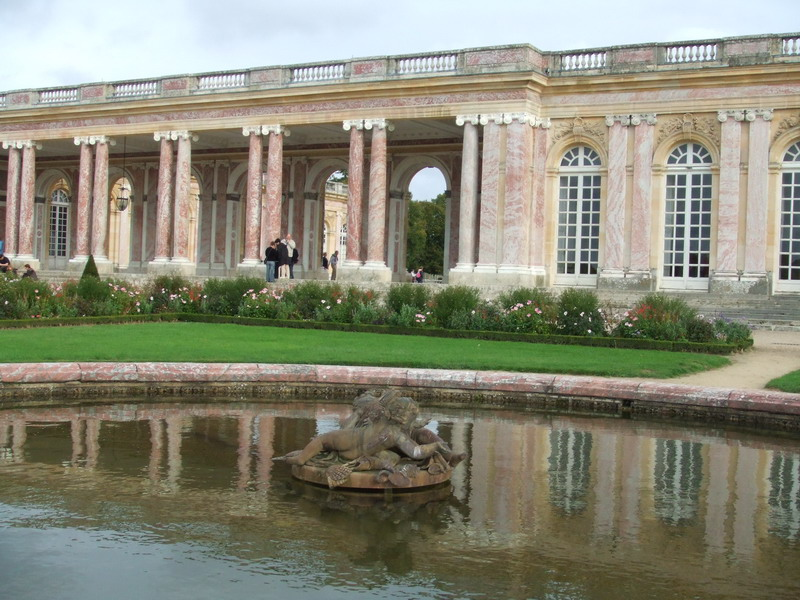
The magnificent Grand Trianon marble palace was Louis XIV's personal small retreat.
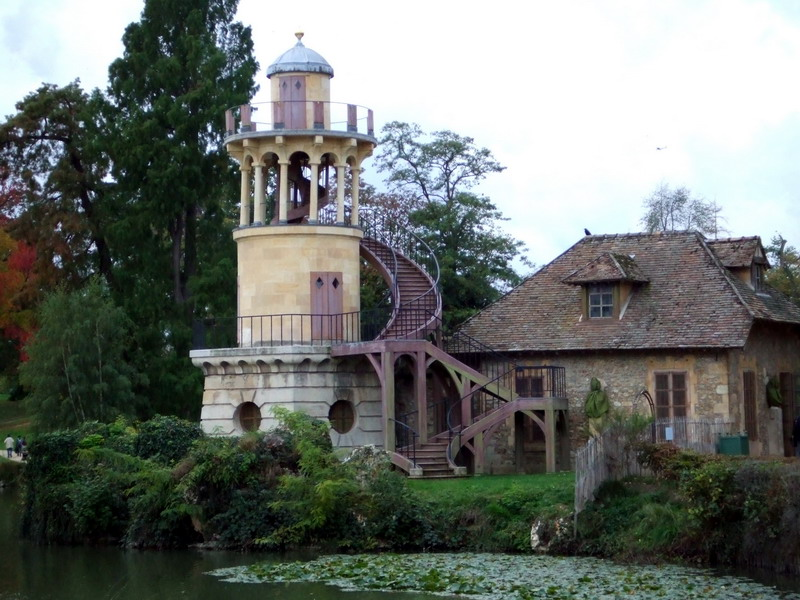
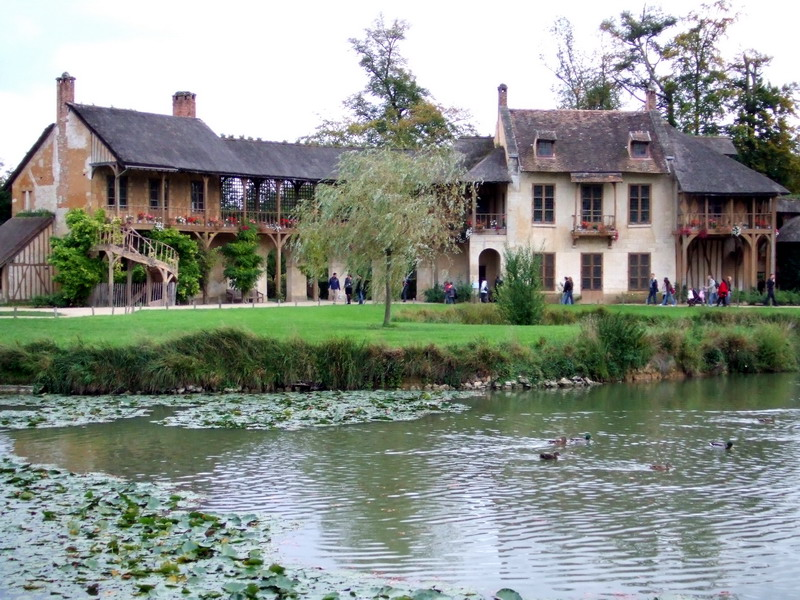
The Queen’s beloved quiet rural farmhouse is situated within a scene of lake light and shadows. The Gardens of Versailles are typical French gardens, completed by landscape architect Le Nôtre between 1661 and 1668. Their main inspiration came from Italian Baroque gardens, featuring flower beds, woods, lawns, ponds, statues, fountains, and waterfalls. Before the French Revolution, this poetic garden covered 8,000 hectares; today only 815 hectares remain, with over 300 statues (marble and bronze), making it arguably the world’s largest outdoor sculpture garden. During summer vacations, every afternoon (except Sundays) from 15:30 to 17:00, over 300 fountains dance to symphonic music, creating a magnificent and captivating spectacle.
Two large reflecting pools (Parterre d’Eau): These two rectangular octagonal basins resemble giant mirrors, reflecting the Hall of Mirrors. On the marble frames, exquisite classical statues are adorned, including four groups of children, four reclining male figures symbolizing France’s four great rivers, and four elegant female figures symbolizing smaller rivers.
Orangerie: Located south of the reflecting pools, the Orangerie grew exotic fruits favored by the Sun King (oranges, lemons, pomegranates, and other subtropical fruits), which were considered rare treasures at the time.
La Fontaine de Latone: This fountain full of mythological allegory depicts the beautiful young mother Latona protecting her two lovely children. Apollo and his sister Diana (standing at the top) were insulted by farmers. Jupiter, king of the gods, descended to avenge them, turning these farmers into frogs and lizards that spray water around the central statue. These splendid sculptures are the masterpieces of sculptors Marsy brothers.
La Colonnade: This colonnade, rich in musical forms, resembles an ancient Roman circular colonnade. It consists of a vaulted structure made of 64 painted marble columns (32 round in front, 32 square at the back), decorated with symmetrical small vases. The colonnade is 32 meters long, and beneath these arches are 28 white marble shallow fountains. This was also where Louis XIV dined outdoors and listened to concerts.
La Bassin D’Apollon: This is the most spectacular fountain in the Gardens of Versailles. When spraying, the water column reaches 19 meters high in the 10-meter diameter pool, creating a dramatic and impressive play of light and water.
La Grand Canal: Behind the Apollo Fountain lies an endless Grand Canal. Legend has it that it took ten years to dig during Louis XIV’s reign, completing a 23-hectare canal nearly 2 kilometers long. The royal family once boated and played in the water here. If interested, we can rent boats to experience the royal pleasures of the past.
When visiting the Apollo Fountain, we can bypass the railing on the right to rent bicycles or take small trains or carriages. However, walking through the Gardens of Versailles is most pleasant, as we can visit every corner, places inaccessible by bicycle, train, or carriage. From here, it takes only 10 minutes to walk to the Grand Trianon, 15 minutes to the Petit Trianon, and 30 minutes to the Queen’s Hamlet.
A paradise-like Trianon: Behind the Baroque-style gardens of Versailles, hidden in a green wooded area are two smaller museums—the Grand and Petit Trianon Museums. Opening hours: 10:00–12:30 (visit time approx. 1 hour).
Grand Trianon (La Grand Trianon): This magnificent marble palace was Louis XIV’s personal small retreat, where he occasionally retired to the green courtyard to create a leisurely living space. Built in 1688 by the famous architect Mansart, the Grand Trianon is also called the Marble Trianon because its entire exterior is constructed of pink and white marble. The front features a double-columned corridor connecting the north and south wings, with the King’s apartments on the left side of the columns. The museum currently exhibits relics from the First French Empire, the Restoration period, and the July Monarchy (1830–1848).
Visits begin in the south wing exhibition room. Under the reflection of mirrors, a maze is formed; this was the Sun King’s large office, later becoming the meeting room for Louis XV, Louis XVI, Napoleon, and Louis Philippe. Entering the suite from the maze, this was the royal suite before Louis XIV, and during the French Empire, it became the suite for Empress Marie Louise (Napoleon’s second wife).
Crossing the marble colonnade, we arrive at the north wing exhibition room. Facing us is a circular salon with exquisite floors patterned in stars using black and white marble. The official salon was formerly the Sun King’s music hall, now displaying exquisite Neoclassical furniture. Next is the large salon, which served as Napoleon’s official salon during the Empire and as a gathering place for the Louis Philippe family during the Restoration.
Le Pavillon du Jardin France: To escape the pressure of court life, Louis XV often enjoyed the French Garden of Versailles, developing a strong interest in flowers and plants. In 1750, he commissioned architect Gabriel to build a white building in the French Park as his summer residence. It is a typical Rococo style, elegantly decorated, containing several rooms, a large summer hall, and a small dining room.
Petite Trianon: Commissioned by Louis XV in 1762 and completed in 1768, the Petite Trianon is a simple and dignified building. Its harmonious landscape, composed of ancient Greek columns and regular railings, blends into the garden, full of poetic charm. During Louis XVI’s reign, he gave this pastoral retreat to his beloved young Queen Marie Antoinette, who transformed the botanical garden left by Louis XV into an English garden, living a pastoral domestic life there.
Le Temple de l’Amour: Located next to the Petite Trianon in the lush English garden, this temple was built by architect Mique in 1778. Supported by 12 ancient Greek marble columns, it holds a pavilion decorated with coffered ceilings. At the center stands a statue of Cupid holding a bow and arrow.
Le Hameau du la Reine: The Queen’s Hamlet is located on the other side of the English garden, also built by architect Mique in 1783. Centered around Marie Antoinette’s residence, it connects two buildings. The ground floor of the right building contains a restaurant and a playroom; the upper floor has an elegant banquet hall, a small salon, and a study. The ground floor of the left building has a billiard room; the upper floor has a quiet small hall. By the pond on the right stands a watermill. Here, in this picturesque rural setting, the Queen escaped the noise and extravagance of the palace to live a pastoral life.