The King's Garden in England: The Gardens of Hever Castle
Hever Castle Gardens, the castle of King Henry VIII
Text and photos by Chen Chi-Hsiang
Preface: Mentioning English gardens immediately evokes poetic, picturesque natural landscapes. Especially in Western horticultural history, the most representative English gardens are Stowe and Stourhead, with their bewitching, beautiful natural scenery. Besides these, there are numerous magnificent classical, modern, and contemporary gardens that leave visitors lingering. Britain is a country where gardening is highly popular and developed; naturally, horticulture not only beautifies living environments but also represents a civilized display of overall social quality. Therefore, lush green public parks and green spaces are quite common. All historic castles and monuments are landscaped to be pleasing to the eye, and even schools are so verdant they resemble parks (such as the world-famous University of Cambridge). It seems every household possesses a space, large or small, for contemplation: a garden.
Hever Castle Gardens are located southeast of London (45 km from the capital), situated in Kent, an area known for its lush, beautiful scenery and quintessential British countryside landscape, resembling a bright natural theater. This region has many sturdy medieval defensive castles (such as the most famous Leeds Castle or Hever Castle, both belonging to King Henry VIII), grand cathedrals, abbeys, traditional museums, art galleries, innovative farms, and typical Norman houses with white walls and black stripes. Every household has brilliant private gardens or flower-adorned doors and windows competing in beauty. Besides the classical gardens of Leeds Castle and Hever Castle, there are several idyllic English landscape parks: Mount Ephraim Garden, Beech Court Garden, and Goodnestone Park; Sissinghurst Garden, a famous modern garden full of poetry and pictures; and Downderry Nursery, a contemporary garden full of imagination. Kent is also a major producer of beer and wine.
The Story of Hever Castle and Its Brilliant Gardens: The magnificent and sturdy Hever Castle and its gardens were built by King Henry VIII of England in the mid-13th century for his beloved second wife, Anne Boleyn, but soon became the residence of his fourth wife, Anne de Cléves. Today, the spacious castle serves as a historical memorial museum for Henry VIII and his beloved wives, surrounded by a square moat. It displays medieval artifacts and the living spaces of kings and queens, exquisite medieval furniture, tapestries, and artistic objects, as well as a series of wax figures depicting scenes from Henry VIII’s court or intimate life with his noble wives. These are dramatic and bring to life the historical stories of medieval royalty.
The verdant and bright Hever Castle Gardens are one of the most exquisite in English gardens. The innovative garden features a poetic Renaissance garden as its main body, which also includes a lush topiary garden, a brilliant and delicate rose garden, a medieval garden (including a traditional maze), and a creative "sprinkler" modern maze.
The Magnificent Tradition of Topiary: Topiary is like sculpture, shaped by pruning. It has a long history in Western horticulture, with records dating back to Roman times. For example, the writer Cicero wrote: "Let plants climb harmoniously and perfectly on columns, and specially prune shrubs into various shapes..." Historical research suggests this work was reserved for slaves, and the technique may have been introduced to Rome from Greek slaves. Pliny the Elder wrote: "Topiary occupies an important position in the daily decorative life of Romans. People love to prune trees into various forms, often figurative or fantastical. The selected plants are evergreen and flexible shrubs, easier to prune and manipulate, mainly boxwood, yew, and cypress, of course also ivy and myrtle, pruned by large shears into spheres, cones, obelisks, animals, human figures, or scenes of battle and hunting..." (Note 1)
Topiary seemed to disappear during the Middle Ages and was revived during the Italian Renaissance, particularly when drawing inspiration from ancient Greek and Roman literature to design villa gardens in Florence. People presented small boxwoods as geometric flower beds, brilliant patterns, and hedges, binding fruit trees, weaving cedar, cypress, orange tree, olive tree, and lemon tree branches... In 1499, Francesco Colonna depicted an ideal garden in his book Hypnerotomachia Poliphili: "One also saw an expressive boxwood, round or square, orderly among long pods and flowers." (Note 2)
In strict French gardens, inheriting Renaissance traditions, this horticulture was fully exploited, especially small boxwood patterned flower beds, inlays between flowers and plants, shrubs in geometric forms, flat hedges, geometric avenues, etc., all flawless. It also holds weight in English gardens, where they turned topiary into a unique horticultural display, especially in Chatsworth Garden or here at Hever Garden, which are excellent examples.
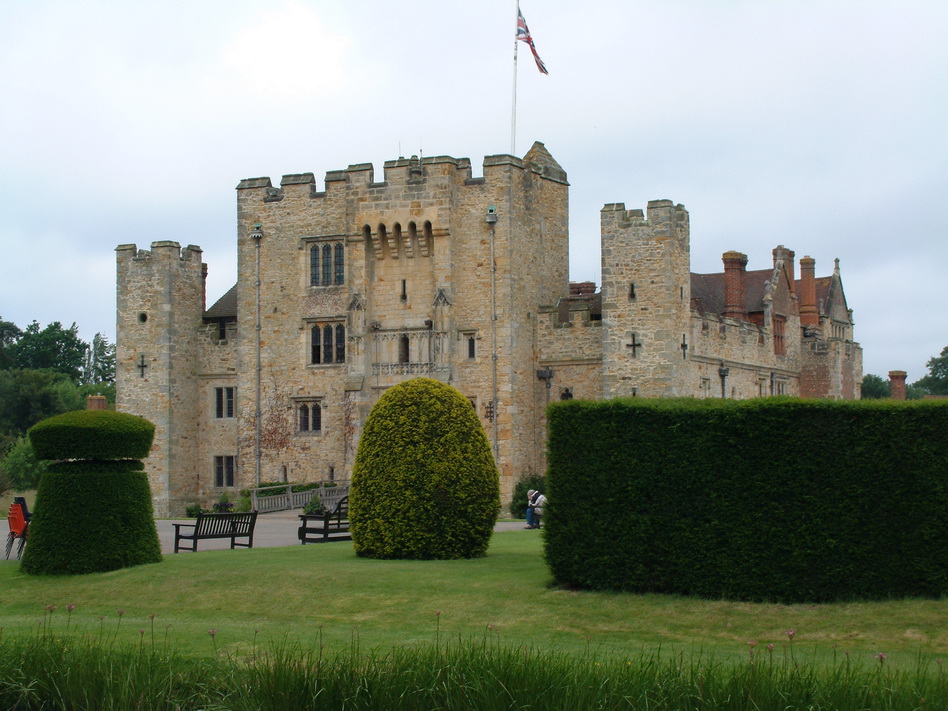
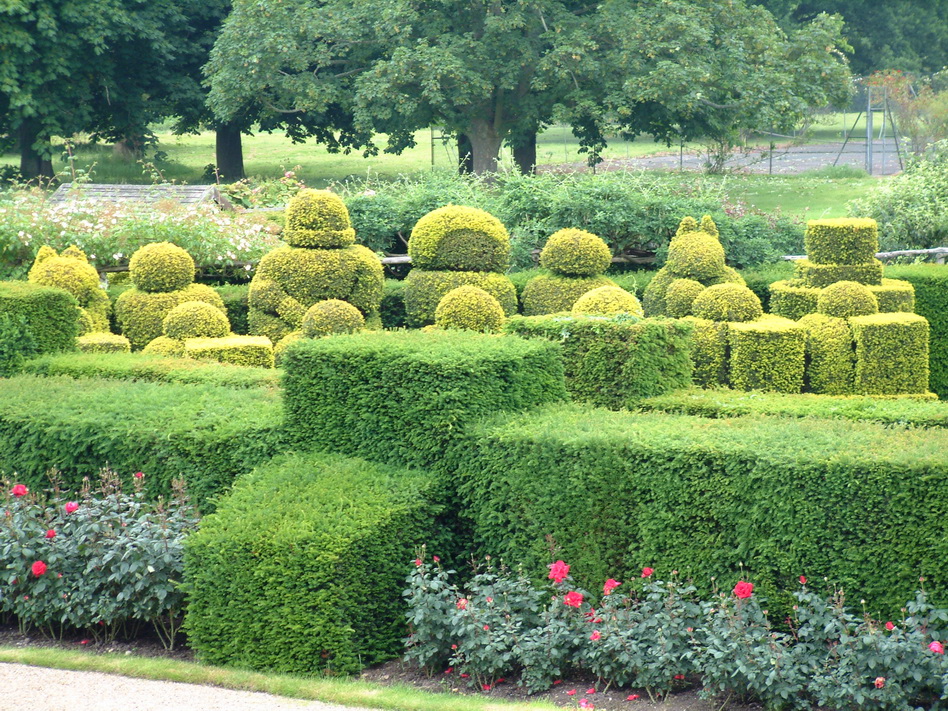
The Magnificent Topiary Garden: Crossing the moat, an innovative natural theater unfolds before our eyes, with a magnificent medieval castle as the backdrop. Lush green, high and low, rhythmic geometric forms composed of neatly trimmed squares, circles, and ellipses combine to resemble Western chess pieces, distributed on verdant lawns, like outdoor evergreen natural carvings, forming a chessboard confrontation scene. Excellent and exquisite craftsmanship, powerful shapes, imaginative forms, some quite abstract, others vividly metaphorical and figurative like birds, insects, or spirals, poetic and full of vitality, displaying an innovative volume and form.
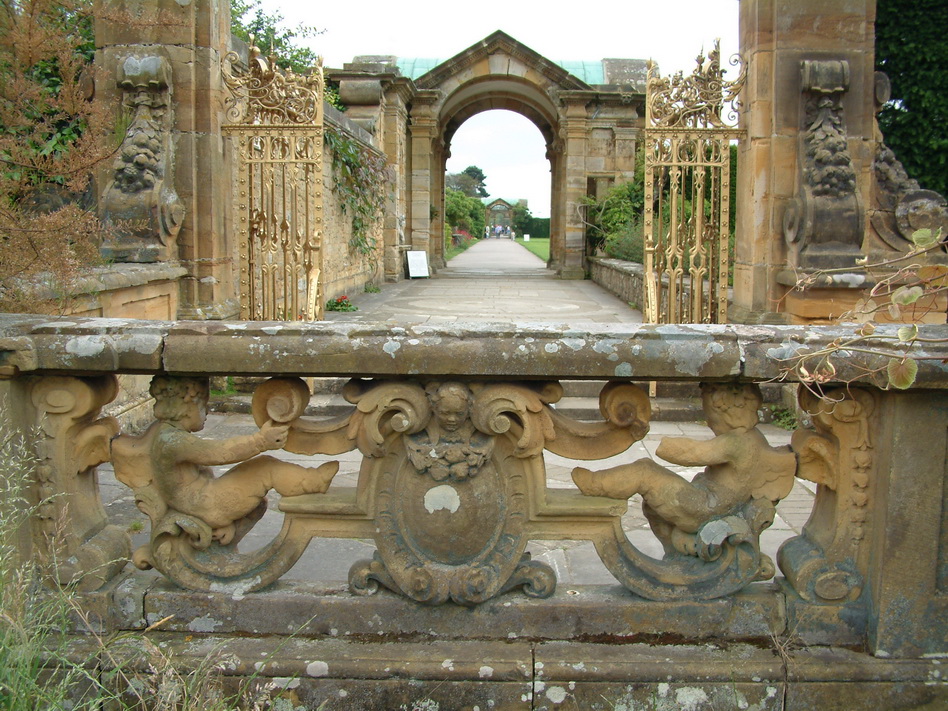
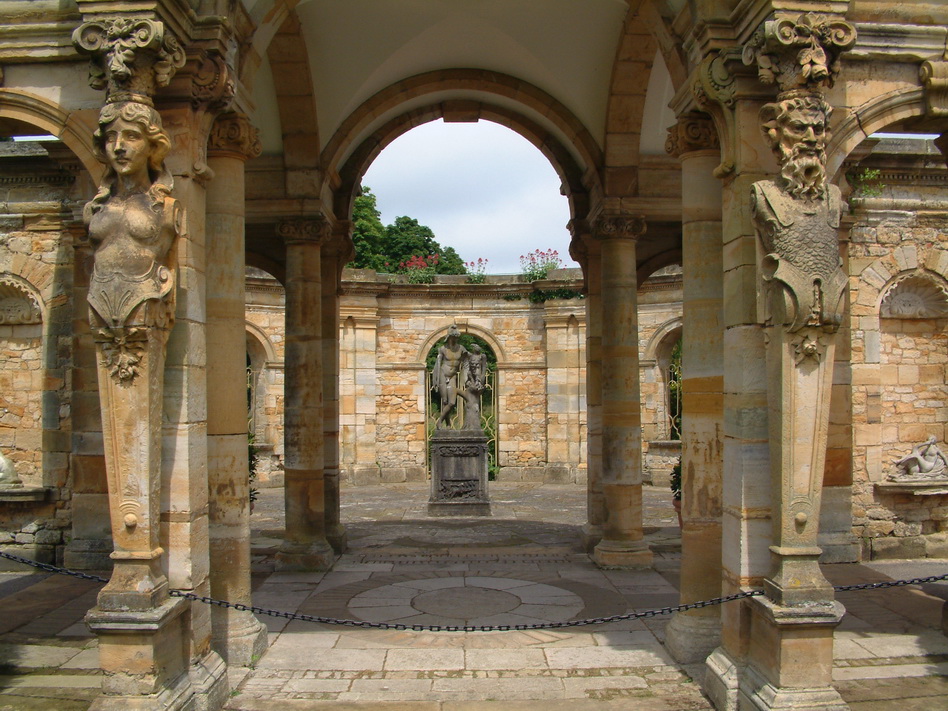
The Exquisite Italian Renaissance Garden: This exquisite and perfect Italian garden is currently the most typical Renaissance garden in Britain. Outside the moat, within perfect natural architecture, surrounded by ancient city walls, lies a semicircular water feature reflecting Venus. Entering through the magnificent colonnade doorway, one immediately feels a humanistic atmosphere. Strictly symmetrical architectural colonnades feature pairs of ancient Etruscan figure statues. In the arched space (on the left), a carved large flowerpot decorates the area; on the right stands an Apollo statue. Niche cages contain allegorical statues. Stretching along the old city wall are patches of lush greenery, flourishing and colorful mixed flower beds. Each exquisite scene is equipped with symbolic and allegorical classical artifacts and statues: ancient Greek and Roman stone columns, spiral columns, reliefs, Etruscan flowerpots, jugs, stone wells, stone lion tables, of course also Neptune, satyrs (half-human, half-beast), Bacchus holding a cup, Diana statues... etc., too beautiful to mention, excellently interpreting the ideals of humanism, like an ancient artifact museum.
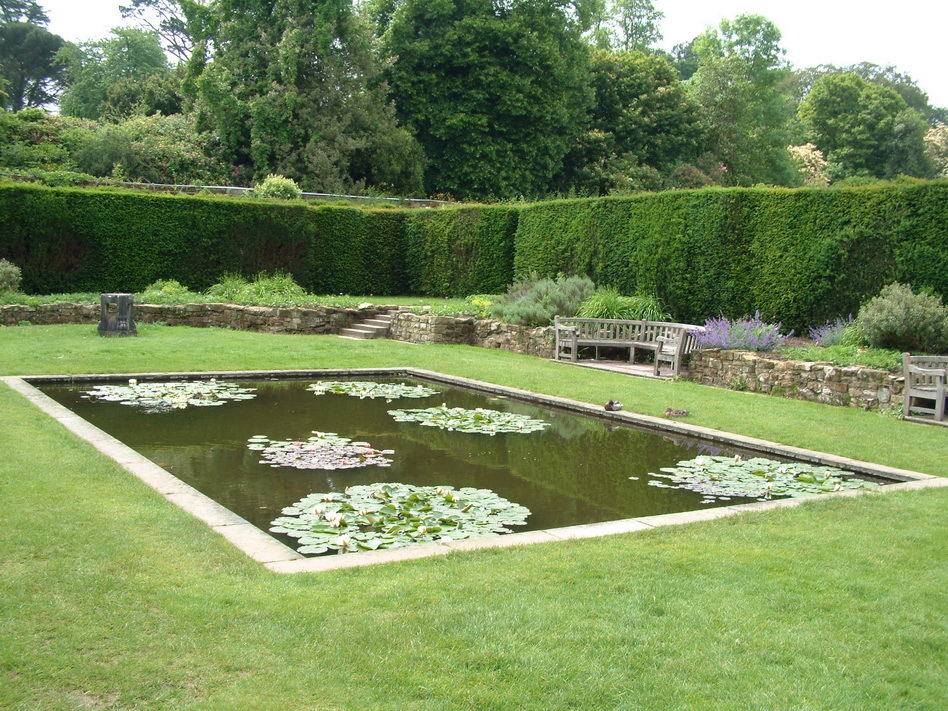
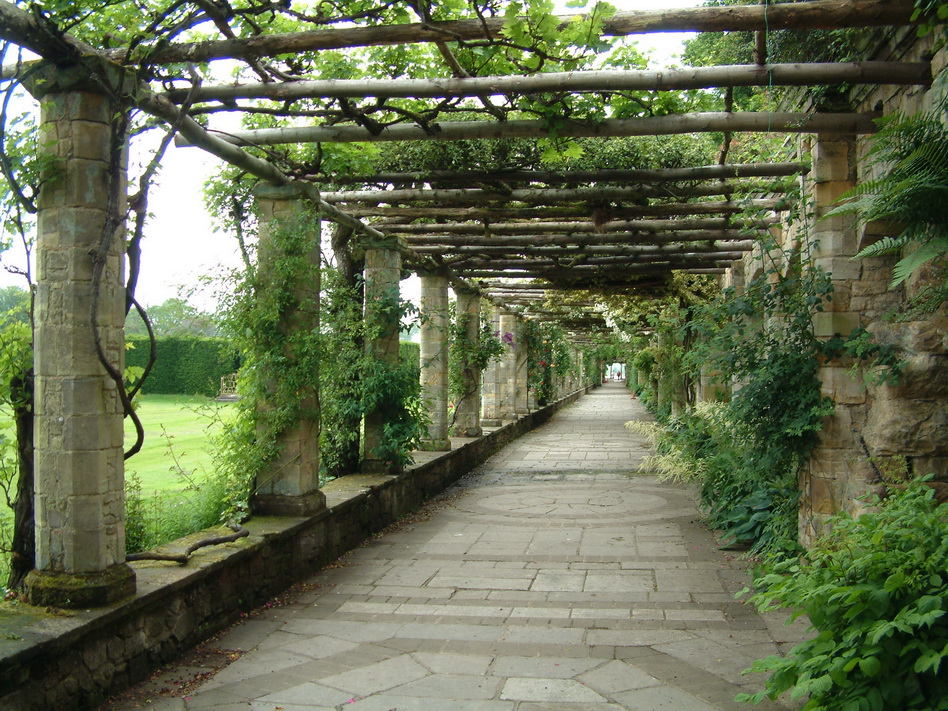
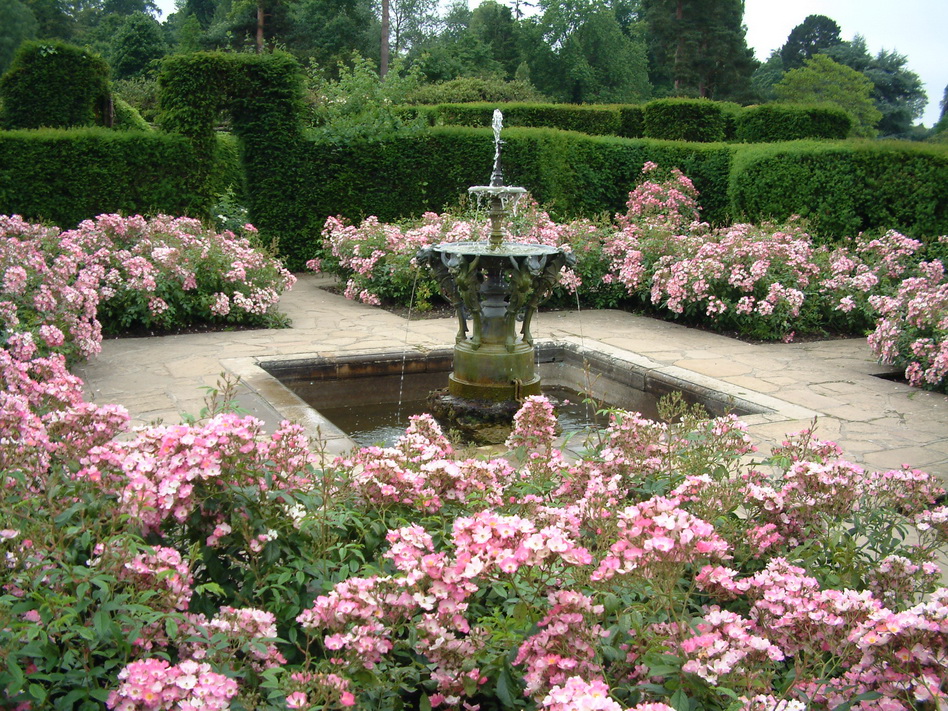
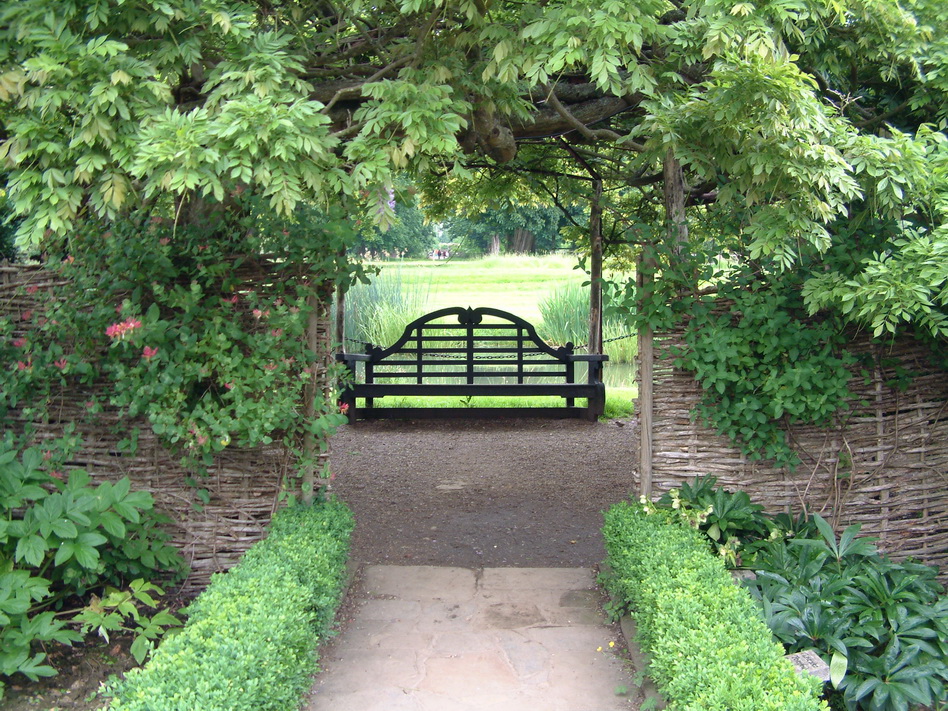
Inside the garden, a garden within a garden, within tall, strict rectangular hedges, tranquil and quiet, hides a rippling, poetic lotus pond, surrounded by colorful mixed flower beds, full of vitality, like a paradise on earth. On the other side of the strict symmetry of the Italian garden is a lush green corridor formed by climbing grapes and wisteria. Within perfect architectural structures and gentle nature, it becomes a spectacular grand perspective in an orderly manner. On the left wall is an artificially constructed rugged cliff covered in moss and plants, with flowing water adding a touch of poetry, forming a perspective path of mountain spring water, revealing the mysteries of the natural world.
At the end of the Italian garden, vast skies and seas, a large lake surrounded by lush forests, bright natural scenery, full of vitality, seems to be the greatest charm of English landscape gardens. Then! Looking out from the colonnade archway, picturesque scenery, too beautiful to mention, leaves visitors lingering.
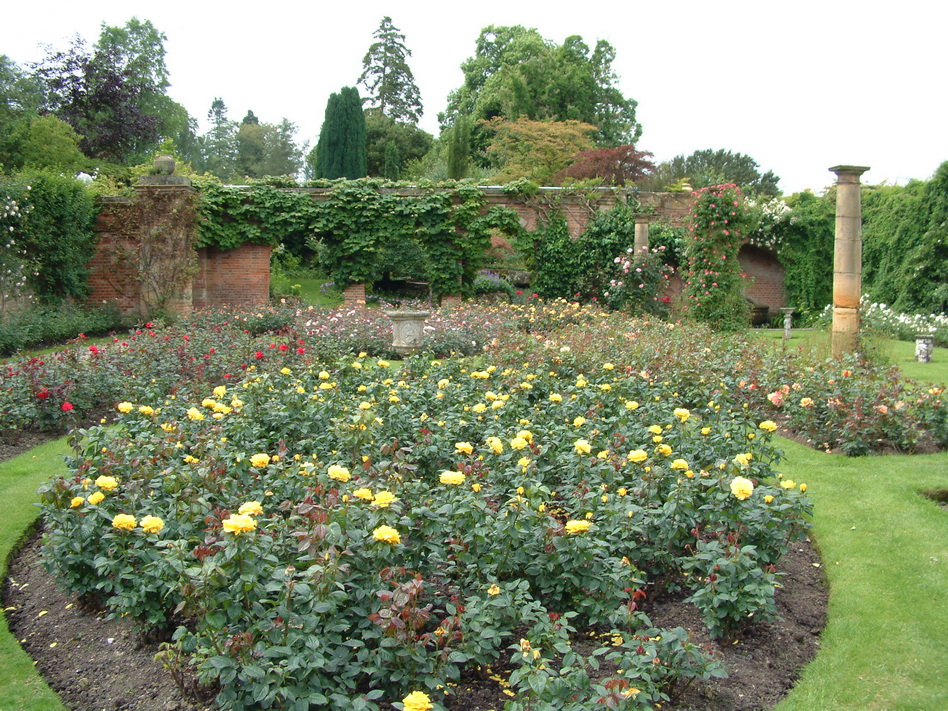
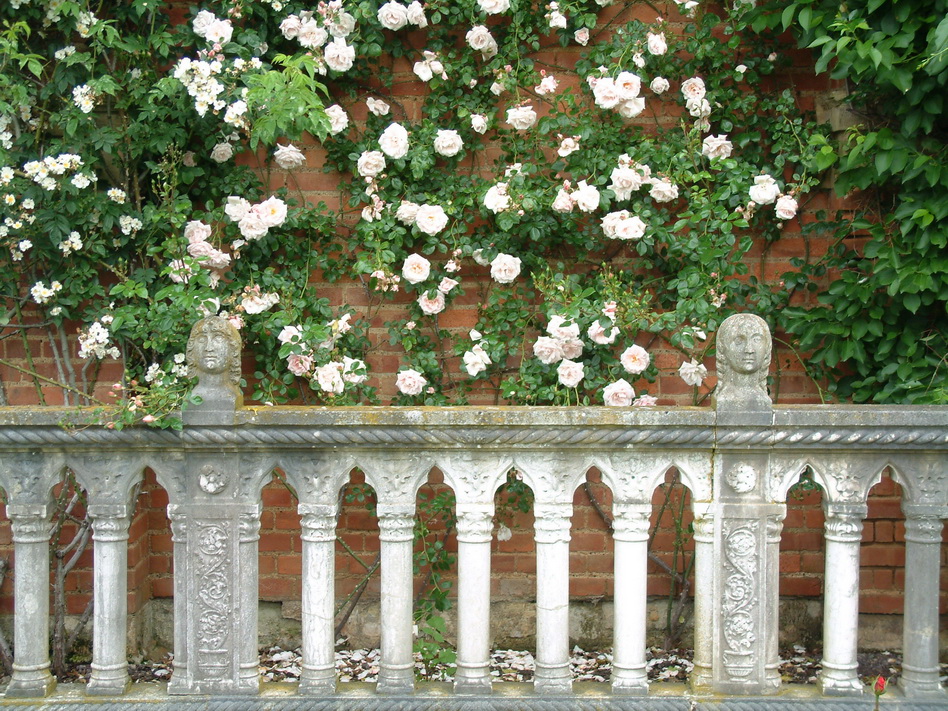
The Fragrant Rose Garden: Passing through the colonnade or rock wall, one opens up to arrive at the fragrant, pleasing rose garden. Rows or circles, ellipses, orderly arranged, a whole expanse of charming and brilliant roses, in forms changing rhythmically up and down. Series of climbing roses form colorful flower walls, flower pillars, and flower corridors. Intersecting brilliant rose paths flow through, flower-clustered flower beds, natural theaters, dotted everywhere with antique statues, stone lions, and pedestals, poetic and fascinating. Whenever roses bloom, flowers burst forth, a sea of flowers, making people yearn. Bathed in the fragrant scent of roses, intoxicated in the embrace of nature, such intoxicating scenery makes one unsure whether they are in a rose garden or Eden?
The Small Wood Garden with Grass-like Lawns: Next to the brilliant rose garden, a small wood garden with lush greenery and grass-like lawns. Deep green pines, cypresses, and yews are matched with emerald green and purple-red small shrubs (maple and boxwood, etc.), dotted with colorful mixed flowers and large stones, harmonious and perfect, full of vitality. Gradual stone steps lead to the rear courtyard platform. Along the wall is a large patch of brilliant flower beds competing in color. The central lush green lawn lies flat like a carpet in the natural theater. On the side, a series of emerald yews and topiary mix to form a pleasing green slope. Dancing white dots of flowers in the greenery, poetic and fascinating, a tranquil corner providing space for contemplation.
The Fun Modern Sprinkler Maze: Mazes are one of the biggest features of English gardens. The most famous one is in the Hampton Court Palace Garden, built under William III. Currently, Europe has the most mazes; the UK has over a hundred various mazes. Traditional mazes are constructed from yew hedges; Hever Castle Garden has two. This innovative and fun modern sprinkler maze is located behind the Italian garden, in a vibrant, grass-like natural theater facing the large lake with lake views. The sprinkler maze surrounds a shallow pond reflecting light and shadows. In the center of the maze is a fortress built of stones, with flowing water, and a platform inside the fortress. The lively pond is planted with various (nearly a thousand species) aquatic plants, like an aquatic plant garden. The surrounding maze paths are made of stone slabs arranged in circles. When people follow the stone slab paths into the maze, stepping on many slabs unexpectedly sprays dramatic thin water columns, splashing everywhere. If not careful, one will get soaked like a "drowned chicken," full of fun. The price to enter the fortress is thus. But there is a secret: if you see wet slabs, don't step on them, jump over them. Like the Asdan amusement park on Sicily built by Medieval King Robert II Antos. It is currently the most exquisite in Western gardens.
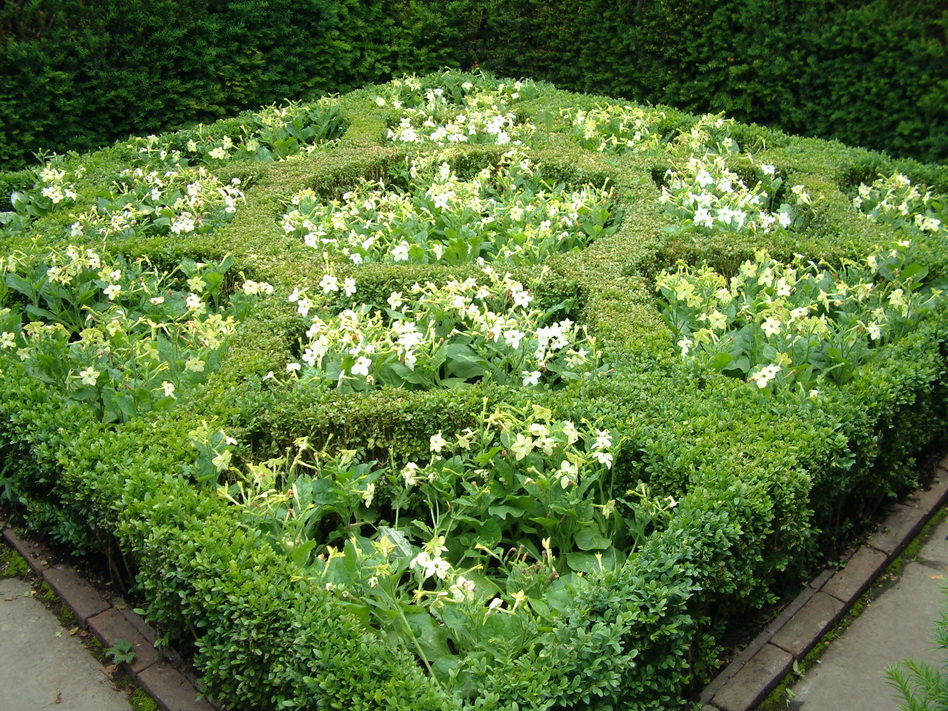
Traditional Classical Garden: Returning to the castle on the inner side of the moat, beside the topiary, stand classical statues on left and right. This is a perfect traditional maze, round inside and square outside. The strict form is made of tall pruned yews. To reach the core of the inner garden, one must go through a tortuous route. This is smaller and easier than the Leeds Castle maze. Because in the Leeds maze (indeed too complex), I got lost, wandering around, unable to enter. Even giving up and wanting to return to the exit took great effort; after searching for a long time, I finally found the exit, losing all patience and courage to enter this "headache-inducing" maze. Inside the hedge next to the maze, there are three consecutive bewitching small gardens in a row. First, a neatly trimmed square flower bed, like a block of emerald tofu, with vigorous white flowers floating on top, fascinating. The second is strict and orderly, an outer square hedge, inner circle brilliant rose bed, centered by a small square green dragon fountain. The murmuring fountain poetically divides it into four perfect geometries, crowning clusters of roses, colorful and beautiful, a pretty typical medieval garden.
Passing through the green corridor, the last one is a globe-shaped brilliant flower bed garden. Within a rectangular hedge, on a lush green lawn, centered by a globe flower bed symbolizing the world's meaning. Behind the colorful flower beds, a series of lush green topiaries are arranged diagonally, orderly placed, resembling Western chess pieces. The front row seems like soldiers guarding the generals and ministers in the back row. The two exquisite shapes in the center are the King and Queen, fascinating. The rear courtyard, grass-like lawns, small bridges and flowing water, shady trees, pleasing to the eye. This is the bewitching, bright natural scenery of Britain.
(Note: Address - Hever, nr Edenbridge, Kent English Phone: +44(0)1732865224 Opening Hours: March 3 to November 30 daily 11 am to 6 pm www.HeverCastle.co.uk)
Note 1: Reference Le Guide des Maitres Jardiniers P 202-203 Paris Bordas 1993 published Dany Lentin work. Note 2: Reference Le Guide des Maitres Jardiniers P 203 Paris Bordas 1993 published Dany Lentin work.