Jean — Basquiat
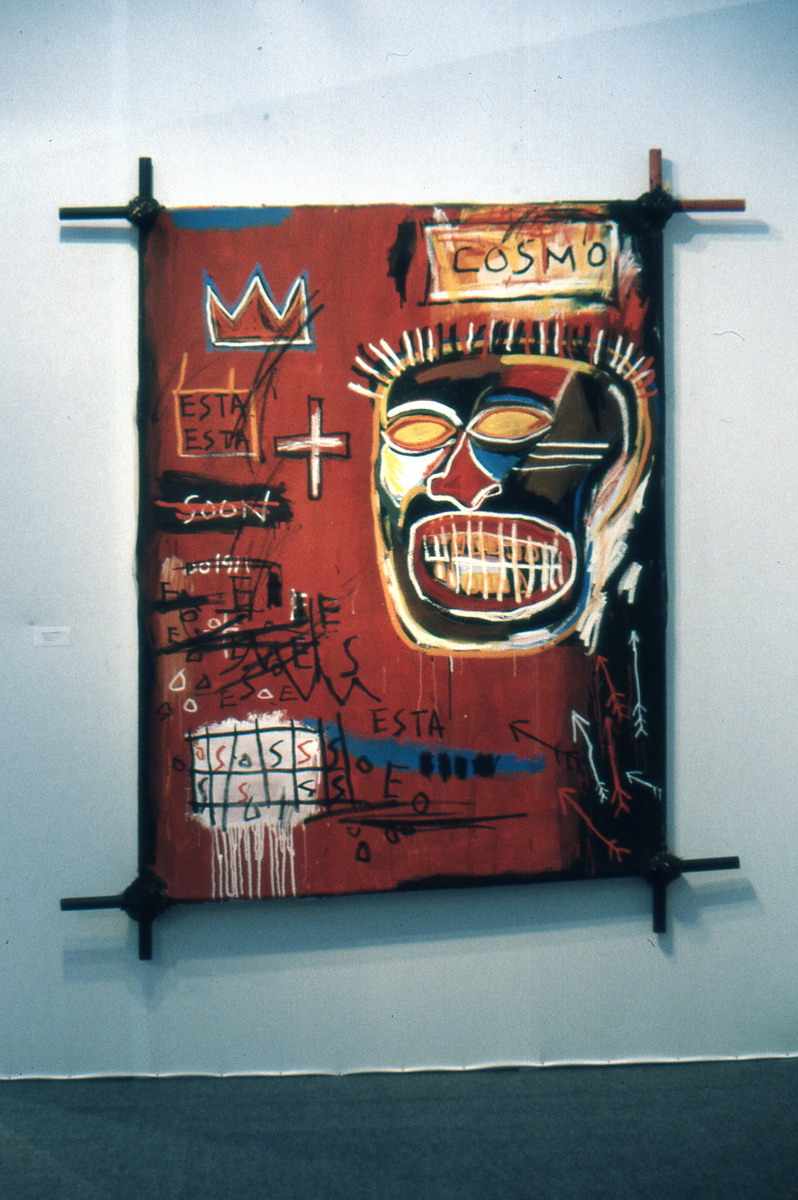
Jean-Michel Basquiat Early work Cosmo Head 213.5x180.5cm 1982
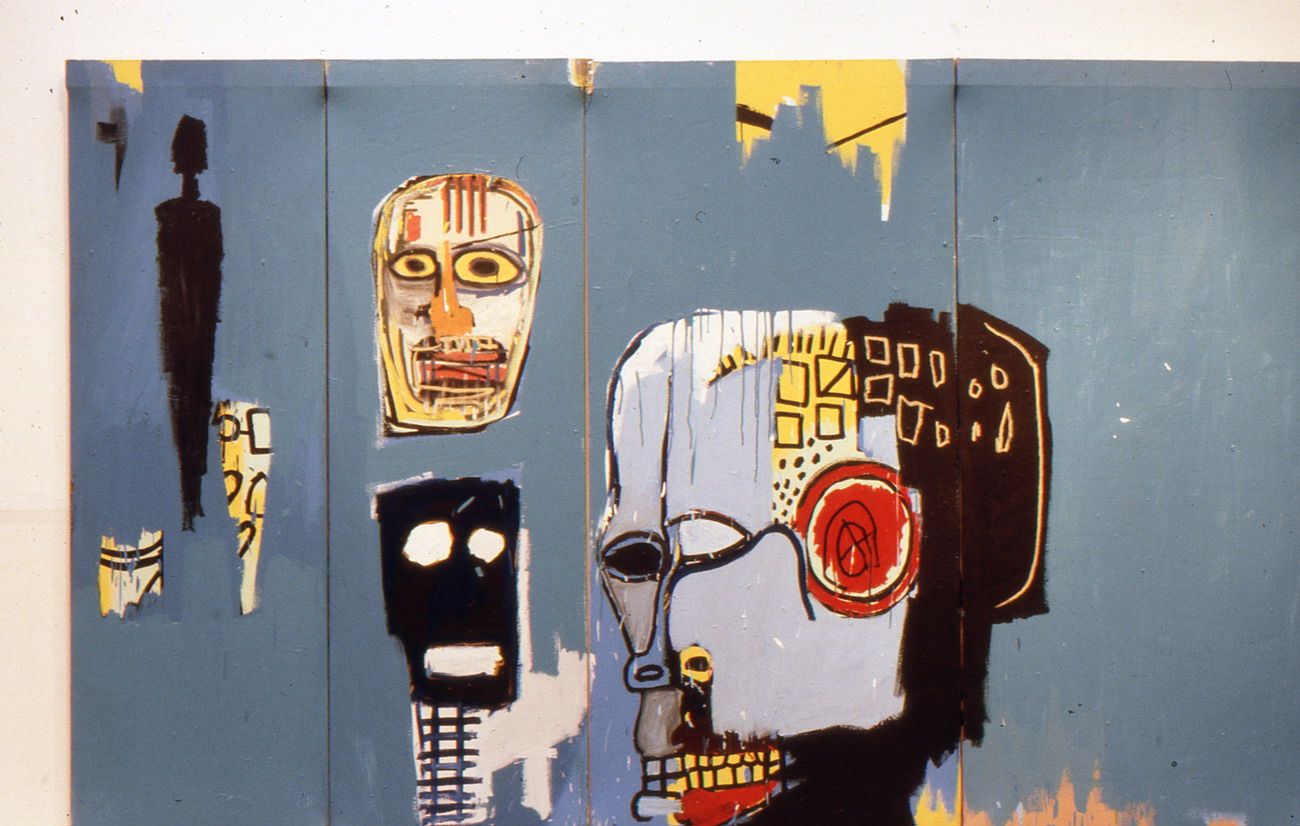
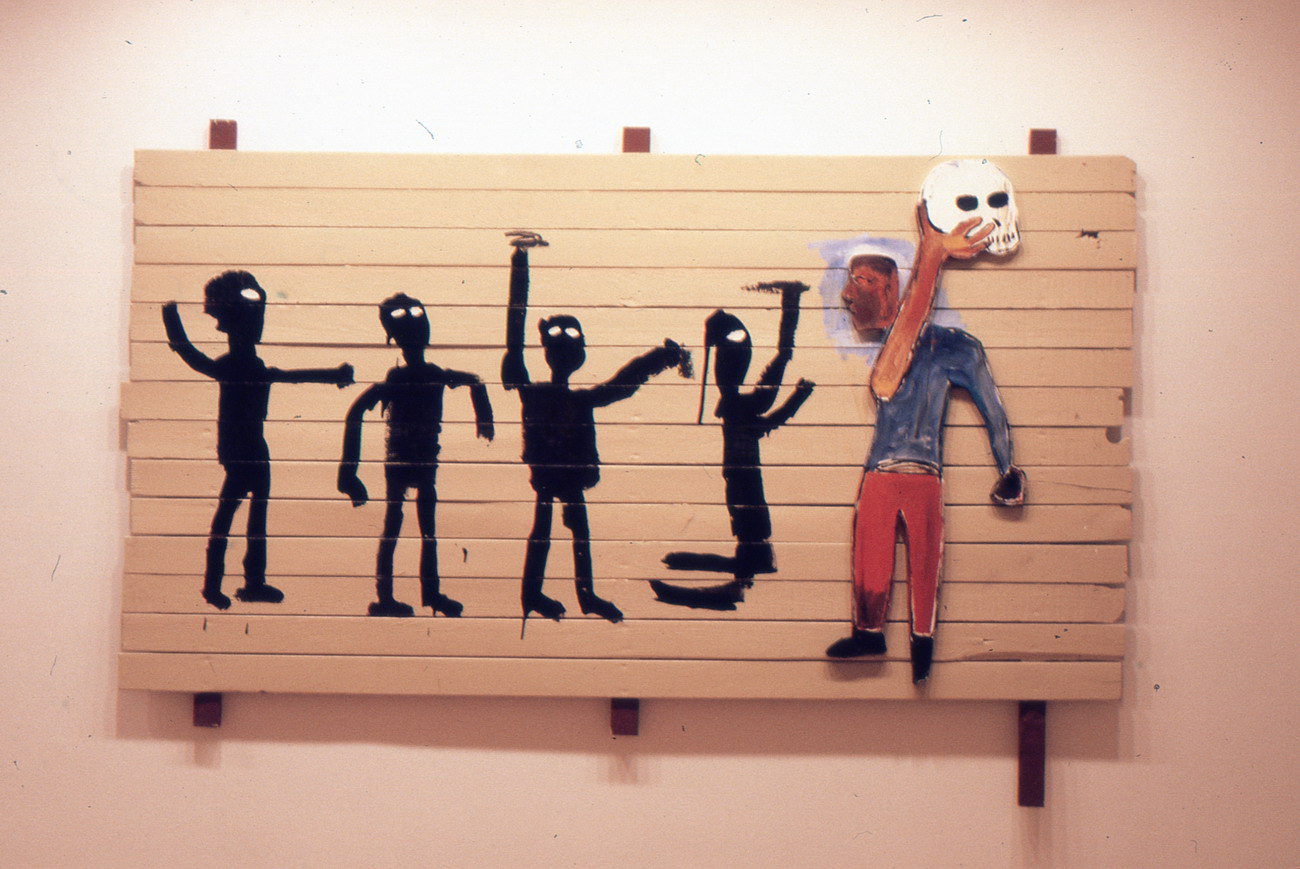
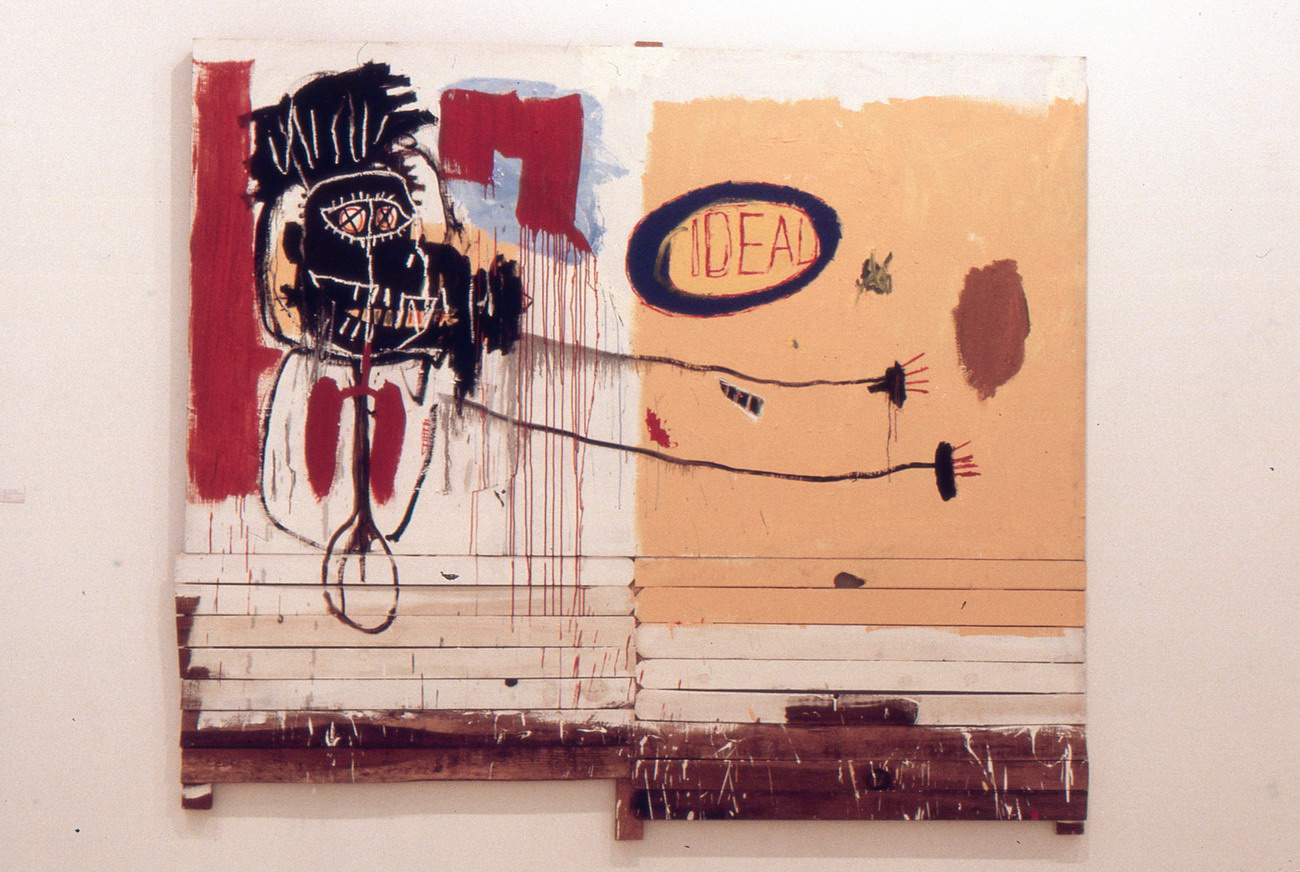
Text / Chen Chi-Hsiang Exhibition dates: October 15, 2010 to January 30, 2011 Venue: Musée municipal d'art moderne de la Ville de Paris Jean-Michel Basquiat (1960-1988) is one of the most legendary artists in contemporary art, still the most renowned among graffiti gangs. Along with Keith Haring, both were star painters of New York's wall graffiti, rising in the early 1980s in Manhattan’s East Village near SoHo. They are currently the hottest artists in the art auction market, repeatedly setting high prices. Both shot across the deep night sky like comets, flashing with artistic brilliance, disappearing into the starry night while still young and vigorous (the former at 28, the latter at 32).
Basquiat was born in Brooklyn, New York, to second-generation South American immigrants; his father was Haitian, his mother Puerto Rican. His mother worked on fabric printing designs, having an absolute influence on his art and encouraging him to develop in this direction. Basquiat began graffitiing at age four, showing his talent by painting what he saw and dreamed of, never letting go. Living near the Brooklyn Museum, which houses American art, he often visited museums with his mother. His father was a jazz fan, and his grandfather had been a guitarist and Latin band conductor. Under this artistic influence, Basquiat dreamed from childhood of becoming a writer or cartoonist, setting his ambition: "After I turn seventeen, I want to become a star."
Basquiat's fate changed when he was hospitalized after a car accident at age seven. During his stay, his mother gave him a book titled "Gray's Anatomy," which became the best way to pass time in the hospital. These images deeply influenced his early paintings and later became the name of his band. It was also at age seven that his parents divorced due to discord. From 1974 to 1976, he lived in Haiti; returning to New York in 1976, he enrolled in school and befriended Al Diaz. During this period, he and Al Diaz began street graffiti, active around galleries in SoHo, using free-form symbols and poetic sentences, often signing "SAMO," meaning "Same Old" in a playful or humorous sense.
In 1978, Basquiat was expelled from school and ran away from home, beginning a bohemian life, selling t-shirts and postcards on the streets to make a living. He became fascinated with music, joining bands and frequenting "Mudd" and "57" clubs, bases for young people in New York's underground culture. This was then the paradise of the arts and literature world. In this gathering place of talents, Basquiat coincidentally met rock musicians Bowie, Madonna, Warhol, and Haring. Warhol bought postcards painted by Basquiat himself, giving him much encouragement and affirming his artistic talent. He also met curator and art critic Diego Cortez. The following year, he gradually gained fame in the East Village art circle, frequently appearing on Glenn O'Brien's TV program.
With the arrival of the new era in 1980, New York was at a moment of transition between old and new. The rise of new art trends led to a group exhibition in June at Times Square on 42nd Street in New York's red-light district, alongside punk and graffiti artists, attracting media attention. The following year, poet and art critic Rene Ricard published an article titled "The Radiant Child" in the famous Artforum, promoting Basquiat and pushing him onto the international stage. Another benefactor, art critic Diego Cortez, was particularly fond of Basquiat's paintings, introducing him through writing and finding collectors for his works. At this time, Basquiat broke up with his graffiti partner Al Diaz to seek development separately. Basquiat began painting formally; someone had written "Death of SAMO" on the streets, announcing the end of an era.
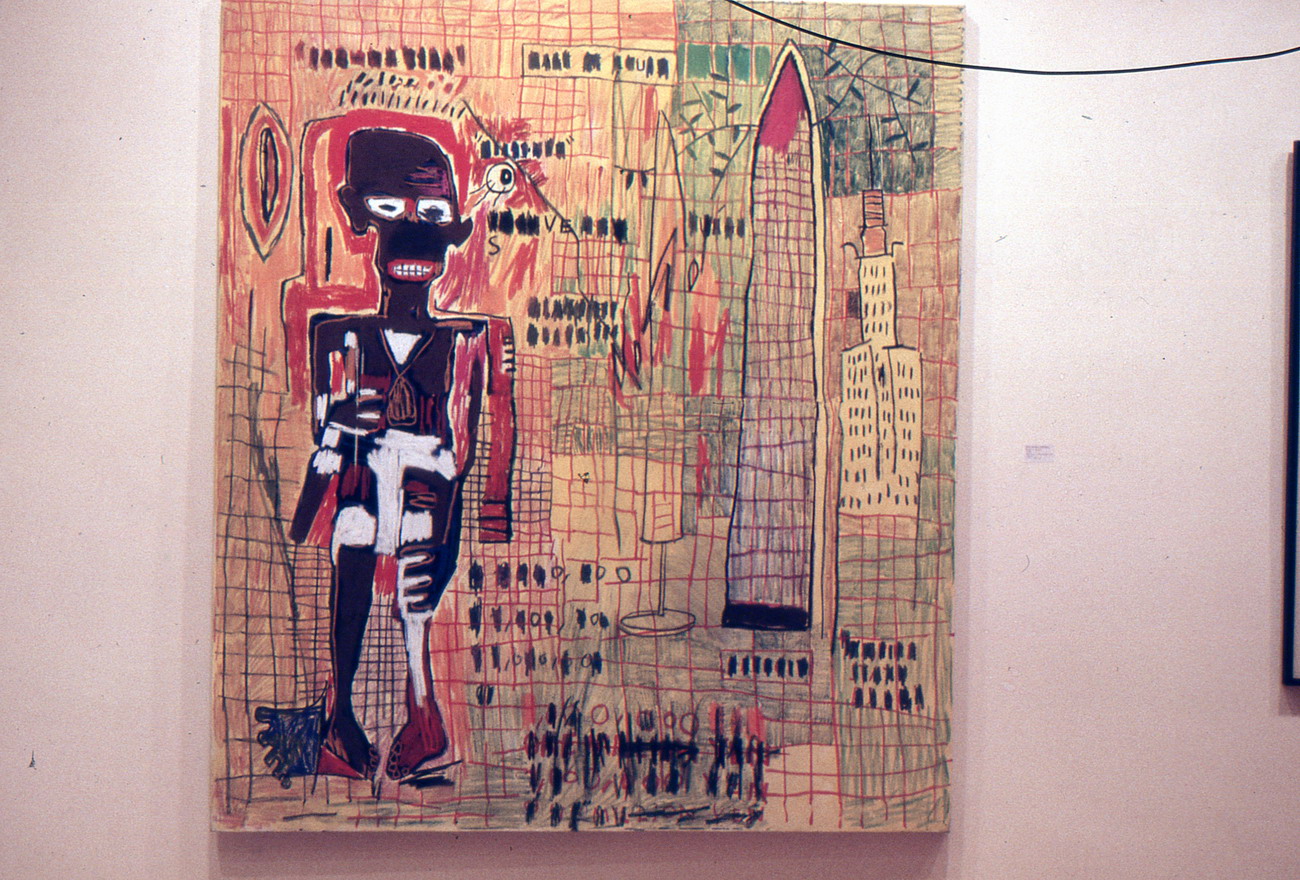
In the artistic replacement of the new era in 1981, Basquiat participated in a large exhibition "New York/New Wave" curated by Diego Cortez at P.S.1 in Long Island City, officially pushing Basquiat onto the New York art scene. He received favor and collections from many collectors, becoming popular as luck turned. The following year, he frequently exhibited with important masters of the 1980s such as Julian Schnabel, David Salle, Francesco Clemente, and Enzo Cucchi. This new trend was quickly called Neo-Expressionism, a rise of new fashion and style. Clearly, in the imagery of this 1980-1982 period, the strongly expressive colors, full of literary and emotional qualities, often featured skull figures and mask-like heads, along with elements of street life such as cars, police, buildings, etc., combined with written sentences and free-form graffiti symbols.
For practical living, Basquiat collaborated with Annina Nosei Gallery. Encouraged by Annina Nosei, he painted tirelessly. The gallery aggressively promoted his works through cheap giveaways and held a solo exhibition for him in 1982, receiving widespread acclaim and laying the cornerstone of his fame. During this period, Basquiat developed a drug addiction, saying, "I smoked a lot of drugs to relieve stress." In 1983, Basquiat became the rising star of New York. During this time, he met his idol Andy Warhol, which had a great encouraging effect on the artist because "everyone will be famous for fifteen minutes." He collaborated with Warhol on paintings, and the two built a strong bond. He joined Mary Boone, the most prominent dealer at the time, who held a grand solo exhibition for him in May 1984. Basquiat became an overnight success, leveraging Andy Warhol's media influence to transform from a newcomer to a star.
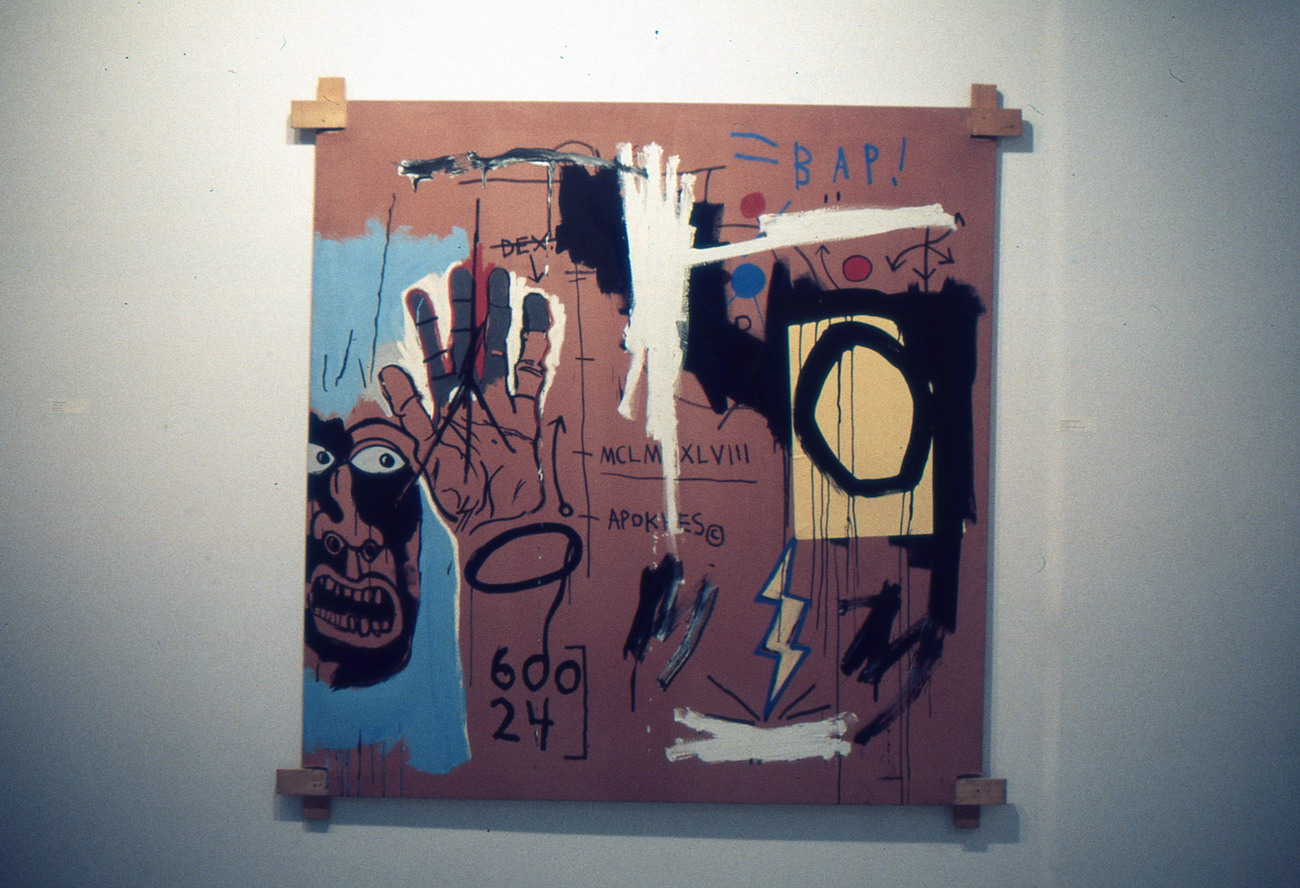
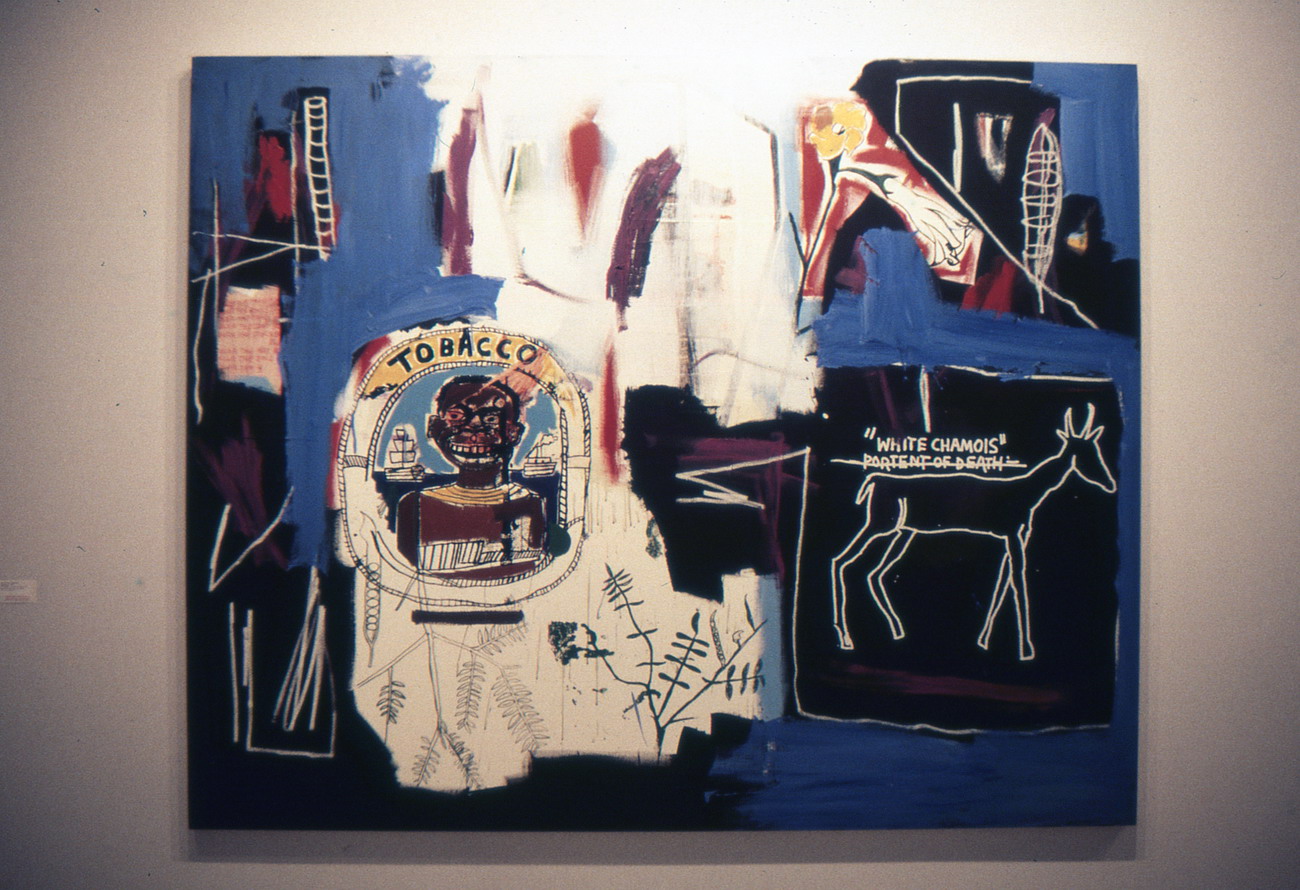
During this period, he highlighted his personal history and unique Black identity. His works featured numerous Black figures, street performers, women, toys, comic characters, etc., constructed through collage, writing, and multiple elements of varying sizes. Under expressive and subjective colors, they were full of violence and energy, with works being quite emotional and literary. In 1985, Basquiat became the cover figure of New York magazines. Under the theme "New Art, New Money, and the Promotion of an American Artist," Basquiat became a household name and a top-red artist.
As Basquiat's prestige peaked, his artistic creation entered a mature stage. Using a new technique mixing painting, graffiti, and collage, he created montage-style compositions, developing a new type of free-form painting style. During this period, relying entirely on drugs, the death of Andy Warhol in 1987 cast a deep shadow in Basquiat's heart. Under the long-term destruction of excessive drugs, his body could no longer withstand it. On August 12, 1988, he died of a drug overdose, ending his dramatic and legendary life, like a comet crossing the starry sky, leaving behind eternal artistic brilliance. (This text is dedicated to commemorating the 23rd anniversary of Basquiat's death.) (Jean-Michel Basquiat "Free Art" retrospective exhibition was held at the Musée municipal d'art moderne de la Ville de Paris from October 15, 2010 to January 30, 2011.)