Malevich (K. Malevitch) - Black Square and Black Cross
Malevich (K. Malevitch), Black Square, 36.7×36.7×9.2 cm, 1923–1930, Centre Pompidou collection
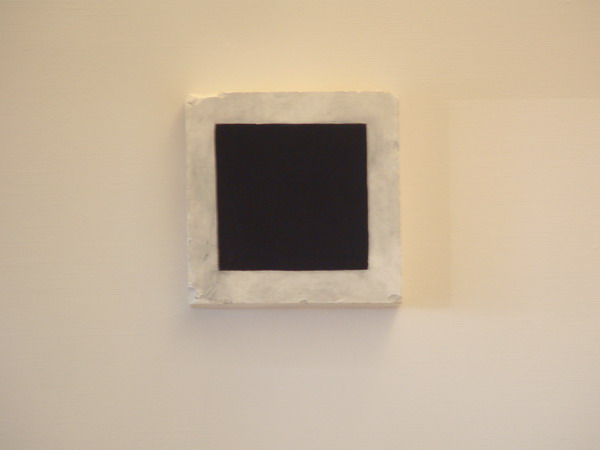
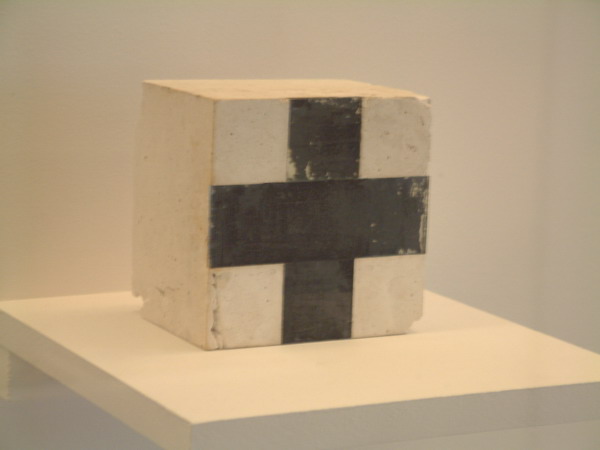
Malevich (K. Malevitch, 1878–1935) was a Russian painter, arguably the most legendary and captivating artist of the century in the realm of plastic arts. His clear, restrained intuition allowed him to delve into the purest realms of art. In 1913, he initiated "Suprematism," arguing that the reality of art lies in the sensory effect of color itself. This stance radically rejected all concepts of natural imitation, affirming that within the non-objective, in the originality of geometric abstraction, one reaches the "zero of form."
In Western Christian culture, the cross is not unfamiliar; rather, it holds an intimate relationship, serving as religious consciousness in their lives and even as a symbol of death. Is Malevich’s purely plastic symbol (the Black Cross) not the truest reflection of Western culture? In this non-objective art, does the cross not also metaphorically signify the death of traditional painting and the birth of art in a new era?
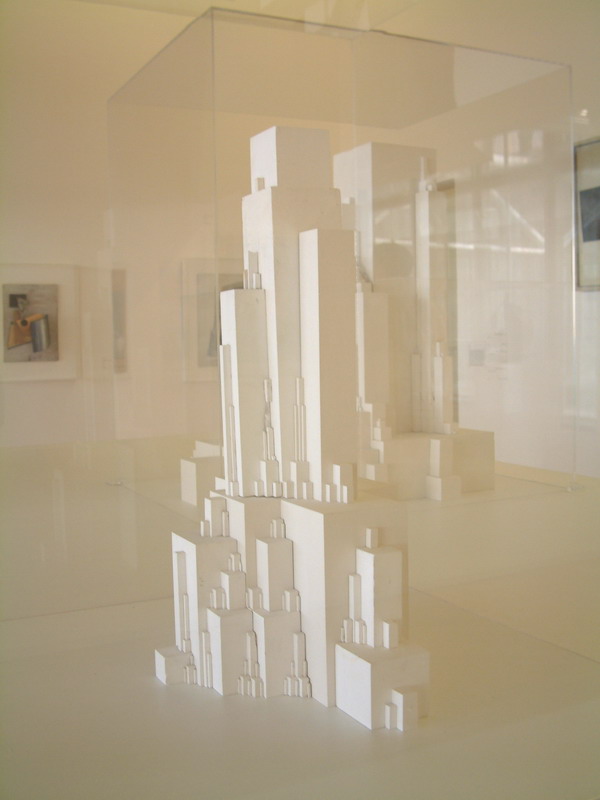
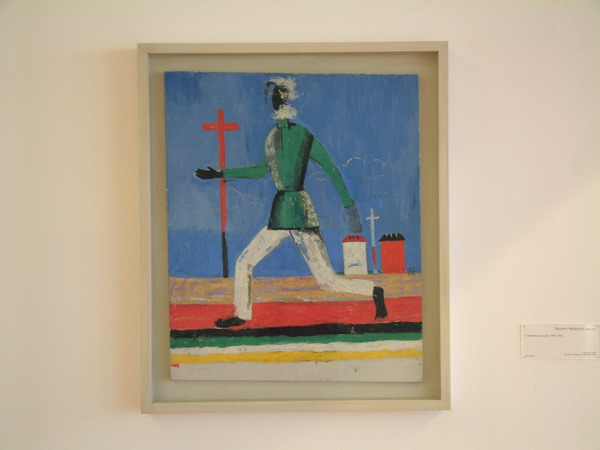
The square, circle, rectangle, and triangle are the mothers of all geometric forms, and the result of consistent pure form in Suprematism and non-objective art. In his book Non-Objective World, Malevich wrote: "In 1913, I strove with all my might to free art from the cage of useless objects. I used the square and exhibited a work where nothing remained on the canvas except a black square set against a white background... I did not invent anything; I only felt the night upon me. I vaguely saw something new, which I called Suprematism." Here, only the area of a black square is displayed... It filled me with a shy type of feeling; I hesitated until I became uneasy when it came to leaving the world and depicting... I accepted the test with satisfaction. To liberate the object often placed me in more distant deserts. Until there was nothing else, only the truly unique sensory experience, and perception became the essence of my life. The square is not an unconscious form; it is the creation of intuitive reason... Facing new art!... The square is a solemn and vital new birth... In art, it is the first step of pure creation. Here, there are also architectural model plans for Suprematist three-dimensional space extending from the square system, featuring Black Circle (1923) and his later figurative painting Running Man (1933–1934).