Paying Highest Tribute to the "Priest Pierre" of the Poor
France's most revered priest for the poor, "Father Pierre," died at 94 on January 22 in Paris's Val-de-Grace military hospital. News of his passing deeply mourned a cleric who dedicated his life to fighting for society's poor (he founded the international Emmaus movement). The next day, his simple c
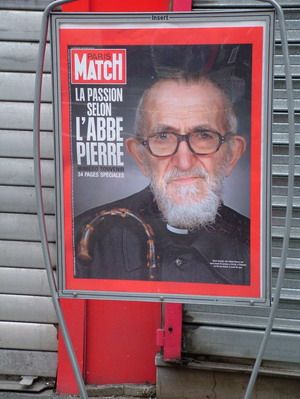
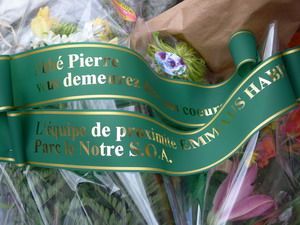
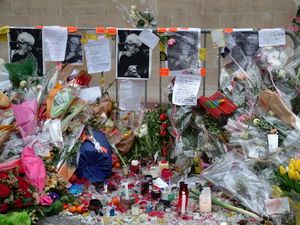
France's most revered priest for the poor, "Father Pierre," died at 94 on January 22 in Paris's Val-de-Grace military hospital. News of his passing deeply mourned a cleric who dedicated his life to fighting for society's poor (he founded the international Emmaus movement). The next day, his simple coffin lay in state in the military hospital cathedral for public viewing and mourning. Early that morning, French President Chirac arrived, followed by this year's presidential candidates including Interior Minister Nicolas Sarkozy, Ségolène Royal, François Bayrou, former President Giscard d'Estaing, Paris Mayor Bertrand Delanoë, National Assembly Speaker Jean-Louis Debré, Médecins Sans Frontières founder and former Social Party minister Bernard Kouchner, and others. From presidents and social elites to movie stars and ordinary citizens, crowds flowed continuously to pay their highest tribute, illustrating Father Pierre's status, influence, and dedication in society. Most moving were the long queues of people braving cold waves and drizzle. In this crowd, people from diverse social classes, races, and generations waited two hours just to view this priest (or warrior) standing for society. The unique mourning ceremonies over two days deeply moved Parisians. On the 25th, France paid its highest tribute to this generation's priest of the poor in the name of the nation at Notre-Dame de Paris, making him one of the few public figures to receive such honors after General de Gaulle, President Pompidou, and Pope Paul II. Inside the solemn cathedral, it was evident that members of the domestic and international Emmaus movements (mostly lower-class individuals) gathered with the President, all ministers, and social figures for the most profound and solemn memorial service. Outside Notre-Dame, many citizens from across the country gathered under giant screens to participate in the prayers. This grand memorial was broadcast live on television, illustrating how Father Pierre's dedication and fighting spirit touched humanity and received such affirmation.
Later, Father Pierre's coffin was laid to rest in the Esteville cemetery in Seine-Maritime, Normandy, during an intimate funeral with his family and Emmaus members, joining fellow Emmaus members buried there. Warrior or Priest Pierre's life was like Saint Peter's, full of legendary events. He pursued a simple spiritual life throughout his years, dedicating himself entirely to those who needed help and care the most, practicing his excellent spirituality through daily life. He said, "People struggling for their own meals may be materialistic, but fighting for others' survival is spiritual." This spirit of giving best embodies Lord Jesus Christ.
Father Pierre, born Henri Grouès on August 5, 1912, in Lyon, came from a wealthy, harmonious Catholic family with eight siblings. Unhealthy since childhood and particularly sensitive to death, he first truly encountered mortality when his grandfather died at age eight. He dropped out of high school due to lung disease. During Easter 1927 (at age 15), while pilgrimaging to Rome and the Vatican, he accidentally read the biography of Saint Francis of Assisi, which ignited his passion and determined his path of spiritual cultivation. He began studying theology. At 19, he entered the Capuchin monastery and, like Saint Francis, donated all his inherited wealth to help the poor in need in Lyon. One can imagine Father Pierre's kind nature and righteous acts, rooted in social charity and ascetic practice. Ordained as a priest in Grenoble in 1938, right as World War II began, France was soon occupied by German troops. In the remote mountains of Grenoble, Father Pierre unhesitatingly joined the French Resistance, helping and guiding persecuted Jews to cross into Switzerland. He established an underground independent patriotic alliance newspaper to participate in the war effort. Captured twice during the war, he narrowly escaped. Fleeing to Spain, he was arrested but freed with assistance from the Canadian International Red Cross under the guise of being a crashed Canadian pilot. It seemed all arranged by heaven. On June 17, 1944, he advanced with Allied forces to French Algeria in North Africa, where he met General de Gaulle. The provisional government appointed him as a Navy chaplain, fulfilling his childhood dream.
After World War II ended and liberation came, encouraged by his Resistance friends, Father Pierre ran for parliament under the banner of the Mouvement Républicain Populaire (MRP) in Meurthe-et-Moselle. He was honorably elected as a legislator. Hoping to participate in social reform and struggle through the political system, he moved to a dilapidated villa in Neuilly-Picardie, a working-class suburb of Paris near Saint-Denis, for convenience attending the Paris parliament. Soon, this villa became a gathering place for workers and a hostel for young people, freely sheltering the homeless. He funded this residence using his salary as a national legislator. In 1949, he coincidentally met his neighbor Georges, who had just been released from prison and wanted to commit suicide. Father Pierre told his neighbor, "I have nothing to give you. Conversely, you have nothing to lose because you seek to end your life; so you can give me [your labor] to help others." Such a compassionate reply surely touched all beings! With Georges' help at Easter 1950, Father Pierre established the now well-known "Emmaus Movement" (named after the Gospel). Georges, filled with despair about life, became the first member of the Emmaus Movement. No one could have imagined that today, the Emmaus Movement spreads to every corner of the world (distributed in 35 countries) with 350 groups, 110 in France alone, becoming a large international non-governmental aid organization.
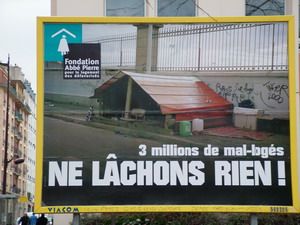
In the 1950s, during post-war reconstruction, Paris suffered severely from housing shortages. Suburbs became temporary residences built illegally by workers, turning into slums. Within Paris, various social problems frequently arose, such as tenants unable to pay rent and being evicted by landlords. Especially in winter, these conditions were unbearable for Father Pierre. The important mission of the "Emmaus Movement" was not only to shelter these displaced or needy people but also to raise funds to build houses themselves to solve this major social problem of housing shortage. Word spread quickly throughout Paris. Needy people flooded from all directions to the suburban Emmaus Movement sites, working together to build wooden shacks, tin-roofed houses, or even brick houses, springing up like mushrooms after rain. Under the government's tolerant eye-closed approach, from Neuilly-Picardie to Pontault-Combault and Plessis-Trévise, the current series of Emmaus low-cost apartments prove the results of those struggles. The entire funding for the "Emmaus Movement" came from Father Pierre's salary as a national legislator. Moreover, once he took office, he devoted his whole heart and strength to this relentless social reform and poverty-fighting struggle. Deciding no longer to engage in politics, maintaining the operation of the movement became even more difficult. Amid everyone's heavy worries, Father Pierre had a sudden inspiration: printing "Emmaus Movement" relief flyers and begging for funds on the major boulevards of Paris to operate the movement. Of course, this righteous act moved the members greatly but was a very distant plan. Thus, the group decided they could participate in production. Thus, the birth of Emmaus scavengers began. They started collecting cardboard boxes, old books and newspapers, scrap metal, old clothes, etc., around the Paris metropolitan area, and receiving discarded home appliances and furniture to repair and sell. This unique economic development potential was infinite. Today, Emmaus second-hand clothing stores, bookstores, furniture stores, appliance stores, etc., benefit the lower-middle class significantly and contribute to building environmental awareness in today's consumer society.
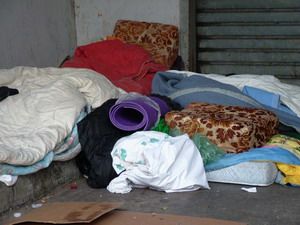
Father Pierre's most striking righteous act occurred on February 1, 1954, in the bitter cold (one of the coldest winters in Paris, freezing below minus ten degrees everywhere). Through a loud call for help on Luxembourg Radio late at night: "Friends, help! A woman has just frozen to death... Every night in Paris, over two thousand people curl up without blankets sleeping on frozen ground, without bread, some almost naked, 200 emergency beds just created.... Every citizen can help homeless wanderers. We need 5,000 blankets, 300 American-style large tents..." His angry and touching message awakened social conscience and love, prompting French citizens to generously donate. This kind deed made Father Pierre famous overnight, becoming a public figure in France. For him, this was merely the duty of a person with conscience. But under the mental and physical strain of his brave good deeds, his health became worrying. Finally, he fell ill and spent 22 months hospitalized between 1954 and 1958, recovering gradually after six surgeries.
From then on, the "Emmaus Movement" expanded further. Father Pierre became a warrior fighting for the poor and social justice, deeply influencing France's consumerist and individualistic society. His every move sparked social resonance and response, encouraging young people "not to look to money, but to have love." He developed a global display of goodness, inaugurating the first World Emmaus Congress in Berne, Switzerland, in 1969, establishing the faith of giving: "Serving those who need help the most." In 1971, he unusually stepped forward to help disaster victims in Bangladesh. In 1979, he again called on the media to face the tragedy of Southeast Asian maritime refugees. Starting in the 1980s, this white-haired, bearded, wrinkled-faced "Father Pierre," wearing an old blue coat and holding a cane, became the most beloved public figure among French citizens, continuing his unremitting fight for social justice and against poverty. Dissatisfied with the event of excessive European agricultural produce destruction in 1984, he initiated the creation of the French Food Bank. In 1985, famous French comedian Coluche responded to Father Pierre's ideals by founding the now famous "Restaurants du Cœur" to help impoverished families and citizens survive the winter. The following year, Coluche generously donated 1.5 million francs to Father Pierre. Unexpectedly, three months later, the comedian Coluche died in a car accident. Father Pierre held a touching funeral for him.
Thereafter, he continued to educate the masses through mass media, believing this was the duty of a priest. At age 80, on Bastille Day 1992, the President awarded him the Legion of Honour medal. However, Father Pierre refused to wear the medal because the issue of 300 homeless African families on the Vincennes lawn remained unresolved. Twenty-four hours later, the French Socialist Party government immediately provided two apartments to resolve this issue, illustrating Father Pierre's influence. In 1994, approaching Christmas, accompanied by warriors from the Union des Droits du Logement (DAL), Father Pierre occupied an empty house on Dragon Street in the 6th arrondissement of Paris. The next day, Prime Balladur immediately met with the priest, promising not to send riot police to evict them. The next day, Paris Mayor Chirac also ambiguously wanted to take over the incident, as it was during the French presidential election period. Thus, the 1945 law expropriating empty houses took effect immediately. He often stood on the front lines of battle with social warriors. More precious still, he led by example, disregarding his own life and frailty, going on hunger strike at the Saint-Bernard Church protesting against stateless and homeless refugees. One cannot help but admire him. After 1996, due to health issues, he participated less in public affairs. In June 1999, he again fought for justice for dozens of families evicted from their homes. In 2002, disregarding danger to his life, he personally came to a poor dwelling occupied by Romanian refugees in the Choisy-le-Roi suburb, solely to expose Interior Minister N. Sarkozy's laws on interior security. In 2004, he stood out again at Trocadéro Human Rights Square in front of the Eiffel Tower, calling for the collection of empty houses and construction of social housing. Last year, regarding the parliamentary bill on social housing legislation, the bedridden, critically ill Father Pierre was specially carried into the parliament by Emmaus members, sacrificing the self to achieve the greater good, inspiring admiration. He repeatedly hoped to awaken social conscience and universal love.
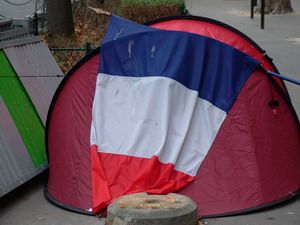
Before this year's New Year, the birth of a new generation of social struggle groups, "Children of Don Quixote," inherited Father Pierre's social morality and spirit, occupying the Canal Saint-Martin to fight for justice for social drifters and the homeless. This attracted attention from mass media and social debate during the upcoming French presidential election. The French President pointed out the right to housing in his "New Year's Address." The ruling party quickly constructed a social housing bill, which has now entered the parliamentary procedure. This is one of the ultimate goals Father Pierre, the warrior of the poor, struggled for all his life. Unexpectedly, before this bill was fully formed, Father Pierre passed away. For the "Emmaus Movement," "Children of Don Quixote," and the "Paris Homeless Alliance," it seems the revolution is not yet successful, and comrades must still strive. This will be Father Pierre's most important legacy and social will.